
From gaps in physician training to better care across the lifespan and the entire circle of support
Seth M. Keller, MD, FAAN
Summary: Better healthcare for people with IDD requires physicians to understand disability, communicate accessibly, recognize changes from a patient’s baseline, and work with the full circle of support. Training initiatives such as Project D.I.M.E., Lifespan Neurology, and Foundational Care aim to make that approach part of routine medical education.

An education gap affects the entire circle of care Inadequate physician preparation to care for people with intellectual and developmental disabilities (IDD) is not simply a problem for an individual patient or clinician. It creates a domino effect across the entire circle of care: the person with IDD, family members and chosen supporters, direct support professionals, nurses, therapists, behavioral health clinicians, educators, case managers, community agencies, and the physicians who work with them. When residents have limited experience with disability, important clinical information can be misunderstood, dismissed, or lost as it moves from one person or service to another. Conversely, disability-competent physicians can strengthen relationships and communication throughout that network.
Evidence from the broader disability population underscores the concern. In a national survey of 714 practicing U.S. physicians published in 2021, only 40.7% said they were very confident they could provide the same quality of care to disabled patients as to nondisabled patients; 82.4% believed that people with significant disabilities have a worse quality of life. A separate analysis of the same physician sample found that 35.8% reported knowing little or nothing about their legal responsibilities under the Americans with Disabilities Act. These findings concern physicians' reported perceptions and knowledge, not direct measurements of the quality of their clinical care; nevertheless, they point to gaps that education and training must address. [5,6]
For a person with IDD, inadequate clinical preparation may mean that a new seizure, pain, depression, sensory impairment, or emerging dementia is attributed to the disability rather than investigated. A change from the person’s baseline may be missed; the patient may be spoken about rather than spoken to; and an unfamiliar care environment may create avoidable distress. These are illustrative clinical pathways, not inevitable outcomes. Families and direct support professionals can be left repeatedly explaining baseline needs, translating communication, and advocating for evaluations that should already be part of competent medical care.
The gap also affects all those who provide treatment, care, and support. Direct support professionals may notice an important change but struggle to convey its significance to a clinician unfamiliar with the person’s baseline. Nurses, therapists, behavioral health teams, and community clinicians may need to repeat assessments or compensate for inaccessible instructions. Families and chosen supporters may repeatedly reconstruct years of medical and functional history. Physicians themselves may lack supervised experience, accessible equipment, or reliable team-based processes. These effects compound when the person moves between settings.
The consequences are interconnected, but not inevitable. The Accreditation Council for Graduate Medical Education (ACGME) now offers a rare opportunity to improve the shared expectations under which physicians are trained. What began as a Lifespan Neurology initiative has expanded into a cross-specialty discussion about whether physicians entering independent practice should demonstrate disability-related clinical competence—and how that competence can improve the work of everyone involved in care.
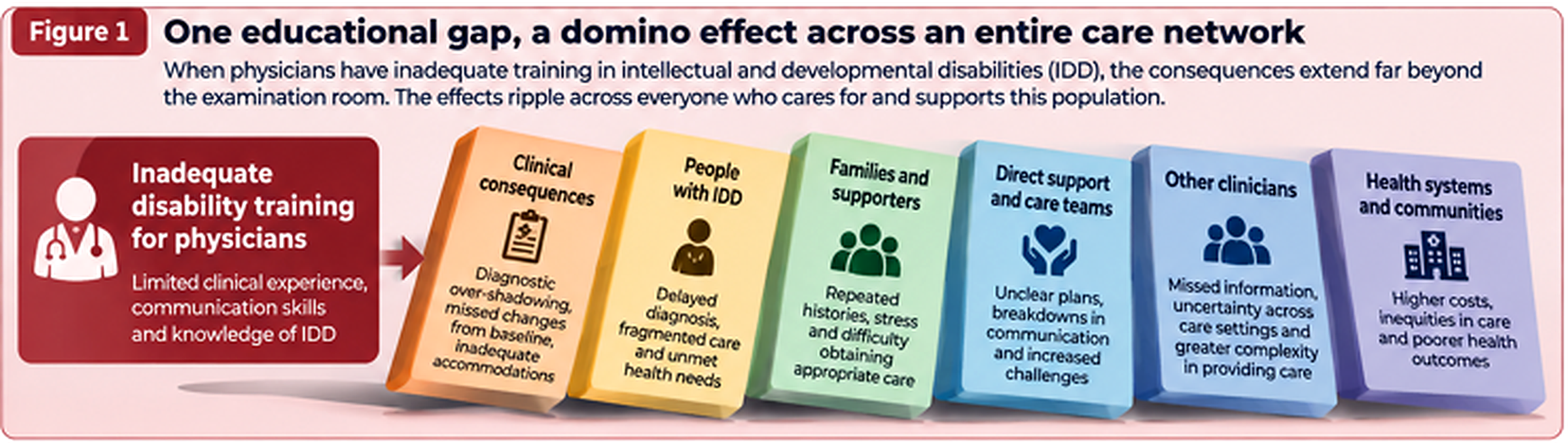
Figure 1. A training gap can have cascading effects across the entire circle of care.
The national groundwork: NCD called for reform in 2021 The need for disability competence in graduate medical education did not begin with neurology. In July 2021, the National Council on Disability (NCD), an independent federal advisory agency, urged the ACGME to make disability competency training part of all accredited residency and fellowship programs. NCD identified gaps in physicians' preparation as one contributor to barriers in health care and emphasized that people with disabilities must help develop the training. Its letter pointed to existing interdisciplinary core competencies as a foundation for change. [7]
NCD’s recommendation provides the policy foundation for the current opportunity. The challenge now is to translate a national recommendation into standards that help programs teach, observe, and assess accessible, clinically competent care. It also places neurology’s more recent work in the context of a longstanding disability-led and cross-professional movement.
First: a lifespan neurology statement of need Our initial focus was the gap between the needs of children and adults with intellectual and developmental disabilities (IDD) and the training of the physicians who care for them. Adult neurologists routinely encounter lifelong neurological conditions, epilepsy, cerebral palsy, autism, genetic syndromes and, increasingly, dementia in people with IDD. Child neurologists prepare families for transition but cannot ensure that adult services are equipped to receive them. Too often, training pathways mirror an administrative eighteenth birthday rather than a continuous human life.
The Lifespan Neurology effort developed a Statement of Need calling for more meaningful disability competence in adult and child neurology residency training. The work brought together colleagues and supporting organizations across neurology, developmental medicine, disability advocacy, and related fields. Its core proposition was practical: graduating neurologists should be able to communicate accessibly, understand baseline function, recognize diagnostic overshadowing, adapt neurological assessment, support patient autonomy, and coordinate care across life stages. The statement helped establish a common purpose and bring attention to specialty-level educational gaps; it was not itself a new accreditation requirement. The effort complements, rather than originated, the wider national agenda articulated by NCD.
Second: bringing the case to the ACGME specialty processes The statement provided a foundation for engagement with the ACGME’s separate adult neurology and child neurology Program Requirements revision processes. Those specialty-specific discussions offer a place to address particular clinical expectations: examination and evaluation of patients with neurodevelopmental disabilities, continuity across childhood and adulthood, and the resources needed for appropriate clinical exposure and faculty development.
In August and September 2026, the ACGME invited stakeholder input for those separate specialty revisions; the adult neurology survey deadline was September 18 and the child neurology deadline September 21. Those consultations were an important avenue for neurology educators and allies to make the case, but they applied to specific specialties. They did not, by themselves, reach the many other physicians who encounter people with disabilities in emergency departments, primary care offices, operating rooms, psychiatric services, or hospital wards. [1]
Third: the Common Program Requirements expand the opportunity On September 8, 2026, the ACGME announced a major proposed revision of the Common Program Requirements (Residency), the foundational standards shared across residency specialties. Unlike the earlier neurology and child neurology stakeholder surveys, this is a formal public review of proposed common requirements. The electronic comment period closes October 22, 2026. The ACGME invites input from its community of interest through its designated form. [2,3]
This changed the scale of the conversation. If disability competence is addressed only in neurology, a patient may receive more accessible care in one specialty while encountering the same preventable barriers everywhere else. The Common Program Requirements offer a means to ask for foundational expectations across training, with specialty-specific details layered on top. They also create an opportunity to make space for qualified residents and faculty with disabilities through appropriate accommodations and inclusive learning environments—an important but distinct issue from training every resident to care well for disabled patients.
The American Academy of Developmental Medicine and Dentistry (AADMD) brings cross-specialty clinical experience in IDD. Project D.I.M.E. brings a broader disability-education strategy; the Lifespan Neurology collaboration offers a concrete example of how common competencies can be translated into adult and child neurology training. Their contributions are complementary, not interchangeable. Organizations must independently approve any position or ACGME submission made in their names.
Project D.I.M.E.: connecting professional education and lived experience Project D.I.M.E. (Disability Inspired Medical Education) is a three-year initiative funded by Orange Grove Center and directed by Rick Rader, MD, editor-in-chief of HELEN. Its aim is to make disability clinical competence an integral part of preparing physicians and other health professionals, rather than an elective or brief awareness exercise. Its work reaches beyond residency alone, encompassing education for physicians, nurse practitioners, and physician assistants. [8,9]
Project D.I.M.E. emphasizes that people with disabilities must be educators, advisers, and leaders in shaping training. Its interprofessional perspective matters because the consequences of inadequate physician preparation are shared by nurses, direct support professionals, therapists, families, community partners, and the people receiving care. It can help translate the current ACGME opening into a broader, coordinated effort across professional education while keeping the ACGME’s direct authority over physician residency standards clear. [8,9]
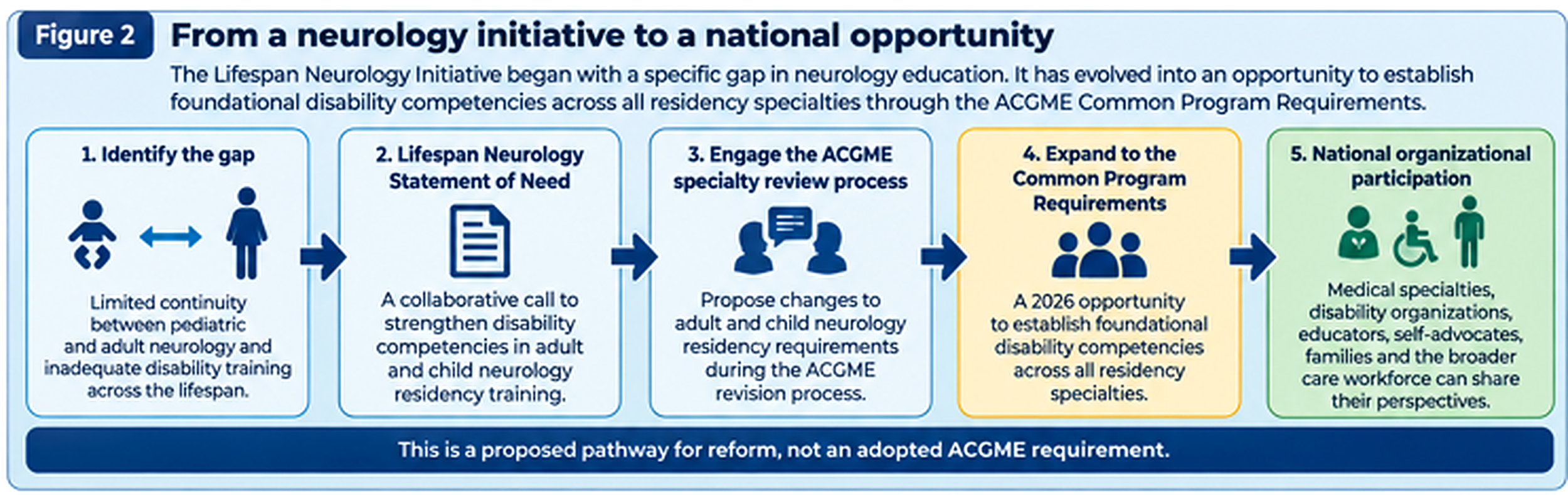
Figure 2. How the Lifespan Neurology effort developed into a broader national opportunity.
The domino effect: transitions and Foundational Care Transitions expose the consequences of fragmented training. A young adult moving from pediatric to adult neurology may encounter a new clinician who has never learned the person’s communication style, seizure patterns, usual behavior, baseline function, or decision-making supports. A hospital discharge may leave direct support staff without understandable instructions or a workable follow-up plan; a change of residential setting may sever relationships that once made subtle clinical changes visible. These are not only medical handoffs. They are transfers of trust, knowledge, responsibility and practical support among patients, families, caregivers, and multiple professions.
Foundational Care offers a way to reverse this pattern. Rather than treating transfer as a single appointment or document, it begins relationships before a transition, recognizes the person and their supporters as teachers, and asks the receiving adult clinician to learn the individual’s history, strengths, preferences, communication methods, and baseline. Shared tools—such as an accessible health passport and serial documentation of changes from baseline—can preserve what matters across pediatric and adult services, primary and specialty care, emergency departments, hospitals, and community settings. Better physician training is one piece of this model: clinicians must learn how to receive, question and act on knowledge from direct support professionals and other members of the circle of care, while protecting the patient’s autonomy.
This is the positive domino effect of meaningful disability competence: better clinical listening makes early changes easier to recognize; recognition supports timely assessment and more appropriate treatment; effective communication improves discharge and transition planning; and reliable handoffs help nurses, therapists, direct support professionals, behavioral health teams, families and community partners carry plans forward. The benefits are shared, but so is the responsibility. ACGME can directly change expectations for physician education; parallel learning and coordination across the wider workforce require partnership with the organizations that train and support other professionals.
The proposed revisions are not yet adopted, and there is no guarantee that public comments will produce the wording requested. That is precisely why medical associations, residency leaders, certifying organizations, disability-led groups, families, and direct support professionals should examine the proposal and contribute their own experience now. The potential change is both curricular and cultural: physicians would learn to expect disability as an ordinary dimension of patient care, and patients and supporters would no longer be expected to teach each new clinician the fundamentals at every encounter.
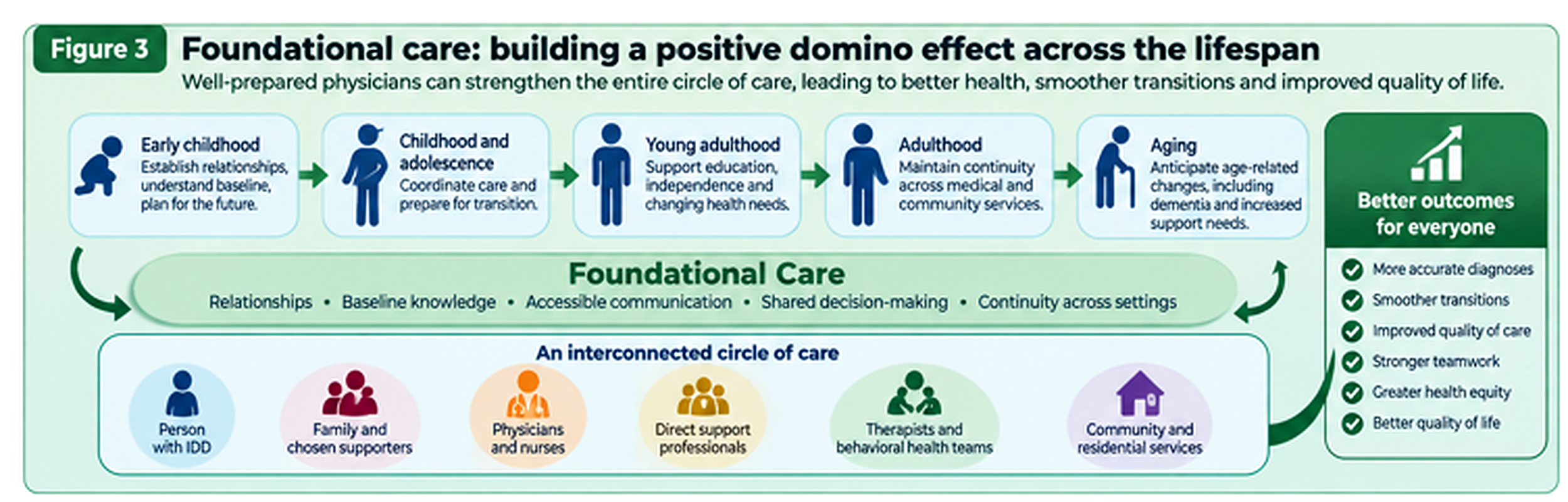
Figure 3. Foundational Care aims to strengthen relationships and continuity across transitions and aging.
A fourth development: competence must be demonstrated As the broader comment opportunity opened, another question came into focus: if residency programs are expected to teach disability competence, how will they know whether residents can demonstrate it? The ACGME’s 2026 proposal includes changes to resident assessment and describes limits on specialty Review Committees' ability to specify additional assessment requirements. Those changes raise a practical issue for neurology and other specialties: how can programs maintain meaningful observation of essential clinical skills while building accessible care into assessment of readiness for independent practice? [10]
Neurology and child neurology provide a tangible example: clinical skills assessments can test medical interviewing, neurological examination, and professional interactions, while other specialties use assessment approaches suited to their practice. The question for every program is whether disability competence remains observable rather than aspirational. A lecture on diagnostic overshadowing, for instance, is not the same as assessing whether a resident investigates a new symptom rather than reflexively attributing it to disability. [11]
Consider a resident evaluating a nonspeaking adult with IDD whose direct support professional reports a subtle change in walking, sleep, and behavior. A faculty member can observe whether the resident addresses the patient, identifies the person’s preferred communication, learns the baseline from the patient and trusted supporters, adapts the examination, considers pain, medication effects, or neurological illness, and makes the follow-up plan accessible. Direct observation, case discussion, patient and supporter feedback, and longitudinal review can fit within existing assessment systems without mandating a one-size-fits-all disability examination.
What other organizations should do—now This is a time-limited invitation to participate in a formal national process, not simply to endorse a statement written by others. The October 22 deadline applies to the Common Program Requirements (Residency) review, a different process from the earlier specialty stakeholder surveys. Organizations should read the actual proposed requirements and impact statement, identify the provisions directly related to their expertise, approve their own positions and submit comments through the official ACGME electronic form. [2,3]
Organizations representing direct support professionals, nursing, rehabilitation, behavioral health, social work, care coordination and family or self-advocacy should have a particular voice in this process. They can document how a physician’s communication, understanding of baseline function and coordination during transitions affect the work of the entire care team. Their submissions should reflect their own experience rather than simply repeat a medical organization’s language. Project D.I.M.E. and other cross-professional coalitions can help these stakeholders identify the distinct evidence that each profession brings, while avoiding identical template comments.
Medical specialty societies and certification stakeholders can explain which clinical competencies must be observed and how specialty assessment requirements interact with common standards. Residency program directors, faculty, and trainees can speak to feasibility, direct observation, faculty development, and continuity across training. Nursing and interprofessional organizations can identify communication failures, coordination gaps, and patient-safety consequences they see in clinical practice. Disability organizations, self-advocates, and family organizations can describe what respectful access, autonomy, supported decision-making and the recognition of a person’s baseline actually look like—and where current training falls short.
Their perspectives should not be collapsed into identical form letters. An emergency medicine organization may emphasize safe assessment when communication is atypical. A psychiatry organization may describe how behavioral change can conceal pain, seizures, or medical illness. A pediatric or transition-focused organization may focus on continuity into adulthood. A disability-led organization may emphasize direct communication and patient participation. Each can identify the proposed sections most relevant to its experience and offer precise, independent comments.
Three requests can anchor this work:
make foundational disability-related clinical competence visible in patient care, medical knowledge, communication and systems-based practice;
require meaningful opportunities to teach, observe and assess those skills, including their place in readiness for independent practice; and
preserve appropriate flexibility for specialty-specific assessment rather than inadvertently weakening established clinical evaluations. These are proposed improvements for public comment—not provisions the ACGME has already adopted.
How to participate before October 22, 2026. Read the proposed requirements and the rationale, identify the provisions most relevant to your organization, and submit your own comments through the ACGME’s official electronic form. The links below lead directly to the current materials:
ACGME Review and Comment page and electronic submission form — choose Common Program Requirements (Residency), not the separate Post-Doctoral Education Program form.
Proposed Common Program Requirements (Residency), tracked changes — review the exact sections on patient care, communication, educational experiences, and resident assessment.
ACGME Rationale and Impact Statement — consider why changes are proposed and explain any needed modifications. Submission reminder. Organizational respondents should obtain their own approval, use the designated electronic form rather than relying on a separate letter or endorsement, and retain a copy of their final submission. Comments close October 22, 2026.
What change could mean for the whole circle of care Success is not the number of lectures added to a curriculum or logos on a coalition statement. It is a graduating physician who addresses the patient, learns from family and direct support staff without displacing the person’s voice, notices a change from baseline and avoids diagnostic overshadowing. It is also a clinician who provides an accessible care plan to a nurse, works with a therapist on an adapted examination, includes behavioral health when indicated, and makes a pediatric-to-adult transition or hospital discharge safer by transferring relationships and knowledge—not merely records. This is where an improvement in physician education can create a positive domino effect for everyone who cares for and with people with IDD.
The present effort rests on several connected contributions: NCD articulated a federal disability-policy case for training reform; the Lifespan Neurology group translated a recognized gap into a specialty-specific Statement of Need and engagement with adult and child neurology requirements; Project D.I.M.E. brings a broad, disability-informed and interprofessional education strategy; and the 2026 Common Program Requirements review offers a formal opportunity for the wider community to comment on shared residency standards. The opportunity belongs to every organization that can explain how a physician’s preparation affects care, support, communication, and transitions. Better physician training cannot fix every fragmented system, but it can begin a positive domino effect throughout the circle of care.
About the Author

Dr. Seth Keller is a Neurologist at Neurology Associates of South Jersey. He specializes in the evaluation and care of adults with Intellectual and Developmental Disabilities (IDD) with neurologic complications. Dr. Keller is on the Executive Board of the Arc of Burlington County as well as on the board for The Arc of New Jersey Mainstreaming Medical Care Board. He is the co-president of the National Task Group on Intellectual Disabilities and Dementia Practices (NTG).
He is also the founder and past chair of the Adult IDD Section with the American Academy of Neurology. Dr. Keller is actively involved in national and international IDD health education as a speaker, and webinar and workshop participant. He is a co-author on a number of articles and book chapters relating to aging and dementia in those with IDD.
References:
ACGME. August 24, 2026 e-Communication and September 14, 2026 e-Communication, Neurology and Child Neurology stakeholder surveys.
ACGME. September 8, 2026 e-Communication: Common Program Requirements Major Revision.
ACGME. Review and Comment, Common Program Requirements (Residency).
ACGME. Rationale and Impact Statement, 2026 proposed Common Program Requirements (Residency).
Iezzoni LI, Rao SR, Ressalam J, et al. Physicians’ perceptions of people with disability and their health care. Health Affairs. 2021;40(2):297–306.
Iezzoni LI, Rao SR, Ressalam J, et al. US physicians’ knowledge about the Americans with Disabilities Act and accommodation of patients with disability. Health Affairs. 2022;41(1).
National Council on Disability. Letter to the ACGME regarding disability competency training of medical professionals. July 16, 2021.
Rader R. Project D.I.M.E.. HELEN: The Journal of Human Exceptionality. October 2025.
Rastović V. Transforming Healthcare Through Disability-Inspired Medical Education. HELEN: The Journal of Human Exceptionality. August 2026.
ACGME. Proposed Common Program Requirements (Residency), tracked changes, September 2026.
ABPN. Neurology and Child Neurology clinical skills evaluation requirements.
Illustrations: Conceptual infographics created for this commentary. They depict proposed educational and care pathways, not adopted ACGME requirements.