
A Monthly Column in HELEN: The Journal of Human Exceptionality
“I Had a Choice” … Hearing the Patient's Voice as Self-Advocates from the Arc Train Future Physicians to Communicate with People with I/DD
Kevin Larragy and Michele Iannuzzi Sucich, M.D.
Summary: Medical students can improve care for people with I/DD by learning directly from self-advocates. In this training at TouroCOM, people with lived experience helped future physicians practice communication, build trust, and understand why patients should be treated as active participants in their own care.
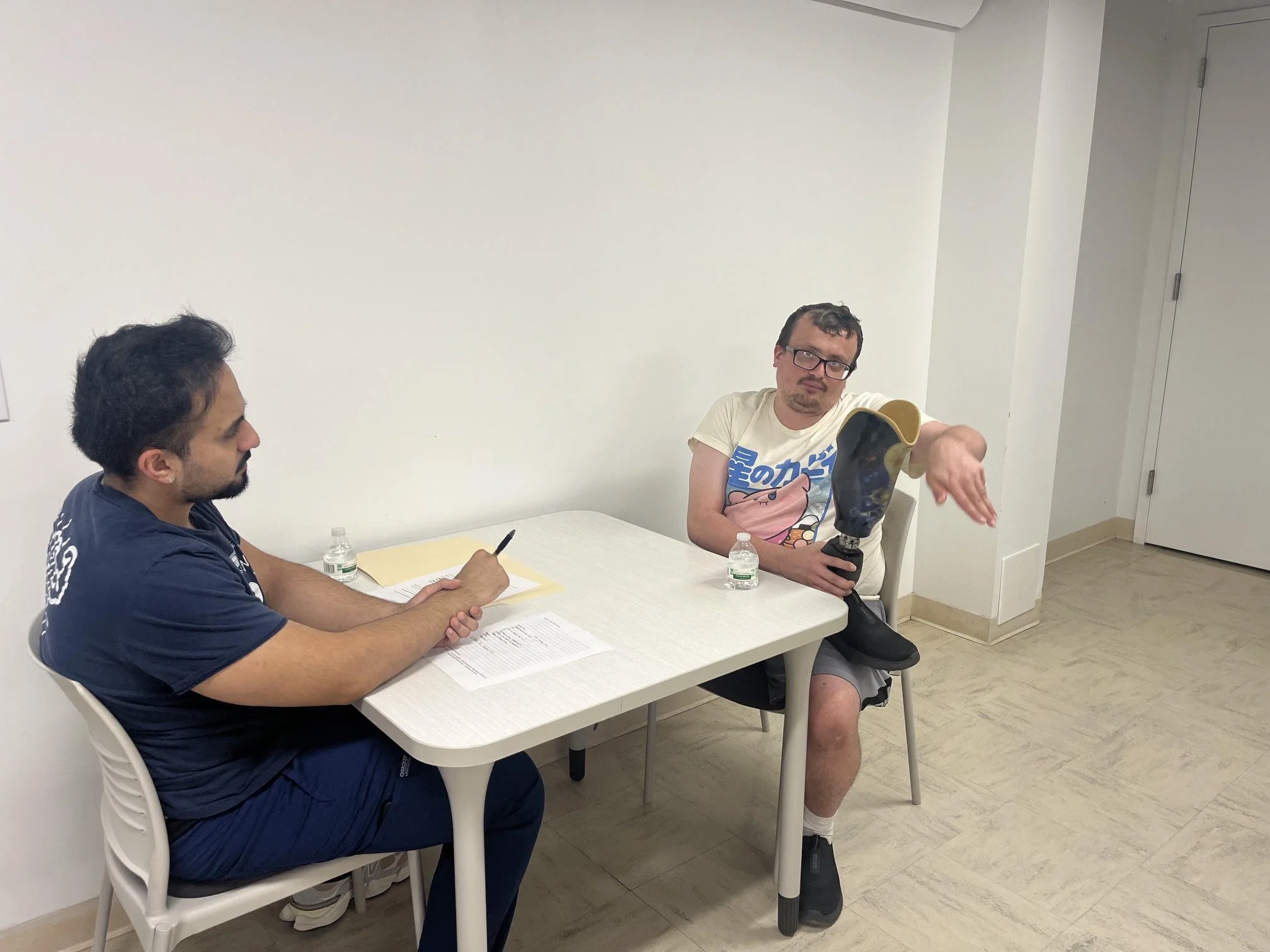
During a TouroCOM training session, a self-advocate from the Arc Greater Hudson Valley speaks with a medical student about his experiences navigating healthcare. The exercise gives future physicians the chance to practice listening directly to people with I/DD and treating them as active participants in their own care.
“I had a choice.” The second year medical students listened attentively as Thomas shared the story of his cancer journey. Thomas was given a choice by his physicians: he could have a below-the-knee amputation and start rehab shortly thereafter to relearn how to walk, or he could undergo chemotherapy in an effort to save his leg and allow that therapeutic regimen to dictate his life for the foreseeable future. Without hesitation, Thomas had a choice: He chose the amputation, then he got on with his life.
This is only one of multiple anecdotes shared by the self-advocates, turned medical educators, from the Arc Greater Hudson Valley. In early October, seven self-advocates volunteered their time and went to Touro College of Osteopathic Medicine (TouroCOM) in Middletown, New York to assist six future doctors in learning how to effectively and respectfully communicate with patients with intellectual and/or developmental disabilities (I/DD).
The overarching message to medical students is simple: The question is not whether you will treat patients with I/DD, the question is whether you will be prepared when you do. Regardless of medical specialty, nearly every provider will encounter patients with I/DD during their careers. For decades, people with I/DD have experienced significant disparities in health outcomes and access to care. A growing body of research suggests that the notable gaps in the education of healthcare providers contribute to these disparities. Despite the evidence, formal education addressing the clinical, communication, ethical, and practical considerations involved in providing care to this population remains unmandated and inconsistent. Recent studies seeking to bridge this gap suggest that effective I/DD education is best approached through a combination of learning modalities—including didactic instruction and experiential learning, with an emphasis on the importance of directly involving people with I/DD and their caregivers as educators.
Our current collaboration with TouroCOM harnesses the essence of this last tenet: People with I/DD are essential in educating future providers to care for this population. In this context, TouroCOM’s Associate Dean of Students, Francis Rose, Jr., created the space for an interactive experience whereby the self-advocates from the Arc engaged second year medical students in role plays, assisting these students in establishing an entirely new frame of reference when encountering patients with I/DD. At the conclusion of the event, Dean Rose thanked participants for, “a great event and a great teaching moment for our students.” The benefits of this experience were evident, as both the students and administrators from TouroCOM readily embraced the offer to schedule additional sessions with self-advocates from the Arc GHV later this semester.
To understand the impact of the event for students and self-advocates, as well as to gather suggestions for improving future events, we hosted feedback sessions with both cohorts after the role play encounters. The students overwhelmingly reported enjoying the experience, noting that it was “eye-opening” and “crucial to being a great doctor,” sharing engaging conversations with their role-play partners. They requested additional opportunities to interface with the Arc self-advocates, and suggested that students role play with multiple individuals to gain exposure to a wider variety of past experiences with the healthcare system and hear a variety of perspectives on how to engage with people with I/DD. The students concluded by expressing their gratitude for the work of the self-advocates and asserting that the experience would shape their approach to caring for patients with I/DD in the future. The self-advocates similarly and overwhelmingly shared that they had a positive and enjoyable experience working with the medical students. One person noted that the session, “made me feel really special, helping…they’re not going to get it anywhere else.” These individuals each expressed how the students made them feel “comfortable” and “safe” by engaging them in casual conversation and “getting to know me as a person.” In discussing prior experiences with the healthcare system, they acknowledged that if providers skip the “ice breakers” and, instead, focus exclusively on diagnosis and treatment, it can make them feel “uncomfortable” or “unworthy.”
As we concluded our feedback session with the self-advocates, we asked if they would be willing to participate in another teaching and learning session with the medical students in the future. The response was an immediate, enthusiastic, and unanimous “Yes,” followed by inquiries about how soon we could schedule the event.
We welcome educators teaching medical students, medical residents, or allied health professionals to contact us for more information regarding how to establish a similar opportunity at their instructions.
About the Authors
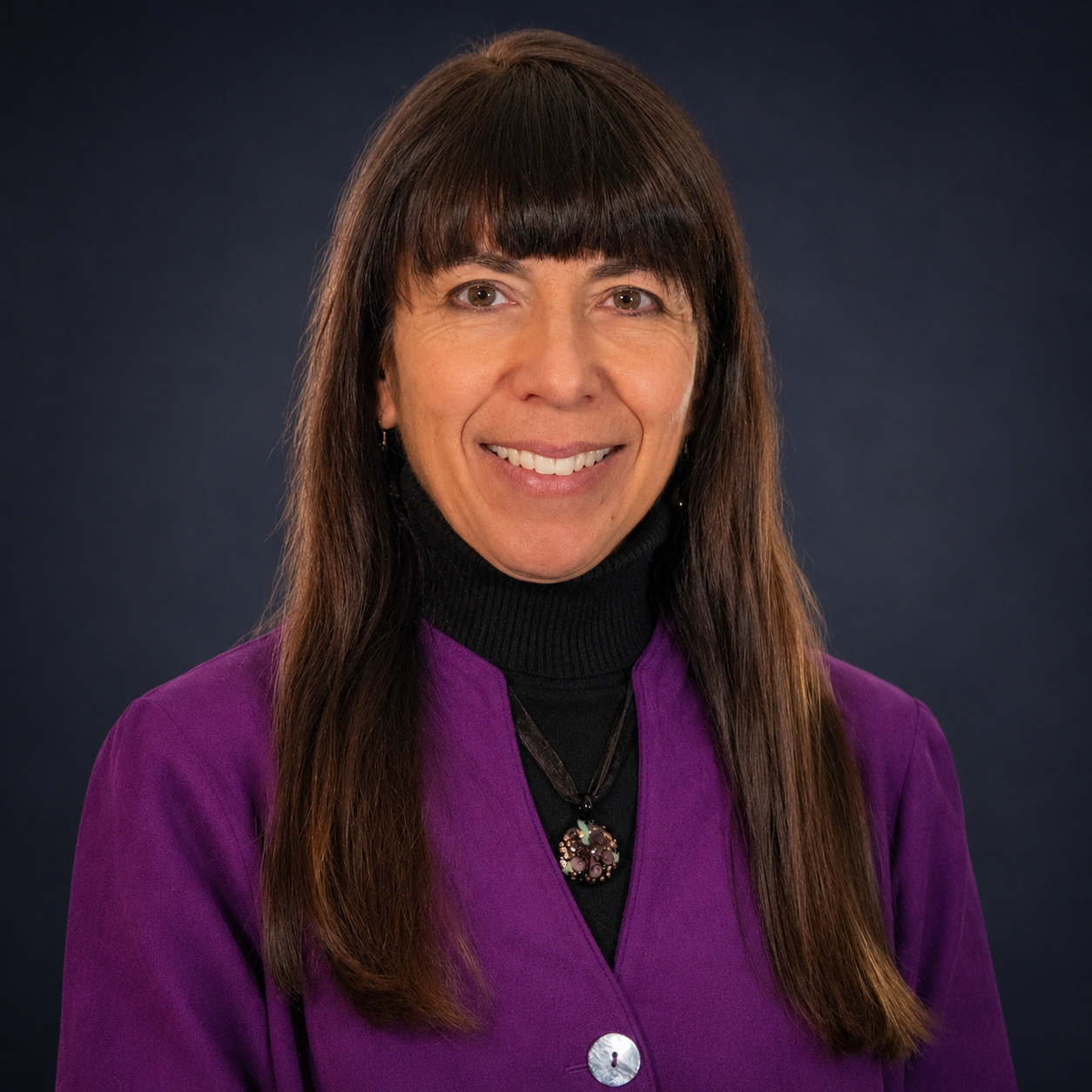
Dr. Michele Iannuzzi Sucich is a board-certified family physician and professor of Anatomy and Physiology at SUNY Orange, as well as an adjunct instructor at Touro College of Osteopathic Medicine in Middletown, New York. She earned her BS in Biology from Siena College and her MD from SUNY Upstate, then completed a Family Practice residency and Geriatrics fellowship.A former direct-care physician, Dr. Iannuzzi now focuses on medical education and disability advocacy. Through her work with The Arc Greater Hudson Valley and colleagues at TouroCOM, she is pursuing opportunities to improve training on intellectual and developmental disabilities at the undergraduate, graduate, and post-graduate levels. She has also contributed to continuing education videos on caring for special populations and remains committed to improving healthcare for people with disabilities.
Kevin Larragy serves as Associate Executive Director at The Arc Greater Hudson Valley, a nonprofit organization supporting individuals with intellectual and developmental disabilities across New York’s Hudson Valley region. He began his career with the organization in 2014 as Director of Residential Services for Orange County and has since advanced through senior leadership roles, reflecting a strong track record of operational leadership and organizational impact. In his current role, Mr. Larragy oversees key service areas and contributes to strategic initiatives focused on person-centered supports, program development, and system-wide quality improvement. His work is grounded in a commitment to empowering individuals to live self-directed, meaningful lives within their communities
References:
1. CDC Health Equity (accessed April 20, 2026)
2. Krahn GL, Walker DK, Correa-De-Araujo R. Persons with disabilities as an unrecognized health disparity population. Am J Public Health. 2015 Apr;105 Suppl 2(Suppl 2):S198-206. doi: 10.2105/AJPH.2014.302182. Epub 2015 Feb 17. PMID: 25689212; PMCID: PMC4355692.
3. National Minority Council on Minority Health and Health Disparities (NACMHD) Working Group on Persons Living with Disabilities: Final Progress Report September 20, 2023 (accessed April 20 2026)
4. NIH National Institute of Child Health and Human Development website (accessed December 11, 2024)
5. MMWR Morb Mortal Wkly Rep. 2018 Aug 17;67(32):882-887
6. Krahn, G.L., Hammond, L. and Turner, A. (2006), A cascade of disparities: Health and health care access for people with intellectual disabilities. Ment. Retard. Dev. Disabil. Res. Rev., 12: 70-82.
7. Liao P, Vajdic C, Trollor J, Reppermund S. Prevalence and incidence of physical health conditions in people with intellectual disability - a systematic review. PLoS One. 2021 Aug 24;16(8):e0256294. doi: 10.1371/journal.pone.0256294. PMID: 34428249; PMCID: PMC8384165.
8. Seidel E, Crowe S. The State of Disability Awareness in American Medical Schools. Am J Phys Med Rehabil. 2017 Sep;96(9):673-676. doi: 10.1097/PHM.0000000000000719. PMID: 28187005.
9. Vi L, Jiwa MI, Lunsky Y, Thakur A. A systematic review of intellectual and developmental disability curriculum in international pre-graduate health professional education. BMC Med Educ. 2023 May 11;23(1):329. doi: 10.1186/s12909-023-04259-4. PMID: 37170246; PMCID: PMC10176941.
10. Molnar C, Strnadová I, Dunn M, Loblinzk J, Sarfaraz S, Cathcart-King Y, Tso M, Danker J, Hayes S, Willow SA, Hansen J, Lim TQ, Boyle J, Terrill B, Scully JL and Palmer EE (2024) The need for co-educators to drive a new model of inclusive, person-centred and respectful co-healthcare with people with intellectual disability. Front. Psychiatry 15:1346423. doi: 10.3389/fpsyt.2024.1346423
11. Shapiro, Hannah F. Johnson, Frueh, Julia S., Chiujdea, Madeline, Sillau, Stefan, Sanders, Jessica Solomon. Education Research: Predictors of Resident Physician Comfort With Individuals With Intellectual and Developmental Disabilities, March 2023. Neurology Education 2(1) doi:10.1212/NE9.0000000000200045
12. Iezzoni LI, Rao SR, Ressalam J, Bolcic-Jankovic D, Agaronnik ND, Donelan K, Lagu T, Campbell EG. Physicians' Perceptions Of People With Disability And Their Health Care. Health Aff (Millwood). 2021 Feb;40(2):297-306. doi: 10.1377/hlthaff.2020.01452. PMID: 33523739; PMCID: PMC8722582.
14. Stone EM, Wise E, Stuart EA, McGinty EE. Experiences of health care services among people with cognitive disabilities and mental health conditions. Disabil Health J. 2024 Apr;17(2):101547. doi: 10.1016/j.dhjo.2023.101547. Epub 2023 Nov 5. PMID: 37949697; PMCID: PMC11210385.
15. OPWDD By the Numbers: October 2024 (accessed April 20, 2026)