
Transforming Healthcare Through Disability-Inspired Medical Education
By Vanessa Rastović, JD
Summary: Project DIME addresses a major gap in healthcare education by making disability a core part of professional training, not a specialized topic. Through meaningful engagement with people with disabilities as educators, advisors, and leaders, the initiative helps future healthcare professionals build confidence, improve communication, and better understand patients’ needs. By combining lived experience, interprofessional education, community partnerships, and institutional change, Project DIME aims to create a healthcare system where people with disabilities are respected, understood, and active partners in shaping care.
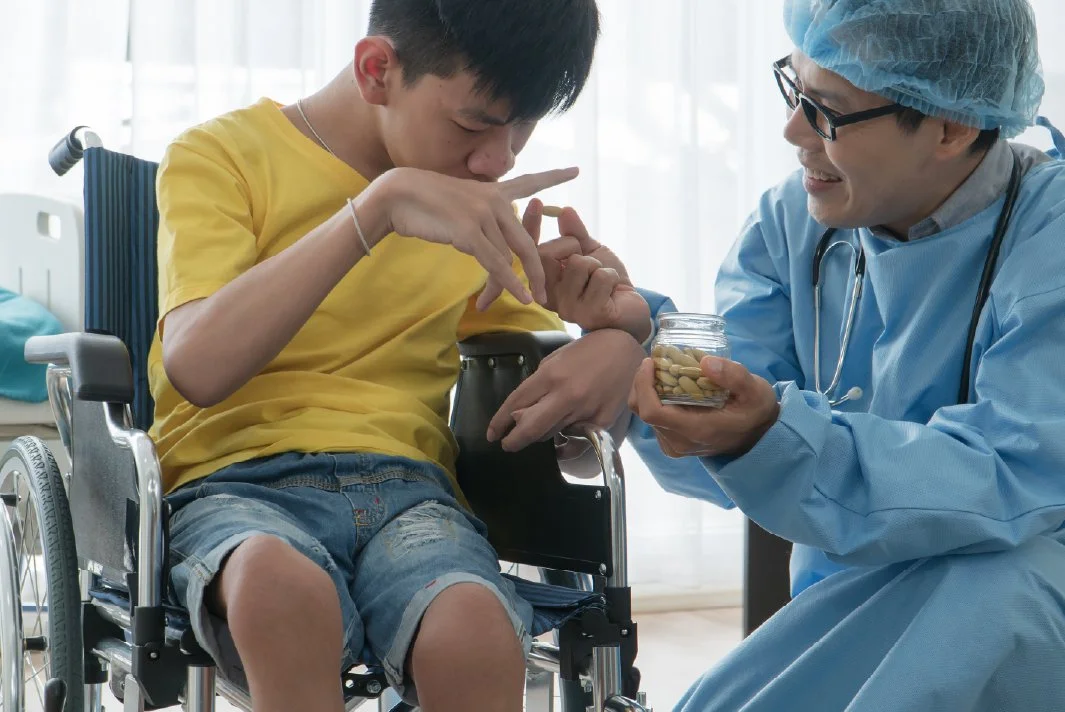
A patient with a disability arrives for care—and leaves feeling unheard, misunderstood, or inadequately treated. Not because the clinician lacks compassion, but because the system has not fully prepared them for the moment.
This scene plays out every day.
It is not the result of indifference. It is the result of a gap—one that sits quietly within healthcare education itself. Many professionals enter practice without the training, experience, or exposure needed to confidently care for people with disabilities. The consequences ripple outward: strained trust, uneven outcomes, and a persistent sense among patients that the system was not built with them in mind.
The scale of the issue is impossible to ignore. In the United States, approximately 1 in 4 adults—more than 61 million people—live with at least one disability (Centers for Disease Control and Prevention [CDC], 2023). Every healthcare professional, regardless of specialty, will care for patients with disabilities. In many settings, they already do—frequently and without the support they need.
This is not a niche problem. It is a defining challenge of modern healthcare. And it raises a simple but urgent question: What would it look like if healthcare professionals were truly prepared?
A Different Starting Point
Project DIME—Disability Inspired Medical Education—emerges from that question.
Rather than treating disability as a specialized topic or an optional addition to training, it reframes it as central to how healthcare professionals learn to care for people—period. Because when clinicians are equipped to care for patients with disabilities, they are better equipped to care for everyone.
At its core, Project DIME is less about adding content and more about changing perspective.
It brings together people with disabilities, healthcare professionals, educators, researchers, and community partners—not simply to improve knowledge, but to reshape how learning happens. It challenges a long-standing assumption in healthcare education: that expertise flows in one direction.
Instead, it insists on something both simple and transformative—people with disabilities are not just patients. They are teachers, advisors, and leaders. Their lived experience is not anecdotal; it is essential.
The Gap Beneath the Surface
For decades, healthcare education has struggled to keep pace with the realities of patient care. Students learn anatomy, pharmacology, and clinical protocols in depth. But when it comes to disability, the learning is often fragmented—brief lectures, isolated modules, or theoretical discussions that rarely translate into practice.
The result is predictable.
Healthcare professionals report feeling underprepared and lacking confidence when treating patients with disabilities (Iezzoni et al., 2021). Patients, in turn, encounter providers who may be well-intentioned but uncertain—unsure how to communicate, how to adapt care, or how to navigate complex needs.
This is not simply a failure of knowledge. It is a failure of experience.
Because competence in this space cannot be built through lectures alone. It requires interaction. It requires exposure. It requires learning directly from the people whose lives are shaped by these systems every day.
Rethinking How Professionals Learn
Project DIME approaches the problem from a different angle.
Instead of asking how to fit disability into existing curricula, it asks how to reshape education so that disability is naturally integrated into how professionals learn to care for patients.
That means moving beyond the classroom.
It means creating opportunities for meaningful clinical experiences with people with disabilities—not as rare encounters, but as a routine part of training. It means building sustained connections between healthcare institutions and disability communities. It means bringing disciplines together—medicine, nursing, dentistry, and allied health—so that learning reflects the collaborative nature of real-world care.
And it means something even more fundamental: shifting who holds authority in the learning process.
When people with disabilities are positioned as educators and leaders, the dynamic changes. Students are no longer learning about disability from a distance—they are learning from individuals who understand the system from the inside out.
Beyond Education Alone
Education is necessary. But it is not enough.
Healthcare professionals operate within systems—systems shaped by policies, accreditation standards, institutional priorities, and resource constraints. Even the most well-prepared clinician can struggle within a system that does not support accessible, individualized care.
Project DIME recognizes this complexity. Its work extends beyond curriculum development into the broader ecosystem of healthcare education and practice. It looks at how institutions implement change, how outcomes are measured, and how promising ideas can move from isolated programs into scalable, sustainable models.
It also acknowledges that many organizations are already doing important work in this space—developing competencies, advocating for policy change, and improving access. Rather than duplicating these efforts, Project DIME seeks to connect them, identify where gaps remain, and help translate ideas into practice.
Because the challenge is not a lack of awareness. It is a lack of integration.
The Human Side of the System
Healthcare today is under pressure. Curricula are crowded. Faculty are stretched thin. Systems prioritize efficiency, often at the expense of connection.
In this environment, even the most dedicated professionals can feel disconnected from the human experience of care.
Project DIME addresses this tension directly.
By elevating lived experience within healthcare education, it reconnects learning to the realities of patient care. It helps professionals develop not only clinical competence, but also the confidence and adaptability needed to respond to diverse patient needs.
At the same time, it aligns with broader shifts already underway—growing interest in interprofessional education, increasing emphasis on community partnerships, and new technologies that expand how learning can occur.
These are not obstacles. They are opportunities.
What Change Could Look Like
imagine a healthcare system where every professional enters practice having worked directly with people with disabilities—not as a rare exposure, but as a foundational part of their training.
Where disability is not treated as a specialized topic, but as an integral part of understanding patients.
Where people with disabilities are routinely involved in teaching, shaping curricula, and guiding research.
Where healthcare professionals feel prepared—not hesitant—when caring for patients with complex needs.
And where patients, in turn, feel seen, respected, and understood.
This is not an abstract vision. It is a practical one.
But it requires intentional change.
A Collective Effort
No single organization can transform healthcare education alone.
Project DIME operates with that reality in mind. Its role is not to replace existing efforts, but to connect them—to bring together educators, institutions, policymakers, researchers, and communities in ways that make change possible. It invites collaboration across disciplines and sectors.
It encourages institutions to experiment, evaluate, and refine new approaches. And it centers the voices of people with disabilities as essential to every step of the process.
Because meaningful change does not come from isolated initiatives. It comes from shared effort.
The Stakes—and the Opportunity
Each year, new healthcare professionals enter practice. Each year, many do so without the preparation needed to confidently care for millions of patients with disabilities.
That gap carries consequences—for patients, for providers, and for the system as a whole.
But it also represents an opportunity.
An opportunity to rethink how healthcare professionals are trained.
To build stronger connections between education and community.
To create learning experiences that reflect the realities of patient care.
And to ensure that people with disabilities are not just included in healthcare—but are shaping it.
Project DIME exists within that opportunity.
Not as a final answer, but as part of a broader movement to make healthcare more responsive, more inclusive, and ultimately, more human.
For more information on Project DIME please go to ProjectDIME.org.
About the Author
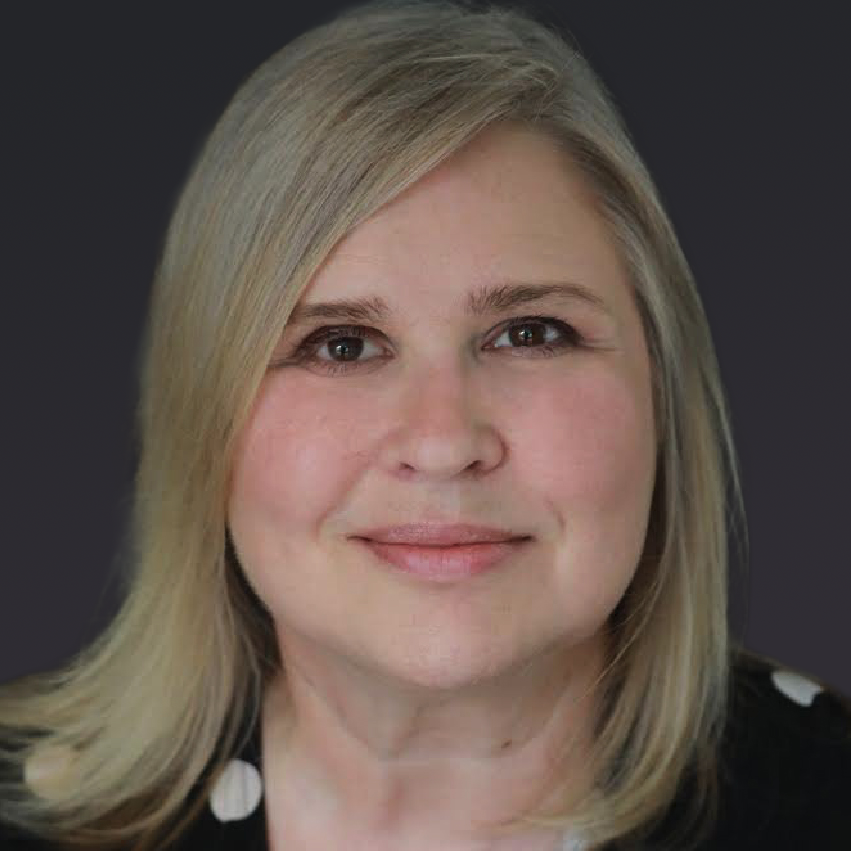
Vanessa Rastović, JD, is a disability and healthcare compliance professional whose work sits at the intersection of civil rights, health systems, and lived experience. She is the Founder of AccessLab, a disability-informed health access and compliance organization focused on helping healthcare systems move beyond minimum legal requirements toward meaningful inclusion and equity in practice.
She also serves as Vice President of First Domino Alliance, a nonprofit advancing inclusive workforce pathways and community-based health access initiatives, including peer-supported service models and practical solutions to persistent gaps in oral and primary healthcare for people with disabilities. Vanessa is a member of the Advisory Council for Project DIME (Disability Inclusive Medical Education), a national initiative working to improve medical and dental education through disability-informed training, clinical guidance, and systems change.
As a lawyer who also experiences disability, her work frames compliance as a tool for accountability, dignity, and better health outcomes. Outside of her professional work, Vanessa is an avid SCUBA diver who enjoys exploring shipwrecks and observing marine life up close.
References
Centers for Disease Control and Prevention. (2023). Disability impacts all of us. https://www.cdc.gov/ncbddd/disabilityandhealth/infographic-disability-impacts-all.html
Iezzoni, L. I., Rao, S. R., Ressalam, J., Bolcic-Jankovic, D., Agaronnik, N. D., Donelan, K., Campbell, E. G., & Lagu, T. (2021). Physicians’ perceptions of people with disability and their health care. Health Affairs, 40(2), 297–306. https://doi.org/10.1377/hlthaff.2020.01452