
Degrees of Access
Global Disabilities in Higher Education Part III
Summary: Parts I and II trace the historical marginalization of disabled students in U.S. higher education and the legislative milestones, such as the ADA, that have sought to increase accessibility. Part III examines global approaches, noting that while China uses a bifurcated system with growing accommodations and India faces challenges despite legal mandates, the UK is navigating a shift toward student-centered learning and improved access to higher education for those with intellectual disabilities. You can read the full analysis of these international approaches in the provided text.
Part I examines the historical societal perceptions and systemic exclusion of people with disabilities in U.S. higher education. Despite transformative disability rights laws, higher education institutions have been slow to implement inclusive practices. Part I traces the roots of exclusion from the Victorian era, where disabled individuals were often isolated and stigmatized, through the Industrial Revolution, which further marginalized them. It also discusses the rise of eugenics and its impact on educational access.
Part I highlights the emergence of the independent living movement in the mid-20th century, which challenged systemic barriers and led to the establishment of Centers for Independent Living. These centers provide essential services and support for students with disabilities. It also explores the evolving landscape of disability inclusion in higher education, from physical accommodations to curriculum design and campus community inclusion. Despite legislative mandates, cultural acceptance and meaningful inclusion have lagged, posing significant challenges for students with disabilities transitioning from secondary to postsecondary education.
Part II delves into the significant legislative and societal milestones that have shaped the journey towards inclusiveness in higher education for individuals with disabilities. It highlights the development of the Federal TRIO Programs, which support disadvantaged students, including those with disabilities. Part II examines the legislative foundation laid by the Rehabilitation Act of 1973, the Americans with Disabilities Act (ADA), and the ADA Amendments Act, which have been pivotal in advancing accessibility in higher education. Additionally, it discusses the impact of the Education for All Handicapped Childres Act (EHA) and its reauthorization as the Individuals with Disabilities Education Act (IDEA) on educational opportunities for students with disabilities. The section concludes by addressing the ongoing challenges and the need for sustained efforts to ensure that all students, regardless of their backgrounds or abilities, can succeed in higher education.
Introduction to Part III
Parts I and II concentrated on disability access in higher education within the United States. Part III examines disabilities in higher education from a global perspective. This article in no way includes all the initiatives in the worldwide movement to provide higher education to people with disabilities but to give a snapshot of what some other countries are doing.
China
It is estimated that there are 85 million people with disabilities in China, but only 37.8 million were registered with the official system maintained by the China Disabled Persons’ Federation in 2021 (Congressional-Executive Commission on China [CECC], 2023). Registration and receiving a disability certificate are required to receive public assistance. In China, the higher education landscape for students with disabilities is characterized by a bifurcated system that includes both specialized instructions and mainstream universities (Lei, 2018). Specialized colleges typically offer a limited array of vocational programs aimed at skill development, with visually impaired students often restricted to majors such as massage therapy and music. In contrast, mainstream universities provide a broader spectrum of academic disciplines—including law, translation studies, and engineering—but require applicants to pass the national college entrance exam, the gaokao. While access to mainstream institutions has historically been limited, recent policy reforms have expanded accommodations for disabled test-takers, including Braille exam papers, extended test durations, and exemptions from certain sections of language exams (2018). These measures, alongside pilot programs in inclusive education, reflect a growing commitment to integrating disabled students into the broader academic community and enhancing their educational opportunities.
India
Despite legal mandates such as the Rights of Persons with Disabilities Act (2016), disability inclusion in Indian higher education remains largely superficial, often confined to infrastructural adjustments and policy quotas (Mohan, 2025). The persistent underrepresentation of students with disabilities—who constitute only 0.2% of total enrollment—reflects deeper systemic issues rooted in societal stigma and institutional bias. These students are not absent due to lack of capability, but because universities frequently fail to cultivate environments conducive to their success (2025). Encouragingly, select institutions like IIT-Delhi, Ashoka University, and IIM-Bangalore are pioneering holistic models of accessibility, integrating inclusive pedagogy, campus-wide sensitization, and student-led innovation (2025).
United Kingdom
Students in the UK enjoy many benefits of university life, but these benefits are not available to people with intellectual disabilities (Carpenter, 2023). Only options in education are in specialist colleges, but not universities. Universities in the UK are behind the rest of the nation for students with intellectual disabilities and their acceptance and inclusion.
The principle that education is a universal right was first enshrined in Article 26 of the 1948 Universal Declaration of Human Rights. Yet, the question has long remained: what form should this education take, and in what settings should it be delivered? Nearly six decades later, the 2006 United Nations Convention on the Rights of Person with Disabilities expanded this commitment, affirming that all individuals are entitled to equal access to lifelong learning. Under this framework, member states carry a clear obligation to establish inclusive educational opportunities. The United Kingdom endorsed this vision by signing the Convention and formally ratifying it in 2009. In doing so, it accepted the responsibility outlined in Article 24 to ensure that inclusive education is available at every level of the system.
Within the United Kingdom, several higher education institutions have begun to embed inclusive practices in their academic and cultural environments (Carpenter, 2023). The Royal Central School of Speech and Drama, affiliated with the University of London, offers a two-year diploma specifically designed for students with intellectual disabilities. Similarly, the University of Winchester integrates inclusive arts through its partnership with Blue Apple Theatre, an initiative that situates an inclusive theatre company within the campus community. Opportunities for participatory research have also expanded, exemplified by projects such as Self-building our lives (Hall et al., 2019), alongside ongoing collaborations between faculty and doctoral researchers at the Centre for Research in Inclusion at the University of Southampton. Moreover, academic publishing has begun to reflect this shift toward accessibility, for instance, the British Journal of Learning Disabilities now requires abstracts to be provided in Easy Read formats, thereby extending scholarly communication to audiences with intellectual disabilities. Collectively, these developments suggest that while UK universities increasingly recognize the importance of funding inclusive initiatives, the establishment of fully integrated degree programs remains limited.
Recently, there was a shift in the UK as more students with disabilities are willing to self-report (Tang et al., 2024). Another paradigm shift has been a change from teacher-centered learning (TCL) to student-centered learning and teaching (SCLT) and inclusive environments in higher education. Withing the traditional TCL paradigm, instruction was typically characterized by the lecturer occupying a central position in the lecture hall—often described metaphorically as the “sage on the stage”—delivering structured content to students seated in passive rows. In this model, academics frequently identified more strongly with their disciplinary expertise than with the role of “teacher,” and the primary emphasis lay in the transmission of knowledge and information.
By contrast, SCLT foregrounds active engagement, conceptual change, and intellectual development through dialogic interaction between faculty and students. Here, the lecturer is reconceptualized as a “guide on the side,” facilitating learning processes rather than treating students as empty vessels to be filled. Samuelowicz and Bain (Tang et al., 2024) argue that TCL and SCLT are best understood along a continuum, a claim supported by their semi-structured interviews with academics across multiple disciplines. Their initial study identified five orientations in teaching and learning beliefs, later expanded to nine in a subsequent investigation. Across both studies, they provide qualitative evidence that these orientations cluster into two dominant categories: teacher-centered and learning-centered approaches.
The recent shifts are beginning to strengthen neurodiversity within the UK higher educational system. While the UK has much left to improve the acceptance of neurodiversity in the university classroom, things are beginning to change (Tang et al., 2024).
Canada
Inclusive education has become a prominent feature of Canadian schooling: however, this commitment is not consistently reflected in teacher preparation at the university level (McCrimmon, 2015). Only a small number of Canadian institutions require undergraduate teacher candidates to complete coursework focused on inclusive education, and the limited offerings that do exist often fall short of equipping future educators to effectively support learners with diverse and complex needs in inclusive classroom settings. One promising approach to addressing these gaps is the development of specialized postgraduate certificate programs that provide advanced training in childhood disorders and evidence-based, classroom-focused interventions (McCrimmon, 2015). Such programs have the potential to strengthen teachers’ capacity to design and implement instructional practices that enhance the educational experiences of students with learning disabilities within inclusive environments.
Canada hosts a wide range of initiatives supporting inclusive education, with Alberta standing out as a leader in this field (Carpenter, 2023). The University of Alberta established one of the earliest programs of its kind in 1987, setting a precedent that has since inspired the creation of roughly twenty more programs across the province.
Although all Canadian jurisdictions acknowledge the essential role that classrooms play in fostering an inclusive society, each province and territory has developed its own approach to inclusive education in response to local priorities and conditions (Specht, 2013). Decentralized evolution has produced substantial variation in policy and practice across the country, resulting in limited opportunities for shared learning or coordinated development among jurisdictions. Canadian educators are recognizing the importance of policies like the IDEA and others in the United States. In 2013, a group of researchers began meeting to collaborate on different systems within Canada to see if a unified approach to inclusive education would be possible in Canada (Specht, 2013). No research could be located on the progress of this initiative.
European Network for Inclusive Education
Recent developments across Europe have culminated in the establishment of the European Network for Inclusive Education, a consortium designed to advance research and practice in equitable learning. Member institutions span Austria, Ireland, Iceland, Germany, Spain, and Switzerland, collectively representing a diverse set of higher education contexts. These universities have distinguished themselves by critically interrogating and moving beyond entrenched ableist paradigms and the pervasive influence of neoliberal policy frameworks. In doing so, they have created space for inclusive pedagogical models that foreground equity, participation, and social justice within higher education systems (Carpenter, 2023).
United Nations Convention on the Rights of Persons with Disabilities
Article 24 of the United Nations Convention on the Rights of Persons with Disabilities (UNCRPD)—ratified by the vast majority of UN Member States—establishes a clear entitlement to inclusive higher education for persons with disabilities, including individuals with intellectual disability (ID) (O'Callaghan et al., 2025). Despite this mandate, the inclusion of students with ID in tertiary education remains insufficiently examined in academic research. 185 countries have ratified the UNCRPD, which makes this a significant right relevant to universities (O'Callaghan et al., 2025).
A subsequent resolution, The Right to Education of Persons with Disabilities, further elaborates the obligations of States in advancing inclusive education (United Nations General Assembly Human Rights Council, 2014). It calls for concrete measures to ensure the participation of persons with disabilities in mainstream tertiary education, vocational training, adult education, and continuing education. This includes adopting proactive and supportive policies that enable access to these opportunities—particularly for individuals who were previously excluded from primary or secondary schooling—and doing so without discrimination and on an equal basis with others (United Nations General Assembly Human Rights Council, 2014).
Recent jurisprudence in the United States and Canada (Bell & Jacobs, 2023; Jacobs, 2023), alongside key decisions from the European Court of Human Right (Cam v. Turkey, 2016; Enver Sahin v. Turkey, 2018), has increasingly addressed the rights of students with disabilities in higher education—particularly in relation to equitable admissions processes and the provision of reasonable accommodation. Taken together, these developments underscore the growing legal scrutiny surrounding access to tertiary education for learners with disabilities. They also highlight the urgent need for deeper engagement with the UNCRPD and its implications for higher education systems, especially regarding how institutions interpret and implement their obligations toward students with disabilities.
Summary
Part III expands the discussion of disability and higher education beyond the United States, offering a comparative look at how several countries and regions approach inclusion. While global progress is evident, access to higher education for people with disabilities—especially those with intellectual disabilities—remains uneven and often limited.
China’s system is described as bifurcated, with specialized vocational colleges and mainstream institutions has expanded through reforms such as Braille exams and extended testing time. Recent policy reforms have expanded accommodations for disabled test-takers.
Despite strong legal frameworks, India’s inclusion in higher education is described as largely superficial. Enrollment of disabled students remains extremely low (0.2%), due to stigma and institutional barriers. However, a few universities—such as IIT-Delhi and Ashoka University—are developing more holistic accessibility models.
The UK offers many inclusive initiatives, but people with intellectual disabilities remain largely excluded from university-level study. Some institutions, such as the Royal Central School of Speech and Drama and the University of Winchester, are creating innovative programs. A shift from teacher-centered to student-centered learning, noting that SCLT “foregrounds active engagement, conceptual change, and intellectual development.”
Canada promotes inclusive education broadly, but teacher preparation programs often lack required coursework in inclusive education. Alberta University is highlighted as a leader, with over twenty inclusive programs. Also, each province and territory has developed its own approach, resulting in significant variation and limited national coordination.
A consortium of universities across Europe is working to challenge ableist structures and promote equity-driven pedagogies. These institutions are moving beyond entrenched ableist paradigms to advance inclusive higher education research and practice.
The United Nations Convention on Human Rights establishes a global right to inclusive higher education, including for people with intellectual disabilities. Although 185 countries have ratified the UNCRPD, research on inclusion of students with ID remains limited. The resolution requires states to adopt proactive measures to ensure access to tertiary, vocational, and adult education without discrimination and on an equal basis with others.
Legal cases from the U.S., Canada, and Europe increasingly address discrimination in admissions and accommodations. These cases highlight the urgent need for deeper engagement with the UNCRPD and its implications for higher education systems.
Although individuals with intellectual disabilities have long been excluded from participation in university life, the past thirty years have seen the emergence of programs in several countries designed to support their inclusion in higher education. Despite this growth, research examining the breadth of possible outcomes for students with intellectual disabilities enrolled in such initiatives remains limited. Existing studies seldom investigate the specific barriers and enabling factors associated with different program models, nor do they fully consider how these elements shape the achievement of intended outcomes.
About the Author
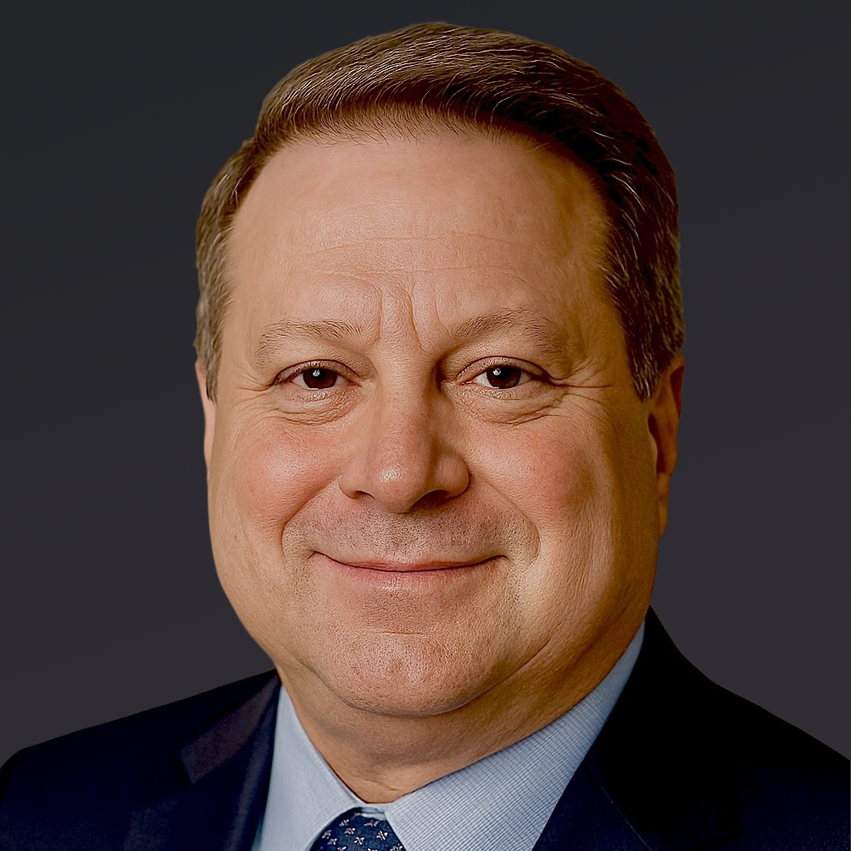
David Cox, EdD, MBA Assistant Director of Case Management, Orange Grove Center, Chattanooga, TN Disabilities and Higher Education Editor
Inspired by his sister, who is a member of the IDD community, David has worked in residential services for people with IDD, case management, and compliance. He is a part-time professor at the University of Tennessee at Chattanooga, and holds a Doctor of Education in Higher Education Leadership and Organizational Studies.
He works with the Chattanooga Police Department as an advisor for Crisis Intervention Teams on working with people with IDD. His research interests are autism, sensory processing disorders, dementia, and community engagement for people with disabilities. He has served as Vice President of American Association of Multi-Sensory Environments; Board of Directors of The Arc Tennessee; as a Gallup Certified Strengths Coach; as a Certified Special Olympics Coach and as a Member of People First Tennessee.