
From Awareness to Action
The Story of the AADMD In Lagos, Nigeria
Summary: Dr. Mustapha Madehin Oluwatosin chronicles his journey from a concerned student to a leader in inclusive healthcare, driving the AADMD-CMUL chapter to transition from awareness to calculated action for individuals with developmental disabilities. Key achievements included hosting a pivotal webinar on systemic advocacy and launching the “Know Your Body” initiative, the first integrated multidisciplinary health outreach in Lagos.
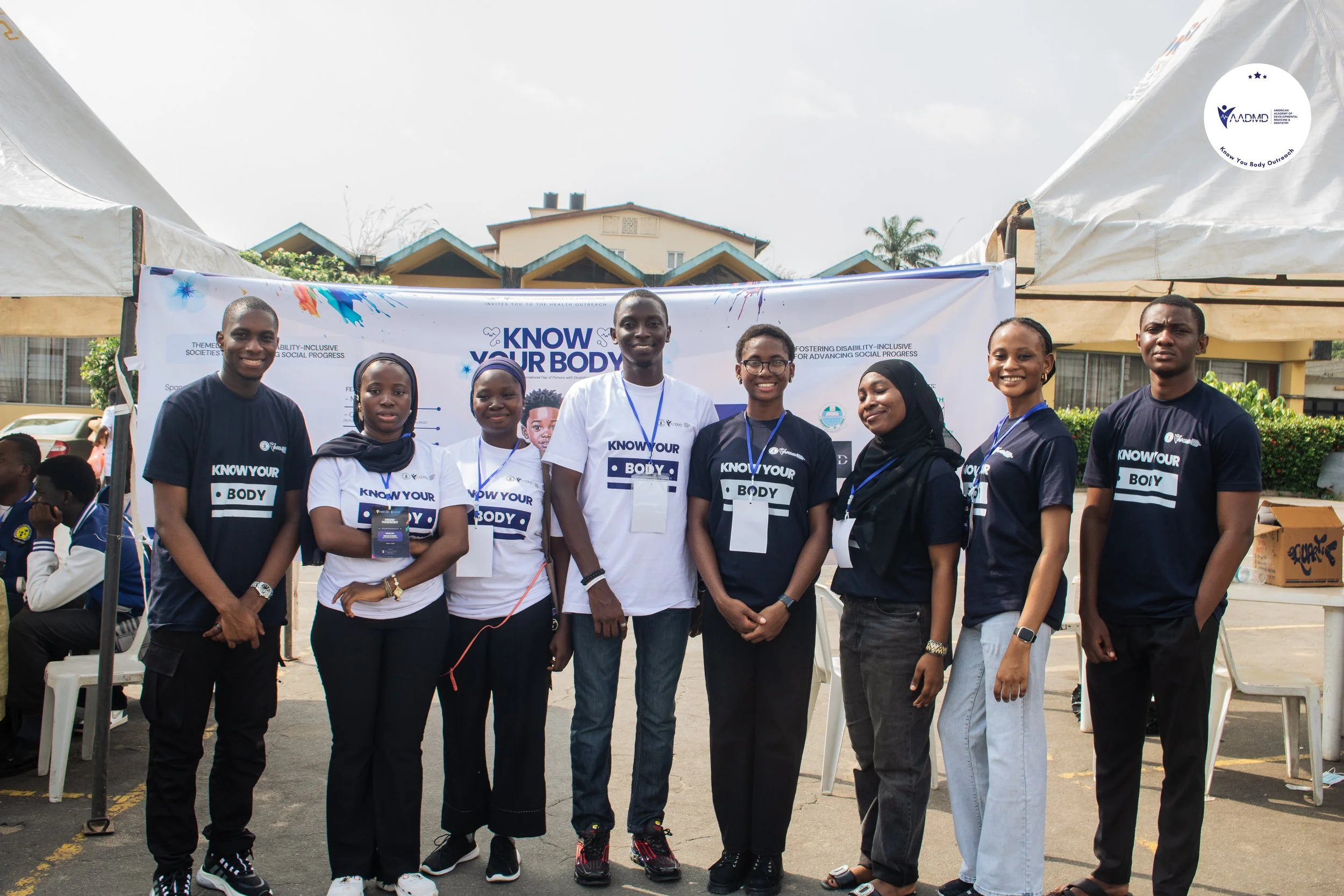
The author with his classmates.
Person — what makes a person? the soul? the body? the mind?
These were the first things I wondered while in my first year of college when I joined a students’ group on an excursion to visit a Home that catered to the care of persons with neurodevelopmental disorders. It was the first time I met such different individuals (most common conditions were Cerebral Palsy, Down Syndrome, Hydrocephalus, Nonverbal Autism, and Physical Disability) because that was what my mind said, they are like me, just unique in their own way.
I listened to the stories shared by the housekeeper as she narrated different scenarios that led to the children being taken in by the Home. Stories of abandonment, stories of physical and psychological cruelty to these children, and stories borne by LACK, the lack of knowledge, the lack of education, the lack of finance. While we took a tour round the facility, something stirred in me seeing the living conditions of these children and their caregivers. After sharing relief materials, I went back on the journey, mindful and reflecting. I wanted to learn.
The need to understand the reason - why? how?
I began to read. I searched about these conditions and then read about them, but still I wondered why care for them was very fragmented and almost neglected, based on my observation and understanding. I embarked upon a couple more of such visits to these Homes through my 2nd to 4th year in Medical school.
Still, I made sure I read more about these conditions. I spent time on YouTube and Instagram watching videos of neurotypical individuals and the things that they could do with their differences, in talent, in skill, in learning and in developing solutions.
It was then, in my 5th year, that I was introduced to the AADMD and a Chapter was birthed in my college, with me being appointed as the Program Development Director.
Is there a problem? Is there a solution? What is it? Where is it?
As a person, I’ve always asked questions and thankfully, I’ve somehow also found answers or paths to the answers. It is hardly ever linear.
Being exposed to so much information about Intellectual and Developmental Disabilities at the start of my tertiary education was a huge part in ensuring that I could be part of a solution. I had observed the lives of those whose families maintained the sanctity of family and chose to love and care for their children. I had also observed those who thought it would be too difficult to associate themselves with their own children, I’ve made the assumption that finances must have been the issue. We have heard terrible stories of infanticide.
One thing that I’ve always felt was possible is the ability to provide tailored healthcare services to these individuals and education to the professionals who would make it possible. This started my journey in the AADMD-CMUL and has made it beautiful thus far.
I’ve always loved to make things happen and so, the roles of Program Development Director and President made it possible for me to lead, direct, and serve.
My mission was to create a team of individuals that would remain committed, innovative, and driven. I felt that this was necessary to pass our message to our community of medical students who naturally, only sympathize with this community, rather than empathize, respect and build structural support.
AWARENESS was a key aspect of our activities. We had to create content, designs, exploring our non-existent thespian talent just to make sure that the message wasn’t misunderstood. The mission was simple; WE HAVE TO REMAIN IN THE FACES OF PEOPLE TO THRIVE. Every month, we made sure there was a message from us. For some months, I had to be the one who would create the designs.
Beyond Awareness, I am very particular about calculated action. This led me to seek institutional support. I planned visits with the University, College Stakeholders, and the State Government, ensuring that our very long name got to the ears and eyes of everyone. This step proved very good for us in providing advice and guidance and throughout the year 2025, it was very helpful towards our projects. In making these collaborations possible, the effort, love and passion of the AADMD Team to make things easy for us, cannot be overstated. I sincerely have to thank Dr. Dian Chin Kit-Wells and Dr. Vincent Siasoco. This story is incomplete without them.
Awareness To ACTION
Action then took shape in one of our most defining academic engagements of the year. Our Webinar focused on the intersections between neurodiversity, Intellectual and Developmental Disabilities, healthcare professionals, advocacy, and the Sustainable Development Goals. It was not just another virtual event; it was a carefully thought-out response to a question we had constantly asked ourselves; how do we move from sympathy to systems? From intention to structure?
The journey to that webinar was not straightforward. It was postponed more than once, from April to August, and finally to November. Each shift came with its own frustrations: academic pressures, coordination challenges, and the constant fear that momentum would be lost. But something held us together, a quiet conviction that the conversation was necessary. And when it finally held, it brought together voices across disciplines, aligning our local realities with global frameworks. It reminded us that inclusion is not accidental; it is designed, advocated for, and sustained.
If the webinar was our voice, then the “Know Your Body” Multidisciplinary Health Outreach was our action. It was, to the best of our knowledge, the first outreach of its kind in Lagos, and perhaps Nigeria, designed specifically to provide integrated medical, dental, physiotherapy, and mental health services for persons with Intellectual and Developmental Disabilities and their caregivers. It was our attempt to answer the question: what does inclusive healthcare look like in practice?
The process tested everything we had built. Funding was uncertain. Team capacity fluctuated. There were days when it seemed easier to scale down the vision. But we held on to the idea that these individuals deserved more than fragmented care. On the day of the outreach, over 150 people came together in a space that was intentionally designed to be safe, inclusive, and multidisciplinary. People were seen, screened, referred, and most importantly, valued. Caregivers asked us, “When next?” and in that moment, we knew that this was not just an event, but the beginning of something that must continue.
And so, I return to my first question — what makes a person?
Over the years, I have come to understand that it is not perfection of the body, nor completeness of function, nor conformity of the mind. It is dignity. It is identity. It is the quiet, unwavering truth that every individual, regardless of ability, deserves to be seen, to be heard, and to be cared for, intentionally.
My journey with AADMD-CMUL has shown me that inclusion is not a concept we simply agree with; it is a responsibility we must design for, advocate for, and build into our systems. It is in the classrooms where future professionals are trained, in the clinics where care is delivered, and in the policies that determine who has access and who does not.
This work is far from complete. In many ways, it is only the beginning.
But I am certain of this: there are people, students, professionals, caregivers, advocates, who are willing to ask the difficult questions, to challenge the gaps, and to create solutions where none seem to exist. I have been privileged to be one of them, and even more privileged to work with others who believe just as strongly.
The future of healthcare must be inclusive. And if it is to be so, then we must continue — to learn, to build, to serve, and to act.
About the Author
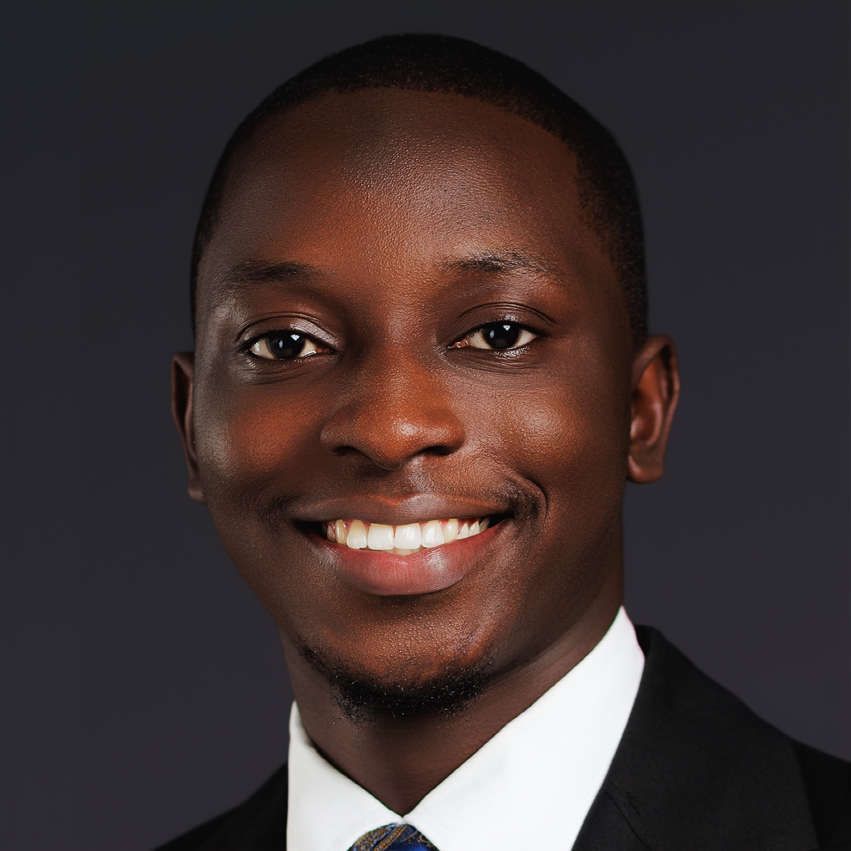
Dr. Mustapha Madehin, BDS is a Dentist trained at the College of Medicine, University of Lagos. He led The KB KLUB as President in 2024, directing 15 community health projects. He started the Your Power to Gift Life campaign in 2023 with the KLUB, which has mobilized about 1,300 pints of voluntary blood donations, across 10 drives between 2023-2025. He chaired the American Academy of Developmental Medicine and Dentistry in the College (AADMD-CMUL Chapter) in 2025, advocating and acting for improved access and quality of care for persons with intellectual and developmental disabilities, and hosting the first multidisciplinary Health Outreach for these persons by a student organization.
A 2021 UNAI Millennium Fellow, Dr. Mustapha co-founded the Revive Earth Initiative to advance Climate-Health Education and champion Sustainability. He remains active in Mental Health awareness, Oral Health outreach, and Health Systems strategy. Entrepreneurial and creative, he runs KINGS’ FEET Footwear and aims to build a career at the intersection of clinical practice, health policy, and systems leadership.