
The Gift I Get to Give Back
By Iva Ballou
Summary: Iva Ballou reflects on growing up with a bilateral cleft lip and palate and discovering that medical care alone could not provide the sense of belonging she needed. Connecting with others who shared similar experiences offered a deeper kind of understanding and support.
That experience now shapes her work with Smile Train and Cleft Con, where she helps create intentional spaces for people in the cleft community to connect, share their stories, and feel understood.
Her message is about giving back what she once needed most: community, affirmation, and a place to belong.
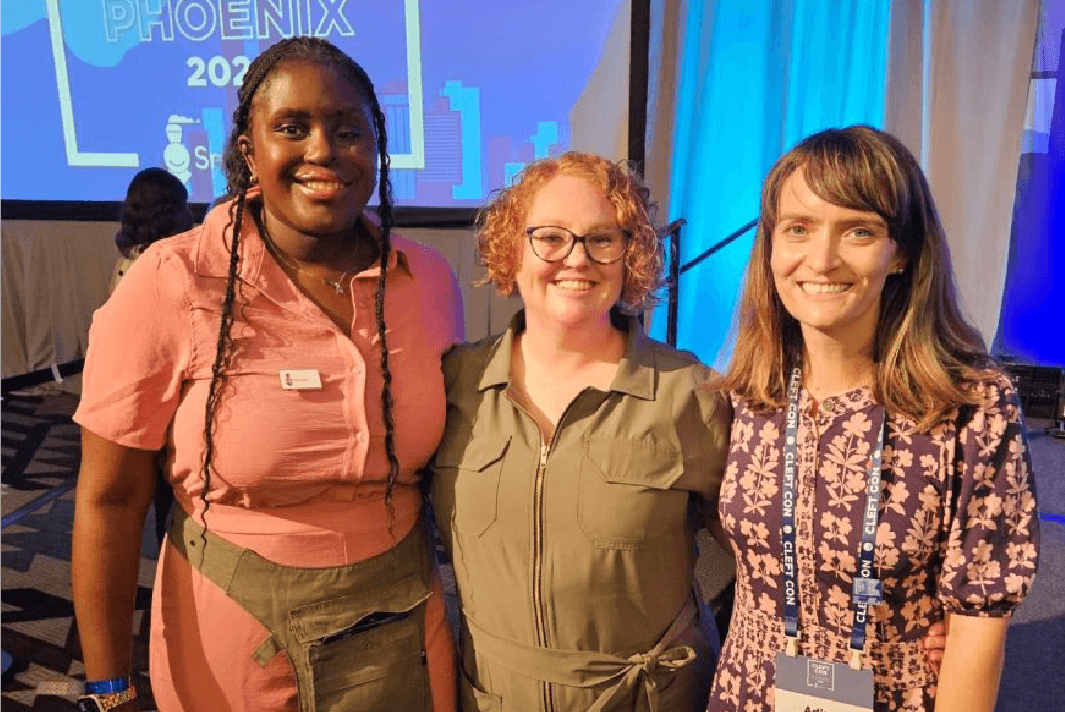
The author with her colleagues.
Every year before Cleft Con, I get nervous.
As the Senior Community Development Manager at Smile Train, the world’s largest cleft organization, I spend months planning it, thinking through sessions, talking with speakers, and considering everything down to the smallest details. And then, as we get closer, the same thought inevitably creeps in: What if they don’t like it? And if I am completely transparent, somewhere underneath that question is another one: What if they don’t like me?
I know Cleft Con is not a personal reflection on me. It isn’t supposed to be. It belongs to the cleft community. But when you put so much of yourself into creating something, it can become difficult to separate the two. Cleft Con has become deeply personal to me because, in many ways, I see it as my gift back to the community and my gift back to Little and Teenage Iva.
I was born with a bilateral cleft lip and palate. So, while I professionally work in the cleft community, helping create programs and spaces for people affected by cleft, I also live this experience. Those two parts of me can’t really be separated. And I don’t think I want them to be.
Eventually, You Leave the Clinic
People born with clefts can spend years interacting with the healthcare system. There are surgeries, dental appointments, speech therapy, insurance battles, orthodontics, and countless other appointments, depending on someone’s individual journey. That care is incredibly important. But eventually, you leave the clinic and you must go live your life. You must go to school. Make friends. Date. Interview for jobs. Build relationships. Develop confidence. Navigate people’s questions. Look in the mirror. Figure out who you are. And you have to do all that while carrying whatever emotions have become attached to your journey along the way. Some of those emotions you understand immediately. Some take you years to understand. And some you don’t realize you’re carrying until something unexpectedly brings them back to the surface. That’s part of why I believe so deeply in community.
Medical care can address so many important parts of living with a cleft, but there are parts of this journey that don’t fit neatly into a treatment plan. Sometimes what you need is simply another person who gets it. Cleft Con is Smile Train’s twice-annual gathering for people with clefts and their families. We gather in person each year in the United States, then, through Virtual Cleft Con, we are able to extend that same spirit of connection to members of the global cleft community who may never be able to join us in person. On paper, Cleft Con is a conference. But I have never wanted it to simply feel like one. Whether someone is walking into the room or logging in from thousands of miles away, I want them to feel like they belong.
Welcome to the Family Reunion
This year’s Cleft Con theme was Family Reunion, and I loved it from the beginning because I immediately thought of my own family reunions and how much I enjoyed them growing up. There was something about coming together, eating together, laughing together and simply knowing: These are my people. That’s what I wanted people to feel at Cleft Con. And I didn’t want “Family Reunion” to just be a theme we put on a sign. I wanted it woven throughout the experience. Even something as small as lunch mattered to me. We intentionally created a family-reunion style lunch because we know you can’t just tell people they’re family. You need to make them feel it. At the end of Cleft Con, I shared a memory about leaving my grandparents’ house. I talked about looking back and seeing my grandparents standing on their porch, waving goodbye as we drove away. It was a simple memory. Afterwards, so many people came up to me and told me how much they related to it. That stayed with me. Because sometimes community isn’t created through some huge revelation. Sometimes someone tells a story about their grandparents waving from the porch and suddenly you’re thinking about your grandparents, too. For a moment, someone else’s story feels a bit like yours. Those are the moments I want Cleft Con to make room for.
The Community I Needed Growing up, I didn’t have Cleft Con.
Sometimes I wonder what Little Iva would have thought walking into a room filled with other people with clefts. What would she have thought seeing adults with clefts leading conversations, building careers, falling in love, raising families, laughing loudly, taking up space, and simply living. What would it have meant for her to meet other children who understood certain things without her having to explain them first? I don’t know. But I think she would have felt seen. And maybe that’s part of why I care so much now. Children with clefts grow up. We become adults with clefts. The questions change, but that doesn’t necessarily mean the need for community disappears. As adults, we may be navigating relationships, careers, additional procedures, self-advocacy, confidence, identity or simply what it means to live in a world where facial differences are still often misunderstood. Cleft Con itself has made me think about parts of my own journey differently. It has helped me heal feelings and experiences that I didn’t necessarily know still needed healing. That is one of the beautiful things about being in community. But it is also one of the things we have to handle with care.
Our Stories are Ours
There is something I tell all Cleft Con speakers that is extremely important to me. I thank them for being willing to share their stories on the Cleft Con stage, but I also remind them: Your story is your story. You have the right to share it when and how you are ready. Being in a room with people who understand your experience can be incredibly freeing. It can also leave you emotionally open, raw, and vulnerable. A session can unlock a memory. Someone else’s story can bring you back to your own. You can find yourself thinking about something that you haven’t thought of in years. And in a space where you finally feel understood, there can be a temptation to give the room everything. I never want anyone to share something on the Cleft Con stage that they are not ready to carry with them afterward. Our journeys are personal. There can be years of emotion tied to surgeries, childhood experiences, relationships, interactions with strangers, medical appointments, appearance, and things that perhaps we haven’t even named yet. All of it deserves to be honored.
Community Has to be Built on Purpose
I have learned that meaningful community doesn’t happen simply because you put people with a shared experience in the same room. You have to create the conditions for connections. And that requires listening. A mom holding her six-month-old baby with a cleft may need something completely different from a teenager with a cleft. A 35-year-old adult may be asking questions that they never had the opportunity to ask when they were 15. Someone attending their first Cleft Con may need something different from someone who attends every year. All of them belong. That is why I am always listening. Sometimes the community tells us what it needs through formal feedback. Other times it’s a hallway conversation, something a parent says after a session, a question from an adult with a cleft or a teenager saying, “Why don’t we ever talk about this?” I am listening for those moments because lived experience is not one story. I may have a cleft, but my experience does not represent everyone with a cleft. The goal isn’t to find one person who can tell the cleft story. There isn’t one. The goal is to create enough space for all our stories. And there are still so many conversations I want us to have.
A Living, Breathing Thing
One of the things that excites me most about Cleft Con is that I don’t know exactly what it will look like five, ten or fifteen years from now. I have ideas. Lots of them! There are sessions I want to do and topics I know we have yet to explore. But Cleft Con can’t become simply what I want it to become. It has to grow alongside the community it serves. I often say that Cleft Con is a living, breathing baby, well toddler now, that I am simply helping raise. It wasn’t my brainchild. The vision came from Adina Lescher and Troy Reinhart, senior leaders at Smile Train, and I am incredibly grateful that they entrusted me with something that has become so special and precious to me. My responsibility is to help cultivate it. To protect it. To listen. To know when to change something. To make sure new voices continue to find their way into the room. And to remember that no matter how personally connected I have become to Cleft Con, it belongs to the community.
What Goes Home with You
Eventually, Cleft Con ends. People pack their bags. The conference rooms empty. Families exchange phone numbers and social media handles. People hug goodbye and start talking about when they'll see each other again. And I finally exhale. After spending all that time wondering, what if they don't like it? I get to watch people leave with connections that didn't exist when they arrived. Maybe a teenager goes home knowing they aren't the only person who has felt a certain way. Maybe a parent leaves with a little less fear about their child's future because they spent the weekend watching adults with clefts live full, complicated, ordinary lives. Maybe an adult who has spent years feeling disconnected from the cleft community realizes there is still a place for them. Maybe someone simply leaves with a new friend. Those things can be difficult to capture on a spreadsheet. But they matter. For a few days, having a cleft isn't the thing that makes you different in the room. It is one of the things connecting you to everyone else. You don't have to explain yourself before you can belong. And every year, that reminds me why I care as much as I do. Yes, I want the sessions to be good. I want the speakers to feel supported. I want the food to be right. I want people to laugh and learn and have a good time. I will probably always worry about the little details more than anyone attending will ever know. Because underneath the schedules, speaker calls, emails, meals and all those tiny details is something much simpler: I care. Managing Cleft Con is an honor, a joy, and a privilege. It is something I take immense pride in. And somewhere in every Cleft Con is Little Iva, too. The little girl who didn't have a room like this. Now I get to help create one for somebody else. I don't know exactly what this living, breathing thing will become over the next five, ten or fifteen years. I just know that for however long I have the privilege of helping raise it, I want to take good care of it. Someone entrusted this gift to me. And now I get to give it back.
About the Author
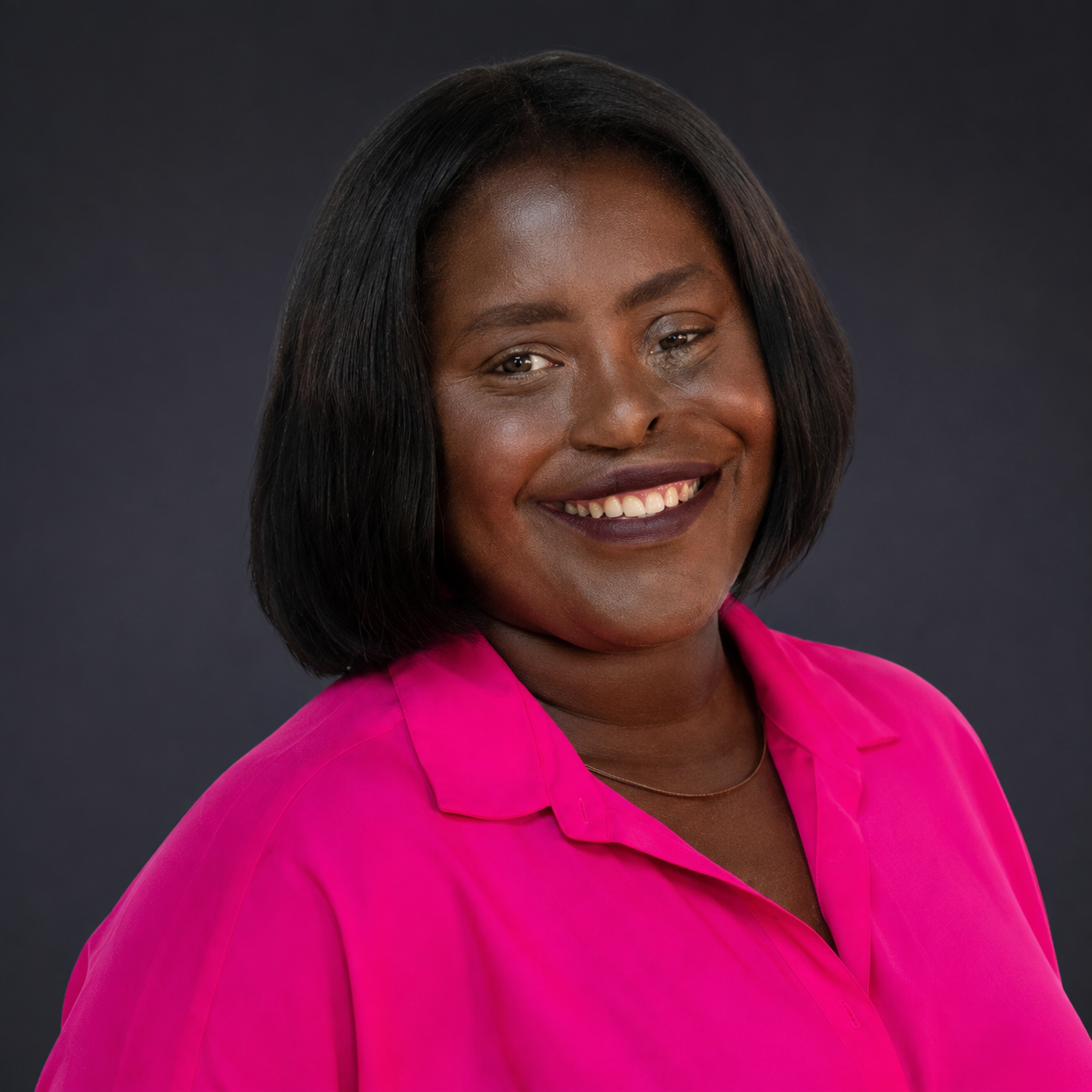
Iva Ballou is Senior Community Development Manager at Smile Train and was born with a bilateral cleft lip and palate. In this piece, she reflects on Cleft Con, the community she once needed herself, and what it means to create spaces where people with clefts can belong without having to explain themselves first.