
When the Supports Around Olmstead Shift
What Federal Policy Changes Mean for Community-Based Care

The honest answer is complicated. Nothing that has happened recently overturns Olmstead v. L.C., repeals the Americans with Disabilities Act, or takes away anyone’s right to live in the community. But the concern isn’t misplaced either.
That’s because the right to live in the community was never protected by just one law or court case. It was built the way most lasting systems are built – in layers, over time. Civil rights protections, Medicaid funding, federal enforcement, rules and standards…each one was added on top of the last.
That’s exactly why the recent changes matter. Something built in layers can also be taken apart in layers — one piece at a time, without any single moment that looks like the right disappearing.
This article looks at four changes: a Supreme Court decision called Loper Bright, big cuts to Medicaid funding, a new legal opinion from the Department of Justice (DOJ) about Olmstead, and a pending court case called Texas v. Kennedy. Each one affects a different part of the system. None of them, by itself, changes everything. But together, they raise real questions about how community living will be paid for, enforced, and protected in the years ahead. Those questions deserve a clear answer — without panic, and without pretending the risk isn’t real.
How Community-Based Care Took Shape
HCBS didn’t come from one law, one rule, or one court case. Table 1 shows the key moments that shaped it. The system was built slowly, one piece at a time.
Medicaid was not originally designed with home- and community-based care in mind. Nursing facility care has long been a required Medicaid benefit, but in the program’s early years, states had no comparable way to use Medicaid funds for services in a person’s own home. That began
to change when Congress created Section 1915(c) waivers. For the first time, states could use Medicaid funding for personal assistance, supported living, respite, and other community-based services instead of relying almost entirely on institutions.
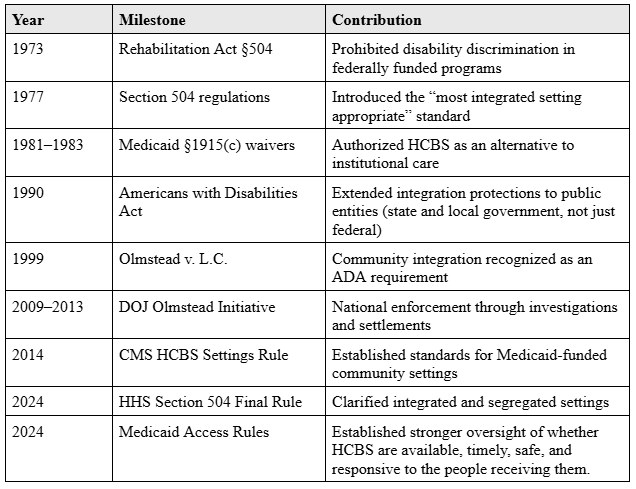
Table 1. Key Milestones in the Development of Community Integration
Civil rights protections developed alongside that funding structure. Section 504 of the Rehabilitation Act of 1973 prohibited disability discrimination in programs receiving federal funds. Regulations issued in 1977 required those programs to provide services in the “most integrated setting appropriate.” In 1990, the Americans with Disabilities Act extended similar protections to programs and services of state and local governments.
But a right written into law does not automatically become a right people can exercise in practice. Lois Curtis and Elaine Wilson, two women in Georgia, remained in a state psychiatric hospital even after their own doctors said they could safely live in the community. In 1999, the Supreme Court sided with them in
Olmstead v. L.C. The Court ruled that keeping someone in an institution when they don’t need to be there can be a form of discrimination (specifically, a violation of the ADA).
Olmstead gave legal force to the right to live in the community. But a right on paper isn’t the same as a right you can use. People also needed funding, clear standards, someone to enforce those standards, and a system that could actually deliver the services.
Beginning in 2009, the Department of Justice made Olmstead enforcement a national priority. Through investigations, lawsuits, settlements, and court filings, the DOJ challenged unnecessary institutionalization and pressed states to strengthen their community-based systems. That enforcement mattered because it gave states a reason to act: the federal government was not simply stating a principle; it was holding systems accountable for putting that principle into practice.
In 2014, CMS — the federal agency that oversees Medicaid — issued the HCBS Settings Rule. It set new standards for what a Medicaid-funded community setting has to look like. In 2024, HHS updated its Section 504 rules and finalized two new Medicaid “Access” rules, meant to help states keep enough providers available and help people actually get the services they qualify for. Since then, though, CMS has delayed enforcing some of the Access Rule’s requirements.
The takeaway here is that the HCBS system we know today did not develop by accident. It was built through the combined force of civil rights law, Medicaid funding, state policy choices, federal regulations, enforcement, and decades of advocacy by people with disabilities and their families.
But a system built one layer at a time can also be weakened one layer at a time.
Four Changes, One System
Courts don’t automatically trust federal agencies anymore
In 2024, the Supreme Court ruled on a case called Loper Bright Enterprises v. Raimondo. That decision overturned a 40-year-old rule called the Chevron doctrine. Under Chevron, if a law was unclear, courts usually went along with how a federal agency interpreted it, as long as that interpretation was reasonable. Loper Bright ended that. Now courts have to decide for themselves what a law means, using their own judgment.
This doesn’t change the Olmstead decision or any existing rules. But it removes something that makes longstanding rules feel solid and protected: courts no longer have to trust an agency’s expertise just because the agency has interpreted the law the same way for years; agencies are not owed the benefit of the doubt. That means regulations such as the HCBS Settings Rule, and the Medicaid Access Rules can be challenged in court more easily than before.Medicaid is under more financial pressure
A federal budget law signed in July 2025 is expected to cut federal Medicaid spending by a historic amount over the next ten years. States don’t have to respond by cutting HCBS, and some may choose not to. But they’ll still face hard budget choices because nursing facility care is a required Medicaid benefit, and most HCBS programs are optional. When money gets tight, optional programs tend to become very vulnerable.
This is where the legal and financial pressures meet. Many states already have workforce shortages, long waiting lists, and provider capacity problems in their HCBS systems. Some states may not be able to replace lost federal money with their own funds. This puts the financial support behind community-based care at risk, which inadvertently puts the legal right to live in the community at risk…because the right doesn’t mean much if the services that make it possible aren’t actually there.DOJ has backed away from its own legal position
The third change is a memo from the DOJ’s Office of Legal Counsel. On June 18, 2026, that office said that Section 504 and Title II of the ADA don’t require the kind of broad community integration that federal agencies have enforced for decades. The memo doesn’t say Olmstead was decided wrong, and it doesn’t say people have no right to avoid unnecessary institutionalization. It agrees with Olmstead’s core point: keeping someone in an institution when they don’t need to be is a form of discrimination. But it argues that DOJ, and some courts, have stretched that ruling further than the Supreme Court intended.
A month later, the DOJ issued public notice in the Federal Register that said its 2011 Olmstead guidance can no longer be treated as enforceable. None of this changes the ADA, overturns Olmstead, or removes any rule. What it changes is how far the federal government is willing to go to enforce those protections.
In plain terms: the agency that has spent 25 years pushing states to meet their obligations is signaling that it may step back.A pending lawsuit could make that shift permanent
The fourth change is Texas v. Kennedy, a lawsuit challenging part of HHS’s 2024 Section 504 rule. The states suing argue that Congress never gave HHS the authority to define what counts as a “segregated setting,” or to require the level of community integration that is outlined in the updated rule.
Both sides have to explain their case to the court. The states asked the judge to consider the DOJ's new legal opinion, and the judge allowed it. In effect, the states are arguing: “HHS went too far — and now your own lawyer (the DOJ) agrees with us.”
HHS’s response is due August 31, 2026, though that date could change. If the court sides with the states, the DOJ's new interpretation could become part of the actual legal framework — not just a change in enforcement policy.
How the Pieces Connect
None of these four changes, by itself, takes away the right to live in the community. But each one affects the system in a specific way.
Olmstead is still binding. The ADA and Section 504 are still in effect. The HCBS Settings Rule and Medicaid Access Rules haven’t been repealed. People with disabilities and advocacy groups can still sue over unjustified institutionalization (but maybe without as much backup from the DOJ).
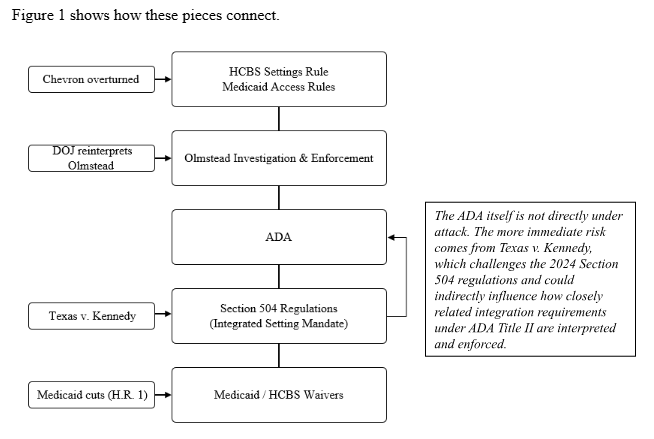
Figure 1. How Each New Development Affects Specific Policy Levers
Loper Bright gives courts more room to second-guess federal rules, including the ones that require or define community integration. Medicaid cuts put pressure on the systems that make community living work. The DOJ memo signals that the federal government may step back, which means states may feel less pressure to protect HCBS when money gets tight.
That also shifts responsibility. Instead of the federal government holding states accountable, more of that job falls to the people who rely on these services, their families, and advocates — the same people who have counted on the DOJ for 25 years to have their back. And Texas v. Kennedy gives the court the chance to agree that the federal government went further than the law allows. If it does, the DOJ's new position could carry real legal weight.
The real risk isn’t that Olmstead disappears overnight. It’s that several of the protections around it get weaker at the same time. Someone might still have the legal right to live in the community, but face longer waiting lists, fewer available workers, fewer services, less federal enforcement, and a harder legal fight if something goes wrong. Many people won’t have the resources for that fight.
Over time, whether someone can actually live in the community may depend more on state budgets, local service capacity, and whether people, families, and advocates have what they need to catch problems early.
What’s really at stake is this: what standard will decide whether a state is falling short? And how involved will the federal government be in fixing it?
Looking Ahead: A Possible Next Layer
One thing hasn’t happened yet, but it’s worth watching: states may start moving toward value-based payment for HCBS. If federal money keeps shrinking and federal oversight keeps loosening at the same time, states may look at paying for outcomes instead of paying for services delivered, as a way to control costs without cutting services. It would sound less like “we’re cutting HCBS” and more like “we’re modernizing how we pay for it.”
That shift could bring real benefits, and some states have already been moving this way for other reasons. But it comes with its own risks. “Value” is hard to define in HCBS the way it can be in a hospital. For someone with an intellectual or developmental disability, or a serious mental illness, a good outcome often looks like stability over years, not one measurable result. If payment is tied to metrics that are easy to measure, providers may be pushed to serve people who are easier to help, and steer away from people with the most complex needs — the very people Olmstead was written to protect.
This would also happen at a moment when the federal enforcement that used to catch these problems is stepping back. A payment system that quietly narrows who gets served would have fewer federal eyes watching for it than it would have had ten years ago.
None of this is decided, and it may never happen. But it’s a reminder: the answer to this moment might not be “less HCBS.” It could be “different HCBS” — paid for and delivered in a new way that carries its own tradeoffs.
The same pressures could also push states toward institutions in a quieter way: through a lack of coordination. In many states, there’s no formal way for one provider to serve both an aging caregiver and the person with an intellectual or developmental disability they support, in the same home, at the same time. Families already stretched thin may find that the systems meant to help them were never built to work together in the first place.
What This Means for the People Fielding These Questions
Case managers, care coordinators, and other frontline workers are often the first ones a family asks when they’ve heard something scary in the news. The most helpful thing you can offer isn’t reassurance, but it isn’t an alarm either… its accuracy. Right now, that means being able to say plainly: the legal right to live in the community hasn’t changed, but some of the pieces that made that right dependable are under real pressure, and it’s worth paying attention to rather than assuming things will stay the same.
Working Together
The people most affected by these changes should be at the center of the response. People with disabilities and their families can document what services and support make community living possible, and what happens when those supports are delayed or taken away. That kind of information moves the conversation past budgets and legal theories, toward what actually happens to real people.
Providers can share clear data on workforce shortages, pay rates, waiting lists, and unmet needs. State officials and health plans can involve people with disabilities and families in decisions, and check whether funding changes are quietly making institutions the only real option. Professionals in health care, education, and legal and disability services can help translate policy changes into plain information, instead of scary headlines or legal jargon.
Advocacy groups can track Texas v. Kennedy and future rulemaking, explain how to submit public comments, and connect people with legal help. No single group can protect community living by itself. The strongest response combines real experience, hard data, legal knowledge, and public pressure.
Federal priorities have shifted before, and disability policy has never moved in only one direction. The legal and financial pieces of this system may be under pressure, but community living has always depended on people using the tools available — advocacy, lawsuits, new rules, and state-level choices — to protect it, one piece at a time, the same way it was built. For now, the most important thing is to pay attention to what’s changing, be honest about what might come next, and keep working together so that living in the community stays a real choice — not just a right written down on paper.
Why HELEN is so Positive About Positive Exposure
Author’s Note 09.24.2026: Where this article describes Texas v. Kennedy as pending, readers should know the case has since ended. On September 23, 2026, the judge approved a joint request from the Department of Justice (representing the Department of Health and Human Services (HHS)) and the five remaining plaintiff states to remove the community integration provisions from HHS’s 2024 Section 504 rule, “Nondiscrimination on the Basis of Disability in Programs or Activities Receiving Federal Financial Assistance” (referred to in this paper as “HHS's 2024 Section 504 rule”). The vacated pieces include the integration section of the rule, the definition of “most integrated setting,” and related language directing programs to prioritize serving people in the most integrated setting appropriate. Because the court vacated those provisions, the change applies nationwide, not just in the states that sued. The rest of the 2024 rule remains in place.
This matters because that rule was the most detailed federal guidance on how programs receiving federal funds must meet the integration requirement under Section 504. Section 504 and the ADA still stand, so the foundational principles are still in place. What's gone is the blueprint that spelled out the standards states were expected to follow.
Arguably, how this case ended matters more than the provisions themselves. HHS stopped defending its own rule and asked the court for the same outcome the states wanted, so the judge never had to decide the underlying legal question: did HHS overstep its authority by spelling out how states must implement “integrated”? The court made no finding that Section 504, the ADA, or the right to community integration is invalid, but it also didn't decide whether HHS had the power to write such a specific rule in the first place.
In practical terms, the ruling changed what’s written in the regulations without creating any legal reasoning other courts are expected to follow. That cuts both ways for people who care about community integration. On one hand, there’s no new precedent saying HHS overstepped, so courts can keep relying on decades of decisions recognizing the right to community integration. On the other, the states’ other claims were dismissed without prejudice, which means the question of how far HHS's authority reaches is still open and could be argued again. Think of it like a forfeited debate: the result counts, but nobody judged whose argument was stronger.
The ADA, Section 504, and Olmstead v. L.C. are still the law, and people can still bring claims over unnecessary institutionalization. What's changed is that one of the clearest written federal standards supporting that right is gone, and the agency responsible for it asked the court to remove it. Because this is so recent, legal experts, disability advocacy organizations, and state agencies are still working through what it means for current services and for how integration protections will be enforced going forward. DREDF is tracking developments here.
This outcome does not change the central argument of this article; it illustrates it. No single event has taken away the right to live in the community. Instead, another supporting layer has been removed.
About the Author

Samantha Thumma has worked on nearly every side of disability services, across three different states. She started as a direct support professional in Pennsylvania, worked as a service coordinator in Maryland, and now works within Tennessee's disability services system, where she oversees case management for people receiving support through Tennessee's 1915(c) Self-Determination Waiver. That path has given her a firsthand view of how differently these systems can work from state to state — and how much a person’s options can depend on where they happen to live. She's pursuing a Master of Science in Social Work, concentrating in organizational leadership, at the University of Tennessee, Knoxville, building on earlier degrees in legal studies and human services.
For Samantha, dignity, autonomy, and choice should be the starting point in disability services, not an afterthought. She hopes to one day teach future professionals in this field. Her vision is a future in which disability does not have to be accommodated as an afterthought because accessibility, inclusion, and human difference were considered from the beginning.
References
Sources
The following sources informed the facts, statistics, and policy descriptions in this article.
Americans with Disabilities Act of 1990. Title II, 42 U.S.C. § 12131 et seq. https://www.dol.gov/agencies/oasam/centers-offices/civil-rights-center/statutes/title-ii-americans-with-disabilities-act-of-1990
Bazelon Center for Mental Health Law. “Olmstead: Implementing the Integration Mandate.” Accessed July 31, 2026. https://www.bazelon.org/olmstead-integration-mandate/
Carpenter, Alexandra, Cara Stepanczuk, Caitlin Murray, and Andrea Wysocki. “Trends in Users and Expenditures for Home and Community-Based Services as a Share of Total Medicaid Long-Term Services and Supports Users and Expenditures, 2023.” CMS/Medicaid.gov, October 17, 2025. https://www.medicaid.gov/medicaid/long-term-services-supports/downloads/ltss-rebalancing-brief-2023.pdf
Centers for Medicare & Medicaid Services. “Home & Community Based Services Authorities.” Accessed July 31, 2026. https://www.medicaid.gov/medicaid/home-community-based-services/home-community-based-services-authorities
Centers for Medicare & Medicaid Services. “Home and Community-Based Services by Authority.” Medicaid and CHIP Scorecard. Data as of May 31, 2025. https://www.medicaid.gov/state-overviews/scorecard/measure/Home-and-Community-Based-Services-by-Authority
Centers for Medicare & Medicaid Services. “Mandatory & Optional Medicaid Benefits.” Accessed July 31, 2026. https://www.medicaid.gov/medicaid/benefits/mandatory-optional-medicaid-benefits
Congressional Budget Office. “Public Law 119-21: Medicaid Provisions.” October 28, 2025. https://www.cbo.gov/publication/61837
Disability Rights Education & Defense Fund. “Texas v. Kennedy (Formerly Texas v. Becerra): What It Is and How You Can Help Stop the Attack on Section 504.” Updated July 24, 2026. https://dredf.org/protect-504/
Disability Rights Education & Defense Fund. “We Belong in the Community, Not in Institutions.” June 18, 2026. Updated June 24, 2026. https://dredf.org/we-belong-in-the-community-not-in-institutions/
Loper Bright Enterprises v. Raimondo, 603 U.S. 369 (2024). https://www.supremecourt.gov/opinions/23pdf/22-451_7m58.pdf
Medicaid and CHIP Payment and Access Commission. “Medicaid Payment Policies to Support the Home- and Community-Based Services Workforce.” January 2026. https://www.macpac.gov/publication/medicaid-payment-policies-to-support-the-home-and-community-based-services-hcbs-workforce/
“Medicaid Program; State Plan Home and Community-Based Services, 5-Year Period for Waivers, Provider Payment Reassignment, and Home and Community-Based Setting Requirements.” 79 Fed. Reg. 2948 (January 16, 2014). https://www.federalregister.gov/documents/2014/01/16/2014-00487/medicaid-program-state-plan-home-and-community-based-services-5-year-period-for-waivers-provider
“Nondiscrimination on the Basis of Disability in Programs or Activities Receiving Federal Financial Assistance.” 89 Fed. Reg. 40066 (May 9, 2024). https://www.federalregister.gov/documents/2024/05/09/2024-09237/nondiscrimination-on-the-basis-of-disability-in-programs-or-activities-receiving-federal-financial
Olmstead v. L.C. ex rel. Zimring, 527 U.S. 581 (1999). https://supreme.justia.com/cases/federal/us/527/581/
Rehabilitation Act of 1973. Section 504, 29 U.S.C. § 794. https://www.dol.gov/agencies/oasam/centers-offices/civil-rights-center/statutes/section-504-rehabilitation-act-of-1973
Social Security Act. Section 1915(c), 42 U.S.C. § 1396n(c). https://www.ssa.gov/OP_Home/ssact/title19/1915.htm
State of Texas et al. v. Kennedy. First Amended Complaint, No. 5:24-cv-00225-H (N.D. Tex., January 23, 2026). https://dredf.org/wp-content/uploads/2026/01/89.-Am.-Compl.-1.23.26-Access-Pass.pdf
State of Texas v. Becerra/Kennedy. Civil Rights Litigation Clearinghouse. Case and docket materials, last reviewed July 31, 2026. https://clearinghouse.net/case/45899/
United States. Department of Justice and Department of Health and Human Services. Defendants’ Second Unopposed Motion for Extension of Time. State of Texas v. Kennedy, No. 5:24-cv-00225-H (N.D. Tex., July 9, 2026). https://dredf.org/wp-content/uploads/2025/01/2026-7-9-Defts-motion-for-extension-Access-Pass.pdf
United States. Department of Justice, Civil Rights Division. “U.S. Department of Justice Civil Rights Division Accomplishments, 2009–2012.” Accessed July 31, 2026. https://www.justice.gov/crt/us-department-justice-civil-rights-division-accomplishments-2009-2012
United States. Department of Justice. “Clarification on Department of Justice Guidance Titled ‘Statement of the Department of Justice on Enforcement of the Integration Mandate of Title II of the Americans with Disabilities Act and Olmstead v. L.C.’” 91 Fed. Reg. 45287 (July 20, 2026). https://www.federalregister.gov/documents/2026/07/20/2026-14566/clarification-on-department-of-justice-guidance-titled-statement-of-the-department-of-justice-on
United States. Department of Justice, Office of Legal Counsel. “Application of the Rehabilitation Act and Americans with Disabilities Act to State Institutionalization of Patients with Severe Mental Illness or Disabilities.” June 18, 2026. https://www.justice.gov/olc/opinion/application-rehabilitation-act-and-americans-disabilities-act-state
United States Government Accountability Office. “Medicaid Home- and Community-Based Services: Selected States’ Program Structures and Challenges Providing Services.” GAO-18-628. August 30, 2018. https://www.gao.gov/products/gao-18-628