
The Power of Education & Accommodation
Helen Keller Was No Fraud: Disability, Accommodation, and Achievement
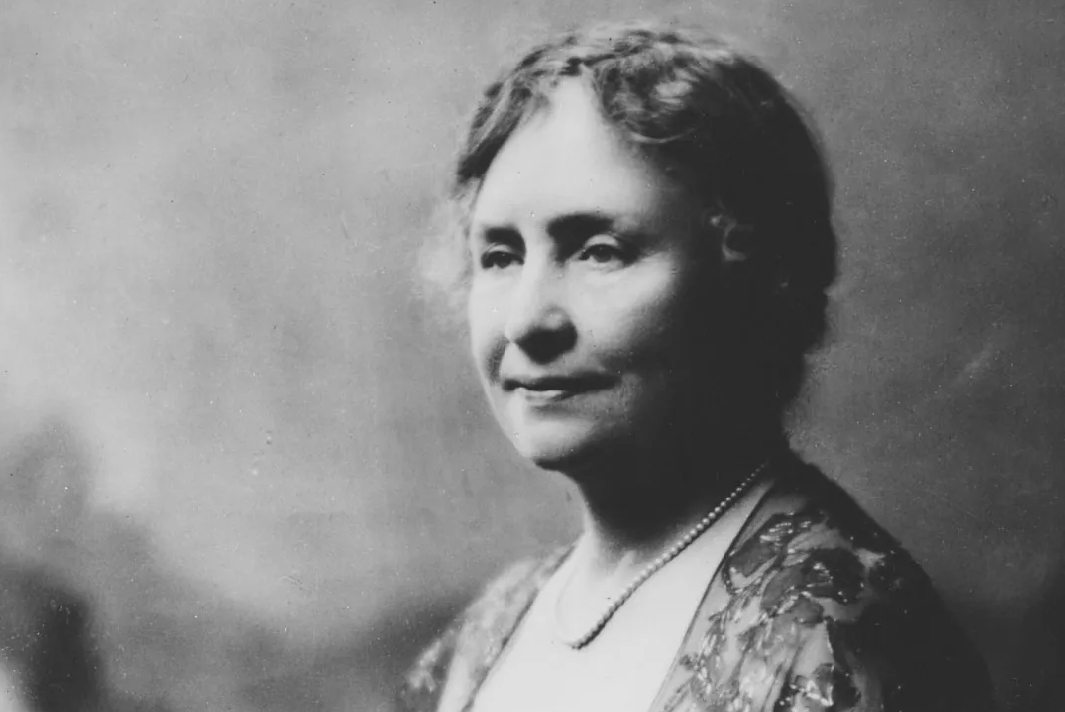
Helen Keller
Helen Keller (1880–1968) remains one of the most recognized people with disabilities in history. Yet, remarkably, she has repeatedly been accused of being a fraud. During her lifetime—and more recently through conspiracy theories circulating on social media—skeptics have questioned whether a person who was both deaf and blind could really have achieved what Keller accomplished.
These accusations reflect ableism, the discrimination and social prejudice against people with disabilities based on the assumption that typical abilities are superior. At its core, ableism defines people by their disabilities rather than recognizing their intelligence, abilities, ambitions, and potential.
Keller’s life provides a powerful example of what education, determination, support, and appropriate accommodations can make possible.
How Could Helen Keller Accomplish So Much?
Keller lost her sight and hearing after an illness when she was a toddler. Because she had experienced language during her first years of life, she already had some familiarity with communication. Her family also developed simple signs to communicate with her about basic needs.
Her breakthrough came when her teacher, Anne Sullivan, spelled the word “water” into Keller’s hand while water flowed over it. Keller suddenly understood that the movements of Sullivan’s fingers represented the object she was experiencing. That discovery opened the door to language and formal education.
Keller later attended the Perkins School for the Blind and developed increasingly sophisticated methods of communicating and learning. She demonstrated that people who are deafblind can acquire knowledge through touch and other senses, just as sighted and hearing people learn through the senses available to them.
How Could She Write Books?
Keller became a prolific writer, producing books and numerous articles. She used both braille and typewriters, eventually learning to operate an ordinary typewriter through touch. She kept track of the location of the keys by touch rather than sight.
Like many successful writers, Keller also had editors and assistants. Anne Sullivan and later Polly Thomson helped proofread and review her writing. Receiving assistance did not make Keller’s accomplishments less authentic; it demonstrated how accommodations and collaboration can remove barriers to participation.
How Could She Have Such Good Handwriting?
Keller and other blind people could learn handwriting through adaptive techniques. A grooved writing board could help a person maintain the position and direction of letters without relying on vision.
Keller also lived during a period when numerous systems for reading and writing for blind people were being developed. She herself commented on the confusing number of competing systems before standardized braille became widely established in the United States.
Her handwriting and other examples of her schoolwork remain part of historical collections documenting her education.
How Did She Graduate From College?
In 1900, Keller entered Radcliffe College, the women’s college associated with Harvard University. She graduated with honors in 1904.
Her education required accommodations. Sullivan attended classes with her and communicated lectures by finger spelling into Keller’s hand. Keller then used a typewriter to complete her written work. During examinations, proctors were available to provide assistance when necessary.
Keller’s academic record is also preserved in archival collections, including examinations and schoolwork. These materials provide firsthand evidence of the extensive education she received and the academic work she completed.
How Could She Fly an Airplane?
One of the most frequently repeated questions about Keller concerns her reported experience flying an airplane.
The explanation is simple: she was accommodated. During the flight, a pilot sat beside Keller and communicated instructions through her interpreter and companion, Polly Thomson. Keller did not need to see the instruments or hear spoken instructions independently in order to participate in the experience.
The story was reported in a 1946 newspaper article preserved in the American Foundation for the Blind’s Helen Keller Archive.
“The public must learn that the blind man is neither a genius nor a freak nor an idiot. He has a mind which can be educated, a hand which can be trained, ambitions which it is right for him to strive to realize, and it is the duty of the public to help him make the best of himself so that he can win light through work.”
How Could She Ride a Bicycle?
Keller also rode a bicycle, but not alone on a conventional bicycle. She used a tandem or “sociable” bicycle, which allowed another person to ride with her. The bicycle had two sets of pedals and handlebars, allowing Keller to participate in the activity with assistance.
Again, the accommodation explains the achievement.
How Did She Learn About Objects?
Keller was not the first deafblind student to receive a formal education. In 1837, Perkins director Samuel Gridley Howe taught Laura Bridgman, another deafblind student, to associate objects with words.
The principle is similar to how all children learn: they connect experiences with language and meaning. Children who cannot rely on sight or hearing simply use other senses and methods of communication.
Keller's education demonstrates that the absence of one or more senses does not mean the absence of intelligence or the ability to learn.
How Did She Learn Other Languages?
Keller became interested in foreign languages through her interactions with educated and well-traveled people. She learned languages through tactile communication and braille textbooks and even wrote in French to Michael Anagnos, a director at Perkins and one of her mentors.
Her multilingual education further demonstrates the adaptability of learning when instruction is presented in an accessible form.
The Real Lesson of Helen Keller’s Life
The persistent question behind many myths about Helen Keller is: How could someone who was deaf and blind possibly do these things?
The answer is that she did not accomplish them by pretending she was not disabled. She accomplished them by learning different ways to communicate, receive information, write, travel, study, and participate in the world.
Keller had teachers, interpreters, companions, adaptive equipment, and other accommodations. These supports did not diminish her accomplishments. They made it possible for her abilities to be expressed.
The continuing fascination with Keller’s achievements can therefore teach an important lesson about disability. People with disabilities do not need to perform extraordinary feats to prove their worth or intelligence. They need opportunities, education, accessibility, accommodations, and the same recognition of their humanity and potential afforded to everyone else.
Helen Keller’s life challenges the assumption that disability defines what a person can accomplish. Her legacy is not simply that she overcame blindness and deafness. It is that society can remove barriers and provide the tools people need to develop their abilities, pursue their ambitions, and participate fully in life.
Helen Keller was not a fraud. Her life is evidence of what can happen when disability is met with education, accommodation, opportunity, and the belief that a person is more than a diagnosis or a disability.