
Making Medical Preparation and Procedural Care Accessible for People with Intellectual and Developmental Disabilities
Seth M. Keller, MD
Doreen Bestolarides, RN
Summary: Medical procedures can become inaccessible for people with IDD because of communication, sensory, behavioral, transportation, preparation, and recovery barriers. A coordinated accessibility plan can help patients successfully complete necessary care while reducing distress and unnecessary sedation.
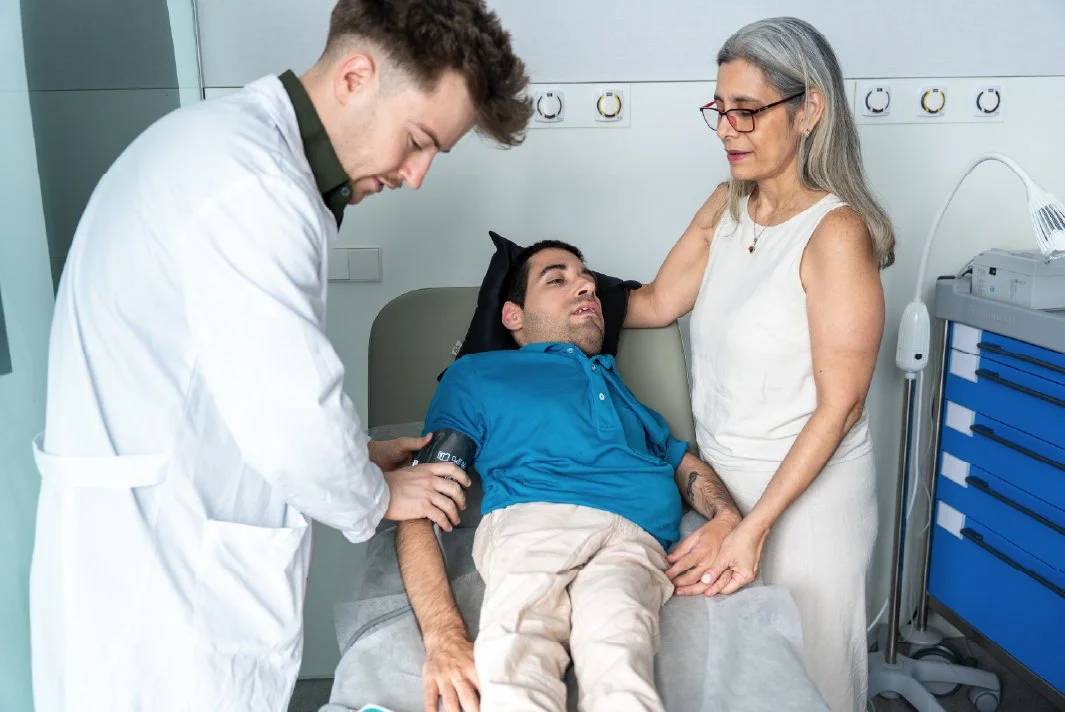
A colonoscopy is not just the colonoscopy. An MRI is not just the scan. A blood draw is not just the needle.
For many people with intellectual and developmental disabilities (IDD), the greatest barrier to medically necessary care may be everything that has to happen before, during, and after the technical procedure. Yet healthcare systems often plan around the procedure itself and leave families, direct support professionals, and nurses to figure out how to make the rest of the process work.
A familiar problem hiding in plain sight Imagine that an adult with IDD is referred for a colonoscopy. The medical indication may be entirely appropriate. But before the endoscopist ever enters the room, someone must explain a change in diet, manage medications, ensure adequate fluid intake, administer bowel preparation, support repeated toileting, cope with disrupted sleep, transport the person to the procedure, manage waiting in an unfamiliar environment, obtain an IV, and then navigate sedation and recovery. If the person also has significant cardiac, respiratory, neurologic, or behavioral complexity, the word 'routine' quickly loses its meaning.
This is not unique to gastroenterology. A person may need to tolerate the noise and confinement of MRI, the compression and positioning of mammography, the bright lights and close facial contact of an eye examination, adhesive electrodes for an ECG or EEG, a pelvic examination, pulmonary-function testing, or a simple venipuncture. Each procedure has a technical goal. Each also has an accessibility pathway that may determine whether the technical goal is ever reached.
What the literature is telling us The literature is fragmented across specialties, but the pattern is remarkably consistent. In gastroenterology, Fischer and colleagues described frequent bowel-preparation and colonoscopy problems among adults with IDD, and a later study found inadequate bowel preparation in roughly half of documented cases among patients with developmental disabilities.¹˒² In acute hospitals, people with intellectual disability often need reasonable adjustments, yet implementation is inconsistent and staff responsibility is frequently unclear.³˒⁴ Nursing literature similarly describes clinicians who feel underprepared, face communication barriers, and are uncertain about the role of paid and unpaid caregivers.⁵
At the same time, newer studies show that redesigned pathways can work. Structured needle-anxiety programs use behavioral strategies, pain management, and minimal sedation to enable vaccination and phlebotomy.⁶ Person-centered MRI approaches can reduce reliance on sedation for selected patients.⁷ Cross-specialty services have used planned sedation to complete blood work, imaging, ECG, echocardiography, EEG, gastrointestinal procedures, gynecologic examinations, and other evaluations that otherwise might not have occurred.⁸
The most developed model may come from oral healthcare. Special Care Dentistry has long recognized that successful care may require advance assessment, communication modification, behavioral support, conscious sedation, general anesthesia, and coordination across the entire patient journey. Its guidelines explicitly consider not only the dental procedure, but also preoperative planning, the role of caregivers, anesthesia, recovery, and opportunities to reduce repeat anesthesia.⁹ Medicine has no comparably mature cross-specialty framework.
The procedure begins before the procedure Healthcare systems often define access as getting an appointment or scheduling a test. For people with IDD, that definition is too narrow. A test is not accessible if the person cannot realistically complete the preparation required to reach it.
A better question is: What clinical information do we need, what is the least burdensome reliable way to obtain it, and what supports are required for this particular person to complete the preparation, the procedure, and the recovery?
That shift sounds simple, but it changes clinical practice. It means bowel preparation is part of colonoscopy care. It means tolerance of adhesive electrodes is part of cardiac and neurologic testing. It means sensory preparation is part of MRI. It means positioning and privacy are part of gynecologic and breast care. And it means that the ability to draw blood may depend on months of prior experience with needles, not on the skill of the phlebotomist alone.
Who is really doing the preparation? One of the least discussed aspects of procedural care is who actually makes the preparation happen. In many cases, it is not the specialist who ordered the test. It may be a parent, sibling, group-home staff member, direct support professional (DSP), nurse, medical assistant, or transportation staff member.
These people may be asked to alter meals, monitor hydration, hold medications, supervise bowel preparation, rehearse the visit, manage distress, maintain routines as much as possible, arrive at a particular hour, explain the procedure repeatedly, and decide whether the plan is failing. Too often, they receive generic instructions designed for patients who can independently understand, tolerate, and carry out every step.
That leaves supporters in a precarious position. They may know the person better than anyone, but they should not be expected to invent the medical plan. Families and DSPs should not have to decide on their own whether a person is becoming dangerously dehydrated during bowel preparation, whether a missed medication is acceptable, whether repeated distress means the procedure should be cancelled, or whether sedation is necessary. Those are clinical responsibilities.
A procedural-access plan should therefore identify not only what needs to happen, but who is responsible for each step, what adaptations are required, and whom the supporter should contact when the plan is no longer working.
Why This Matters: A Family Perspective For some families, the concept of procedural accessibility is not theoretical, it is lived reality.
As both a registered nurse and the mother of an adult son with Down syndrome and complex congenital heart disease, I have spent years navigating medical procedures that were clinically appropriate but operationally inaccessible. My son cannot independently understand or comply with many preparation requirements. A blood draw may require weeks of planning. Diagnostic testing often depends on finding clinicians willing to adapt communication, scheduling, sensory environments, and procedural approaches. Even routine procedures can become overwhelming when anxiety, communication differences, cardiac considerations, and past healthcare experiences intersect.
Recently, my son developed significant gastrointestinal symptoms, including episodic diarrhea, abdominal bloating, and signs of discomfort that he could not verbally explain. Testing revealed marked intestinal inflammation. A colonoscopy was recommended, but the discussion quickly expanded far beyond the procedure itself. Could he realistically complete the bowel preparation? How would hydration be monitored given his cardiac history? What anesthesia support would be needed? Who would coordinate among gastroenterology, cardiology, nursing, and our family? The clinical question was clear; the pathway to obtaining the answer was not.
Experiences like these are common for people with intellectual and developmental disabilities and those who support them. Families, direct support professionals, and clinicians are often left to solve procedural-access challenges without a structured framework. These recurring experiences helped inspire the AADMD Procedural Accessibility Initiative. Our goal is not simply to improve individual procedures, but to create a healthcare model that recognizes preparation, communication, accommodation, caregiver involvement, and recovery as essential components of quality care.
“When healthcare systems plan for the whole journey, not just the technical procedure, patients are more likely to receive timely diagnoses, avoid unnecessary trauma, and experience care that is truly accessible.”
A practical framework: start with accessibility, not anesthesia There is a danger that discussions about difficult procedures in IDD become discussions about anesthesia. That is too narrow. The first question should not be, ‘Does this person need sedation?’ The first question should be, ‘What makes this procedure difficult for this person?’
For elective care, a reasonable hierarchy is to begin with accessible communication and environmental adjustments, then add familiarization or desensitization when feasible, then consider pharmacologic anxiolysis or procedural sedation, and use deep sedation or general anesthesia when less intensive approaches are insufficient, inappropriate, or unsafe. ⁶˒⁹
This is not a rule that sedation must always be avoided. Sometimes a carefully planned, brief sedation is less burdensome than three failed visits, escalating physical holding, and a growing history of trauma. The goal is the least restrictive, least burdensome, safe, and effective pathway to clinically necessary care.
Twelve questions to ask before a planned procedure
What clinical question are we trying to answer?
How necessary and how urgent is the procedure?
Is there a less burdensome but diagnostically adequate alternative?
What preparation is required?
Can this person safely and realistically complete that preparation?
How does the person understand and communicate what will happen?
What sensory, behavioral, mobility, pain, or positioning barriers exist?
Who knows the person best, and who will actually carry out the preparation?
What has worked or failed during prior procedures?
What is the least restrictive level of support likely to succeed?
If sedation or anesthesia is required, are there other already-indicated procedures that could safely be coordinated?
What should be documented afterward so the next team does not start from zero?
Why elective and acute care must be separated The same principles cannot be applied identically in every setting. Planned outpatient care allows time for rehearsal, visual preparation, desensitization, modified scheduling, and consultation with anesthesia or other specialists. Emergency care may allow none of those things.
For first responders and emergency departments, the immediate questions are different: What is this person’s baseline? How do they communicate pain or fear? What has changed? Who knows them? What intervention is essential now, and what can safely wait? How can we obtain urgently needed information without repeatedly attempting a standard approach that is clearly failing?
Hospitalization creates a third challenge: cumulative procedural burden. A patient may face repeated vital signs, finger sticks, venipuncture, IV replacement, injections, imaging, ECGs, wound care, respiratory treatments, catheters, EEG, and bedside examinations across multiple shifts. Without a visible procedural-support plan, every new clinician may unknowingly recreate the same distress.
What healthcare systems should do now
Screen for procedural-access barriers before elective procedures are scheduled.
Create a written preparation plan that assigns responsibilities to clinicians, nurses, families, DSPs, and operational staff.
Provide accessible information and individualized environmental adjustments.
Train schedulers, technicians, nurses, physicians, and anesthesia teams—not only disability specialists.
Use desensitization and rehearsal when time and clinical circumstances allow.
Consider less burdensome diagnostic alternatives only when they can answer the clinical question adequately.
Use sedation and anesthesia thoughtfully and proportionately, not automatically and not as a substitute for reasonable adjustments.
Coordinate other clinically indicated care during a planned anesthetic when safe, consented, and likely to reduce overall burden.
Document what worked and what failed in a portable procedural-access profile or EHR field.
Develop separate operational pathways for planned outpatient, emergency, and inpatient care.
A call for a broader standard of access People with IDD are often described as having difficulty 'cooperating' with procedures. That language can obscure the larger problem. A healthcare system may be asking the person to cooperate with a process that was never designed to be accessible to them.
The answer is not to eliminate every difficult procedure, nor is it to sedate every person who struggles. The answer is to recognize procedural accessibility as part of clinical quality. That means anticipating barriers, listening to the person and those who know them, planning the whole pathway, choosing the least burdensome effective approach, and learning from each encounter.
Special Care Dentistry has already shown that this can be organized systematically. Medicine should do the same.
The AADMD Procedural Accessibility Initiative is being developed to bring these scattered lessons together into a cross-specialty framework for planned, emergency, and inpatient care. The goal is practical: fewer failed procedures, fewer traumatic encounters, less unnecessary anesthesia, better diagnostic access, clearer roles for supporters and clinicians, and a healthcare system that does not wait until the day of the procedure to discover that the procedure was never truly accessible.
Author note: This is a draft commentary/feature article derived from the ongoing AADMD Procedural Accessibility Initiative. Seth M. Keller, MD, and Doreen Bestolarides, RN, are co-authors. The family-perspective section is authored by Doreen Bestolarides, RN.
About the Authors

Seth M. Keller, MD, Past President of the American Academy of Developmental Medicine & Dentistry (AADMD), and by Doreen Bestolarides. As co-authors, we write together with a shared commitment to advancing the rights and dignity of individuals with intellectual and developmental disabilities. Dr. Keller, deeply involved since the organization’s early formation, brings decades of leadership and advocacy experience.

Doreen Bestolarides, RN brings more than three decades of hospital nursing experience, including roles in critical care, developmental disability health, and family support advocacy. She has dedicated her career to improving healthcare for individuals with intellectual and developmental disabilities and currently serves on the Executive Board of the American Academy of Developmental Medicine & Dentistry (AADMD). Her public professional presence reflects meaningful advocacy, care coordination, and a deep commitment to IDD health equity.
References
1. Fischer LS, Becker A, Paraguya M, Chukwu C. Colonoscopy and colorectal cancer screening in adults with intellectual and developmental disabilities: review of a series of cases and recommendations for examination. Intellect Dev Disabil. 2012;50(5):383-390. doi:10.1352/1934-9556-50.5.383.
2. Parungao JM, Reyes C, Jackson N, Roizen N, Piper M. Factors Influencing the Adequacy of Bowel Preparation in Patients With Developmental Disabilities. Gastroenterol Res. 2018;11(6):416-421. doi:10.14740/gr1118.
3. Moloney M, Hennessy T, Doody O. Reasonable adjustments for people with intellectual disability in acute care: a scoping review of the evidence. BMJ Open. 2021;11:e039647. doi:10.1136/bmjopen-2020-039647.
4. Tuffrey-Wijne I, Goulding L, Giatras N, et al. The barriers to and enablers of providing reasonably adjusted health services to people with intellectual disabilities in acute hospitals: evidence from a mixed-methods study. BMJ Open. 2014;4:e004606. doi:10.1136/bmjopen-2013-004606.
5. Lewis P, Gaffney RJ, Wilson NJ. A narrative review of acute care nurses' experiences nursing patients with intellectual disability: underprepared, communication barriers and ambiguity about the role of caregivers. J Clin Nurs. 2017;26(11-12):1473-1484. doi:10.1111/jocn.13512.
6. Rava J, Rosenau KA, Wilkie K, Bernacki J, Curcio E, Kuo A. The Needle Anxiety Program: A Patient-Centered Initiative for Individuals With Developmental Disabilities. Cureus. 2023;15(7):e42253. doi:10.7759/cureus.42253.
7. Stogiannos N, et al. A systematic review of person-centred adjustments to facilitate magnetic resonance imaging for autistic patients without the use of sedation or anesthesia. Autism. 2022. PMCID: PMC9008560.
8. Bücker SK, Rolke K, Dianti NR, Münster E, Stockmann J. Sedation of Persons With Intellectual Disability and Multiple Disabilities: A Single-Center, Retrospective Evaluation of Clinical Cases. Dtsch Arztebl Int. 2026;123:341-342. doi:10.3238/arztebl.m2026.0037.
9. Geddis-Regan AR, Gray D, Buckingham S, et al. The use of general anesthesia in special care dentistry: A clinical guideline from the British Society for Disability and Oral Health. Spec Care Dentist. 2022;42(Suppl 1):3-32. doi:10.1111/scd.12652.