
We Can Build a Path to Cost-Effectively Improving Outcomes for Tens of Millions of People with Special Needs, Our Caregivers, Health Professionals, Healthcare, and Society.
Matthew A. Weed, Ph.D.
Summary: Healthcare plans work best when they reflect a patient’s actual life. Dr. Matthew Weed argues that training should help clinicians understand accessibility barriers, treatment complexity, caregiver support, financial limitations, and other real-world factors that affect whether care is practical and sustainable.
Personal and professional experiences fire my passion for improving outcomes for patients wherever they are and whatever challenges they and their caregivers manage; health professionals who help millions toward full lives; and the overall healthcare system. If this is important to you as well, please read my story and this call for simple to implement, cost effective improvements in training and practice management that can lower stress for patients, caregivers and health professionals; save billions of dollars; open millions of patient and caregiver hours for activities other than health management; and more. If you would like to polish this thinking with me or spread these ideas as far as we can, reach out to help shape what I describe and hope to move forward in 2027 and beyond.
I have a complex medical history including very brittle type I diabetes diagnosed nine months after I was born. Partial blindness was diagnosed when I was six weeks old. By age eight, I was totally blind. Managing these combined challenges has been in the foreground for nearly all of my life. Unfortunately, other issues have arisen, some of which are ongoing.
Due to the difficulty in managing early onset brittle diabetes in the 1970s, my family was told I had a 50% chance of surviving to my fifth birthday. My problems were highlighted by three incidents of diabetic coma before my fifth birthday, surely exacerbated by ongoing challenges managing my blood sugar due to a lack of at home blood glucose monitoring, the need to use urine glucose test strips, and required use of animal derived insulin.
Particularly at the toddler stage, I couldn’t always communicate that I wasn’t feeling well, which worsened the situation for me, my parents and others who cared for us.
When I got to age 5, my physicians did not expect me to live past 21. The fact that I am now 56, helping build new health professions schools and reaccredit established ones as chief Academic Officer of Academic Health Associates, while working to increase healthcare access; educate people about how patients with special needs manage (and struggle with) their health; do some accessibility consulting for various institutions; and help students get into college and graduate/professional programs as lead of my own practice, leaves me and the people around me with the sense we are playing with house money. We grow it by regular endocrinology, primary, and dental visits. We also ensure visual checks for skin cancer and other monitoring I can’t provide myself due to my lack of sight.
Challenges similar to those I have managed with, literally, the help of thousands, are also faced by tens of millions of Americans who are disabled, older, socioeconomically disadvantaged, socially isolated, far from care, or with limited English. All of these people are special needs patients with unique circumstances and biology. We and our caregivers will benefit from health professionals being better trained on the complex barriers we manage in achieving positive outcomes wherever we need to. Strengthened training on how healthcare and society can best support us in better caring for ourselves and our loved ones will also help us have a maximally net positive impact on our shared world.
Nearly everyone should benefit via reduced healthcare usage and cost, greater involvement of patients and caregivers in the workforce, lowered safety net outlays, reduced stress on millions of health professionals, patients, and caregivers, and more. These changes should also improve the bottom lines of public and private health insurers.
The limited training for health professionals on what happens outside of the clinic in millions of patients’ lives is deeply concerning. Those who read my 2023 Helen piece touching on the lack of required training of health professionals in current accreditation standards to manage patients with special needs (and new readers as well), likely know well that the disconnect between the clinical understanding of, and culture of thought about, how disease is managed and patients' experience of this in the real world is increasing as our population ages and manages more chronic health concerns of all kinds.
Health professionals are also very poorly trained with respect to the requirements of the Americans with Disabilities Act. According to a study from Iezzoni et al., published in Health Affairs in 2023, 35.8% of physicians had no knowledge of the Act itself and 71.2% didn’t know who determines reasonable accommodations under its regulations. Nearly 70% feared being sued for not accommodating patients properly.
One wonders how many health professionals have avoided seeing patients with special needs due to fear of being sued for not accommodating them properly. It’s probably a lot.
This essay reviews the challenges patients face, the things health professionals and systems do, and need to do, to help everyone have better outcomes, the talks I give on these issues and opportunities, and offers ways for all of us to help improve matters.
I believe a case driven textbook or video series to teach health professionals how to offer effective, legally, and ethically appropriate, support to patients and caregivers in achieving Pareto Optimal outcomes that meet patients where they live is needed. Done right, it can help healthcare be more patient centered, effective, and cost-efficient than it is today.
Its benefits to all of us could be nearly limitless. Its cost to healthcare very limited.
I will use myself as an example here, but any story I tell is likely repeated many times in many different ways and circumstances across our nation. I will be the first to say that my life has not been easy, and yet has been advantaged, in many unique ways.
My difficulties give me lived experience of our pressing need to make health and healthcare work better for everyone. My advantages include family and community support, excellent care, and practical training on how we can cost-effectively improve outcomes for millions.
In order for me to go to Yale for college, Princeton for my first master’s, Harvard for my second, and back to Yale for my Ph.D. and two postdocs, as well as helping launch a new $150 million research center at UW Madison and working with the NIH on numerous accessibility and policy related projects, not to mention taking two round the world trips, completing a rollerblading marathon, and becoming a skier, kayaker, and much more, we had to overcome the fact that I couldn’t (and can’t) operate a hand glucometer, or safely draw the insulins I take daily due to my rare combination of disabilities. Even with a self-calibrating continuous glucose monitor which became available to us in 2019, the first 24-48 hours after a sensor is replaced can require four to ten finger sticks to ensure the new one is calibrating itself correctly.
Literally hundreds of student volunteers helped me with my glucose monitoring and insulin dosage measurements. They performed my protocol approximately 30,000 times over a total of 26 years without making errors sufficient to require clinical intervention.
This success happened due to careful volunteer training and oversight paired with thoughtful selection of scheduled helpers. The training protocol was always followed. Most volunteers were bright and highly motivated to learn how to help. I could usually select among very capable potential caregivers. Of course, millions don’t live close to campuses with thousands of bright, service focused people. Even if those needing help do live near campuses, students often don’t get similar chances to see how health and disability are managed in homes and at work. Many young people leap to gain real world experience when given the chance to do so. As they help patients, improve training and empathy, and can reduce healthcare costs, I would be glad to help interested stakeholders build similar service learning opportunities.
Before working with me, far too many of my volunteers hadn’t fully realized millions of patients can’t easily perform the very exacting handling a wide range of medical devices require. Most health professionals either forget or, as I have found in discussing matters with many around the country, simply aren’t taught that the resources available in the clinic, are not at hand for millions nation-wide when they are at home trying to manage a protocol, figure out which very similarly shaped pills to take (because labels are not legible for them either due to poor sight or limited English proficiency for example), or complete tasks like getting to the doctor or acquiring groceries or meds. (and yes, delivery services exist, but many are very expensive and so cost prohibitive for millions to use). It is also a reality that many merchants don’t have accessible websites, which makes getting deliveries even more problematic.
Back to devices like hand glucometers, how is someone who can’t see, or someone who has movement challenges, going to get that tiny little drop of blood into the equally tiny test strip? Many here can surely think of commonly used devices that require tiny movements (like dental floss for example), that someone with poor fine motor control can’t use effectively.
In presenting to various audiences and staying in contact with my former volunteers, I have become convinced we must teach health professionals how to better support patients and caregivers in finding creative solutions to the practical problems they face daily outside of the clinic. Real world health management skills too many health professions schools spend far too little time on while students are being trained. Experience that is often not selected for in the admissions process which tends to focus on lab research that does not expose students to the people and problems they will face in clinic. Skills, knowledge, and empathy that could be the difference between life and death (or at least decreased suffering) for patients and caregivers, and lowered stress on health professionals, clinical staff, the healthcare system, and society.
When present, these skills and knowledge help prescribers to see and maneuver the limited practical extra-clinical resources patients have whether they access help (which can vary in cost, quality and availability) or manage alone, by choice or not, with all the problems that entails.
The Power of Pareto Optimal Outcomes (Or How Good is Often Better Than Perfect)
Pareto Optimal health outcomes that arise because patients and their caregivers must create workarounds for problems like those I describe above are often seen as unacceptable by our healthcare system. Are they really that bad, when the requirements of protocols followed to the letter put crushing burdens on millions of patients and their 53 million unpaid caregivers, particularly when the healthcare system’s requirement for absolute adherence to directives may well lead to failure to achieve them at all?
Wouldn’t a sustainable 90% effective solution be better than complete protocol failure because patients and their caregivers literally can’t carry the most exacting version (intended to generate textbook results in patients who aren’t textbook), of it out for all sorts of reasons such as socioeconomic circumstances to unique biochemistry for example?
An Example of a Pareto Optimal Solution on a Complicated Medical Protocol.
When I got to the Longwood Medical Center for that stage of my graduate training in 1995, my med routine was two mixed regular and NPH insulin shots a day. These done before breakfast and dinner. I should note NPH was then classed as long acting, but now it is, effectively, a medium duration insulin. Although even then my current, long standing, protocol was thought “out of date” my Mass. General based endocrinologist kept with it. This, even though he led the Diabetes Control and Complications Trial, which showed four shots a day offered greater control, and therefore lower risk of complications than two did.
Despite his research, he kept me on two shots a day because my protocol was working pretty well. Other options would have been impossible to manage given my need for help drawing my multiple shots and using a glucometer to monitor my blood sugars along with problems in managing the unpredictable spaces campus eateries are when you can’t see.
Aside from issues in finding enough help to make four protocol cycles a day work on every single campus day, travel days and other disrupted schedules would also make a four-time-a-day routine impossible to maintain over any period of time. During term, we could usually pull three encounters (including a lunch glucose check on weekdays plus time for meals with whomever was helping at their assigned time) but keeping three daily visits going over holidays for example, (and not just at Harvard) was a huge challenge given everyone’s academic, (or work) research, exercise and life maintenance commitments.
The scheduled volunteers came as needed 98% of the time. Emergency Emails to volunteer lists or calls to student coordinators usually led to needed help. I used marked insulin pens one or two times a term. At these highly stressful times, I had no glucose check. I risked mis-assessing my blood glucose level by self-sensing, a mis-dosing via miscounting pen clicks, and accidentally switching pen tops, which risked a dangerously incorrect dosage on next using the pens. Or, I could not have gotten my education and best chance to contribute to my full potential. Similar problems exist with the pump.
Three meetings a day required me to be in a specific place on time, every time. If I wasn’t, I would miss the volunteers, causing them, and me, significant problems. I think I was more than two minutes late 13 times over the 26 years and a thousand volunteers helped me with my meds and other tasks. Schedule discipline was key. We believe the volunteers saved more than $1 million in trained health support costs. We also made accommodations like direct flights between wherever I was and Denver (home airport) at peak times so as to go between shots so meds could be done before departure with med help shortly after arrival.
Along with benefits at home where hand-measured meds are fewer (though my mother’s help with meds and more is still needed daily), the self-calibrating continuous glucose monitor, and inhalable insulin make travel easier—but not easy. I still go from someone to someone as a tourist but with more flight flexibility. As I age and my diabetes control gets tougher, I bring (or meet) a health professional co-consultant—a nurse—on business.
Reasons Why Protocols Fail
Many factors cause protocol failure. Some of these include patients' inability to maintain them due to complexity and/or poor instructions; inaccessible or illegible labeling; failure to ensure the patient and their caregivers understand and can implement directives; med shipment at incorrect temperatures causing their failure to work as prescribed; and limited assistance with required tasks. Many others exist. Students don’t often learn them.
The Importance of Exposure to Patients’ Lives and Needs Outside the Clinic
Mark Bertolini, then of Aetna Insurance noted in 2018, 99.7 percent of patient time is spent outside of the clinic. In my view, if outcomes for all stakeholders are to improve, real world experience of patient care and/or personal health issues and the factors shaping lives of the millions managing these challenges must be better emphasized in admission for health professions schools and in instruction when students get there.
Without instruction on, or exploration of, real world causes for protocol failure and exposure to workable ways to add to the likelihood they will be achieved, health professionals must learn these pain points and ways to avoid them in practice. By then, they are often used to thinking in ways that, given extra clinical reality, are unhelpful at best, frequently frustrating, and possibly outright dangerous to patients' health at worst.
Protocol failure or inability to achieve optimal outcomes also occurs because interaction of meds in patients with complex health needs didn’t receive sufficient attention from the prescriber. As a story in my own life, when I got in for a regular appointment after a trip to a country with extreme air pollution in 2008, my internist found a raised pulse. He prescribed beta blockers to slow it down. At that time, beta blockers were the standard treatment for elevated pulse issues (thought to be caused in me by cardiac neuropathy).
Unfortunately, beta blockers reduce awareness of lows in many diabetics, me included.
Two events highlighted the problem. Firstly, my mother found some concerning data on the internet about beta blockers and diabetics. Simultaneously, I went to a birthday dinner with my med volunteers when third year med students saw I was “terrifyingly pale.” We got juice into me. I had no idea my sugars were still in the low thirties or even upper twenties, close to where I was before leaving home and yes, eating something. Before testing, I knew I was lowish (certainly below 70), but 23, as the glucometer said then? No, I had no idea I was that low even though my sensitivity to my glucose levels was noted by my doctors, and my ability to function while quite low was recognized by many over time.
Many diabetics are in coma or dangerously near it if below 40.
This wasn’t the first time I had been too low while on the betas, but this was a particularly serious incident.
We changed the med I was to take to something that wouldn’t suppress my autonomic reactions to low blood sugars.
In discussing things, the internist in question admitted he forgot to check the PDR for potential complications.
I never saw him again.
On hearing this story, listeners to my presentations have told me they put the PDR on their phones for ongoing access.
What reflexive habits would you want students to develop to avoid unnecessary side effects of new meds or other problems that can arise when protocols change?
Today’s Training Trap
We train health professions students to interact with “standardized patients.” Unfortunately, healthcare is usually not about the “standardized patient.” Rather it is, all too often, about the tens of millions of patients with unique, non-standard situations doing the best they can under whatever circumstances they live. How can we better help health professions students and CE learners see this and find ways to support the patients they work with in finding practical solutions to as many of the problems they face as possible?
How patients are perceived, whether they have disabilities, are older, or have other special needs, is very important. Iezzoni et al., report 82 percent of U.S. physicians believe people with significant disabilities have a worse quality of life than those who are not disabled.
Sometimes it’s true, often it isn’t. How can health professionals learn to keep open minds toward their patients and so reduce the barriers to participation and productivity faced by too many with very particular needs by seeing them as people, not health conditions?
Issues in Patient Management Health Professionals May Not Think About
Many health professionals don’t fully think through how a proposed procedure or life change may impact their patients. Here are some questions on the logistics of care life experience that taught me that must be taught often at all levels of health professions training.
Can appointments and procedures be set to accommodate medical and life schedules?
Are health professionals and staff taught to think about strategic scheduling with patients?
Can appointment reminders be sent weeks ahead instead of a few days in advance, so patients and/or caregivers have extra time needed to negotiate work and other schedules?
Can patients be told about schedule changes far enough in advance to ensure they see the clinician they know well? (as familiarity can be unusually important in special needs cases)
Can cancellation lists be automated to notify patients of relatively last-minute availability?
Do patients’ current meds, diets or eating schedules need to be modified to account for procedures like dental work, GI procedures or lab tests requiring any form of adjustment?
Do health professionals know how to help patients make these modifications or can they direct them to a colleague who can provide the needed advice while they are still in clinic?
If not, how can we better coordinate among health professionals to provide this support?
Does the proposed regimen work with the patient’s medical schedule and lifestyle?
If not, how can one or both be modified to achieve Pareto Optimal outcomes?
Do patients understand, and can they use delivery devices for prescribed meds (or food)?
Are systems and training in place to ensure a proposed change is not contraindicated?
Do patients have biochemical, social, financial, and practical resources when not in the clinic needed to manage directed changes in routine whether temporary or permanent?
Are health professionals taught to ensure there are at home resources or access to ones in the community that may be needed to ensure a protocol can be completed successfully?
Can they lead patients to community and other resources to help them do what is needed?
If patients have caregivers, are those people aware of what needs to be done to achieve success through the impact of testing, procedures, or major routine changes?
Can instructions be tailored to fit the patient’s learning style and capabilities? (e.g., electronic text versions of protocols, large print output, materials in languages other than English, pictographic instructions instead of videos etc)?
Are we doing enough in healthcare to accommodate different learning modalities? For example, would it surprise you to learn that the average blind person can listen to material far faster than sighted individuals can read it? If you didn’t know this, check out the “Do you Read at Dr. Weed Speed” PowerPoint on the “My Story” page on my website.
Helping patients and caregivers think through how to use a device or follow a protocol in ways that work for them, rather than the health professional is important because the at home team will need to learn how to do what is needed in ways that will lead to best possible outcomes. This can take a lot of time. It is essentially important for many patients' success in managing prescribed protocols and devices. How can caregivers be involved in planning for patients' procedures and protocols rather than simply springing a change on the at home team that, unmodified, may not lead to optimal outcomes for everyone?
An underappreciated failure point in protocol completion is “unexpected” variability in pharmaceutical effectiveness. In a recent study, Chowdhury et al. found on average medication packages spent 68% of their transit time outside the recommended temperature range of 68°F to 77°F. The temperatures recorded in the packages ranged from 5.1°F to 102.3°F.
In my experience, many health professionals don’t believe patients when they say different batches of meds work differently. Awareness of factors that patients can’t control and yet impact outcomes like shipment temperature need to be better emphasized in training.
Differences Between Health Professional Demographics and General Society
In 2016, Dr. Sarah Waliany reported 18.7% of the entire US population, and up to 8.9 percent of people aged 18 to 24 have at least one disability. A 2023 JAMA study by Perrera-Lima Et al, showed an increase in medical students reporting disabilities from 2.7% in 2015 to 5.9% in 2021. Nearly simultaneously, CDC data said 16% of American adults from 18-44 had a disability in 2022. Though there were increases among medical students, the number reporting disabilities was still far below their US age cohort and much farther from the percentage of adult Americans reporting disabilities which, by age 65, exceeds 40% according to the U.S. Census and, per the CDC, is close to 50%. Data from Jackson Et al on nursing students has them at 8.4% of school populations which is higher than medical students but only half of CDC levels in their usual age cohort. Concerningly, Data from Aaron D. Johnson et al. On dental students had less than half of 1% reporting disabilities.
Data in the Archives of Physical Medicine and Rehabilitation from Tervo et al. in 2002 showed a background in disability impacted medical students' attitudes on disabled patients. Those with experience in disability often dealt better with challenging rehabilitation situations. There is more recent data on medical residents' ability to empathize with patients with whom they shared experience of health challenges.
The American Medical Association reports 3% of medical students fail to complete their degrees. Eighty-plus percent graduate on time. Meanwhile, a survey of internal data run by an online advising service suggests students with disabilities have a reduced on-time graduation rate if they identify their disabilities immediately and a far lower rate if they become disabled during training. The author notes failure to graduate is somewhat higher among disabled than non-disabled students. This may be evidence that medical school, at least, still has Darwinian processes selective for traits that increase demographic and experiential differences between health professionals and many of the patients they serve.
If these factors exist, are their impacts on patients, costs, and outcomes fully understood?
Tervo et al. argue specific educational experiences are needed to promote more positive attitudes toward patients with disabilities within the American and Canadian healthcare systems. After working with my volunteers and seeing how impactful their experience with me has been on most of them, I am extremely interested in facilitating these kinds of training opportunities. If you would like to talk with me about them, please contact me.
There are many other differences between health professional demographics and those of society. Health professionals are usually younger, more science focused and come from wealthier and better educated environments than the average American. These issues alone explain many of the communications problems healthcare and science often face in interacting with the average American, not to mention patients with ongoing health challenges who are often far from the statistical norm relative to the overall US population.
Patient and prescriber communication and psychology on actions and protocols often differ as senior professionals can misconceive themselves as health providers rather than the consultants they tend to be today: offering advice, tools and procedural skill to patients who must choose to benefit from them, and then be able to provide themselves thousands of hours of care in a wide variety of circumstances, often while overcoming other barriers.
Issues With Access to Information and Accessibility of Infrastructure
Here are a few statistics that show how problematic access to information can be.
According to WebAIM, an authoritative source on internet accessibility, 95.7% of the top one million high traffic pages had at least one accessibility issue in 2026.
WebAIM’s tests also show 83.9% of websites do not have enough color contrast on homepages, which is a problem for people who are color blind.
According to ArcTouch in 2025, 72% of mobile apps have accessibility barriers.
Other sources show 28% of rural Americans don’t have at home broadband.
It is also estimated that 20% in New York City do not have access to the internet.
Millions can’t read protocols printed in 12-point font and yet this is the size of the print most prescribers send hard copy PDF documents home in.
Many med labels and protocols are only offered in English. Most clinics don’t offer alternate language materials even though they are available in certain situations.
According to Iezzoni et al., Brailled information is difficult to obtain. It is usually not offered even in ophthalmologists’ offices where greater sensitivity to the need for accessible information is expected. Other practice types have similar problems.
Many areas of the country report limited availability of health professionals who can communicate in languages other than English per the San Francisco Chronicle.
On infrastructure, per Marshall et al., most curb cuts are not ADA accessible in many cities. Many areas don’t have sidewalks at all. Public transportation often depends on live spoken (not prerecorded and therefore unclear) station announcements. Many transportation systems' infrastructure for accessibility is not meticulously kept. According to the New York Times and Kaiser Health News, millions in urban and rural places have limited access to people who can drive them to appointments.
Barriers to Getting to, and Benefitting from, Appointments are Often not Accounted For
I encourage health professionals to ask broadly applicable questions including: What is the patient’s home situation like? (e.g., are there trip or fall hazards, barriers to street access (like a lack of sidewalks or inoperable elevators in an apartment buildings)? Can interventions like Sarah Szanton’s CAPABLE program be better deployed to cost-effectively improve patients' homes, health, independence, and productivity? How can all the benefits of home and community interventions be maximized? What practical barriers do patients face in getting to appointments that practices and health systems can help them lower (via referrals to local or national transport options for older individuals, use of virtual care, etc) so steps to reduce today’s high levels of missed appointments can be taken to help patients ensure they have workable transport? What avoidable barriers to physical access are there in the clinic and its larger building? How can these be corrected, or prevented through improved training and responsiveness?
I have more than a dozen slides in my presentations detailing ADA requirements for clinical accessibility. I include accessible parking spaces, ramps width and pitch, door width, thresholds, carpet thickness and shag depth, elevators, paperwork, hallways, turning spaces near doors and pathways to exam tables/dental chairs, the need for wheelchair accessible weight scales, and much more. I also offer solutions, IE how to make large print protocols, making times that cater to neurodivergent patients, having clear masks so patients with hearing challenges can read health professionals' lips and more. What challenges have you learned about whether in clinic or in the home (or in getting from home to clinic) that patients need help to manage successfully wherever they are?
Many audiences are unfamiliar with ADA requirements. This is not surprising given the data on familiarity with the ADA I noted above from Iezzoni Et Al. Similarly, cost-effective, easy to implement solutions are new ideas to many. Would presentations to your institution or hospital to help make facilities more accessible like those I offer, or talks to increase your staff’s readiness to support optimal patient interactions and outcomes be helpful?
“Asking the patient” is My Last Theme. Doing This Actively Can Improve Outcomes for All.
Asking patients how they describe themselves and their lives is essential. Whether this is how they describe their situations: IE, do they say, “I am a diabetic” or “I am a person with diabetes.” Record this for future interactions in the clinic. People may use “person with” descriptions but not consistently. I say, “I am blind” “I am a diabetic.” I also say “I am a person with special needs” for example. Similarly, ask them how they should be called if there are alternatives, IE by name or by military rank if relevant, or Dr. if they have a terminal degree. Remind staff, most patients with special needs should be spoken to at regular volume in the waiting room. If they need help navigating the clinic, this should be in their EHR summaries so tailored accommodations are automatic in future. Also, what form of take home directions is best for them, IE standard or large print, video recording etc. These answers, if set in HIPAA-safe ways, can markedly improve perceived patient centeredness of the clinical experience and so odds of positive outcomes for all.
Conclusion
Using a mix of lived experience and data from the media and literature, I speak on how patients manage (and struggle with) their at home health needs and interactions with the healthcare system whenever I can. I share my slides though many are framed around my experiences. Students say they find my talks very impactful. Many tell me, or their faculty, hearing me changes how they plan to practice. Experienced health professionals say they also find my presentations, data, and solutions useful. The scary thing is they should know, or be supported in figuring out, most of the challenges and concepts I discuss already.
As up to 80 percent of primary care appointments are affected by chronic health concerns, and 75 percent of patients with disabilities report structural barriers to care access, a healthcare workforce more able to respond to patients' challenges is one better prepared to help the people they see have better , lower cost and lower stress, outcomes than we have today, while reducing negative impacts on itself, the healthcare system, and society.
A tested set of case-based materials and lectures to help all health professionals see the challenges patients face when at home, when engaging in information on their health and improving it, and in accessing the clinic must be built and championed. Learners must be shown the value of Pareto Optimal solutions to complex problems; exploring interpersonal interactions among patients, caregivers, and health professionals that impact outcomes; learning how to prevent problems that cause difficulty in clinic and at home; and building care plans patients can succeed on in unique situations that may be far from textbook.
You can join me in all of these efforts by offering experiences or cases showing how healthcare outcomes can be cost-effectively improved whether in the clinic or at home, or by sharing leads to contacts to advance and test (or support development of), any materials that are developed. You can also have me speak to, or work with, your school, health system (or insurer) on better outcomes, training, and costs.
For any of these, or other thoughts inspired by this essay, please Email to contact me or see my website: https://www.drmatthewweed.com/
About the Author
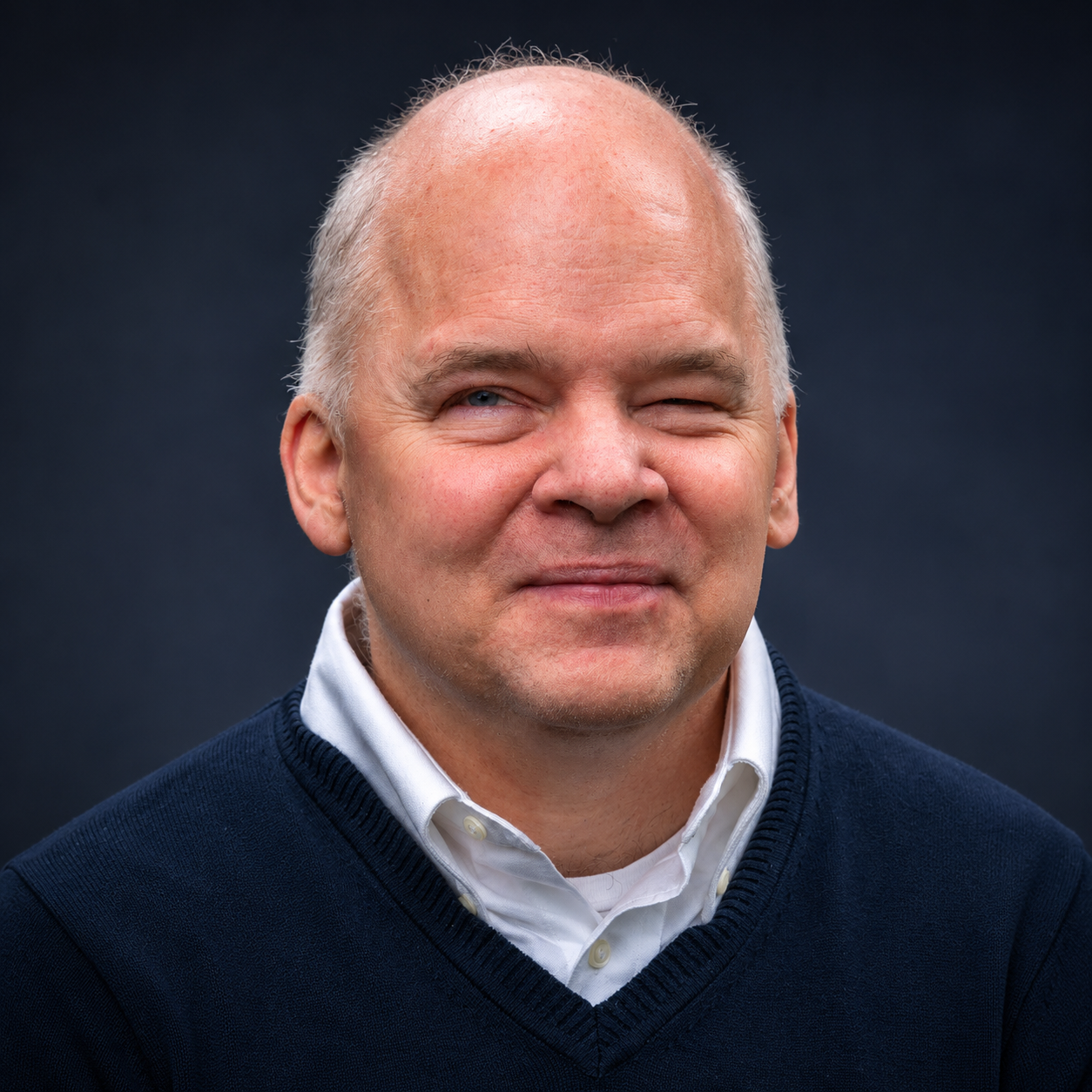
Dr. Matthew Weed is a totally blind type I diabetic and three-time Yale graduate, including a Ph.D. in Genetics earned in 2004. He also holds master’s degrees from Princeton and Harvard.
While an undergraduate at Yale, Dr. Weed co-created an early method for making electronic text accessible to people with reading challenges. He has since worked with and mentored hundreds of student caregivers, many of whom have gone on to careers in healthcare and science.
Following postdoctoral work in bioethics and medical education at Yale, he helped launch the Wisconsin Institute for Discovery at the University of Wisconsin-Madison and later became a Yale-Hastings fellow in bioethics. His work has increasingly focused on healthcare accessibility, health professions education, and improving outcomes for people with disabilities, chronic conditions, and other special needs.
Dr. Weed is Chief Academic Officer of Academic Health Associates, a consultancy that helps build and accredit new health professions schools and supports established programs through reaccreditation.