
Dr. Steve Perlman
Summary: HELEN and the AADMD share roots in decades of work addressing health disparities among people with IDD. Dr. Steve Perlman traces that history from Special Olympics Healthy Athletes through landmark national advocacy and the eventual creation of the AADMD.
On September 10, 2026, HELEN: the Journal of Human Exceptionality became the official Journal of the American Academy of Developmental Medicine and Dentistry (AADMD). Although the signed agreement was legally recorded, it seems as if it always was the Journal of the AADMD.
In fact, the seeds were planted in 1995 that led to where we are today by the same individuals, sometimes wearing different hats coming together with the common goal of improving healthcare for people with disabilities; especially those with intellectual and developmental disorders (IDD).
The history begins in 1993, when I was asked by Eunice Kennedy Shriver, the Founder of Special Olympics International and Dr. Robert Cooke, the Founder of Developmental and Behavioral Pediatrics, Head Start and the University- Affiliated Programs (later renamed and known today as University Centers for Excellence in Developmental Disabilities (UCEDDs) to create a health program for the athletes of Special Olympics.
Within a few years the Special Olympics Healthy Athlete Program grew from a pilot event to health screenings in eight core disciplines and collaborating with the Centers for Disease Control and Prevention (CDC) to collect volumes of data on people with IDD.
The data revealed significant health disparities and the need to understand the problems, investigate solutions, and improve healthcare for this medically underserved population. The Healthy Athlete Program continues to be the largest Public Health Program for people with IDD in the world.
Realizing the lack of quality data, in 1998 Special Olympics contracted the Department of Epidemiology and Public Health at Yale University School of Medicine and its Department of Psychology to produce “The Health Status of Individuals with Mental Retardation.”
It was published on September 15, 2000, and it was only 172 pages, 62 of them were references. This exhaustive report demonstrated we knew almost nothing about the health status of this invisible, underserved minority population.
With the report the Shriver’s approached Senator Ted Stevens of Alaska who agreed to hold a Senate Hearing on the Health Status of People with Mental Retardation that was held in conjunction with the Special Olympics World Winter Games in Anchorage on March 5, 2001.
Of the many people who were called to testify at the Hearing, it was an eye opening experience for the U.S. Surgeon General Dr. David Satcher. After talking to several of us, he agreed to convene the first ever Conference on Health Disparities for People with Mental Retardation.
True to his word, the Conference was held on December 5 and 6, 2001.
Of the approximately 150 attendees, twenty were from Special Olympics and the Joseph P. Kennedy Jr. Foundation, the rest representing leaders in the field, academicians and representatives from government agencies touching education, health, social and medical models for individuals with disabilities.
At the start of the Conference, Dr. Satcher placed the Surgeon General’s Medallion on Mrs. Shriver, the highest honor he can give stating it was his experience at the Hearing that led to this moment.
In January of 2002, Dr. Satcher released “Closing the Gap: A National Blueprint to Improve the Health of Persons with Mental Retardation. Report of the Surgeon General’s Conference on Health Disparities and Mental Retardation”
In his foreword Surgeon General Dr. Satcher wrote:
“Reports don’t have arms and legs. Like many others, this report will just sit on shelves unless we turn it into action. It is important to listen to those affected to learn what needs to be done, but to listen and not respond with determined action will only heighten the injustice this community has too long endured. I ask everyone reading this report to do your part to achieve our noble objective of improving the health of all persons with mental retardation. If we do, together we will make a significant difference in the lives of these important individuals.”
Fortuitously, several of us from the Surgeon General’s Conference attended a meeting of The Southern Association of Institutional Dentists in Chattanooga, Tennessee in 2002.
Following the meeting, colleagues, both physicians and dentists had dinner and went to Dr. Rick Rader’s house to brainstorm and decided to establish the AADMD to provide Dr. Satcher’s Report the arms and legs he wished for.
Twenty four years later the AADMD is thriving, and the same band of pirates founded Helen Journal. We are all back together, Helen is so proud to be the official Journal of the AADMD, but the fact is that we have always shared the same DNA and mission.
About the Author
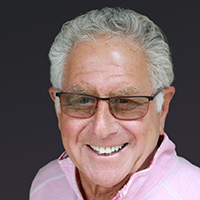
Steven Perlman, DDS, MScD, DHL (hon)
President People Advocating for Optimal Health (PAOH)
Special Projects Sr., Editor Helen: The Journal of Human Exceptionality