
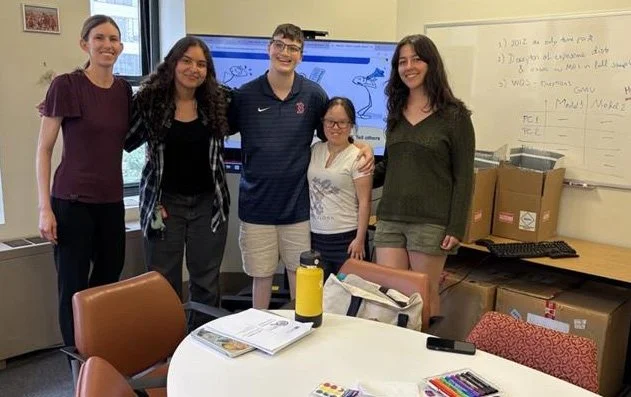
In hospitals and research settings, the best ideas often begin with listening. Listening to patients, to families, and—just as importantly—to one another. But what happens when research itself becomes a form of listening? That question guided our work as a team of co-researchers at the Rubenstein Lab at Boston University, in collaboration with clinicians and staff at Boston Children’s Hospital. Together, we explored what communication and inclusion mean in healthcare, and how bringing together people with and without intellectual and developmental disabilities (IDD) can change not just what research finds, but how it feels.
What Inclusive Research Means
Co-research, a form of inclusive research, is built on a simple but transformative idea: research should be done with people, not about them. It recognizes that people with lived experience are not only participants—they are experts. When we include those voices as equal partners, the research becomes stronger, fairer, and more relevant.
At the Rubenstein Lab, we work together—people with and without Down syndrome and IDD—to study issues that matter to our community: mental health, independence, inclusion, and healthcare access. Each of us brings something different to the table. Some of us contribute technical research skills, others bring lived experience, and together we see a fuller picture.
To us, co-research is a chance to give back to our community and to learn things we never imagined doing when we were younger. Every university should include people with disabilities in research because these perspectives hold knowledge that can’t be found anywhere else. For us, inclusion begins with listening—being open to learning from one another, creating space for every voice, and recognizing that everyone has something important to share.
Listening as a Starting Point
Our work began with a simple but powerful question: “What does inclusion mean to you?”
We asked people from the campus community, including students and staff, to write their answers on sticky notes. Some described what it feels like to be included: welcomed, respected, and seen. Others emphasized how to include others—by helping them feel that same sense of belonging.
Reading these responses showed us just how much inclusion matters to people both within and outside the IDD community. Hearing so many thoughtful ideas reminded us that inclusion is a shared value that extends far beyond one research group.
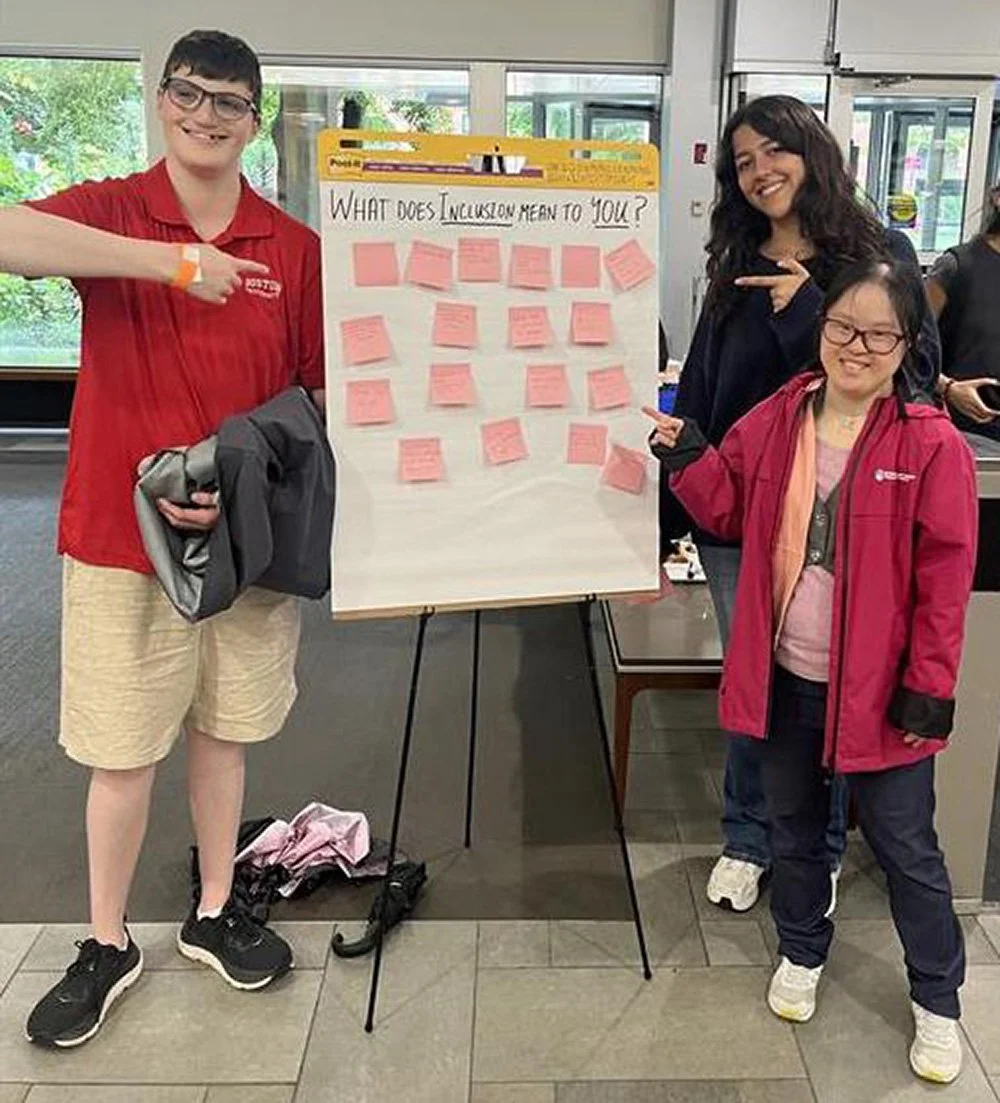
Asking members of the BUMC community what inclusion means to them .
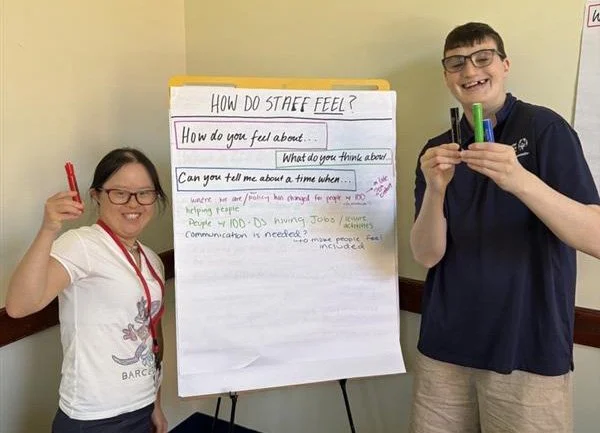
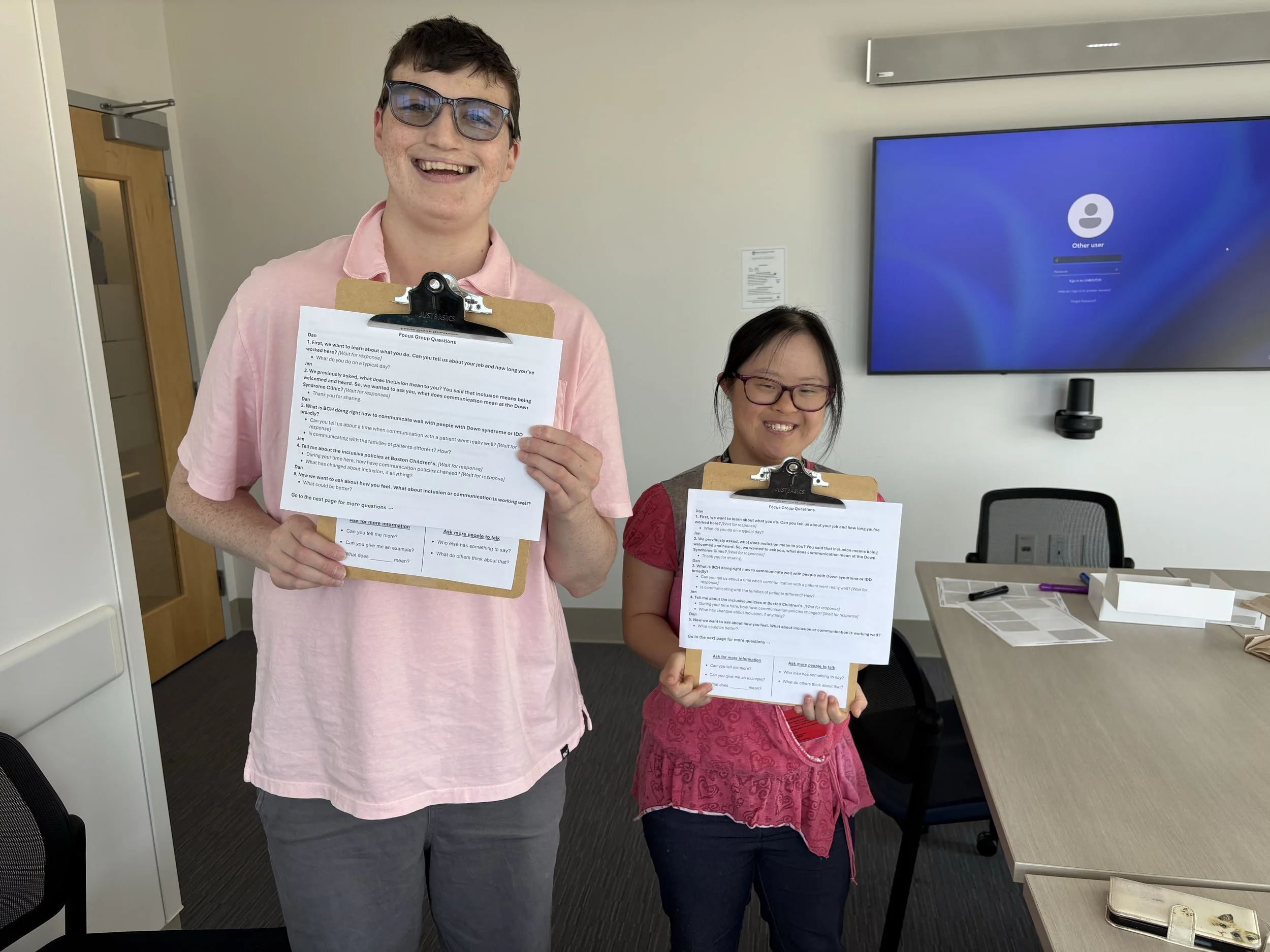
Those conversations set the stage for the next part of our project: a recorded focus group at Boston Children’s Hospital with clinicians, program managers, and researchers. There, we explored how communication and inclusion play out in real healthcare settings—what helps patients feel respected, where barriers still exist, and how teams can work together to improve care for people with IDD.
Across both spaces—campus and hospital—the same theme emerged: inclusion is not a single action but a relationship. It happens when people feel safe to share their ideas. When people communicate clearly and with kindness, you can feel it. That’s what inclusion feels like too—you know you belong and have a space to celebrate and use your strengths.
Why Inclusion Changes Research
What we learned went far beyond any list of recommendations. Inclusion doesn’t just change outcomes—it changes the process itself.
When we led discussions, asked questions, and analyzed responses together, we saw how inclusive research opens the door to deeper insights. People share differently when they see themselves reflected in the work. Conversations open up. Assumptions fall away.
We know that people with disabilities are experts in their own experiences, and that working together helps everyone understand the bigger picture. Inclusive research is not about studying people—it’s about learning with one another. Through this project, we also saw how hospitals and universities can listen and learn from us when we participate equally. We hope more institutions across the country take meaningful steps toward involving people with disabilities in their work.
Inclusion shifts the center of research. It reminds us that lived experience holds knowledge that data alone can’t capture and that the best ideas are often the ones discovered together.
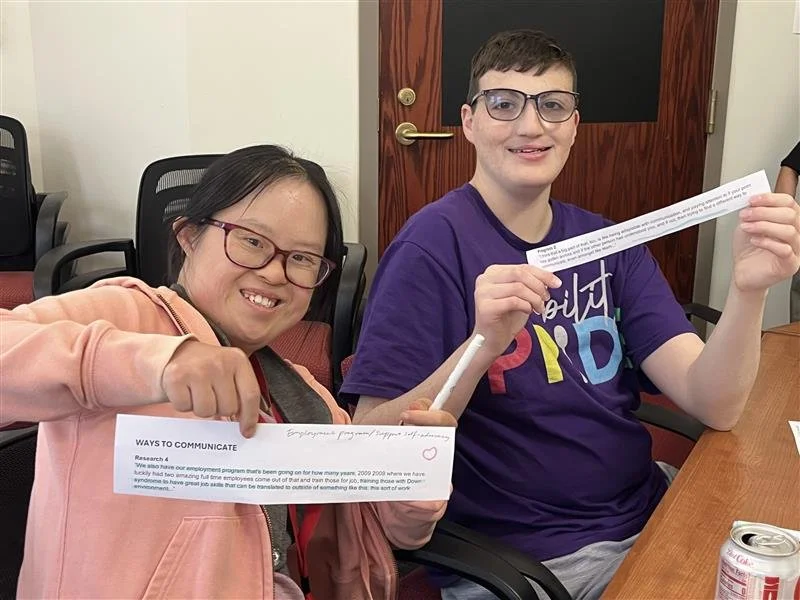
Coding focus group quotes and finding the big ideas and themes
A Culture of Belonging
Through this work, we came to see that communication and inclusion are inseparable. Both rely on respect, patience, and empathy.
Belonging means being seen as a person, not a label. It means being treated with kindness and respect, and knowing that our ideas matter. When we listen to people with different experiences, we notice things we might have missed before. That’s how we grow—not only as researchers but as people.
Inclusive research is about more than accessibility. It’s about belonging. It shows that when people with and without disabilities collaborate, research becomes more compassionate, care becomes more responsive, and institutions become more connected to the communities they serve.
Inclusion also changes us. It challenges habits, deepens understanding, and builds relationships based on equality rather than hierarchy. When everyone has a voice, research doesn’t just generate knowledge, it builds trust.
Looking Ahead
We continue to share our findings through the Rubenstein Lab, presenting at conferences and working on new projects that bring inclusion into every stage of research. But more than any single result, what we carry forward is the mindset of inclusive research itself.
Inclusive research is not about adding a new step—it’s about rethinking what research can be. It’s about slowing down, listening deeply, and valuing every person as a source of insight. It reminds us that knowledge isn’t created in isolation. It grows in conversation.
When we listen to each other, we don’t just improve research. We improve the quality of care and bridge trust between providers, advocates, and individuals with IDD. Inclusive research reminds us that progress doesn’t come from speaking the loudest, but from listening the deepest.
Inclusion starts with listening and grows through understanding and belonging.
About the Authors
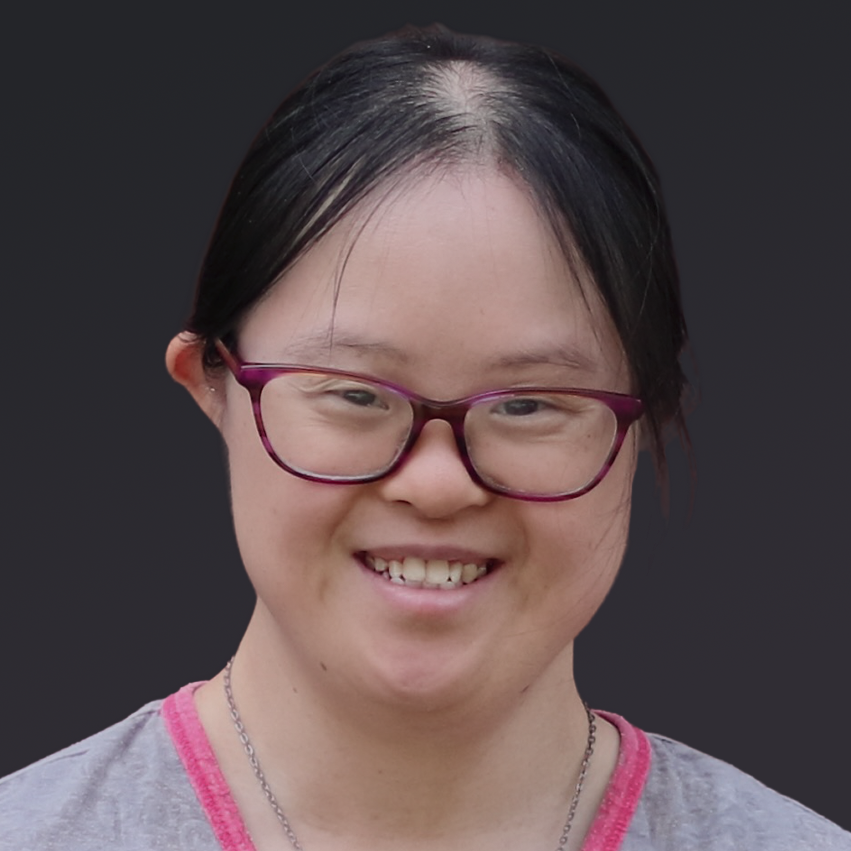
Jennifer Guan lives in Brookline, Massachusetts and has worked at Boston Children’s Hospital since 2018. She supports research studies and clinic work at the Down Syndrome Program, helping with data entry, preparing study materials, and welcoming families. In summer 2025, Jennifer joined the Rubenstein Lab as a co-research intern. Outside of work, she enjoys watching movies, reading, latch hooking, yoga, ballet, and traveling with her family.
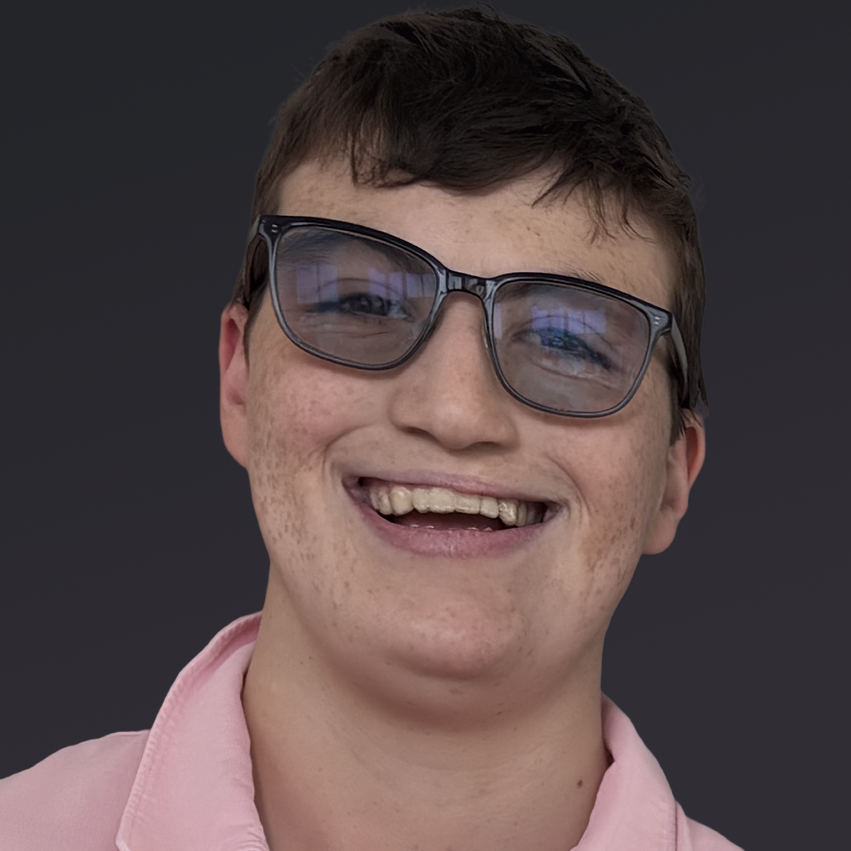
Daniel O’Donnell lives in Boston, Massachusetts and has been part of Brookline Special Olympics for 12 years, where he’s known as the “Mayor” of the program. He is passionate about the Down syndrome and intellectual and developmental disability (IDD) community. Dan joined the Rubenstein Lab as a co-research intern in June of 2024. He loves Boston sports and taking selfies. Dan loves spending time with his countless number of friends and his girlfriend, Maddy.
Eva Adib (not pictured) is a fourth-year undergraduate student studying neuroscience at Boston University. She works as a research assistant in the Rubenstein Lab, where she supports inclusive research projects focused on aging and communication in hospital settings by working alongside a team of Co-Researchers with Down Syndrome. She also provides direct support to neurodivergent individuals and their families through home-based services. Outside of work, she enjoys exploring Boston with her friends, volunteering with disability inclusion programs, and playing the piano.