
Summary: Kathleen Bishop, Ph.D., examines how language shapes attitudes toward people with disabilities, tracing the history of terms like the “r-word” and their impact on dignity, inclusion, and self-perception. Drawing on personal experience and research on the origins of language, Dr. Bishop argues that word choices influence culture, policy, and the way society values people with intellectual disabilities.

“Sticks and stones may break my bones; names will never hurt me.”
Readers who are close to my age may remember teachers and parents advising recipients of insulting words to ignore the bully’s attempt to cause hurt. While the advisors were intending to prevent forceful responses to a playground bully, the advice to ignore the insults did not reduce the bully’s continued efforts to hurt others. At the time I did not understand the recommendation was essentially making the victims of the bully responsible for the bully’s actions. Today, I feel the suggestion to ignore others being hurt by intentional tyrants’ simply wrong.
For myself, as an overweight child the most frequent insult was a reference to weight, insults that have lasted a lifetime in self-perception. I thought insults on looks were the worst slights anyone could receive. That was until as a teenager I found my life’s calling when I volunteered to assist in the Special Education classroom isolated down a long hallway in the elementary school. Some of the ‘children’ in the elementary classroom were the same age as me, others slightly older or much younger. All were labeled as children in that classroom, with no opportunities for participation in sports or intermural activities with other students of the same age or possible shared interests.
I heard for the first time during my initial year volunteering in the Special Education class the “R” word as we name the former diagnostic term today. I volunteered for this classroom throughout junior and senior high school and heard the “R” word often. It was spoken in whispers as we passed by in hallways to our solitary time on the playground or to the cafeteria to pick out leftover snacks. Friends and acquaintances asked how I could spend so much time with those “R-word” kids. I defended and explained as best I could how much each child or teenager taught me and made me feel useful, turning away when the eyes rolled.
Allowing a bully, often much larger in physical size than everyone else, purposefully calling people hurtful and insulting names while advising the intended targets to ignore the threatening words is giving permission to commit wrongs to others. The words used by yesterday’s bullies have returned larger than life today, sometimes as a precursor for more harmful assaults. Unfortunately, there are too many speakers who celebrate the removal of simple humanity and caring in our language as returning their rights for their perceived free speech. Apparently, the harm done to others not like them is not an issue or important to the users of the disrespectful language.
Oral and written language are the most common ways we connect with each other. Words are powerful tools to bring people together or to exclude people who may appear different or are devalued by society. It is important we remember the power of that communication and use that power carefully.
Language is defined as a commonly used means to connect humans with each other as well as other beings including our beloved pets. Verbalization is the use of common sounds that can be mutually interpreted with the same meaning creating a shared language. Well-developed language is considered human evolution and is reflective of the attitudes of society that helped shape the language.
Sounds and joining the sounds together to make words are the building blocks of language. Using these building blocks, we can share emotions, concepts, and information as well as create a connection between people. These connections can lead to the building of communities, cultures, advanced brain development, and the sharing of beliefs. Evidence demonstrates that the first communities of people used oral language as well as other forms of communication like sign language. The choice of the words used is usually purposeful choice made by the speaker. The words used can create images that can unconsciously influence perception, negative or positive.
Some archeologists and researchers believe based on their research that women were the primary developers of this shared oral language, estimated to have begun any time between 500,000 to 2 million years ago. In my passion on uncovering women’s hidden ancient history and helping restore women to history, I have learned from many that the development of culture and language was the product of women who were also the leaders of their group of people.
According to Leonard Shlain, author of The Alphabet vs The Goddess: The Conflict Between Word and Image; women were the creators of oral language and the transmission of culture across generations through story telling long before the written word existed. Dr. Slain, a researcher and surgeon, explains how changing from oral communication to the written word as the primary way to exchange information actually reconfigured the human brain profoundly changing history, religion, language, cultural perception, and the devaluing of the oral stories told by women.
Words, both oral and written, can create powerful messages, influencing thoughts and actions of the receiver of the spoken words. These words can lead to understanding and collaboration or result in excluding people from acceptance in communities. How we value or devalue people is impacted by the choice of words used. For example, the perception about an older woman depends on the choice of words, i.e., old hag (a term of respect in the past) versus elderly lady.
Learning the origin of any word helps us understand the original purpose of the word and some sense of why the evolution of the word has become negative, impacting perceptions in society. The word ‘retarded” comes from the Latin word “retardare” meaning to delay or to slow down. Recorded evidence indicates the noun “retard” referring to a delay, not to a person, was used as early as the 1700s. The term retard was used in 1781 by Benjamin Franklin in a letter to refer to slowing down progress. In the early 1900s the mentally retarded phrase was created as a diagnostic term to mean a person with cognitive delays rather than a person internally flawed. The term became offensive by the 1970s and was replaced in the 1990s by the phrase intellectual disability.
The term mental retardation was coined by medical professionals in the early 20th century to replace the medical diagnostic terms of idiot, imbecile, and moron, used at that time. The three words had become so negative that the term retardation was considered a better clinical term. They were not intended to be words of insult and yet have become words to demean and discount the value of people who are called these names.
I began this article in early 2025, planning to complete it within a few weeks’ time. Deadlines and other responsibilities in life prevented me finishing my thoughts on paper until a colleague forwarded a NY Times article on the ‘Return of the R Word.’ I became so angry reading that in 2026 the assistant attorney general of the US Justice Department of the Civil Rights Division laughingly and very publicly referred to people with opposing political views as ‘R’ beings who slowed down her knitting project.
It is very disappointing and shocking for the leader in the department charged with the responsibility for preserving the basic civil rights of people with intellectual disabilities thoughtlessly and purposely using harmful language. I hope that each reader will think very carefully in the choice of words about any person or group of people. Words can cause permanent harm influencing self-confidence and capacity as well as decrease opportunities for full participation in society.
Zora Neale Hurston, an American African writer, folklorist, and anthropologist tells us of the importance of words:
“With the right word at the right time, you can change the whole world.”
My comment - Change the world in a positive way, one word or phrase at a time.
Resources
Inventing the Feeble Mind: A History of Mental Retardation in the United States, by James W. Trent Jr., Mar 16, 1994
Mental Retardation in America: A Historical Reader (The History of Disability, Paperback – February 1, 2004 by Steven Noll (Editor), James Trent (Editor)
The ‘R-Word’ Returns, Dismaying Those Who Fought to Oust It - The New York Times
The Alphabet Versus the Goddess: The Conflict Between Word and Image, by Leonard Shlain
The Power of Words: How Language Shapes Your Mind, Emotions, and Reality— and How to Transform Your Life from Within, by Daniel Vazquez, January 13, 2026
University of Kansas, Research and Training Center on Independent Living. (2020). Guidelines: How to write about people with disabilities (9th ed.)
What’s so Special about Women? Women’s Oral History. Vol. 2, No. 2, Women’s Oral History (Summer, 1977), pp. 3-17 (15 pages) Published By: University of Nebraska Press
About the Author
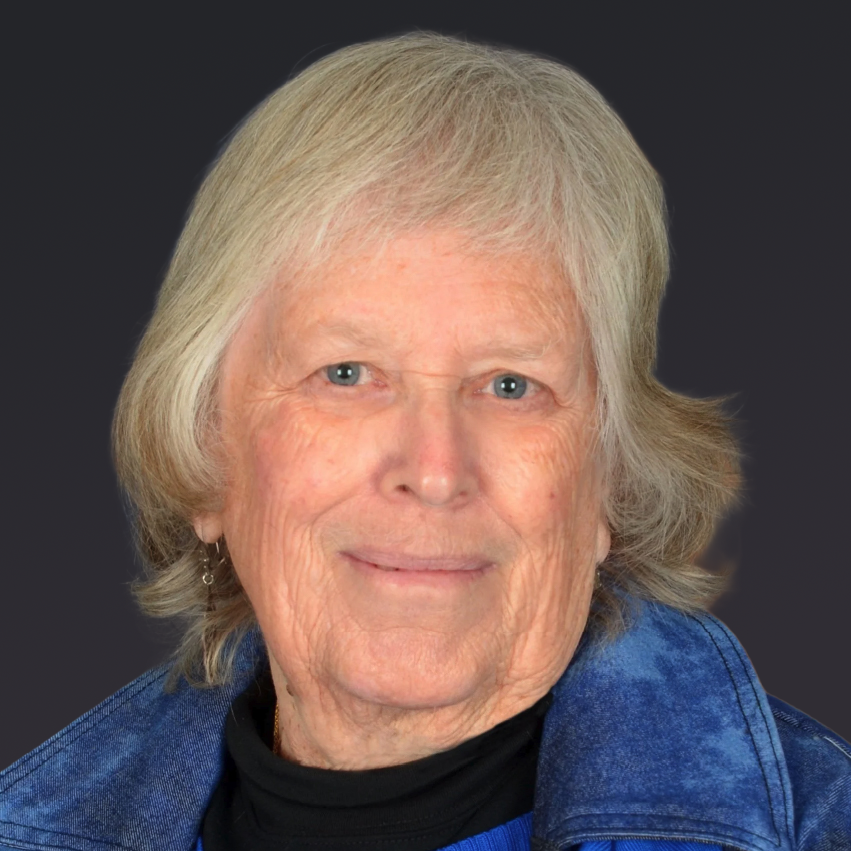
Kathleen M. Bishop, Ph.D. has more than 50 years of experience in the intellectual and developmental disabilities field and specializes in aging with IDD. She serves as Education and Training Coordinator for the National Task Group on Intellectual Disabilities and Dementia Practices (NTG) and consults nationally on dementia-capable care. Writing as Mary Kathleen McKenna, she is the author of the Women with Wisdom series and the Pets of Wisdom series.