
Summary: In this Editor’s Letter, Dr. Rick Rader reflects on Albert Einstein’s reputation as a genius, his reported developmental differences, and his own use of the word “retarded” in describing his intellectual development. The piece explores how language changes over time and invites readers to reconsider assumptions about intelligence, difference, persistence, and the value of unconventional thinking.

Rick Rader, MD, FAAIDD, FAADM, DHL (hon), Director, Habilitation Center, Orange Grove Center
Editor-in-chief, HELEN, Journal of Human Exceptionality
“We cannot solve our problems with the same thinking we used when we created them.”
— Albert Einstein
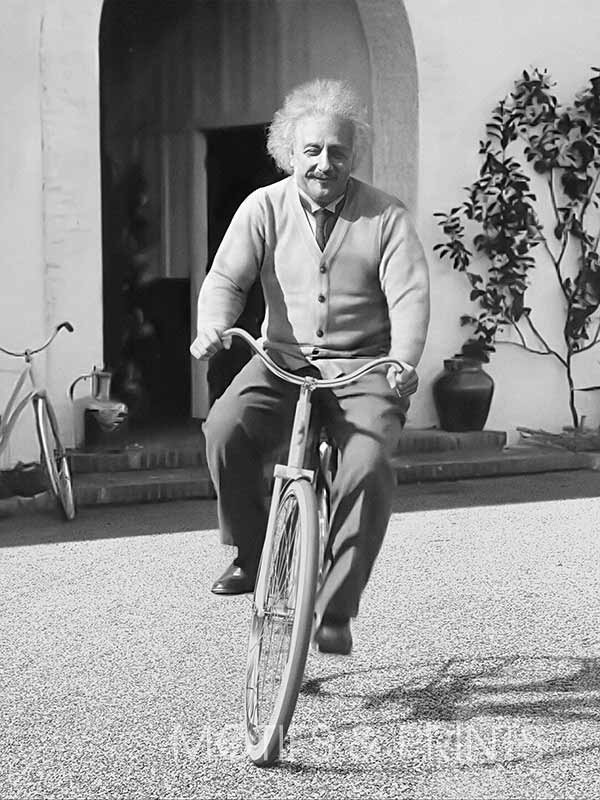
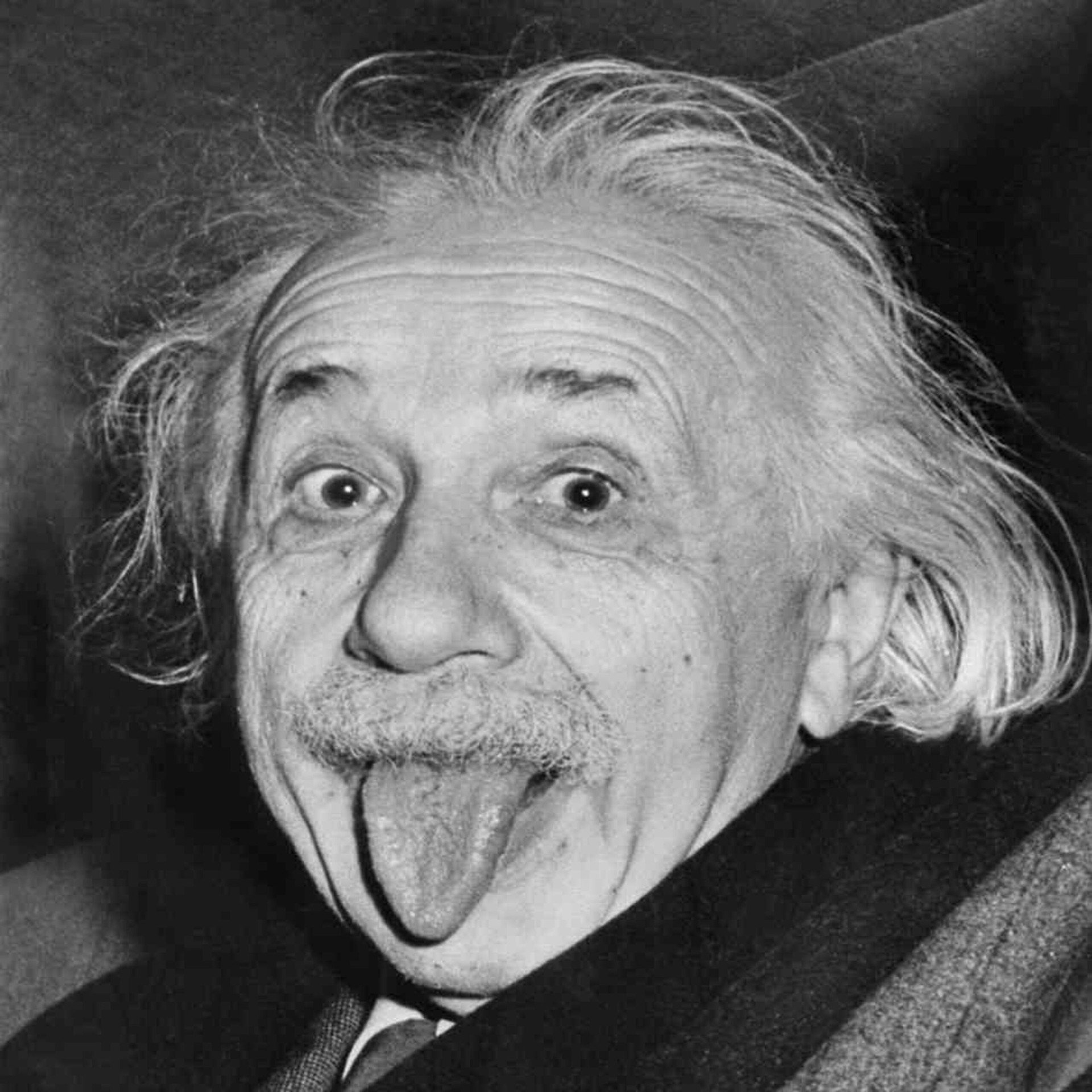
Ever since the first time I saw photos of Einstein riding a bike and sticking his tongue out I knew he was my kind of guy. His unruly hair and scraggly sweaters sealed the deal.
Of course, Einstein is best known for developing the theory of relativity, and making important contributions to quantum theory. His mass-energy equivalence formula E = mc2 has been called “the world’s most famous equation.” I have a sweatshirt with the formula that I wear when I am feeling especially smart.
He received the 1921 Nobel Prize for Physics for “his services to theoretical physics, and especially for his discovery of the law of the photelectric effect.”
All in all, he is the equivalent (at least to me) of Babe Ruth, Shakespeare and DaVinci, the original GOAT.
And although he was not referring to people with disabilities, he did offer what I consider the marching orders for those with complex challenges, “Persistence is the most powerful force on earth, it can move mountains.” We know that it is revealed in the pages of HELEN each month.
So, imagine my surprise when I read that Einstein referred to himself as being “retarded.”
How was it possible that the world’s most celebrated genius thought he was retarded?
I became fascinated with the stories and misinformation about Albert and his so-called early struggles with learning and poor performance as a student.
Walter Sullivan, writing in the New York Times, contributed to the intrigue. “When a boy was born in Ulm, Germany, on March 14, 1879, his head was so large and angular that his mother feared her child was de formed until she was reassured by her doctor that it would grow normally. The baby was given the name Albert Einstein……As recounted later by his sister, “When Grandmama, after some time, first saw him she clapped her hands over his head in astonishment and cried: ’Much too fat! Much too fat!”
Walter Gratzer (Eurekas and Euphorias) adds with, “And everyone surely relishes the judgement of Einstein’s schoolteacher that the boy would never amount to anything, or indeed the story that Albert’s first words, uttered when he was already three and a half, were the vociferous complaint that the milk was too hot: “But you can talk!, his startled and delighted parents were supposed to have exclaimed, ‘why have you never spoken before?’ ‘Because’ came the answer (or so legend has it). ‘Previously everything was in order.”
Einstein’s memory was notoriously poor. He was unable to remember dates and could not remember his own phone number. As a student, one of his teachers claimed that he had a memory like a sieve. Once when he was traveling on a train, the conductor approached to collect his ticket. Einstein began searching his pockets, but the conductor recognized him and said he could ride for free. Einstein responded, “Thank you, but if I don’t find my ticket, I won’t know where to get off the train.”
My fascination with Einstein (the Eccentric) and part of his charm was his disheveled look. In addition to his uncombed hair, one of Einstein’s peculiar habits was to never wear socks. Whether it was while out sailing or to a formal dinner at the White House, einstein went without socks everywhere. To Einstein, socks were a pain because they often would get holes in them. Plus, why wear both socks and shoes when one of them would do just fine? (Jennifer Rosenberg, “10 Things You Don’t Know About Albert Einstein.”
There is evidence that Albert Einstein used the word “retarded” in reference to himself, but in a very different historical context than how the word is understood today.
A commonly cited quote attributed to Einstein is:
“How did it come to pass that I was the one to develop the theory of relativity?
The reason, I think, is that a normal adult never stops to think about problems of space and time. These are things which he has thought of as a child. But my intellectual development was retarded, as a result of which I began to wonder about space and time only when I had already grown up. Naturally, I could go deeper into the problem than a child with normal abilities.”
This appears in biographies and quote collections based on remarks Einstein reportedly made about his childhood development.
In early-20th-century English, “retarded” was often used clinically or descriptively to mean “delayed” or “slowed,” without the strongly pejorative meaning it later acquired. Einstein seems to have been referring to his unusually slow and reflective developmental style — he was known to speak late as a child and described himself as developing differently from peers.
There’s no evidence he used the term in the modern insulting sense, or that he identified himself as having an intellectual disability. In fact, he was reflecting on why he continued thinking deeply about basic questions that most adults stop noticing.
If Einstein were ‘retarded,’ and he was able to conjure the world of tomorrow and at the same time play the violin and sail; then perhaps we should all embrace the “R” word and wish more of us would go without socks.