
Ableist Rhetoric
How We Know, Value, and See Disability by James Cherney
A Book Review by Elena Salgado
Ableist Rhetoric: How We Know, Value, and See Disability by James L. Cherney is a book that offers an incredibly thoughtful and academically rich discussion of how ableism is embedded in language, culture, and social institutions. Cherney explains the complexities of rhetoric, disability studies, history, and cultural criticism, and argues that ableism is not simply a matter of prejudice against disabled individuals, but a system so extensively spread throughout our culture that it becomes too powerful and difficult to control.
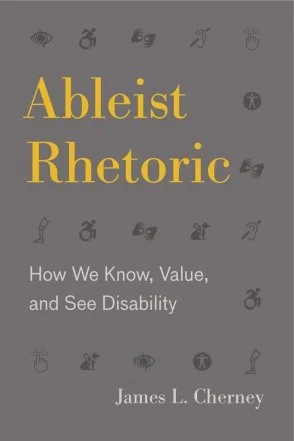
The book is exceptionally well-made. Cherney skillfully connects historical and modern stories to reveal recurring rhetorical patterns across topics ranging from religious narratives, horror media, eugenics, sports, and much more. His analyses of social and cultural practices in disability research show how Western culture continues traditions that value the lives of disabled people less and constantly frame disability as something unnatural, tragic, or inferior. The historical context and case studies are detailed and intellectually engaging, which helps readers maintain interest in the book.
Additionally, Cherney speaks about different perspectives, models, and more. The recurring theme of the book is the author pushing the reader to critically examine language, narratives, and social norms that shape public attitudes towards disabilities. Therefore, the book is valuable for the public to read because its material encourages readers to rethink disability beyond one perspective.
Unfortunately, the book’s language and themes cause it to feel too dense and heavy, even after the theories, ideologies, models, and vocabulary are explained. Even as a psychology major and someone who frequently engages with academic scholarship, I found parts of the book challenging to read because of its complexity and highly theoretical language. While the text’s complexities do reflect the depth and significance of the topics, they also make it better suited for professionals, educators, and academics only. Hopefully, Ableist Rhetoric can inspire future works on similar topics that are more accessible and easier for a broader audience to consume.
Overall, Ableist Rhetoric by James Cherney is an impactful and important contribution to disability studies and rhetorical literature. Its analyses of intellectually challenging and socially relevant topics provide readers with frameworks for understanding how culture and language influence perceptions of disability. Though it is a dense book, I would recommend it to anyone interested in social justice, communication, and disability theory.
About the Reviewer

Mayra Elena Salgado immigrated from Honduras to the United States at age nine. She graduated with highest honors from the University of Tennessee at Chattanooga, where she was inducted into Phi Theta Kappa and the Alpha Society for her academic and research achievements. She currently works as a coordinator for the Family Support Program at a nonprofit organization. Salgado plans to pursue a master’s degree and doctorate in psychology and hopes to become a neuropsychologist contributing to research and advocacy.