
I’ll have mine rare please
Summary: A lighthearted question about steak opens into a thoughtful look at what it means to live with a rare disease. The piece explores the surprising scale and complexity of conditions that affect relatively few people individually, while reflecting on the strength found in shared knowledge, advocacy, and community.

Rick Rader, MD, FAAIDD, FAADM, DHL (hon), Director, Habilitation Center, Orange Grove Center
Editor-in-chief, HELEN, Journal of Human Exceptionality
At a recent conference, several presenters went out together for dinner at a famous steak house. The waiter asked each of us how they wanted their steak prepared. Out of the twelve only one said, “I’ll have mine rare please.”
I found this to be particularly interesting. I ordered mine “well done.” I like the idea of everything being ‘’well done,” including research, relationships and promises…. or “done well” for that matter.
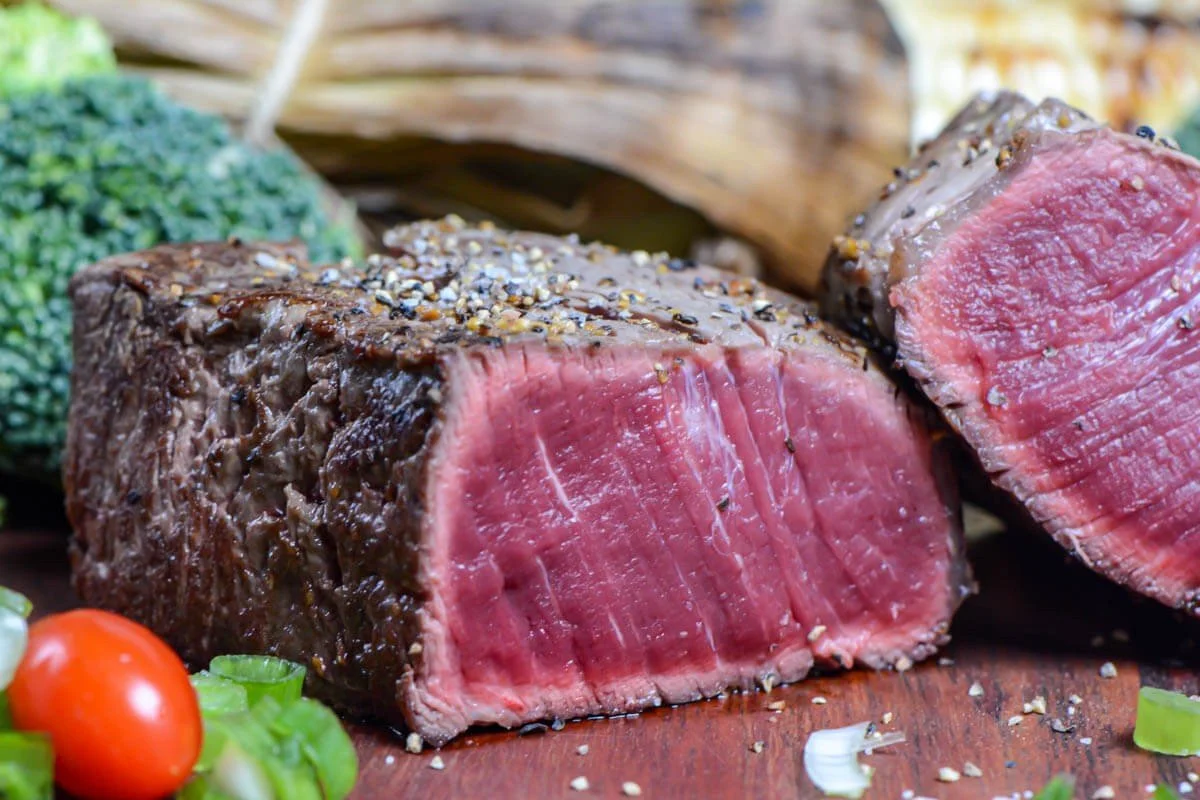
It turns out that only 2% to 5% of people order their meat “rare”, making it one of the least popular ways to cook a steak. The vast majority of diners prefer their steaks with more temperature, with medium-rare and medium being the most popular choices nationwide.
The red juice flowing from a rare steak is not blood. All blood is removed during the slaughtering process (yes Virginia, animals are slaughtered in order to feed you). The liquid is actually myoglobin, a protein found in muscle tissue, mixed with water. All this information can indeed make tofu sound like a potential alternative.
The concept of something being “rare” has fascinated humankind for centuries. Writing in the journal Nature Pratik Patil shares, “There are many amazing sights, creatures, and objects on Earth, but a lot of these are exceedingly rare, which means only a select few of us will ever see any of them in person. From unique minerals to unusual animal species, and natural wonders to historical objects, their rarity makes them very rare. There are wonders created by natural means, others are the result of bizarre mutations or unique historical objects.”
Under the category of “bizarre mutations” we find that there are over 7,000 “rare” disorders, diseases, and disabilities.
There is no single, widely accepted definition for rare diseases. Some definitions rely solely on the number of people living with a disease, and other definitions include other factors, such as the existence of adequate treatments or the severity of the disease.
In the United States, the Rare Diseases Act of 2002 defines rare disease strictly according to prevalence, specifically "any disease or condition that affects fewer than 200,000 people in the United States", or about 1 in 1,500 people. This definition is essentially the same as that of the Orphan Drug Act of 1983, a federal law that was written to encourage research into rare diseases and possible cures.
In Japan, the legal definition of a rare disease is one that affects fewer than 50,000 patients in Japan, or about 1 in 2,500 people.
The European Commission on Public Health defines rare diseases as "life-threatening or chronically debilitating diseases which are of such low prevalence that special combined efforts are needed to address them". The term low prevalence is later defined as generally meaning fewer than 1 in 2,000 people. Diseases that are statistically rare, but not also life-threatening, chronically debilitating, or inadequately treated, are excluded from their definition.
The definitions used in medical literature and by national health plans are similarly divided, with definitions ranging from 1/1,000 to 1/200,000.
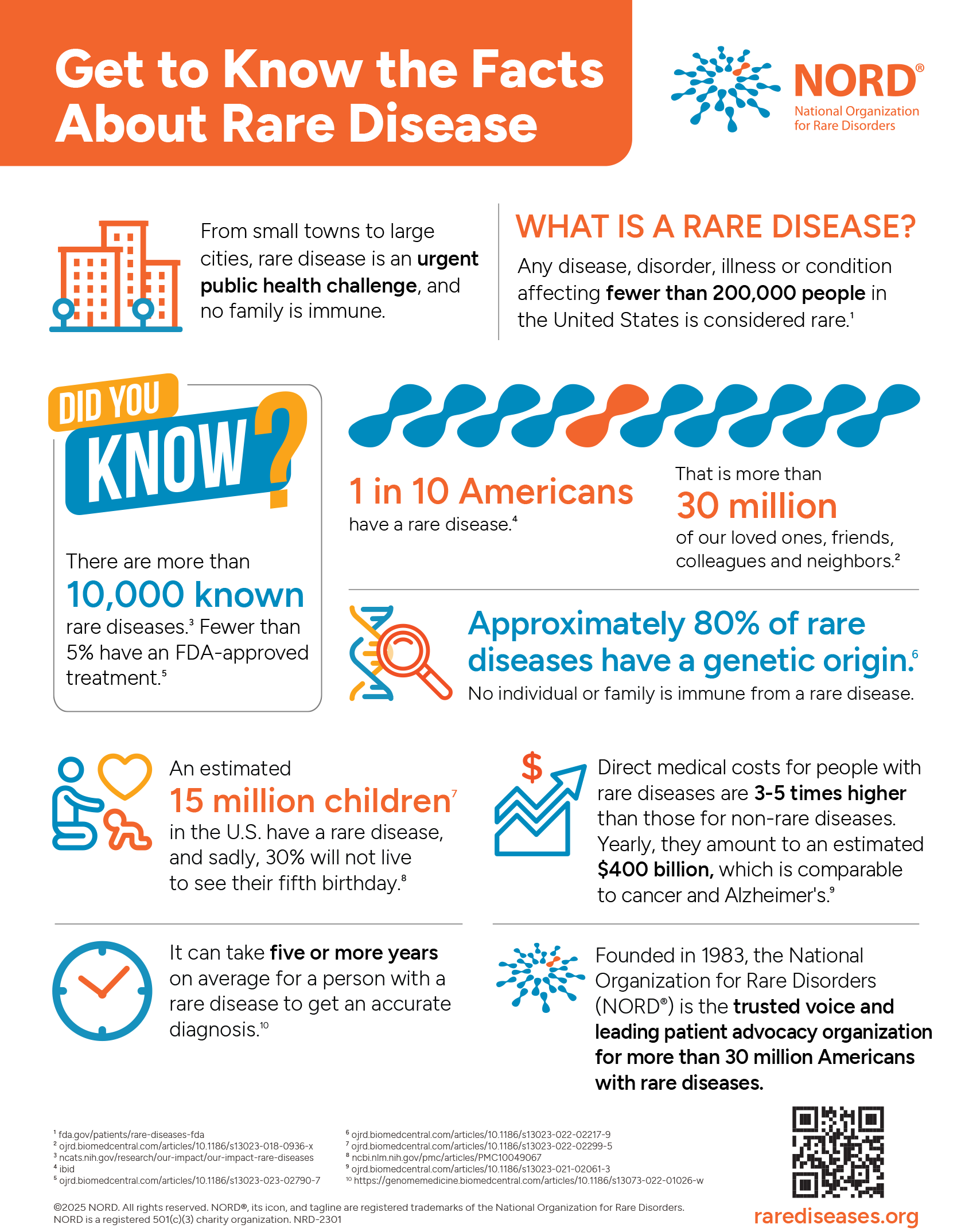
Most rare diseases are genetic in origin and thus are present throughout the person's entire life, even if symptoms do not immediately appear. Many rare diseases appear early in life, and about 30% of children with rare diseases will die before reaching their fifth birthday.
To satisfy trivia buffs, Fields condition is considered the rarest known disease; affecting three known individuals, two of whom are identical twins. It stems from deterioration of the muscular system, progressive limitation of movement and speech, occasional twitching and trembling, painful muscle spasms.
The distinction of the second rarest disease on earth goes to RPI Deficiency (Ribose-5-phosphate isomerase deficiency), with the first documented case found in 1999. Symptoms include progressive leukoencephalopathy, psychomotor retardation, seizures, and developmental delay. Caused by mutations in the RPIA gene, this metabolic disorder disrupts the “pentose phosphate pathway, essential for nucleotide synthesis and protection against oxidative stress.” (and yes, I had to look that up). With four diagnosed patients in 27 years, ribose-5-phosphate isomerase deficiency is considered the second rarest.
HELEN has always had an interest in the rare disease community. The National Institutes of Health reports that rare diseases affect about 30 million people in the United States — almost one in 10 Americans, as well as having major impacts on their families.
What is not rare in the rare disease network is the sense of community, support, encouragement, resources, clinicians, researchers, and the individuals who do not sense that they are alone. Perhaps the motto of the National Organization for Rare Disorders (NORD) provides the hope and resilience that permeates this population, “Alone we are rare, together we are strong.”
Maybe next time I’ll leave my comfort zone and try mine “medium rare.”
Rare Disease at a Glance
1 in 10 Americans live with a rare disease, half of whom are children.
Of more than 10,000 known rare diseases, fewer than 5% have an approved treatment.
People living with rare disease face medical costs that are 3-5 times higher than people with non-rare conditions.
It can take five or more years on average for a person with a rare disease to find a diagnosis.