
Support Without Control
Needing Help Is Not the Same as Losing the Right to Choose
Massimo Lorusso
There is a sentence I have spent almost four decades learning to understand: needing help is not the same as losing the right to decide.
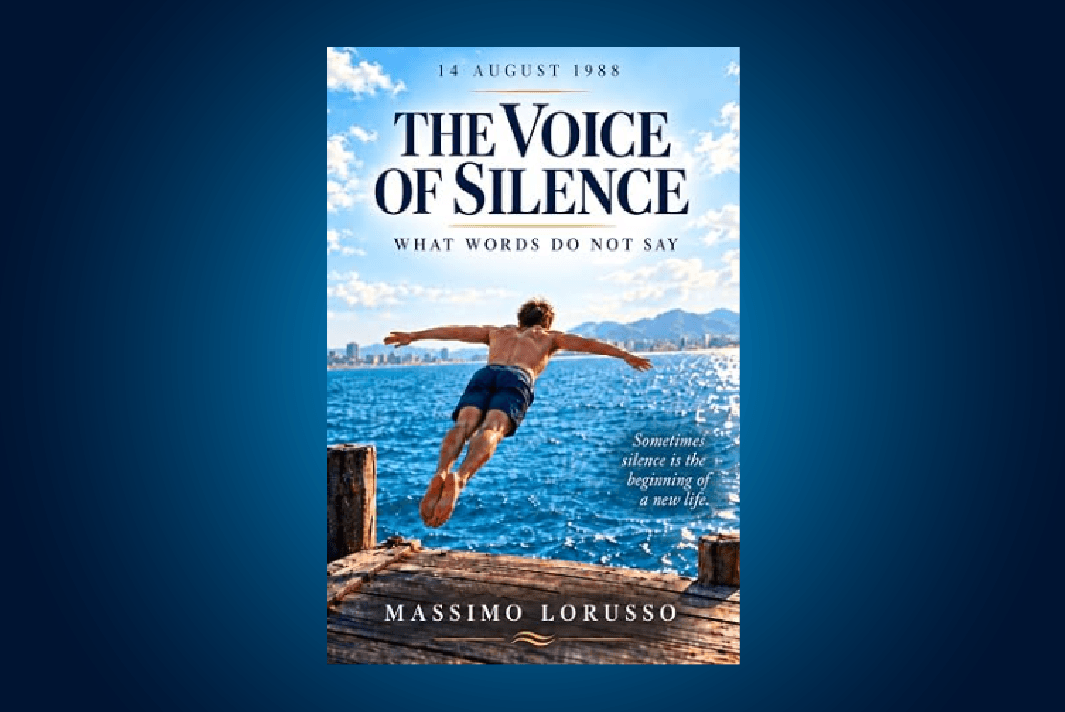
On August 14, 1988, when I was 17, I dove into the sea in Rimini and sustained a cervical spinal cord injury. From that day onward, many physical actions that most people perform without thinking became dependent on other people, equipment, or accessible environments.
I need assistance. I use a power wheelchair. Over the years I have relied on hoists, adapted beds, pressure-relieving equipment, accessible transport and, more recently, respiratory support. None of that is a philosophical idea. It is the practical architecture of my daily life.
But dependence on help does not erase personhood.
This distinction sounds obvious when stated clearly, yet it is often blurred in everyday life. When a person needs extensive assistance, others can begin to make decisions automatically: when to get up, when to go out, what is “too difficult,” what is “safer,” what is worth attempting, or what can simply be postponed. Little by little, help can cross an invisible line and become control.
Good assistance does the opposite.
The best support I have received has never tried to replace my judgment. It has made my choices possible. A person may help me transfer from bed to wheelchair, but the destination should still be mine to choose. Someone may help me prepare for an appointment, but the purpose of that appointment remains part of my life, not theirs. Technology may move my chair, open a door, or change my position, but its real value is not mechanical. Its value is that it returns a piece of decision-making to me.
This becomes particularly important inside a family.
My wife is my wife before she is someone who helps me. That sounds simple, but long-term care can quietly distort relationships if adequate support is missing. When one person becomes responsible for too much assistance, too much organization and too much vigilance, the relationship risks being swallowed by care.
I do not want the people I love to disappear inside my needs.
The person who assists has dignity, limits, fatigue, aspirations and a life of their own. Respect must therefore move in both directions. The person receiving help should not be treated as passive, but neither should the family caregiver be treated as an inexhaustible resource.
For me, autonomy is built precisely in that space between these two truths.
It is not the fantasy of doing everything alone. I cannot do everything alone. Autonomy means remaining the author of my life while accepting that many actions require collaboration.
Over 38 years, I have seen how the same principle applies to healthcare, public services, transport and technology.
A service can be technically available and still be unusable if it is organized without listening to the person. An accessible train journey can become inaccessible if assistance is unreliable. A sophisticated wheelchair can be limiting if it does not match the body, the home or the person's actual routine. A medical decision can be clinically sound but still leaves the person feeling absent if nobody explains it in a way that allows a real choice.
Dignity lives in these details.
It is present when someone speaks directly to me instead of only to the person accompanying me. It is present when assistance is offered rather than imposed. It is present when a professional asks not only “What can you do?” but also “What do you want to do?”
Those questions are not sentimental. They change outcomes.
My own life has included marriage, fatherhood, travel, writing, public speaking, loss, illness, bureaucracy, friendships and ordinary disagreements. None of these experiences cancels the reality of physical dependence, and physical dependence does not cancel the complexity of those experiences.
That is why I am cautious when disability stories are reduced to inspiration.
I understand the desire to find hope in another person's experience. Hope matters. But a life should not have to become extraordinary in order to deserve attention. A person with major physical limitations should not need to be heroic, endlessly positive or exceptional to be treated with respect.
Sometimes dignity is much more ordinary.
It is deciding what time to leave the house.
It is being asked before someone moves your wheelchair.
It is having enough professional support so that your partner can remain your partner.
It is being able to say no.
It is being able to change your mind.
It is being allowed to make a choice that other people would not make for you.
These small freedoms are easy to overlook because they rarely appear dramatic from the outside. Yet when many of them disappear, a person can remain medically cared for and still lose control over the shape of daily life.
The opposite is also true. Even when physical independence is impossible, a person can retain enormous personal autonomy if the environment, technology, services and relationships are organized around participation rather than substitution.
After almost four decades, I no longer measure independence by the number of things I can physically perform without help.
I measure it by the number of meaningful choices that still belong to me.
And I believe that should be one of the central questions in every conversation about disability, care and support: not only “What assistance does this person need?” but also “How do we make sure the assistance never takes the person's place?”
Because help should enlarge a life, not occupy it.
About the Author

Massimo Lorusso is an Italian journalist and author living in Milan. After a cervical spinal cord injury at age 17, he has spent nearly four decades navigating family life, fatherhood, personal assistance, mobility technology, healthcare, accessible travel and public services. He is the author of “The Voice of Silence – What Words Do Not Say”.