
From the Stacks
There are literally thousands of journals published around the world that relate to the disability community. It is virtually impossible to capture even a fraction of them. HELEN receives "stacks" of journals and selectively earmarks what we feel are "must read" articles of interest for our readers. It's a HELEN perk.
EFFICACY VS EFFECTIVENESS
AHCJ ⎸ 1/22/2021
At first glance, it would seem the only difference between “effectiveness” and “efficacy” is a handful of letters. But these terms actually have very different meanings in the context of medical research and should never be used interchangeably. Efficacy refers to how well a drug, device or other intervention performs under ideal conditions. Efficacy can only be determined in clinical trials, which typically have very specific criteria for participants (and therefore may not be generalizable to the general public).
Deeper dive
The criteria for clinical trial participants nearly always have age requirements and often have sex, gender, race or ethnicity requirements as well. Other potential criteria could relate to having or not having certain underlying conditions, having a certain severity of a particular disease, living in a particular geographical area, living in a rural or urban or suburban area or having public, private or no insurance, among other things. The stricter the criteria is, the less generalizable the findings might be. If, for example, a trial includes only Black women in their 40s who were diagnosed with type 2 diabetes within the past two years, would the effects of a drug being tested also apply to white men in their 20s who have had type 2 diabetes since they were children? It’s often impossible to know without doing a trial with that population as well.
Effectiveness, on the other hand, is how well a drug, device or intervention performs in everyday real life for a broader range of patients. Data from effectiveness studies looks at the intervention’s effects in a large, often diverse population. There may still be criteria for inclusion in the study, but it generally will be broader and it often may include people who are sicker or healthier than the groups included in efficacy trials. Effectiveness has much more relevance for doctors and other clinicians.
Why not just always test the effectiveness of an intervention then? The problem with this approach is that the diversity of characteristics among participants could mask potential therapeutic effects or side effects because it’s harder to tell whether the outcomes occur because of the drug or because of differences among the participants.
Another difference between efficacy and effectiveness relates to how a drug is prescribed and how well the patients adhere to it, or how different physicians might perform different procedures. An efficacious drug may not actually be effective the way it’s used. Further, efficacy trials are designed to answer the question of whether a drug, device or intervention works at all while effectiveness studies help answer whether that intervention can help patients. In this sense, efficacy relies more on results’ statistical significance whereas effectiveness relates more to results’ clinical significance. Read more on efficacy and effectiveness here and here.
More than 1 Million Americans with an Intellectual and Developmental Disability Live with a Caregiver over the Age of 60
Milbank Quarterly ⎸ 7/28/2026
For almost 40 years, Janice cared for Vincent, her son with a developmental disability, at their home in upstate New York. For almost half that time, Janice’s daughter Veronica and Veronica’s husband, co-author Harold Pollack, silently feared their eventual responsibilities for Vincent’s care. Janice, fiercely independent, refused to discuss Vincent’s medical challenges and his long-term needs. Disagreements about Vincent’s care, physical distance, and Janice’s flagging energy made serious conversation difficult. Veronica and Harold offered to help Janice and Vincent move to greater Chicago, where they lived. Janice was touched, but never quite ready.
Janice died suddenly in early 2004 at the age of 68. With no plan in place, Vincent moved in with Veronica and Harold and their two young daughters, 760 miles from the only life he had known. There are many gratifying aspects to this story. Vincent became a treasured uncle to his two nieces and started a new life in Chicago, where he now lives in a group home. There were traumas and deep disappointments, too, a story told elsewhere, twenty years ago.
The Pollack family’s challenges remain all too familiar among families dealing with the intertwined challenges of intellectual and developmental disabilities (IDDs) and caregiver aging. An estimated 1.3 million Americans who live with IDDs live with a caregiver who is over the age of 60. As lifespans increase, many people with IDDs are themselves older adults. Most will outlive their parents, who are often their primary caregivers.
Many caregivers and families have not developed, discussed, or implemented transition plans in the event that an older adult can no longer assume the relentless responsibilities of caregiving. Feinstein and Pollack conducted qualitative interviews with 39 caregivers for adults living with fragile X syndrome. If anything, the responses from this 82% non-Hispanic White, majority college-educated sample likely overstated the extent of caregivers’ transition planning. Still, only 15 of the 39 caregivers (38.5%) reported concrete plans for caregiver transitions or contingent housing arrangements in the event that they could no longer care for their loved one. One caregiver reported: “We don’t have a plan. We should be working on a plan.” Another reported: “Our motto is to live longer than our kid…. We have to live one day longer.”
Parent-caregivers have many reasons to put things off. Many do not want to burden their other children with the responsibilities and challenges that come with this discussion. Of course, the lack of such discussion increases the risk that their other children will assume these responsibilities and challenges in the midst of a family crisis. As happened to the Pollacks, people will make critical decisions without adequate preparation, often lacking basic information about their loved one’s medical and social needs.
Policymakers and the broader society are similarly unprepared. The most prominent public efforts focus on children, adolescents, and young adults, and correspondingly overlook opportunities for proactive, long-term planning at each of these life stages. The medical community easily overlooks these issues, too. “Care transition” generally denotes the transition from pediatric to adult care. Equally critical transitions from adult to older-adult services receive less attention, and are frequently left undiscussed, and thus unaddressed.
The opportunities missed are particularly poignant given the lifecycle challenges experienced by persons living with IDDs. To note one prominent example: Persons with Down syndrome face more than a 90% lifetime dementia risk, experiencing higher incidence among persons in their late 40s than among Americans over age 70. These realities must be addressed in families’ life plans.
In addition, roughly one-third of caregivers for young adults who live with fragile X syndrome are injured by their loved one. These externalizing behaviors create safety issues for older caregivers, and complicate transition planning. An adult sibling with young children may be less willing or able to house a sibling with IDD who displays such behaviors. For similar reasons, these behaviors can complicate options for other residential placements.
In addressing these challenges, policymakers and clinicians must find better pathways to partner with families. First and foremost, caregiver transition must unfold within an ongoing, planful process, with proper professional help available if families need it. Such transitions should not be avoided, then suddenly driven by crises in the lives of people with disabilities and their loved ones.
Persons with disabilities require strong and predictable, socially integrated transitional supports, as they prepare to navigate life’s inevitable adjustments when their parent-caregivers enter their senior years. Older caregivers and their families need information and peer supports to engage formal and informal support networks, and to formulate proactive and realistic transition plans. Families also require effective and accessible local services that can help them make needed connections to Independent Service Coordination (ISC) agencies and other important providers.
Policymakers and clinicians must also address punishing intersectional inequalities that pervade the IDD world. In Illinois, where we live and work, IDD services across the lifespan are far more available, and are of palpably higher quality, within our most prosperous communities. Illinois’ top 5 elementary schools for special education serve the state’s three most affluent school districts, with only one Chicago school (that serves an affluent, majority White community) in the top 10. High school staff in affluent settings have greater resources to help families manage the practicalities that accompany students’ disabilities, and to help navigate the difficult transitions from school-based to adult disability services. Social workers and support staff are far better situated to provide such help in affluent communities, where they face fewer competing demands to address housing precarity, community violence, and other prevalent concerns within our state’s low-income communities. Similar disparities appear in the domain of adult IDD services, where our state’s most prominent charity fundraising for the IDD community serves organizations with the greatest material resources.
Affluent families also possess more and better options to address caregiver burdens and transition issues. They can hire paid caregivers to assist with respite care and other pressing needs. They can engage financial and social service professionals to assist with proactive planning and to help navigate public programs’ administrative burdens. Prominent initiatives, such as Achieving a Better Life Experience (ABLE) accounts, are designed to help families navigate the constraints of SSI’s $2,000 countable asset limit in providing for future needs. As currently configured and marketed, these accounts fit the grooves of upper-middle-class life, with virtually zero take-up among non-affluent households.1
One key opportunity facing states is to make optimal use of Medicaid 1915 (c) waivers to support caregiver transition services, and to feature such resources prominently in communications and service delivery to participating families. Specific resources should be provided to caregivers at specific milestones, such as caregivers’ 60th or 65th birthdays, and corresponding milestone birthdays in the lives of adolescents and adults living with IDDs.
Caldwell and Gladstone describe key resources provided to families under the Older Americans Act (OAA). These authors document both the necessity and the difficulty of bridging distinct aging and disability service systems to meet families’ longitudinal needs. For example, the authors document ways that Aging and Disability Resource Centers (ADRCs) can be configured better to serve persons living with IDD, and they describe one particularly pertinent model: a peer-facilitated workshop intervention called The Future is Now. Workshop sessions, operated through the University of Illinois at Chicago, provide a venue for families to discuss future living arrangements, work and retirement, other challenges, and milestone tasks. Families then develop and document their future plans, and document required actions to execute these plans. The authors also describe other valuable efforts, such as Michigan’s Older Caregivers of Emerging Adults with Autism and other Neurodevelopmental Disabilities (MI-OCEAN), which matches older caregivers with family support navigators to provide needed service linkages and expert advice.
Platforms such as ABLE accounts can be similarly strengthened and subsidized for non-affluent caregivers, as vehicles to start early in creating and sustaining the financial foundations for life outside the family home.1 A lifetime of service experiences leads many low-income families to distrust public benefit and medical care systems. Families correspondingly require assistance from care navigators and others with organic ties to their own communities to investigate services and to navigate these systems.
Families also can be connected with integrated service organizations that offer day services for persons living with family, and that provide community-integrated living arrangements within the same inclusive community. Tactile experience within such service settings allows persons with IDD to glimpse their future living arrangements, as they prepare for their eventual transition from the family home.
Perhaps most important, our society must support families to have the important and difficult conversations that acknowledge and address the human reality of aging. Families must hold these conversations before they are immediately needed, rather than initiating these conversations in moments of crisis—or, worse, to regret in those moments and for decades later, that the vital conversations never occurred, with all-too-predictable human consequences.
What We Talk About When We Talk About Health Care Affordability
The Milbank Quarterly ⎸ 7/30/26
In Raymond Carver’s “What We Talk About When We Talk About Love,” two couples banter about love’s precise nature. Over gin, they offer broad pronouncements and personal examples. The reader becomes increasingly aware of each person’s significantly different perceptions of love, and the power of both its presence and absence.
So it is with “health care affordability” in the United States today. Although health care access and affordability now ranks as Americans’ top domestic policy issue according to a March 2026 Gallup poll, a consistent definition remains elusive. For an employee, the size of their share of an insurance premium and what they pay at the time of a medical service have consistently risen faster than wages for the last 30 years, and they have relinquished pay increases for health care benefits. For an employer, health care is a burgeoning line item in their financial statement, currently just shy of $27,000 per family per year—even as they have shifted more and more costs to employees. And for a government official, health care is the “Pac-Man” of public expenditures, now gobbling up almost 30% of both federal and state budgets and forcing budget cuts elsewhere.
The absence of health care affordability in the United States exerts a cost on all of us. In any given year, according to KFF reports, over a third of people report skipping or postponing needed care because of costs. Health care costs that are almost twice as high as in any other country put US manufacturers at a significant competitive disadvantage in the global economy. And public money spent on health care is money not available for other services, many of which—like public health, SNAP benefits, child care, education, and support for housing and homelessness services—can reduce the need for medical care.
Unlike the absence of love, however, the absence of health care affordability in the United States can be readily diagnosed and falls into three broad categories.
First, private sector health care expenses are rising much faster than government health care spending. Research shows that employees with job-sponsored coverage are not using more health care; they and their employers are paying more for each service or item. This is particularly true for hospital-based services and pharmaceuticals.
Facing price constraints from Medicare and Medicaid, hospitals in the United States have become massive health systems—consolidating with one another and acquiring more outpatient medical services to integrate into their organizations. This creates economic power for negotiating higher rates from private insurers, which pass these costs on to employers and employees. Contrast this with government programs, where provider payment rates are set, not negotiated.
For their part, pharmaceutical manufacturers have used patent protection, federal approval laws that focus on efficacy and not cost-effectiveness, and marketing practices protected as free speech to create a powerful business model that generates financial as well as clinical success. In no other country, except New Zealand, will one see television advertisements for treatments for stage 4 breast cancer.
Second, since US health care is financed through myriad sources, it is much easier to shift costs than to reduce them. Like a game of hot potato, insurers look for ways to deny provider claims, and employers increase employee cost-sharing. Providers consider payment variations between private and public insurance for the same service of up to three-and-a-half times to be proof of government cost-shifting. And legislators, rather than tackling systemic costs, find it much easier to limit the number of people on government programs or subsidize the purchase of health care coverage.
Finally and foundationally, when faced with the question of whether health care is a private good to be consumed by individuals (with the resulting abundant choices and significant inequities that result from a market-based economy) or a public good available to all as a right and condition for a healthy community (with the attendant limitations and tradeoffs that result), our culture has responded with a resounding “Yes!”
This inability to agree on how we place economic value on health care services leaves us reaping the worst of both options—persistently poor and increasingly inequitable health outcomes, and an inefficient, rapacious health care sector that clothes itself in virtue even as it rakes in money, becoming, as Warren Buffet once said, “the tapeworm of the US economy.”
By the end of Carver’s story, night has come, the gin bottle is empty, bitterness has surfaced, and the characters cannot make plans for dinner, let alone agree about love.
It is not clear the prospects for health care affordability are much better, at least in the short run.
When confronted with electoral concerns about affordability, Congress members have gone hunting for more money to address cost burdens for specific populations (such as subsidies for Affordable Care Act [ACA] Exchange enrollees and limiting Medicare copayments), or have picked a villain of choice—like pharmaceutical manufacturers, health systems, insurers, and, this year, perpetrators of fraud, waste, and abuse.
Why are real health care affordability solutions evasive? Besides providing payments and coverage policy for Medicare (and, in partnership with states, for Medicaid as well), the federal government sets tax, patent, and antitrust policies, all of which can have profound effects on health care affordability. A key barrier is that the health care sector has emerged as a powerful economic and political player in US public policy. Health care companies—hospitals, pharmaceutical companies, physician groups, insurers, and nursing homes—spent an estimated $750 million in 2025 to protect their interests and defend their revenues in Washington.
Likewise, individual states have significant influence over health care affordability, given their Medicaid and commercial health insurance oversight, as well as their authority over decisions concerning provider consolidation and capital expenses. Yet, state policymakers are also confronted by the iron law of economics that one person’s expense is another person’s revenue, and the dependence of local economies on the health care sector for employment, and academic medical centers for civic status. The temptation for magical thinking persists: even as we call for making health care more affordable, it can be an economic engine.
One need not succumb to platitudes or bitterness and gin, however. A health care affordability policy agenda should acknowledge that affordability is in the eye (or wallet) of the beholder. To be both politically powerful and socially just, the agenda should first focus on solidarity: making sure that all of us have access to a basic set of health services. For many, the ACA was the first step on this path: it broadened a public entitlement and forced the question of what government could afford to finance and how it should do so. In this light, the Medicaid eligibility cuts of last year—financing tax cuts for the wealthy by cutting enrollment—constitute both a profound moral failure and a blow to a broad affordability strategy. Congress chose to cut people, rather than prioritize services or change payments.
Coverage of a set of services for everybody is necessary but not sufficient. A health care affordability agenda should make sure that those without economic and political power do not face financial barriers to access these services. Medicaid, ACA, and Medicare coverage policies all do that in varying ways but no such protections against large cost sharing exist for low-income private sector employees. Limiting the harms of high-deductible health plans would be a positive step.
Finally, the agenda should focus on creating the political will for setting enforceable budgets for that basic set of services and reallocating existing funds within those budgets to prioritize those services that have been shown to have the greatest benefit for the most people, such as public health, prevention, and comprehensive primary care. These reallocation decisions should not be the culmination of personal choice by individuals with “skin in the game,” who purchase all their health care in a free market. Instead, depoliticizing Medicare’s provider rate setting process to permit more objective assessments of the costs and benefits of covered services should be the basis for these budgeting decisions.
Instead, individual states have made incremental progress with such an agenda. A number have tried to preserve Medicaid eligibility, supplement ACA subsidies, and reallocate health care spending by limiting what employers pay health systems, increasing spending on primary care, and throwing sand in the gears of health system consolidation and private equity investments. The federal government’s authority and its role in health care financing means that even the most ambitious state governments cannot do this work alone. With the Supreme Court’s 2010 Citizens United decision, current campaign financing rules favor those with economic power and health care industry players will fight any discussion in Congress that will reduce their ability to make money.
Carver’s tale is, in part, about how love is hard to define and forever flawed, though essential to being human. Affordable health care is also definitionally elusive and essential to a healthy community. Like love, talk of health care affordability—and the policies to achieve it—must be based on a respect for human dignity, a recognition of our mutual dependence, and an acknowledgment of the reality of our limitations, both personal and collective.
MMI Gets FDA OK to Expand Trial of Surgical Robot in Alzheimer’s
MPO ⎸ 7/30/26
MMI (Medical Microinstruments Inc.) announced that the U.S. Food and Drug Administration (FDA) FDA approved an Investigational Device Exemption (IDE) supplement for the REMIND study following its review of 30-day safety data from the initial patients.
The approval expands enrollment from an initial cohort of up to five patients to the full 15-patient early feasibility study, which is evaluating robotic-assisted microsurgery for neurodegenerative diseases, including Alzheimer’s disease. The REMIND study is a global, prospective early feasibility study evaluating the safety and feasibility of the Symani surgical system and microsurgical techniques to restore lymphatic drainage in the deep cervical lymph nodes of patients with Alzheimer’s disease and confirmed lymphatic abnormalities.
As enrollment continues, REMIND data may inform future research, including a potential pivotal trial. The study is part of MMI’s broader effort to generate clinical evidence for expanding robotic microsurgery into emerging applications.
Earlier this year, the company launched its Robotic Suture in the U.S. It’s the first suture purpose-built for the Symani surgical system and is suitable for cases where delicate suturing is required.
Comments from MMI exec and clinician
Mark Toland, CEO: “This milestone reflects continued momentum for REMIND as we explore the potential of microrobotic surgical intervention to reshape the treatment of Alzheimer’s disease for the millions of people and their families impacted by this debilitating disease.”
Adnan Siddiqui, MD, Ph.D., Professor of Neurosurgery at the State University of New York at Buffalo, CEO of The Jacobs Institute, and National PI of the REMIND study: “Patient safety is paramount, and we’re pleased with this important step forward by the FDA, which allows us to continue expanding enrollment in this first-of-its-kind study.”
Domain-specific physical activity levels and risk of dementia: a systematic review and meta-analysis
Lancet ⎸ Sept. 2026
Physical Activity and Dementia Risk
A systematic review and meta-analysis examined how different types of physical activity relate to the risk of dementia, Alzheimer’s disease, and vascular dementia. Researchers analyzed 74 studies involving more than 4.2 million adults across 30 countries, with a median follow-up of 10 years. Overall, higher physical activity was associated with lower risks of all-cause dementia, Alzheimer’s disease, and vascular dementia.
However, the relationship differed according to where activity occurred. Leisure-time physical activity was associated with a reduced risk of dementia, while occupational physical activity and commuting activity were associated with increased risk. Household activity showed a possible protective association, but evidence was limited because only a small number of studies examined it.
The authors suggest that occupational activity may reflect more than physical exertion. Physically demanding jobs are often linked with lower socioeconomic status, workplace stress, hazardous exposures, limited autonomy, and fewer opportunities for recreational exercise. These conditions may contribute to dementia risk rather than physical activity alone.
The study’s findings support public health strategies that improve equitable access to safe recreational exercise and address harmful working conditions. Nevertheless, the evidence was rated low or very low in certainty because of substantial variation among studies, reliance on self-reported activity, limited research from low- and middle-income countries, and the observational nature of the evidence. The authors conclude that dementia prevention should consider not only how much people move, but also the circumstances in which physical activity takes place.
They grew up with disability rights. Now, they're fighting to keep them
NPR ⎸ August 20, 2026
The article examines the importance of community-based services and disability rights, focusing on Cody and Kaleigh Brendle, two siblings who are blind and grew up as part of the “ADA generation.” Their experiences demonstrate how the Americans with Disabilities Act (ADA) and the 1999 Olmstead Supreme Court decision have supported people with disabilities in living, learning, working, and participating in their communities rather than being placed in institutions.
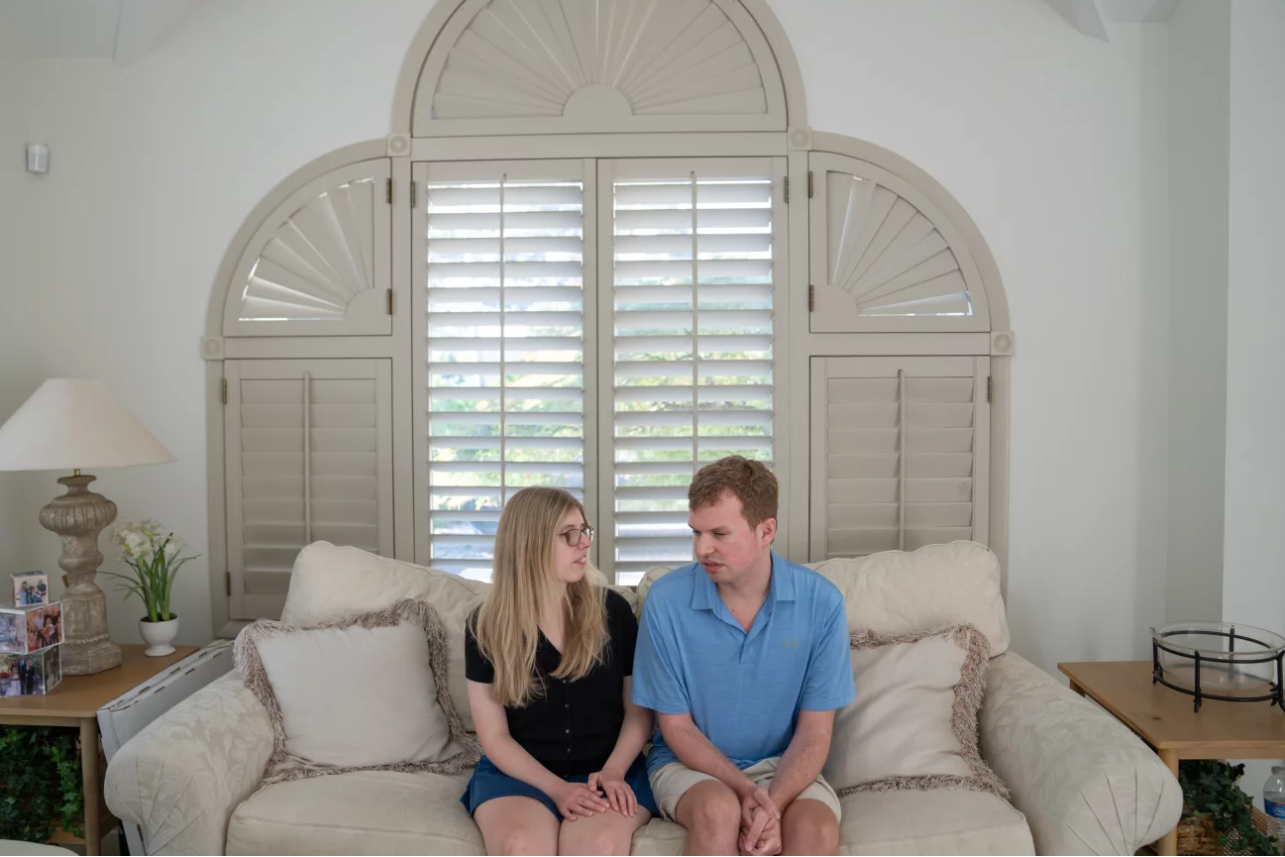
Kaleigh and Cody Brendle
Cody, who is blind and autistic, experienced significant difficulties after leaving high school, including isolation and difficulty finding employment. His participation in the Medicaid-funded Next Steps program dramatically improved his quality of life. Through the program, he develops social and life skills, shops for groceries, exercises, participates in recreational activities, and receives job training.
The article highlights concerns about recent challenges to the federal government’s enforcement of the Olmstead integration mandate, as well as reductions in Medicaid funding. Advocates fear that weakening community services could increase reliance on institutions and reduce opportunities for independence. More than 8 million adults depend on Medicaid home- and community-based services.
Kaleigh, now a law student and disability rights advocate, has founded Judy’s League to raise awareness and protect community integration. The article emphasizes that maintaining community-based supports is essential to independence, dignity, opportunity, and the future of disability rights.
Men with disabilities were less likely to have undergone PSA testing than men without disabilities
JAMA ⎸ August 10, 2026
Cancer Network (8/18) reports, “Men with disabilities were significantly less likely to have undergone prostate-specific antigen (PSA) testing than men without disabilities, according to results from a cross-sectional study of the 2023 Behavioral Risk Factor Surveillance System.” Investigators found that “among a weighted sample of 5,058,866 US men aged 55 to 69 years, 62.7% (95% CI, 61.1%-64.3%) reported a history of PSA testing. Screening rates were lower among men with any disability than among those without (57.2% [95% CI, 54.2%-60.2%] vs 65.1% [95% CI, 63.2%-67.0%]; P P = .046).” The data indicated that “among specific disability types, only mobility disability remained significantly associated with lower screening in adjusted models (aOR, 0.77; 95% CI, 0.62-0.96; P = .02).” The findings were published in JAMA Network Open.
F*ckin’ Stairs
SUBSTACKS ⎸ Aug 18, 2026
Oppressive systems convince people hardship is their own fault. That lie ate my father’s heart. Fifty years of real disability gains are being demolished by Trump. This will hurt families.
I would never publish what follows if my father were alive. He would be too ashamed to see it in print. But it’s my story too.
I.
Summer, 1970. I’m counting the stairs outside a building that my father has never entered. It’s on the other side of the large university campus where he works. He is supposed to attend a meeting there tomorrow and needs recon. So I scout ahead and see how close he can park his car to that building. The grand main entry is at the top of 30 granite steps, classic campus gothic design. I check the side doors. I find the one with no steps, then track down a janitor and ask if it stays unlocked. Then I walk back across campus to give Dad my report: he’s not going to be able to make it to that conference room. It’s on an upper floor and the building has no elevator. He needs to call and get them to relocate the meeting elsewhere.
He swears – “F*ckin’ stairs!!” – and slams his crutch down on his desk. I take a few steps back.
I’m 7.
II.
My father got polio on the same day as one of his brothers and one of his sisters. His sister ran a fever for a week and recovered. His brother spent a few weeks in the hospital and came out with a slight limp. My father spent the better part of a year in the hospital, in and out of an iron lung, and nearly died more than once. They told him he would be in a wheelchair the rest of his life.
Before the virus he was a jock. Football, amateur boxing, the college swim team, a champion golfer. He did not accept the wheelchair prognosis. After two years of physical therapy, he wore a steel brace the length of his leg and could walk a city block using two crutches.
He and my mom joined the Catholic Worker movement, a socialist Catholic group founded by Dorothy Day. After getting married, they volunteered a year in a Catholic Worker settlement house. Then they got assigned to Nova Scotia for two years where they helped organize fishermen into a co-op.
Dad then went to grad school in his 30’s and became a sociology professor. Criminology and community development were his main focus. After the riots of the late sixties he worked on community redevelopment in the South Bronx and Newark and helped pioneer the community development corporation movement. He built stay-in-school programs for kids the system had already written off. He ran for the local school board and served two terms as its president. He taught courses on environmentalism before the first Earth Day.
Dad loved helping people and believed deeply in the power of community to transform lives.
Dad also drank himself into a stupor most nights. He was one of the loneliest people I have ever known.
III.
The university put his office in the basement for years before an elevator eventually got installed.
His department lived on the fourth floor of a gothic brick and stone building with a grand staircase out front. His colleagues walked up those stairs to their offices every morning. My father entered through a back emergency exit next to the boiler room, because that was the one door with no steps, and that is where they gave him his office.
Dad worked summers and I often went to work with him. I got him articles and books from the library. And I shuttled documents up and down to the department’s main office.
And I scouted recon. When he had a meeting in a building he didn’t know, I walked the route first and came back with a report. Which door. How many steps.
I thought every kid did this.
IV.
Late 1990’s. I’m in graduate school in Madison, Wisconsin. Studying sociology in my 30s after a career in community organizing. This apple did not fall far from the tree.
My father and brother fly out to visit. His walking has shrunk to about twenty feet by now. Then he needs a place to sit. A wheelchair is still not open for discussion. Stubborn old man.
I rent him a battery-powered scooter. He looks at it scornfully, the way he looks at most offers of help.
Then he gets on.
Within an hour he’s racing two and three blocks ahead of us down State Street, zooming back with reports. There’s a restaurant on the next corner with a level entrance. The bookstore has a ramp around the side. He’s found a kid-friendly place to eat dinner and already made a reservation.
He is the one doing recon for me now while I push a stroller.
I saw my father laugh more that weekend than I have in my entire life. He tells us he feels like a fighter pilot. I buy him some cheap aviator sunglasses. He makes airplane strafing noises while he scoots along. He grew up worshipping an older brother who fought in WW II. I grew up watching war movies with my dad. For three days in Madison, he gets to pretend he’s flying missions against the Nazis.
We offer to buy him a scooter when he gets home to Brooklyn. His face closes. The apartment is too small, he says. His girlfriend wouldn’t like it. And it probably wouldn’t fit in the ancient elevator. The subject is finished.
The scooter goes back to the rental place on Monday. Dad puts his dreams back in long-term storage.
V.
Some nights he fell on the way to the bathroom after drinking too much. It was always a big deal because it was very hard for him to get back up even when he was sober. I would hear him crash and curse as he stumbled and fell. I’d find him on the floor.
More often than not, I just held him while he cried. Sometimes I had to get towels for a makeshift diaper when he couldn’t hold his pee any longer. The falling was the trigger to cry about everything the polio had taken. A grown man leaking piss and self-pity onto a 7-year old boy in pajamas. I remember waiting for the crying to be over so I could help him up. He was a big man - 6’ 5”, 250 lbs.
Nobody ever mentioned it in the morning.
VI.
Every stairway on that campus had an architect. The buildings had trustees who approved the plans, administrators who assigned the offices. When they declined to build a way in, the cost of that decision got transferred to folks like my father. And Dad paid it in shame.
I write a lot about how shame like this is a bill for hardship that’s been delivered by oppressive systems to the wrong address. A lot of us end up feeling shame for our hardships that are not our fault. We are conditioned to believe the hardship and the solution belong to us. Who does that benefit? People in power who profit from enclosure and extraction.
My father taught the right answer to that question for a living. His entire field, his whole career, was moving blame off individuals and onto the arrangements that produced their suffering. The disability rights movement did the same thing. It said the problem was never the leg that wouldn’t move. The problem was the people who profited from buildings without ramps and fought every law that would have required one. He knew all this.
He could not redirect the blame and shame for himself. A socialist who spent a lifetime teaching others to fight systemic harms, he blamed himself for every minute of his hardship.
VII.
In mining, overburden is the material that lies above something worth money. Wikipedia defines it as “the rock, soil, and ecosystem that lies above a coal seam or ore body.” The industry also calls it waste or spoil. It doesn’t matter what the material is. A forest, a mountainside, a town. If it stands between the machine and the seam, it gets stripped and piled somewhere out of the way.
The Trump regime runs on the same accounting. Medicaid is overburden. Special education is overburden. The agencies that enforce civil rights law are overburden. A century of hard-won protections stands between the regime and the wealth it intends to extract, and strip mining the shit out of democracy is a justifiable cost so long as they reach the seam.
In July 2025, Congress passed and Trump signed the bill they named Big and Beautiful. It delivered record-setting tax cuts for billionaires and corporations. And it cuts roughly a trillion dollars from Medicaid over ten years. The budget office projects more than ten million people will lose coverage. Medicaid is what pays for home care aides, wheelchairs, the therapists who work with disabled kids, the costs for most nursing homes. The senators who voted for it said the country couldn’t afford all that while also delivering the tax breaks to rich campaign donors.
The same government looked the other way when Trump chose a war with Iran. The Pentagon admits to thirty billion so far. A Harvard budget economist who correctly forecasted the cost of Iraq projects this one will pass a trillion before it’s paid off.
They found a trillion for the war. They could not find it for the ramp or the poor kids.
“Too expensive” is the oldest sentence in this extraction game. They said it about child labor laws and workplace safety rules. They said it about curb cuts and lifts on public buses. They said it about the ADA, which business lobbies fought for years as a burden America could not bear. Those assholes never went away. They waited patiently and invested steadily in candidates that can be bought.
Trump’s demolition of disability supports and infrastructure does more than take services away. It reinstalls the old blame delivery system, the one that sends the shame bill for the missing ramp to the person at the bottom of the stairs.
Every service they strip still has to happen. Somebody’s family becomes the aide, the elevator, the ride to the hospital. People with no family or close friends are shit out of luck. A new generation of kids will grow up doing recon.
VIII.
He hid it when he got sick. In his eighties, living on a small fixed pension with no savings. He was terrified of medical debt. So he stopped going to doctors and told no one. I lived halfway across the country and we talked every week. He never let on.
His partner called me on a weekday evening. My father couldn’t get out of bed and wasn’t making sense. I called 911. The ambulance crew arrived and then refused to take him. The elevator in his building was broken, he lived on the sixth floor, and he was a large man. I worked the phones from St. Louis until I found a volunteer fire company in the next borough willing to come carry him down.
“Talk to me,” a guy says when he answers the phone. I explain the situation. He tells me to hold on and covers the phone so he can shout to guys in the next room. “Yo Tony! Vito! This guy’s pops needs to get to the hospital. But he’s six floors up and no elevator. And he’s fat. Whaddya say?” Comes back on the phone and says, “Yeah, we’ll get your pops to the hospital. What’s the address?”
I flew out the next morning. He went into a coma two days later. He died while I held his hand and caressed his head. My phone was on the bedside table playing his favorite music.
I was his executor. He had about twenty thousand dollars to his name. It took me eighteen months to untangle and settle his hospital bills. No omnibus bill. Every provider who touched him billed separately. Radiology, catheterization, labs, etc., etc. I have three graduate degrees. I was teaching health policy to graduate students at the time. It was overwhelming.
The ambulance company that refused to carry him billed us $1,800. Medicare paid it.
The volunteer firefighters sent a card. “This one’s on us. Your pops was cracking jokes and making us laugh when we carried him out. So sorry for your loss.”
In solidarity,
Paul
Remember: Stay human. Stay strategic. Shape tomorrow.
Please support this work and help me reach more people. Paid subscribers make this work possible. Upgrade here if you’re able. Or consider buying me a coffee or leaving a tip on Ko-fi.
PS:
The disability policy gains during my lifetime were real. I watched them arrive. Curb cuts, ramps, elevators, disability laws with teeth. And I’ve devoted most of the past 30 years to advocating for better supports for people with developmental disabilities and their families.
What I’m watching now is how fast they come apart under focused attack. It took three generations of organizing to build them and it is taking a season to demolish them. The gains were real. The permanence wasn’t.
I wrote a short book about what it does to a person to watch that happen, and how to keep going while it does. It’s called Carrying Political Grief and it’s for anyone exhausted, angry, and grieving what Trump is doing to this country
The book is pay what you want, and a few chapters are free to preview. Check it out here.