
Women’s Health and Down Syndrome
The Health & Wellness team at NDSS
Summary: Women with Down syndrome often encounter barriers to gynecological and reproductive healthcare. This article highlights those gaps and introduces CARE Down Syndrome, a free online learning platform designed to help healthcare professionals provide more informed, equitable, and individualized care.
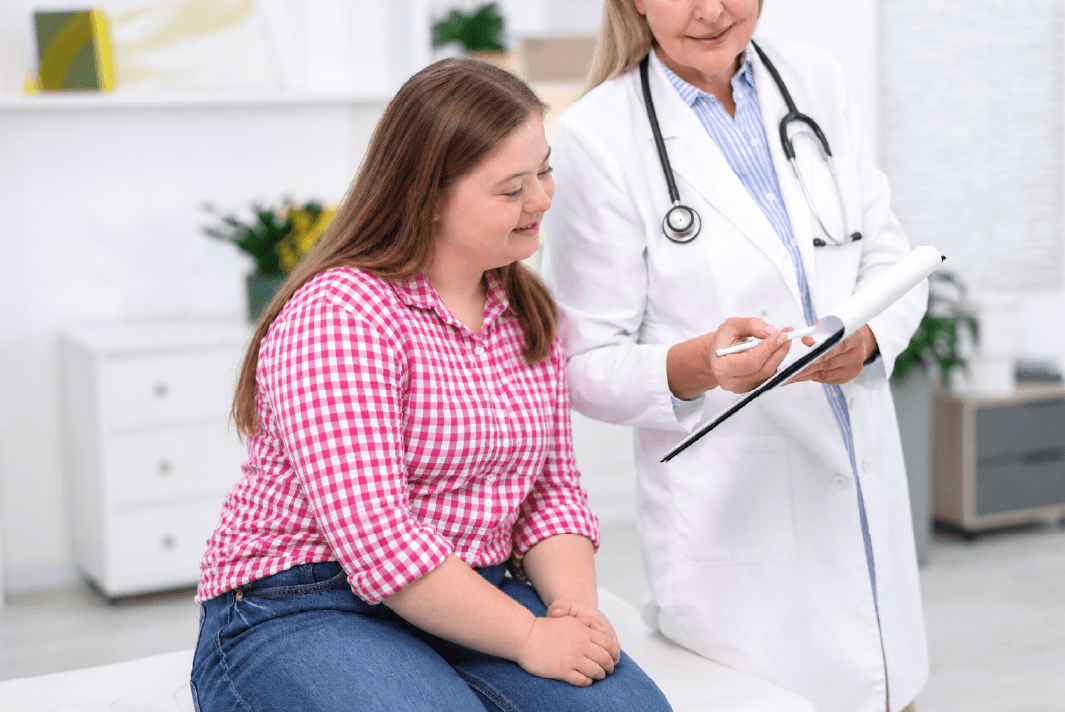
Preventive health care is a cornerstone of living a long, healthy life. Routine physicals, dental cleanings, and gynecological care are all important parts of maintaining overall health. Yet for women with intellectual and developmental disabilities (IDD), including Down syndrome, reproductive and gynecological health care has long presented challenges, with care sometimes being overlooked, delayed, or difficult to access.
The barriers to women’s health care for individuals with Down syndrome are increasingly receiving much-needed attention. Through education for families, caregivers, and medical professionals, awareness continues to grow around the importance of equitable, appropriate gynecological care for every woman, regardless of disability.
For the National Down Syndrome Society (NDSS), the launch of CARE Down Syndrome, a free online learning course and resource hub for medical professionals, is one way to help address this gap.
“We created CARE Down Syndrome to close critical gaps for adults with Down syndrome,” said Kandi Pickard, NDSS CEO. “Women’s health is one of many areas where healthcare professionals may have limited Down syndrome-specific guidance and resources. CARE Down Syndrome equips healthcare professionals with the knowledge, tools, and resources they need to deliver enhanced, personalized care.”
Greater knowledge about women’s health can also help women with Down syndrome, their families, and caregivers feel better prepared to navigate menstruation, cancer screenings, contraception, menopause, and other health needs throughout adulthood. All of these topics are important considerations across the lifespan; however, families and caregivers may be unsure of how to begin conversations or prepare a loved one for a gynecological visit.
For women with Down syndrome, a gynecological visit may involve considerations beyond the exam itself. Communication needs, anxiety around an unfamiliar procedure, sensory sensitivities, and questions about reproductive health can require additional preparation and individualized support. Families may also find themselves navigating health topics that have not previously been discussed with their loved one.
Preparation, education, and open communication can help make these health care experiences more comfortable and meaningful for women with Down syndrome and those who support them.
For tips and additional considerations for preparing a loved one with Down syndrome for an upcoming exam, visit NDSS.org and explore the Women’s Health Guide.
About the Authors
The NDSS Health team provides clear, trusted information and practical tools to help individuals with Down syndrome, families, and professionals better understand and address health needs across the lifespan. NDSS works with medical experts and community partners to turn complex and evolving health information into practical resources for the Down syndrome community. Addressing health and wellness across the lifespan, from establishing healthy habits early in life to understanding conditions associated with aging, the Health team provides tools and programs to help individuals and families recognize health considerations, ask informed questions, and have productive conversations with their healthcare teams. The NDSS Health team also equips healthcare professionals with Down syndrome-specific information to strengthen their understanding of the unique health needs of the Down syndrome community.