
Trevor Learns about Walking in Time with Music
Martha Summa-Chadwick, DMA

Hi, everyone,
It’s me, Trevor Chaplin! It’s Sunday morning, and I just finished my piano practice and Skally-Walk. My piano lessons are on Saturday, and I always love it the next day when I start to work on the new stuff Mrs. Hopkins has given me. Yesterday’s lesson was really cool. It all started when I asked Mrs. Hopkins a question about my daily Skally-Walk. Oh, wait, first I should explain what my Skally-Walk is!
You see, Mom told me a while back that I was diagnosed as being “on the spectrum,” and maybe that’s why I act kinda different from the other kids in my class. In my very first piano lesson with Mrs. Hopkins a few months ago, I told her about how I love to shout out “Skally-ally-ally-ally-ally!” but then all the kids laugh at me. I was a little embarrassed even mentioning it to her, but she turned it into something great. She had me say the Skally phrase over and over, in time with a clicker thing--it’s called a metronome! --that kept a steady rhythm going at 92 beats per minute. It kind of acted like a drum beat to keep everything steady. Then she had me start walking at the same time I was saying the Skally phrase, with one foot stepping each time there was a click. It felt amazing, and I’ve done the walk every day since my mom bought me my own metronome.
Yesterday Mrs. Hopkins opened some music that had a marking on the top right of the page: M.M. = 92. She explained that M.M. stands for “Metronome Marking,” and that the 92 is how many beats per minute it clicks out.
“Hey, that’s the same number I use when I set my metronome for my Skally-Walk! Does everyone do their walking at 92 beats per minute?”
She smiled. “No, Trevor, the reason that I asked you to set the metronome at 92 beats per minute is because I watched as you were walking during your very first lesson. You see, someone’s walking pace typically mirrors their heart rate. And the heart rate can be a great thing to know about when we’re using music to help people. We may want to exactly match the heart rate with the musical beat, or we may want to deliberately play the music faster or slower, depending on what the healing goal is for the person.”
I really wasn’t quite sure what all that meant. Mrs. Hopkins said, “Experiencing it is better than thinking about it, Trevor. Why don’t you hop onto the walking path around the piano and let me play a few samples for you.” When I was in position, she said, “First, I want you to do your Skally-Walk as you always do, at 92 beats per minute just with the metronome.” This was easy-peasy. I do it every day.
Mrs. Hopkins smiled and made a quick adjustment to the metronome. She said, “Remember the very first piece you learned on the piano, Twinkle, Twinkle Little Star? Now do the same walk while I play Twinkle along with you.” Sure enough, I followed along easily and enjoyed hearing the music where I normally just hear the metronome click. She adjusted the metronome again. “Now for the fun part. First, I’m going to play it slower than you usually walk, and then I’m going to play it faster than you usually walk, and then even faster. Got it?”
I nodded and started walking as she played the slower sample. It felt weird--almost made me stumble. When I finished a loop on the walking path, she began to play the faster sample. That felt strange too, but not as bizarre as the even faster sample she played last.
Twinkle at 80 beats per minute
Twinkle at 90 beats per minute (Trevor’s normal pace)
Twinkle at 100 beats per minute
Twinkle at 110 beats per minute
“See what I mean by needing to experience it, Trevor?”
I nodded. “Yep, most of that sure felt weird, Mrs. Hopkins.”
“Well, Trevor, when we use music for therapy, it must fit the needs of the person. If I’m working with someone who’s recovering after they had a fall or a stroke, they wouldn’t be able to walk as fast as you do, so I’d play the slower tempo. But if I’m working with a young hyperactive child and want to match their heart rate, it would be considerably faster than yours. What I did was play samples for 90 beats per minute, then at 80, 100, and 110 beats per minute You felt very comfortable with the 90 beats because it’s so close to your usual 92. But someone else may be better with slower or faster beats, right?
I felt a lightbulb going off over my head. “Ooooh, yes, I get it! Wow, you could play that same song for a lot of different people!”
“Yes, Trevor. But let’s think about this, too. You don’t have the same sensory issues that many kids like you have, but if you did, that simple arrangement with just the piano would be perfect. However, a lot of people want a little more, shall we say, ZEST, in their music!” She grinned and stood up. “And so, we could use the same song but completely change the style by going to a keyboard and adding some bass and drums.” She went to her electronic keyboard, punched a few buttons, and said, “OK, I’m going to play the same tune, but this time with other instruments added. I’ll start with the slower beats per minute of 70 and go up to 100 beats per minute.”
Trap version of Twinkle at 70 beats per minute
Trap version of Twinkle at 80 beats per minute
Trap version of Twinkle at 90 beats per minute
Trap version of Twinkle at 100 beats per minute
Wow, sounded more like the kind of hip-hop music that kids in my class at school like to listen to. I couldn’t stop grinning as she played. She finished and said, “Now do you understand how music can help so many different people, as long as we play in the tempo that they need and the songs and styles are what that they want to listen to?”
Yes, indeed! As you can probably tell, yesterday’s piano lesson was really awesome! Man, Mrs. Hopkins is more amazing all the time. Knowing all this about how music helps me walk and feel more coordinated makes me love it even more. And it can really help a lot of people who might have a hard time walking after a fall or a stroke, or just because they’re a klutz like I am.
Well, Mom just told me it’s time for lunch. After we eat, she’s taking me over to the Wayside Inn to meet up with my friends and walk my favorite trail there, the Innkeeper’s Loop. I think I’ll borrow Mom’s cell phone and play some music while we’re walking the trail to see if we can match the beat. I can’t wait to tell my friends about all this, I hope you enjoyed learning about it too.
Your friend,
Trevor
About the Author
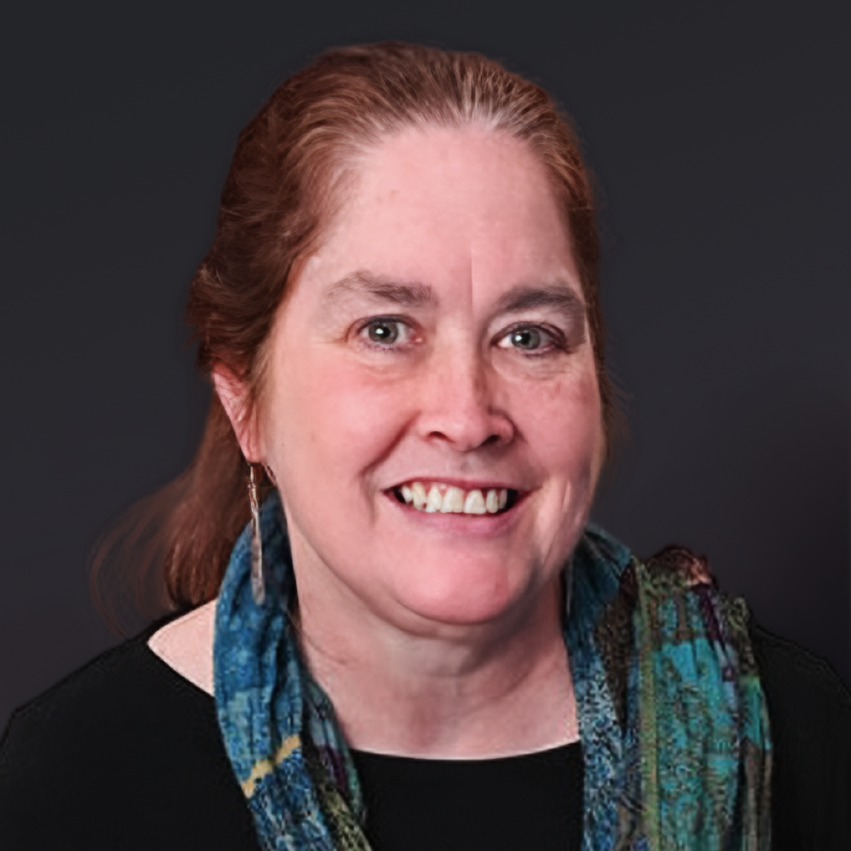
Martha Summa-Chadwick, DMA has achieved a national reputation as an educator, presenter, performer, and advocate for the cause of music in therapy. She has performed as piano and harpsichord soloist with orchestras across the country and is the Executive Director of the nonprofit organization Music Therapy Gateway in Communications, Inc.
Dr. Summa-Chadwick has established a series of both chamber and solo concerts to help educate diverse audiences in an overview of biomedical music protocols, and how music can be used in collaboration with improved neural learning patterns. She has given three TED talks and is the author of “Trevor the Noteable G.O.A.T.” She is also exploring how biomedical music protocols could be automated into software applications for persons with motor, speech, or cognition challenges.