
Oral Health and IDD
Dental Health and Preventive Skillsets for People with IDD
Summary: In a webinar from IntellectAbility, Dr. Craig Escudé and Dr. Allen Wong highlighted that addressing the significant oral health disparities for people with IDD requires shifting from reactive treatment to proactive, prevention-focused care. They emphasized addressing systemic barriers, improving provider training, utilizing minimally invasive tools like Silver Diamine Fluoride (SDF), and implementing at-home preparation techniques to enhance comfort and reduce anxiety [1]. The session underscored that oral health is directly connected to overall systemic health, making it a critical component of total wellness [1].
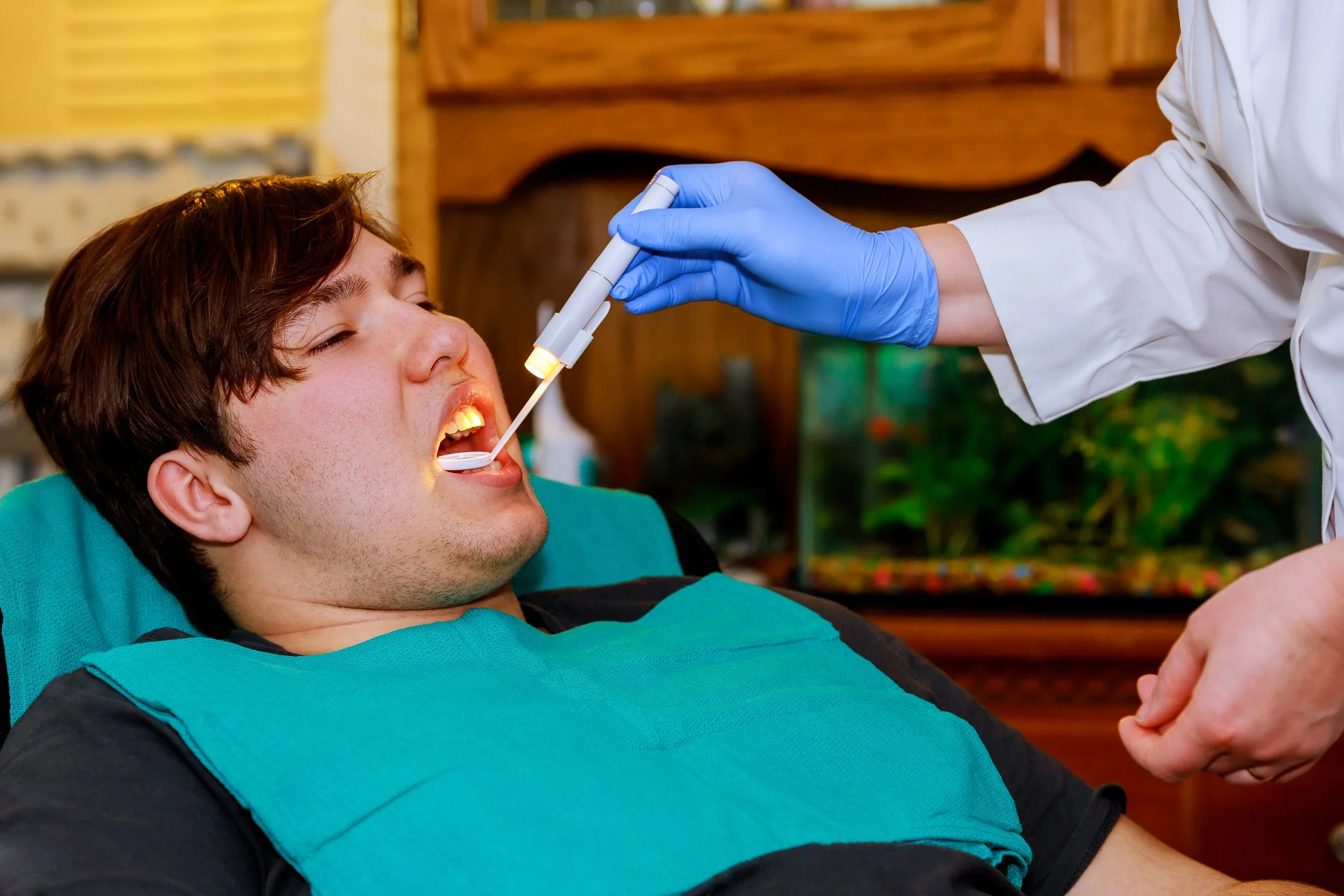
In the live webinar IDD Perspectives: Dental Health and Preventive Skillsets for Supporters and Medical Providers from IntellectAbility, Dr. Craig Escudé, MD, FAAFP, FAADM, FAAIDD, and Dr. Allen Wong, DDS, EdD, DABSCD, delve into a critical yet often overlooked aspect of healthcare for people with intellectual and developmental disabilities (IDD): oral health.
Oral health is one of the most common unmet needs for people with intellectual and developmental disabilities. With the right tools, preparation, and preventive strategies, that can change.
In this session, Drs. Escudé and Wong explored the root causes of these disparities and shared practical, prevention-focused strategies that supporters, caregivers, and healthcare providers can use to improve oral health and enhance overall well-being.
Understanding the Problem
Craig: Why is oral health such a challenge for people with IDD?
Allen: It comes down to a combination of factors, but one of the biggest is lack of training. Most dental and medical professionals are not adequately trained to care for people with IDD. When providers feel unprepared, they often feel uncomfortable, and that can lead to avoidance.
Access is another major issue. Many people rely on transportation services that are inconsistent or require long travel times. Missed appointments are often misunderstood as a lack of interest, when in reality they reflect logistical barriers.
Insurance also plays a role. Medicaid coverage is limited in many cases, especially for people who need more frequent or specialized care. And then there are broader social determinants like poverty and systemic bias that further complicate access.
Craig: So, the issue goes far beyond daily hygiene.
Allen: Exactly. These disparities reflect larger gaps in our healthcare system.
The Oral-Systemic Connection
A critical piece of the conversation is the connection between oral health and overall health, which is often overlooked in both medical and dental settings.
Craig: How does oral health impact the rest of the body?
Allen: Oral health is directly connected to systemic health. Gum disease, for example, is an inflammatory condition. Bacteria from the mouth can enter the bloodstream and contribute to inflammation throughout the body.
That inflammation is linked to cardiovascular disease, diabetes complications, respiratory infections, kidney disease, and even cognitive decline.
There are also functional impacts. Difficulty chewing can affect nutrition and digestion. Pain can affect sleep, behavior, and overall quality of life.
Craig: And yet it is something that is often missed.
Allen: Because we do not always look in the mouth, we do not always recognize the problem.
Looking Beyond Brushing
Prevention requires a broader understanding of what drives oral health risk.
Craig: Many people think cavities are just about brushing. What are we missing?
Allen: The environment of the mouth is key. Think of it like a swimming pool. When the chemistry is balanced, everything stays healthy. When it becomes acidic, harmful bacteria grow.
Saliva is one of the most important protective factors. It neutralizes acid and provides the minerals needed to keep teeth strong. But many medications reduce saliva, creating a dry mouth environment where decay can develop more easily.
Frequent snacking is another factor. It continuously feeds bacteria, especially when food is not cleared from the mouth.
So prevention is not just about brushing. It is about managing saliva, diet, and the overall balance of the oral environment.
Preparing for a Better Dental Visit
For many people with IDD, the dental experience itself can be a barrier. Preparation can make a significant difference.
Craig: What can supporters do to improve dental visits?
Allen: Preparation is critical. Completing paperwork ahead of time can reduce waiting, which often increases anxiety. Scheduling an office tour before the visit helps build familiarity with the environment.
It is also important to share information with the dental team. Sensory sensitivities, communication preferences, and past experiences all help providers tailor the visit.
It is important to adjust expectations. You do not need to accomplish everything in one appointment. Building trust over time leads to better outcomes.
Craig: Trust seems to be at the center of this.
Allen: It is. We are not just treating teeth. We are building relationships.
Practicing at Home
Preparation does not start at the dental office. It starts at home.
Craig: What can supporters do ahead of time?
Allen: Simple practice can make a big difference. Using a flashlight to look in the mouth, practicing opening and holding the mouth open, and counting teeth can help build familiarity.
Even small tools like a spoon can help introduce the sensation of cheek retraction. Watching videos or using visual supports can also prepare someone for what to expect.
The goal is not perfection. It is reducing fear and increasing comfort.
Minimally Invasive Options
Advances in dentistry are making care more accessible and less stressful.
Craig: What are some newer approaches that can help?
Allen: One of the most impactful is silver diamine fluoride, or SDF. It is a liquid that can be applied directly to a cavity. It stops decay, reduces sensitivity, and strengthens the tooth without drilling or anesthesia.
Craig: That is especially helpful for patients who cannot tolerate traditional procedures.
Allen: Exactly. It is quick, effective, and minimally invasive. It does darken the treated area, but it can stabilize the tooth and prevent further damage.
With proper training, it can also be applied by professionals beyond dentists, including hygienists and some medical providers.
Reversing Early Damage
Another important shift in dentistry is the ability to reverse early stages of decay.
Craig: You also talked about remineralization.
Allen: Yes. Early tooth damage can be reversed if the right conditions are in place. Teeth lose minerals in an acidic environment, but those minerals can be restored with proper support.
This requires calcium, phosphate, fluoride, a neutral pH, and healthy saliva. When those factors are present, the tooth can begin to repair itself.
Craig: So, prevention can actually reverse damage.
Allen: In many cases, yes. That is a major shift in how we think about care.
Moving Forward
Efforts to improve oral health for people with IDD are gaining momentum. New training standards, educational resources, and clinical tools are helping providers deliver more inclusive care.
Meaningful progress will require continued focus on prevention, access, and person-centered approaches.
Final Thoughts
Craig: What is the most important takeaway?
Allen: Prevention. If we focus on prevention, we can avoid many of the complications that lead to pain, stress, and more invasive treatment.
Craig: And improve quality of life.
Allen: Exactly. Oral health is a fundamental part of overall health. It cannot be treated as separate.
Watch the full episode here: https://attendee.gotowebinar.com/recording/3348035351248681646
Register for additional webinars in the series featuring experiences and insights into IDD health and support from national experts here: https://replacingrisk.com/webinars/
About the Authors

Dr. Craig Escudé is a board-certified Fellow of the American Academy of Family Physicians and the American Academy of Developmental Medicine and President of IntellectAbility. He has more than 20 years of clinical experience providing medical care for people with IDD and complex medical and mental health conditions. He is the author of “Clinical Pearls in IDD Healthcare” and developer of the “Curriculum in IDD Healthcare,” an e-learning course used to train clinicians on the fundamentals of healthcare for people with IDD.

Allen Wong is Professor Emeritus in Diagnostic Sciences at the Arthur A. Dugoni School of Dentistry and has more than 38 years of experience teaching postdoctoral dentistry at Pacific and UCSF. He is a former Director of the Hospital Dentistry Program at Pacific and a nationally and internationally recognized lecturer in special care and minimally invasive dentistry. Dr. Wong has served as Global Clinical Advisor for Special Olympics Special Smiles and as Past President of the American Academy of Developmental Medicine and Dentistry, the Special Care Dentistry Association, and the CAMBRA Coalition. He currently serves as Adult IDD Dental Director at Renaissance Insurance.

Taylor Neubner is the Communications Manager at IntellectAbility, where she focuses on translating complex healthcare topics into accessible, impactful content. She studied Writing and Rhetoric at the University of Central Florida and is passionate about improving how information is shared across the IDD field.