
114 Words for Autism
What a Community Shared—and What It Reveals About Us All
Summary: At the 13th annual Chattanooga Autism Walk, participants were invited to share one word they associate with autism. What emerged was 114 words written by community members, it became something far greater than a simple exercise. Through thematic analysis, these words revealed a powerful, collective story of identity, strength, creativity, resilience, and emotional depth. Rather than reflecting a single narrative, the responses highlight autism as a complex, deeply human experience shaped by both joy and challenge. This project offers a unique glimpse into how a community understands autism today—through its own voice, one word at a time.
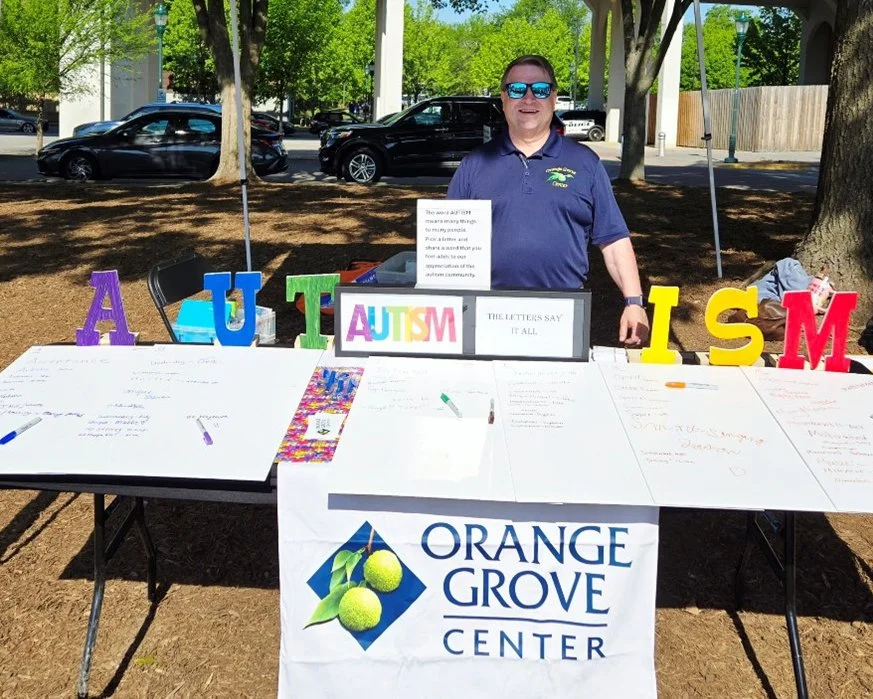
At the 13th annual Chattanooga Autism Walk, David Cox, EdD, MBA, invited participants to share one word they associate with autism. The activity generated 114 responses, offering a community-created portrait of autism shaped by identity, strength, joy, challenge, and belonging.
On a bright morning in April 2026 at the 13th annual Chattanooga Autism Walk, the air buzzed with the kind of energy that only emerges when hundreds of people gather for a shared purpose. Families clustered around registration tables, volunteers handed out T-shirts, and children darted between legs with the kind of joyful chaos that makes these events feel alive. This fundraiser for the Chattanooga Autism Center drew a large and engaged crowd, generating both meaningful financial support and a visible sense of community.
Since the inception of the Chattanooga Autism Center’s annual Autism Celebration Walk, Orange Grove Center has been an active participant and contributor to the event’s success. This year, I was invited to offer a truly “out-of-the-box” interactive experience. The strong level of enthusiasm and positive feedback strongly suggest that this engagement will be repeated in future years.
I stood beside a small table with a simple invitation: “Write one word you associate with autism. It must begin with the letters A, U, T, I, S, or M.” Participants responded using a marker on poster boards, each labeled with a corresponding letter. What began as a modest activity quickly became something more.
I expected a handful of responses. Instead, I received one hundred and fourteen words, each handwritten, each chosen with care, and each offering a glimpse into how individuals understand autism today. What emerged was not merely a collection of terms, but a textured portrait of a community articulating its perceptions in its own voice. Some participants wrote quickly; others paused, reflected, or searched for the “right” word. When individuals struggled, I invited them to think of someone they knew with autism. Many attempted to distill that person into a single descriptor. Recognizing that the prompt itself may have encouraged reduction, I shifted the approach—inviting participants to describe the person more freely. This produced a deeper window into how autism is conceptualized when not constrained by a single-word format.
Notably, a few individuals with autism chose to sign their own names, while others wrote words that reflected how they felt in the moment. I offered no prompts or suggestions, allowing each participant full autonomy in their response. Although participants were not instructed to avoid repetition, many expressed a desire to contribute a unique word. While a few words were repeated, frequency was not treated as an indicator of importance. Instead, each word was understood as equally meaningful, reflecting individual perspective rather than collective weighting. For this reason, thematic coding was used to capture patterns of meaning across the dataset, rather than relying on frequency-based analysis.
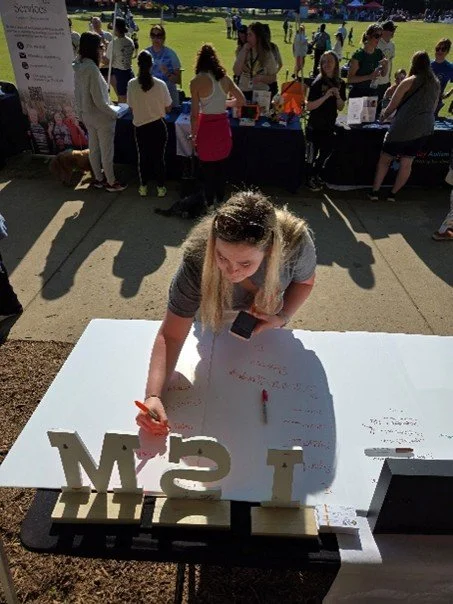
What emerged from this simple exercise was not just a list of words, but a collective narrative—one that reveals how autism is understood, experienced, and valued within a community.
Once the responses were collected, a thematic analysis was conducted to interpret the dataset. This process yielded eight distinct themes, each representing a different dimension of the autistic experience. These themes are outlined in the sections that follow. While 114 total words were collected, they represented 95 unique responses, as compound entries (e.g., “Mighty Kara”) were treated as single units of meaning. A complete list of words is included at the end of this article.
1. Affirmation, Belonging & Social Recognition
The first theme emerged with a striking emotional resonance, marked by words such as acceptance, appreciated, approved, and authentic. The theme captures language related to validation. These terms reflect more than positive sentiment; they signal a fundamental human need—to be recognized, valued, and affirmed without condition. Within the context of autism, where individuals have historically been positioned through deficit-based narratives, the representation of these words suggests a powerful counter-story: one rooted in dignity, affirmation, and identity.
Most compelling within this theme was the presence of names—Adelaide, Isla, Maybelle, Marsha, and Sage. In qualitative analysis, such entries might initially appear as outliers or simple self-identifiers. However, viewed through a narrative and identity-based lens, they carry profound meaning. A name is never just a label; it is an assertion of existence. It communicates, “I am here. I matter. I belong in this space.” In a public setting like an Autism Walk, writing one’s name can be understood as an act of visibility—an intentional placement of self within a collective story that has not always made room for individual voices.
This theme also reflects the broader conceptualization of autism as a lived identity rather than solely a clinical diagnosis. The coexistence of affirming terms (authentic, be you) alongside more tension-laden words such as misunderstood and individually reveals a nuanced dynamic. On one hand, participants express a desire—and a growing ability—to embrace authenticity. On the other, there remains an undercurrent of disconnection, suggesting that being seen fully and accurately is still not guaranteed. This interplay highlights a central paradox: the movement toward acceptance is advancing, yet the experience of invisibility has not been entirely resolved.
The phrase be you, with the “u” deliberately underlined to fit within the letter constraint—serves as a focal point for this theme. It encapsulates both an invitation and an affirmation. The emphasis on the individual (“you”) signals a shift away from conformity toward self-definition. It suggests that authenticity is not something to be earned or negotiated, but something inherently valid. In this sense, the phrase operates as both personal encouragement and collective ethos, reflecting the values of neurodiversity and inclusion that increasingly shape contemporary discourse around autism. Additional words such as special, meaningful, and sister further reinforce the relational and identity-based nature of belonging.
Taken together, this theme speaks of the transformative power of belonging. It illustrates that acceptance is not merely the absence of exclusion, but the active presence of recognition, affirmation, and space for authentic identity. The words gathered here do more than describe state; they document a lived and evolving reality—one in which individuals with autism are not only seeking to be seen but are increasingly claiming that visibility on their own terms.
2. Perceived Strengths, Competence & Capability
If the first theme centers on being seen, the second reveals what is seen as strength, ability, and potential. The second theme amplifies a complementary truth: individuals with autism are not only accepted, but they’re also capable, creative, and powerful. The language within this cluster—able, accomplished, agile, artistic, talented, and intellectual, it reflects a clear strengths-based orientation, one that stands in contrast to historically deficit-focused models of autism. These words do not seek to soften or reframe limitations; rather, they assert competence with confidence and clarity.
Importantly, the tone embedded in these responses is not one of sympathy, but of pride. There is a qualitative distinction between describing someone as “capable despite” and simply naming them as accomplished or talented. The latter reflects a shift in perspective, from accommodation of difference to recognition of value. In this sense, the language used by participants signals not only how people with autism are perceived, but how they are increasingly self-defined and collectively affirmed within neurodiversity-affirming spaces.
The inclusion of words such as intuitive and mindful extends this theme beyond observable skills into the realm of internal strengths and ways of being. These descriptors highlight cognitive, emotional, and perceptual capacities that are often overlooked in traditional assessments of ability. For example, intuitive and mindful suggest depth of awareness and presence. Together, these qualities illustrate a more holistic understanding of intelligence and competence, one that integrates creativity, self-awareness, emotional depth, and cognitive flexibility as interconnected strengths rather than separate traits.
Particularly notable are terms like multitalented and motivated. These words carry implications of autonomy, drive, and nonconformity. This linguistic shift aligns with broader cultural movements that recognize people who are neurodivergent as contributors to creativity, innovation, and systems-level change. At the same time, these strengths do not exist in isolation; they are often developed in the context of navigating environments that are not always designed with neurodivergent individuals in mind, requiring ongoing adaptation, support, and understanding.
The Perceived Strengths, Competence, & Capability theme, therefore, reflects more than individual attributes, it signals cultural reorientation. Autism is increasingly understood not as a singular limitation, but as a constellation of abilities, diverse, dynamic, and contextually valuable. The words gathered here suggest an emerging narrative in which difference is not merely accommodated but leveraged and celebrated.
At the same time, it is important to approach strengths-based framing with nuance. While these affirming descriptors counterbalance deficit narratives, they should not obscure the varied support needs that many people with autism experience. Rather, the power of this theme lies in its ability to hold both truths: that individuals can be highly capable and still require understanding, access, and support.
This theme contributes to a more complete and humanizing portrayal of autism. It affirms that autistic identity encompasses not only challenges, but also remarkable capacities—intellectual, creative, emotional, and visionary—that enrich communities and expand our collective understanding of what it means to think, learn, and be.
3. Inspiration, Admiration & Meaning-Making
Beyond capability, participants also expressed how autism feels—through language filled with awe and joy. The third theme emerged as the most expansive in frequency and emotional tone, characterized by an outpouring of words that evoke joy, admiration, and wonder. Terms such as amazing (appeared multiple times), awesome, astonishing, unbelievable, and unforgettable suggest a collective effort to articulate experiences that exceed ordinary language. The repetition of amazing is noteworthy; it reflects not a lack of vocabulary, but rather the limits of language when attempting to capture deeply felt appreciation. In qualitative terms, such repetition often signals intensity of meaning, where participants return to familiar words because they resonate most authentically with their lived experience.
Beyond these commonly used descriptors, participants reached for more vivid and expressive language- magical, marvelous, miracle, spectacular, and stupendous. These words carry a sense of elevation, suggesting that interactions with autistic individuals are experienced as extraordinary or transformative. They reflect moments that disrupt the routine, inviting attention, presence, and emotional connection. Importantly, this is not merely abstract positivity; it is rooted in relational encounters, small, everyday experiences that accumulate into a broader sense of awe.
These moments of awe are often deeply personal and may be recognized internally before they are visible externally. Together, these words highlight that progress in autism is often qualitative rather than purely quantitative, defined by personal significance, embodied experience, and internal shifts rather than standardized comparison.
While these expressions of admiration reflect genuine connection, they also invite careful interpretation, ensuring that appreciation does not unintentionally obscure the complexity of lived experience.
One particularly striking contribution, supercalifragilisticexpialidocious, introduces an element of playfulness and creativity that is itself meaningful. Its inclusion signals that participants were not only describing autism but engaging with it in a way that mirrors qualities often associated with neurodivergence—imagination, humor, and linguistic freedom. This word operates as both descriptor and demonstration, embodying the whimsy and expansiveness that many participants associate with autistic ways of being.
At a deeper level, this theme reflects how autism is experienced within relational and communal contexts. The language of awe and inspiration suggests that all individuals, not just individuals with autism, are not only observing difference but being moved by it. However, it is important to critically situate this within existing discourse. Scholarship on disability has long cautioned against “inspirational narratives” that position individuals as objects of admiration primarily for existing or overcoming adversity. What distinguishes this dataset is a subtle but important shift: the words here do not frame autism as something to transcend, but as something that inherently evokes wonder. The inspiration described appears to arise from authentic engagement, not from comparison to normative expectations.
In this sense, the theme captures a form of everyday awe, a recognition of beauty, complexity, and uniqueness in moments that might otherwise go unnoticed. Families, peers, and community members are not merely celebrating milestones; they are expressing appreciation for perspectives, expressions, and interactions that expand their understanding of the world. This aligns with broader neurodiversity frameworks, which emphasize that differences contribute to the richness of human experience rather than detracting from it.
At the same time, the prominence of this theme invites reflection on context. An Autism Walk is inherently a space of advocacy, celebration, and collective affirmation. As such, participants may feel both inclined and empowered to express positivity in ways that reinforce shared values of inclusion and pride. This does not diminish the authenticity of the responses but rather situates them within a social environment that amplifies hopeful and affirming narratives.
This theme reveals that autism is not only understood, but it is felt. It inspires moments of connection, curiosity, and joy that resonate deeply within families and communities. When interpreted alongside other themes, particularly those acknowledging challenge and complexity, this cluster of words contributes to a balanced and multidimensional narrative—one in which awe and authenticity coexist, enriching the collective story of autism.
4. Advocacy, Agency & Collective Community
While these expressions of awe deeply reflect personal and relational experiences, they also extend beyond the individual, shaping how communities come together to support, advocate, and create change. This theme underscores a foundational truth: autism is not experienced in isolation—it is shaped, supported, and transformed within community. Words such as advocate, awareness, united, and togetherness reflect a collective orientation, one that emphasizes shared responsibility and mutual support. These terms signal that participants view autism not solely as an identity, but as a social movement grounded in connection, visibility, and change.
The presence of advocate and awareness points to an active, outward-facing stance. Advocacy implies more than support, it involves action, educating others, challenging misconceptions, and influencing systems that impact autistic individuals and their families. Similarly, awareness suggests both recognition and visibility, though within contemporary discourse it also invites a deeper progression toward acceptance and inclusion. Together, these words reflect a community that is not passive but engaged in ongoing efforts to reshape how autism is understood and supported.
These efforts are often shaped by lived experiences of frustration, exclusion, and persistence, underscoring that advocacy is not only aspirational, but deeply personal.
Particularly striking within this theme is the word trailblazer. Unlike more general terms of unity, trailblazer conveys movement, courage, and disruption of the status quo. It evokes images of individuals and groups forging new paths, challenging outdated frameworks, advocating for rights, and creating spaces where people who are neurodivergent can thrive. This term suggests that participants do not see themselves merely as part of a community, but as agents of change within the broader cultural and systematic landscape.
The concept of inclusion further deepens this theme, functioning as both a guiding value and a call to action. Inclusion, in this context, extends beyond physical presence; it encompasses meaningful participation, equitable access, and genuine belonging. Its inclusion among participant responses signals an awareness that true progress requires structural and attitudinal shifts—not only welcoming individuals into existing spaces, but transforming those spaces to be responsive, accessible, and affirming.
This theme also highlights the importance of collective presence. An Autism Walk, by its very nature, embodies the principles reflected in these words. It is a visible, communal act, individuals gathering not only to support one another, but to signal to the broader public that autism is recognized, valued, and worthy of attention. The act of showing up becomes a form of advocacy in itself, reinforcing the idea that change is driven by shared visibility and unified voice.
At a deeper level, this theme illustrates how community serves as both a resource and a catalyst. For many individuals and families, connection with others who share similar experiences can reduce isolation, foster empowerment, and create opportunities for collective action. The language of unity and togetherness suggests that participants recognize this interdependence—that progress is not achieved alone, but through networks of support, collaboration, and sustained engagement.
This theme reflects a dynamic and evolving movement. It captures a community that is not only aware of autism but actively working to shape its future—through advocacy, through presence, and through a shared commitment to inclusion. In doing so, it reinforces the idea that meaningful change emerges when individuals come together with purpose, transforming individual experiences into collective momentum.
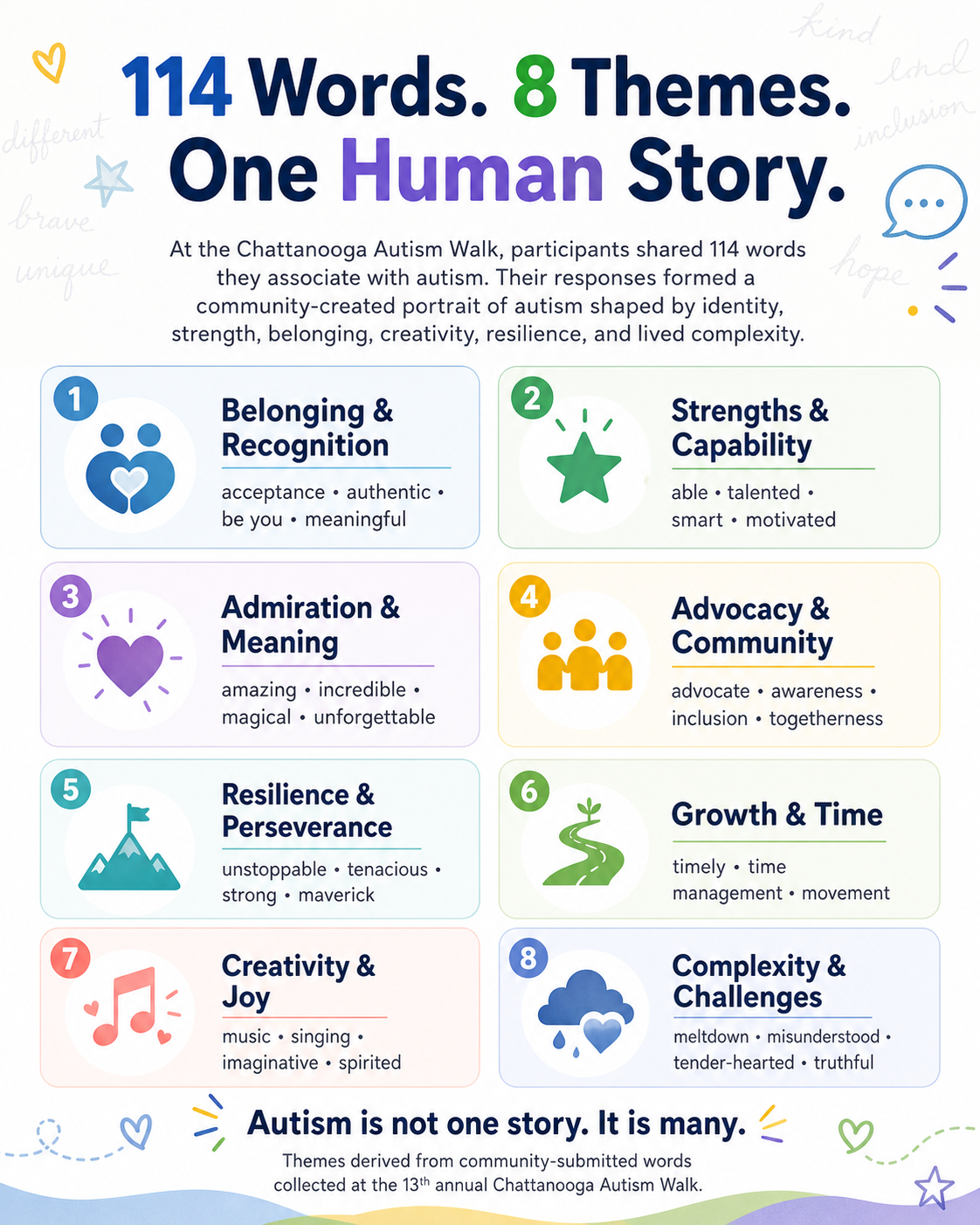
5. Resilience, Perseverance & Adaptive Capacity
Building on this sense of community from theme four, participants also expressed a powerful narrative of resilience—one rooted in persistence, adaptation, and strength. This theme is anchored by a single, powerful repetition: unstoppable, written by three different participants. In qualitative analysis, such convergence is rarely incidental. It signals a shared perception—one that transcends individual perspective and reflects a collective recognition of persistence, momentum, and refusal to be limited. The word itself carries a sense of forward movement, suggesting not only endurance, but an active force that continues despite barriers. In this way, unstoppable becomes more than a descriptor; it becomes a narrative of ongoing progression.
Surrounding this focal point are words such as underdog, tough, tuff, triumphant, tenacious, and strong. Together, they construct a language of resilience that acknowledges adversity without centering it. The term underdog, for instance, implies a recognition of systemic or social challenges, yet it is paired here with words like triumphant and tenacious, which emphasize perseverance and eventual success. This juxtaposition reflects a reframing of struggle: challenges are present, but they do not define the individual. Instead, they serve as context for resilience, effort, and growth.
Notably, the inclusion of both tough and tuff offers a subtle but meaningful layer of interpretation. While they may represent the same intended meaning, the variation suggests personal voice and individuality in expression. It reminds us that resilience is not a standardized experience; it is lived and communicated in diverse ways, shaped by personal, familial, and cultural contexts.
The label maverick is striking; it suggests not only independence but a willingness to challenge norms and think differently. Within the context of autism, this reframing is significant. Traits that may have once been pathologized—rigidity, intensity, unconventional thinking—are reinterpreted here as sources of originality and leadership potential.
This duality—strength paired with sensitivity—aligns with contemporary understandings of resilience as a dynamic and multifaceted construct. Rather than viewing resilience as the absence of difficulty, it is increasingly understood as the capacity to adapt, respond, and find meaning within complex circumstances.
The words in this theme reflect that broader definition, illustrating resilience as both inner fortitude and emotional depth.
It is also important to consider the relational dimension embedded in these responses. Many of these descriptors may reflect not only the experiences of autistic individuals themselves, but also those of families, caregivers, and communities who navigate systems, advocate for support, and celebrate progress. In this sense, resilience becomes a shared experience, distributed across networks of support and sustained through collective effort.
This theme tells a story of persistence that is neither simplistic nor one-dimensional. It acknowledges the presence of challenge while refusing to let challenge be the defining narrative. Instead, it highlights a form of strength that is enduring, adaptive, and deeply human, one that is unstoppable not because it avoids difficulty, but because it continues, evolves, and connects despite it.
6. Developmental Trajectories and Temporal Experience
Resilience, as reflected in the previous theme, is not static—it unfolds over time. This theme introduces a concept that is foundational to understanding autism as a lived experience: time. Words such as timely, time management, and movement reflect an awareness that development is not fixed or linear, but unfolds across moments, rhythms, and transitions. These responses shift the focus from static identity to dynamic process, emphasizing that autism is experienced not as a singular state, but as an evolving journey—one that is shaped not only by change over time, but also by how that change is physically and cognitively experienced.
The inclusion of timely and time management suggests an engagement with societal structures of time—deadlines, expectations, and pacing. These words may reflect both the challenges and adaptations associated with navigating environments that are often structured around neurotypical timelines. At the same time, they point to skill-building, growth, and the ongoing negotiation between individual rhythms and external demands. In this sense, time becomes both a constraint and a context—something to work within, but also something to reinterpret. This negotiation often includes not only cognitive strategies, but also embodied responses, as individuals find ways to regulate attention, energy, and sensory input within these temporal expectations.
For many individuals and families, this negotiation of time is not merely conceptual, but lived—experienced through moments of waiting, adjustment, and redefinition of expectations.
The word movement introduces an additional dimension, one that operates both as a marker of progression and as an expression of lived, embodied experience. While it may suggest forward motion or change over time, it can also reflect forms of self-regulation such as stimming or expressions of hyperactivity. These forms of movement are not separate from development; rather, they are integral to it. Physical motion may serve as a way of organizing thoughts, processing sensory information, or maintaining emotional balance. In this way, growth is not only something that unfolds across time, but something that is enacted through the body in real time.
This theme challenges dominant narratives of development that prioritize uniformity and speed. Instead, it invites a reconceptualization of progress as individualized, nonlinear, and deeply contextual. Growth may be gradual or sudden, predictable, or unexpected, and may manifest cognitively, emotionally, or physically. For some, progress may be measured in small, incremental shifts, for others, in transformative breakthroughs. Both are valid, and both deserve recognition, particularly when we acknowledge that movement itself, even when repetitive or nontraditional, can reflect meaningful engagement with the world.
Importantly, the emphasis on time also carries an implicit call for patience and understanding. It suggests that supporting autistic individuals requires a willingness to honor their unique pacing—to allow space for development to unfold without undue pressure or comparison. This includes recognizing the value of regulatory behaviors and forms of movement that support participation, focus, and well-being. Such an approach aligns with neurodiversity-affirming perspectives, which emphasize that differences in developmental trajectory—and in how development is expressed—are not deficits, but variations.
At a deeper level, this theme reflects a broader philosophical stance: that growth is not merely about reaching an endpoint, but about engaging in a process. The words captured here remind us that each moment, whether ordinary or momentous, is part of a larger narrative of becoming. This process is experienced across time, within the body, and through interaction with the environment. In this way, autism is not something to be overcome, but something lived—continuously shaped through time, experience, and interaction with the world.
7. Creativity, Expression & Joyful Engagement
As these developmental processes unfold, they are often expressed through creativity and joy. This theme illuminates a vibrant and often deeply personal dimension of the autistic experience: the capacity for creative expression as both identity and connection. Words such as artistic, singing, music, imaginative, and spirited reflect more than hobbies or talents; they point to the ways in which many autistic individuals engage with the world—through rhythm, pattern, color, movement, and sound. These forms of expression are not peripheral; they are central channels through which meaning is constructed, communicated, and shared. Additional descriptors such as spirit, sassy, adventurous, and active further emphasize the energetic, expressive, and dynamic nature of creative engagement.
For some individuals, these forms of expression also emerge as alternatives when conventional modes of communication feel inaccessible, reflecting both creativity and adaptation.
The presence of music and singing is particularly significant, as these modalities often provide alternative pathways for communication and emotional expression. For individuals who may experience challenges with conventional verbal interaction, music can serve as a bridge, offering structure, predictability, and emotional resonance. Similarly, artistic, and imaginative suggest engagement with visual and conceptual creativity, where ideas are explored not through linear logic alone, but through abstraction, symbolism, and innovation. Imaginative speaks to creativity and divergent thinking, qualities frequently associated with innovation and problem-solving. Together, these words highlight the diversity of expressive forms that extend beyond traditional definitions of communication.
The inclusion of spirited adds an important affective dimension to this theme. It conveys energy, enthusiasm, and a sense of aliveness that accompanies authentic self-expression. This is not merely about producing creative work; it is about experiencing joy in the act of creation itself. In this sense, creativity becomes both a process and an outcome—a way of being in the world that is intrinsically fulfilling.
At a deeper level, this theme reflects the intersection of creativity and autonomy. The ability to express oneself freely through art, music, or imaginative play—is closely tied to the broader concept of self-determination. When individuals are supported in exploring and sharing their creative identities, they are also being affirmed in their right to define themselves on their own terms. This aligns with neurodiversity-affirming frameworks, which emphasize the importance of honoring diverse modes of expression rather than privileging a single “normative” standard.
This theme also invites a reconsideration of how joy is understood and recognized. The joy reflected here is not necessarily performative or externally validated; it is often intrinsic and self-sustaining, emerging from engagement, focus, and creative immersion. For some, it may be found in the repetition of a melody, the layering of colors, or the unfolding of an imaginative narrative. These moments of joy are meaningful not because they conform to external expectations, but because they resonate internally.
Importantly, the celebration of creativity within this theme does not exist in isolation from the broader dataset. When considered alongside themes of belonging, resilience, and advocacy, it becomes clear that creative expression is both supported by and contributes to these other dimensions. It fosters connection, reinforces identity, and provides avenues for participation within community spaces.
This theme affirms that autism is not only experienced through cognition or behavior, but through expression, imagination, and joy. It highlights the richness that emerges when individuals are given the freedom to create, to explore, and to share their inner world, reminding us that creativity is not simply an attribute, but a vital and meaningful way of being.
8. Emotional Complexity & Lived Challenges
Yet no complete story exists without acknowledging the harder realities. Meltdown and misunderstood were coded within this theme, yet their significance extends far beyond their numerical representation. Additional words such as tender-hearted, thoughtful, truthful, and modest reflect the emotional depth and relational sensitivity that accompany these lived experiences. In qualitative inquiry, absence of frequency does not equate to absence of importance; rather these words function as emotional anchors, grounding the dataset in lived complexity.
The term meltdown reflects more than a behavioral event; it represents a moment of neurological and sensory overload, often arising when environmental demands exceed an individual’s capacity for regulation. Within the context of an Autism Walk, a space typically characterized by celebration, advocacy, and community, its inclusion signals that even in affirming environments, the realities of sensory and emotional overwhelm remain present. This word disrupts any tendency toward overly romanticized narratives, reminding us that autism is not solely experienced through strength-based or identity-affirming lenses, but also through moments of vulnerability and distress.
Extending beyond these more visible challenges, the inclusion of words such as tender-hearted, thoughtful, truthful, and modest reveals a quieter, but equally significant dimension of emotional experience. These words shift the focus from external perception to internal disposition, highlighting the depth of emotional attunement and interpersonal sensitivity that often accompanies autistic ways of being. To be tender-hearted suggests an openness to feeling an ability to experience empathy, care, and emotional resonance in ways that may be intense or deeply personal. Similarly, being thoughtful reflects intentionality and consideration, an attentiveness to others and to one’s environment that is often underrecognized within deficit-based narratives.
The word truthful introduces an additional layer of complexity, pointing to authenticity in communication and expression. Within the context of autism, this may reflect a tendency toward directness, honesty, and a reduced reliance on social masking qualities that can both foster clarity and, at times, contribute to misunderstanding in neurotypical contexts. Meanwhile, modest suggests humility and restraint, offering a counterbalance to the more visible or celebrated traits identified in other themes. Together, these words illuminate forms of emotional depth that are not always outwardly visible yet play a critical role in shaping how individuals experience connection, vulnerability, and self-expression.
Similarly, misunderstood captures a deeply relational dimension of the autistic experience. It suggests not an internal deficit, but a disconnect between the individual and their social environment. This aligns with contemporary frameworks such as the double empathy problem, which posits that communication breakdowns occur not because autistic individuals lack social understanding, but because of a mutual mismatch in perspective between neurodivergent and neurotypical individuals. The presence of this word points to the enduring impact of misinterpretation, being unseen, unheard, or inaccurately perceived can shape identity, belonging, and emotional well-being.
Taken together, the six words within this theme—meltdown, misunderstood, tender-hearted, thoughtful, truthful, and modest—capture the full spectrum of emotional complexity within the autistic experience. They reflect not only moments of overwhelm and disconnection, but also the presence of empathy, authenticity, and relational depth. This combination resists simplified narratives, instead presenting autism as a deep human experience marked by both vulnerability and strength. In doing so, this theme reinforces a central insight into the broader dataset: that understanding autism requires attending not only to what is visible, but also to the nuanced emotional landscapes that shape how individuals feel, connect, and navigate the world.
These words serve as quiet but powerful counterpoints within the data. They do not diminish the strength, joy, or identity reflected in other themes; rather, they complete the narrative, ensuring that the portrayal of autism remains authentic, multidimensional, and ethically grounded.
Discussion
The eight themes identified in this study collectively present autism as a multidimensional experience shaped by identity, relationship, and context. Themes of Affirmation, Belonging & Social Recognition and Perceived Strengths, Competence & Capability reflect a clear shift away from deficit-based models toward a neurodiversity-informed understanding of autism as a valid and valuable form of human difference. The presence of names and affirming language reinforces autism as lived identity, aligning with narrative identity theory and strengths-based frameworks that emphasize dignity, capability, and self-definition.
At the same time, the themes of Inspiration, Admiration & Meaning-Making and Advocacy, Agency & Collective Community highlight how autism is experienced not only individually but relationally and socially. Participants’ language reflects both emotional connection and a growing sense of collective responsibility, consistent with the social model of disability and contemporary advocacy movements. While expressions of admiration suggest meaningful engagement, they also require careful interpretation to avoid oversimplified “inspiration narratives,” underscoring the importance of grounding appreciation in authentic lived experience.
The themes of Resilience, Perseverance & Adaptive Capacity and Developmental Trajectories & Temporal Experience further position autism as dynamic and evolving. Rather than framing resilience as overcoming autism, participants describe persistence within environments that are not always accommodating, aligning with more contextual and relational understandings of adaptation. Similarly, the emphasis on time and movement reflects nonlinear developmental pathways, supporting ecological and lifespan perspectives that recognize growth as individualized and context dependent.
Finally, Creativity, Expression & Joyful Engagement and Emotional Complexity & Lived Challenges together provide a balanced and humanizing portrayal of autism. Creative expression emerges as a vital mode of communication and identity, while words such as meltdown and misunderstood ground the dataset in lived reality, reinforcing concepts such as the double empathy problem. Taken together, these themes illustrate that autism cannot be reduced to a single narrative; rather, it is a complex, relational, and deep human experience marked by both strength and vulnerability.
Conclusion: 114 Words, One Message
As I gathered the cards at the end of the event, I realized something: these 114 words were not random. They were collective messages.
A message about identity.
A message about strength.
A message about community.
A message about love.
Taken together, these words reflect a shift in how autism is understood—not as a single narrative, but as a complex, deep human experience shaped by both joy and challenge.
Perhaps the most important question is not what was written but what remains unwritten: What is your word?
If one word had to summarize them all, it might be this: human.
Because autism is not one story, it is many.
And on that day, a community wrote 114 words that helped tell it.
Word list:
A
acceptance
artistic
awareness
awesome
amazing
agile
Adelaide
amazing Machenzie
accepted
able
advocate
amazing
awesome/able/amazing
authentic
accomplished
astonishing
appreciated
adventurous
active
angel
approved
U
underdog
unstoppable
united
unique
unique
unstoppable
unbelievable
understanding
unique
up-lifting
unstoppable
unforgettable
be you
T
talented
terrific
triumph
togetherness
impeccable
tough
tuff
triumphant
truthful
thoughtful
trailblazers
timely
time management
tenacious
tender-hearted
I
individually
intellectual
important
inspirational
imaginative
inspiring
innovative
inclusion
inspirational
incredible
intuitive
Isla inspirational
incredible
indescribable
S
spirit
smart
special
Sage – my heart
strong
super
smart singing
super-powered
sophisticated
sassy
smart
supercalifragilisticexpialidocious
spirited
soooo smart
sister
Soren – because he is my heart
spectacular
stupendous
M
me
magnificent
multitalented
mindful
mighty
Merry Marsha
miraculous
movement
motivated
magical
modest
meaningful
marvelous
music
miracle
meltdown
momentous
misunderstood
maverick
About the Author

David Cox, EdD, MBA Assistant Director of Case Management, Orange Grove Center, Chattanooga, TN Disabilities and Higher Education Editor
Inspired by his sister, who is a member of the IDD community, David has worked in residential services for people with IDD, case management, and compliance. He is a part-time professor at the University of Tennessee at Chattanooga, and holds a Doctor of Education in Higher Education Leadership and Organizational Studies.
He works with the Chattanooga Police Department as an advisor for Crisis Intervention Teams on working with people with IDD. His research interests are autism, sensory processing disorders, dementia, and community engagement for people with disabilities. He has served as Vice President of American Association of Multi-Sensory Environments; Board of Directors of The Arc Tennessee; as a Gallup Certified Strengths Coach; as a Certified Special Olympics Coach and as a Member of People First Tennessee.