
On Becoming a Disabled Gladiator
Summary: This text reflects on a visit to the Roman Colosseum, shifting from the spectacle of the arena to the surprisingly sophisticated medical reality of the gladiators who fought there.

Rick Rader, MD, FAAIDD, FAADM, Editor-in-Chief, Helen Journal
“Anyone can train to be a gladiator. What marks you out is having the mindset of a champion.”
– Manu Bennett
Last summer my wife and I went to Rome and checked off another destination on our bucket list. Of course, high on our list was The Pantheon, the Trevi Foutain, and the Vatican Museum. For me (besides being on the lookout for Italian exotic supercars) the highlight was the 2,000-year-old amphitheater, The Colosseum.
The amphitheater seated some 50,000 spectators, who were shielded from the sun by a massive retractable velarium (awning). Supporting masts extended from corbels built into the Colosseum’s top, or attic, story, and hundreds of Roman sailors were required to manipulate the rigging that extended and retracted the velarium. The Colosseum was the scene of thousands of hand-to-hand combats between gladiators, of contests between men and animals, and of many larger combats, including mock naval engagements.
And of course, while I was overlooking the arena I had vivid thoughts of the movie The Gladiator, the American historical epic film, released in 2000, that was directed by Ridley Scott and starred Russell Crowe. It won critical accolades, large audiences, and five Academy Awards, including for best picture.
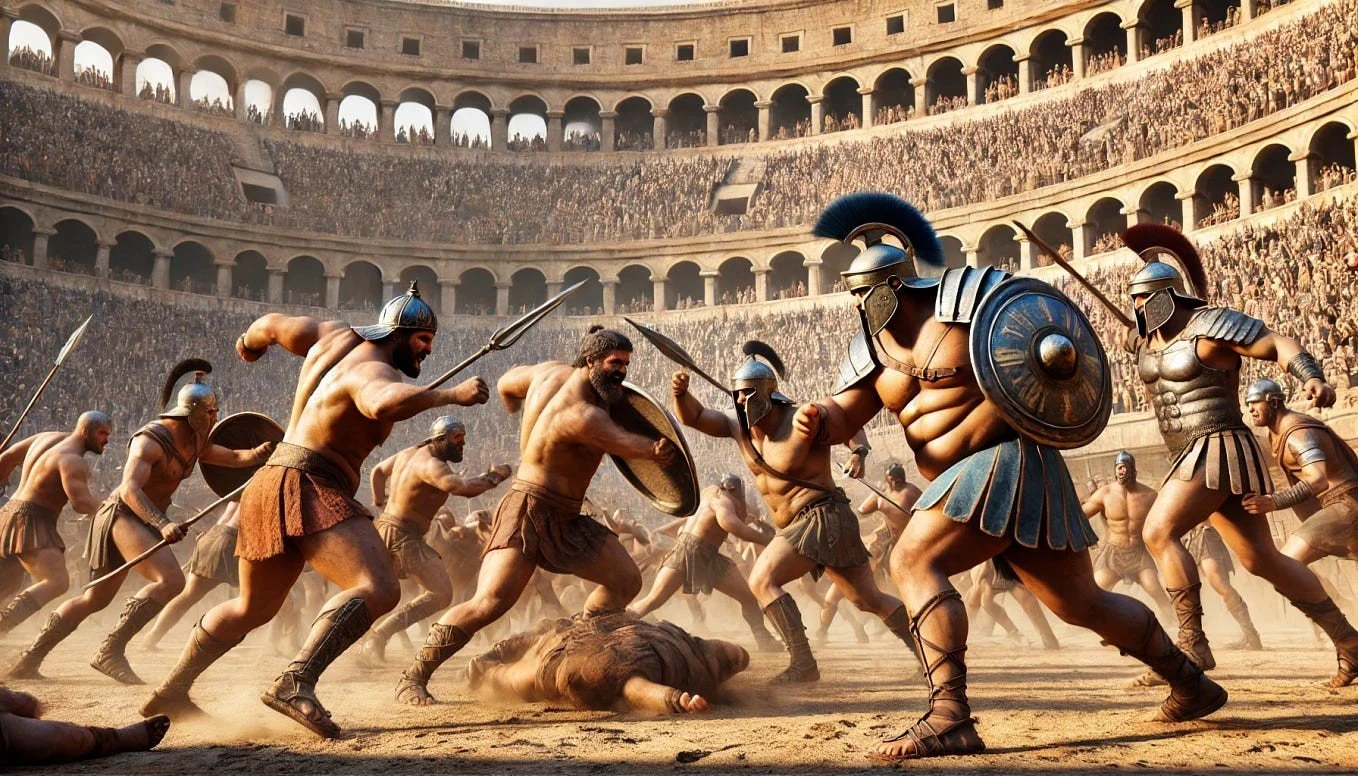
The movie had incredible and often, hard to watch scenes of gladiators fighting each other as well as lions. Blood and gore were not spared and images of wounded gladiators being carried out of the arena on stretchers were abundant.
Famous Dutch architect Rem Koolhaas best described the Coliseum, “Evil can also be beautiful. The Coliseum in Rome, for example, a wonderful structure with an awful past. Just think about the bloody gladiator fights there.”
While many people think of the glorified gladiator as a trained, accomplished, and impressive fighter (and they certainly were) my thoughts took a different perspective to that of the ones that were carried out lifeless, bloodied and “written off.”
What kind of medical care did they receive, how did society respond to the now disabled Gladiator, and how did they cope with exchanging their gladius (short, stabbing sword), their scutum (large shield), tridents and long spears for canes, crutches, and wheeled carts.
Wounded Roman gladiators weren’t automatically doomed-it depended on how bad the injury was, how valuable, and the crowd’s mood. Their fate could go a few different ways:
Immediate death (sometimes, but not always). If a gladiator was clearly defeated and unable to continue, he might surrender (often by raising a finger). At that point, the decision could fall to the editor (the sponsor of the games) and sometimes the crowd.
Mercy and survival. Many wounded gladiators were actually spared. Training a gladiator was expensive, so owners (called lanistae) didn’t want to lose them unnecessarily. If the fighter had performed well or was popular, mercy was common.
Medical treatment (surprisingly advanced). Rome had skilled physicians who specialized in treating gladiators. One famous example is Galen, who worked with gladiators early in his career. They received: wound cleaning and stitching, bone setting, herbal treatments for pain and infection. Some gladiators recovered and returned to fight again – many had long careers.
Retirement or discharge. If injuries were severe but not fatal, a gladiator might be retired. Successful fighters could eventually earn freedom, symbolized by a wooden sword (rudis).
Death from severe wounds. Of course, many did die-either in the arena or later from infection or complications. Even with good care, ancient medicine had limits.
Bottom line: Gladiator combat wasn’t quite the nonstop slaughter it’s often portrayed as. Wounded fighters were valuable assets, and many were treated, healed, and sent back into the arena- unless the crowd, the sponsor, or the severity of the injury sealed their fate.
View of a Gladiator Medical Facility
Many gladiators lived and trained in large complexes called ludi. The most famous, the Ludus Magnus, sat right next to the Colosseum and had built-in medical areas.
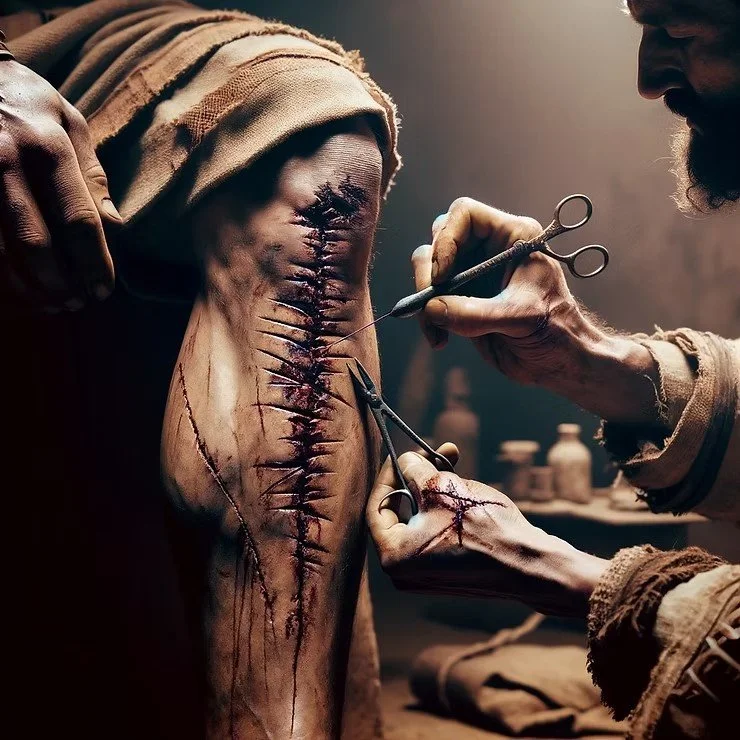
There were treatment rooms for stitching wounds, setting bones, and post-fight care. In Recovery Quarters fighters rested under supervision (not just dumped in a cell). There were sophisticated bath facilities; these were crucial for cleaning wounds (Romans were obsessed with hygiene). Rehab often included gradual return to exercise.
The physicians who treated gladiators weren’t random healers-they became experts in trauma care, because gladiators produced a steady stream of repeatable injuries (almost like studying pro athletes today).
Gladiator wounds were brutal but often controlled (fights weren’t always to the death). They saw deep cuts from swords, puncture wounds, broken ribs, arms, and legs. Prevalent injuries were head trauma (despite helmets), severe bleeding injuries. Interestingly, many blows were aimed to wound rather than instantly kill, making treatment worthwhile.
Rehabilitation and Return to Combat. Fighters were patched up and sent back once recovered. Rehab included gradual retraining as skilled gladiators could fight many times over years. Gladiators were investments, more like racehorses or pro fighters than disposable victims.
While it varied by era and type of games, many matches did not end in death. Estimates suggest a majority survived individual bouts, especially trained professionals.
Gladiator medicine sits at a fascinating crossroads; part entertainment industry, part military-style trauma care, part early scientific observation. In fact, what doctors like Galen learned from gladiators helped shape Western medicine for centuries.
Gladiator combat spans a surprisingly long stretch of Roman history – roughly 700 years. There were tens of thousands of events. The ultimate goal of the gladiator was freedom and retirement.
At the end of their careers many of the most popular and admired gladiators became trainers. On rare occasions even the wounded gladiators were given opportunities to train, promote, and manage up and coming gladiators. There were instances where blind gladiators, amputees, neurologically impaired veterans were supported by fans who admired them during their careers. Some were recruited to join the armies and work in the stables, armories, or work in kitchens.
There are accounts of gladiators committing suicide to avoid the humiliation or agony of being killed in the arena. Some preferred to take their own lives rather than die in combat or suffer a more painful death by wild animals. These acts of defiance were rare but highlighted the desperation that some gladiators felt about their fate.
There were also accounts of gladiators showing mercy to their opponents, even if it risked their own death. Some fighters may have hesitated to deliver a fatal blow, especially if they respected or had an emotional connection to their opponent. However, the decision to show mercy ultimately rested with the emperor or sponsor of the games, and disobeying their orders could lead to severe punishment.
Some gladiators experienced discrimination based on their origin or background. Those gladiators from certain regions, such as Thrace or Gaul were seen as more savage or exotic than others. Roman audiences loved the variety, but gladiators from these regions were sometimes stereotyped or treated differently.
In reflecting about the trials and tribulations of gladiators one could argue that the members of our present day disability community could be compared to being “gladiator-like.’ They received harsh discrimination, assigned to roles, unable to control their destinies, were not given a voice, harshly managed, constantly placed in danger, had limited or no advocates, futures were decided by outsiders, discarded if deemed useless or unproductive, and were reflections of a flawed society.
It appears that the ancient gladiators had something that modern day people with disabilities do not have; and that is physicians who had the skills, motivation, encouragement, and interest in providing the best medical care.
One message the disability community (and perhaps the rest of us) should embrace comes from someone who saw their share of gladiator matches; the Roman emperor Marcus Aurelius offered, “Adaptability is essential; every battle demands a different approach.”