
A Strategy for Better Care
A strategy to advance collaboration and care quality for individuals with special needs
Fred S. Ferguson DDS, Mark E Moss, DDS, PhD and Fred L. Sharpe, DDS, JD
Summary: This article argues that social determinants of health strongly influence health outcomes for children and individuals with special needs, especially when healthcare remains reactive rather than preventive. The authors propose using oral health as an early, measurable starting point for caregiver engagement, consumer-generated data, care coordination, and predictive healthcare strategies that can improve outcomes and reduce inequities.
Introduction
Increasingly, evidence confirms that consumer behaviors, habits, and lifestyle choices (i.e., primary risk factors) are closely linked to what consumers do each day and the health outcomes they experience. These consumer variables are recognized to be significantly influenced by Social Determinants of Health (SDoH), a complex matrix of influences surrounding consumers promoting a chronically reactive, episodic, and costly healthcare system. The impact of this matrix of social and environmental factors can be especially impactful for those with special needs and their caregivers. Across the life course and beginning in early childhood, SDoH influences have a predictable impact on health and care outcomes.
A core limitation of our current healthcare system is its inability to “see” and validate risk early in the life course. Thereby limiting opportunity to gain insights that could address the SDoH predictable impact. This failure can be even more harmful to individuals with special needs and their families. Thus, we argue that there is a fundamental need to shift toward a “timely” collaboration of consumers and healthcare practitioners around preventive health activity for this vulnerable group, tailored around SDoH.
In the healthcare system, we consider the consumer (i.e., caregiver) as the decision maker relative to the patient’s healthcare needs. As SDoH begins to shape opportunities for choices that shape health at birth, it is critical to engage the consumer/caregiver in a child’s first year of life. (Note: In general, the consumer is the “patient” except when the patient cannot be to make decisions in the care such as a minor or a person who is has special needs.
The healthcare system currently operates on two flawed assumptions:
Consumers inherently know how to manage their health.
Consumers proactively seek preventive care and validation.
Beginning in early childhood, SDoH can be a significant risk driver of pediatric dental caries, a very prevalent chronic illness. Caregivers often do not have good oral health knowledge and can become very distracted by concerns common to children with special needs including lack of an effective dental home caregivers may already suffer poor health due to SDoH, which impacts their daily health related activity quality of life. In addition, the matrix of SDoH limits access so that consumers only seek healthcare when acute health issues arise.
This late and reactive consumer activity has a dynamic, detrimental effect that propels poor health outcomes, escalating costs, and deepening health inequities, especially among high-risk individuals and vulnerable populations. This is especially true for families with children born with special needs. The additional impact of SDoH “obstacles” may block, limit, and interfere with effective daily health management and timely visits for primary care.
Most healthcare intervention efforts are ineffective in addressing SDoH because they focus more on minor changes to the existing roles on the provider side of the healthcare equation. Approaches toward improving medical-dental integration around disease management and data often overlooks the importance of the consumer role in prevention. Integrating consumer-generated health data into a predictive rather than reactive framework, can enhance population health outcomes, reduce disparities, improve healthcare effectiveness and efficiency, and reduce costs. A more effective strategy for effective healthcare of children with special needs would be:
Early (caregiver) engagement in lifelong preventive health education
Routine health tracking of consumer health management activities
Timely engagement of healthcare practitioners to confirm effective consumer preventive health management.
Collection of and sharing data to foster tailored action plans from steps 1-3
Benefits to Healthcare Optimization
This process would enable:
Targeted resource allocation – Efficient chronic care funding
Improved care coordination – Interoperability systems better connect stakeholders.
Data-driven policy evolution – Predictive trends guide strategy
Cost reduction & improved outcomes – Early intervention prevents costly treatments.
Equity advancement – Addresses underserved populations and systemic biases.
Oral Health: A Case Study in “Timely” Preventive Engagement
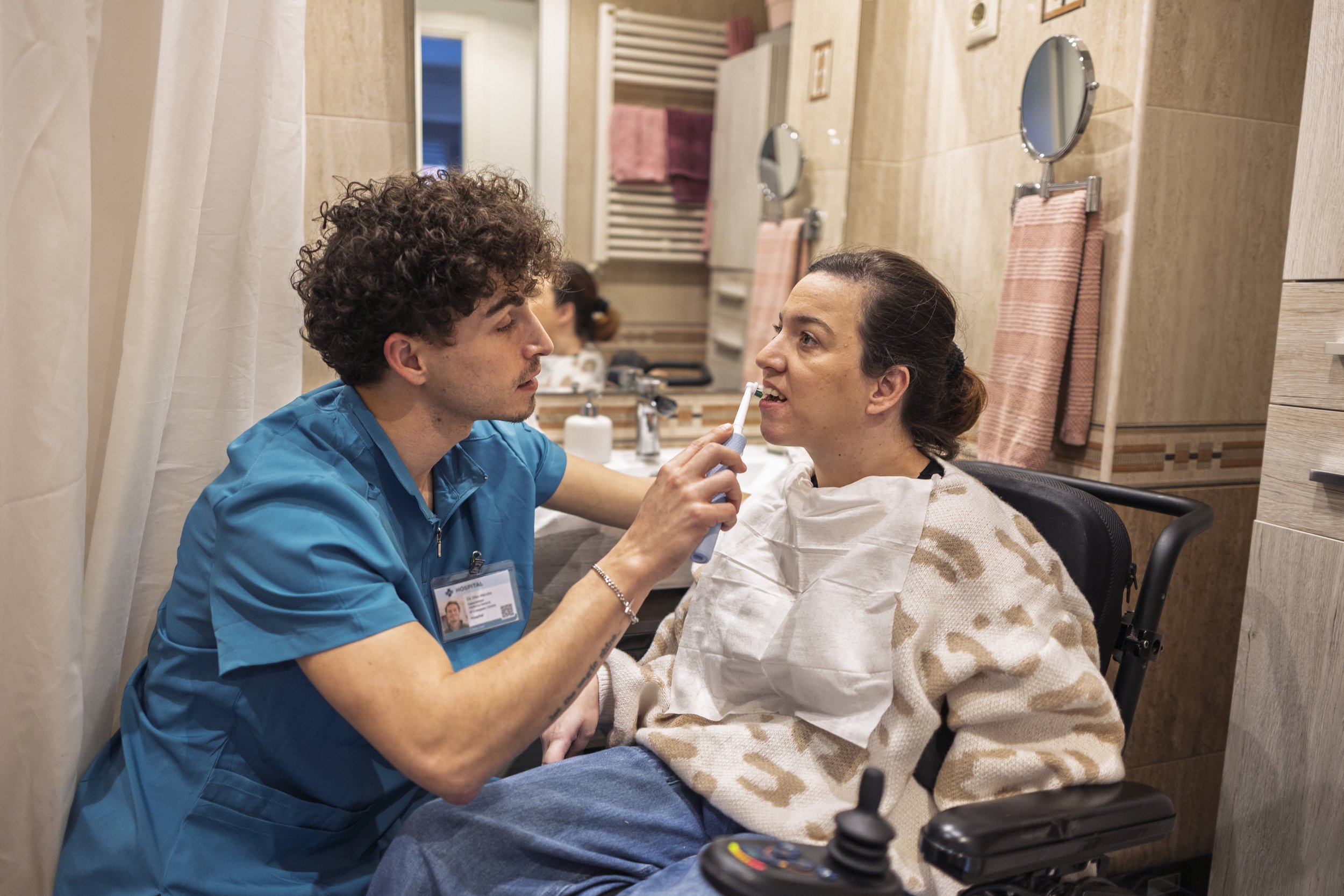
An essential life adaptation for people with special needs is familiarity of the dental environment. This strategy would enable a timely and repeating exposure to dental encounters as a significant advantage given the prevalence and predictable risk for dental illness, thus enabling repeated dental visits for timely monitoring, prevention and earlier intervention is a value add for healthcare systems.
The ability to establish good oral health behaviors has important implications for a broad range of health conditions across the life course. Threats to oral health are easily identifiable providing a reliable view of consumer health decision-making and management. Increasingly, studies demonstrate that oral health concerns evolve as common and shared health/risk factors significantly linked to common chronic illnesses such as obesity, diabetes, cardiovascular disease, high blood pressure, adverse pregnancy outcomes, mental health concerns, and quality of life.
Integrating Oral Health into Preventive Models – Why Oral Health Works
A Two-part Data-Driven Interventions:
Behaviorally Transparent: Daily oral health actions reflect systemic health risk.
Contextual & Life Course-Oriented: Applicable from infancy to old age
Clinically Actionable: Easily confirmed by dental professionals
Transparent to all consumer population health goals
Technology-Driven Collaboration for Special Needs Healthcare Evolution
Payors (employers, state government, commercial) are in the best position to timely engage consumers and dental care practitioners in the event of a diagnostic code (ICD-10-CM) associated with a developmental or medical diagnosis about a child or member. The Payor’s web-based tools and mobile-first designs can then:
Initiate oral health education to members.
Connect members to specific oral healthcare practitioners for health management assessment and early intervention.
Collect and share real-time data.
Drive more effective health equity, collaboration, and predictive interventions.
Conclusion:
A Practical Strategy to Advance Care Management for Medically and Developmentally Challenged Consumers
Beginning with a simple, consumer-led oral health data process, healthcare can:
Engage consumers earlier and more equitably.
Align innovation with meaningful care outcomes.
Provide real-time, relevant data that makes healthcare more initiative-taking.
Bridge the gap between lived experiences within the context of SDoH and clinical care.
Incorporate this two-step data set to include both consumers and dental care practitioners.
Oral health provides a strategy for structured consumer engagement that can be Incentivized in Valued Based Care and seamlessly integrated into health systems to shift from a reactive to a more effective predictive healthcare model. Addressing SDoH, leveraging digital tools, and fostering shared accountability among consumers, providers, policy makers, and payers will improve outcomes and reduce costs. This strategy would be beneficial for timely engagement of parents of children born medically frail or with developmental /physical limitations. Too often, these children and their families have no connection with oral health until dental problems are acute and significant, requiring specialized and costly care.
Early engagement of consumers and dental practitioners can create a data-driven, efficient, equitable, and sustainable foundation that secures health across the life course for children and families with special needs. Oral health provides an evidenced based and logical starting point.
About the Author
Fred S. Ferguson, DDS, is Assistant Director of Pediatric Dentistry at Interfaith Medical Center–One Brooklyn Health, Distinguished Teaching Professor Emeritus at Stony Brook University School of Dental Medicine, and President/CEO of Health Migration Consulting Inc. Over his 50-year career, Dr. Ferguson has developed oral health programs for people with special needs and chronic health conditions, children with HIV, and individuals with craniofacial differences. His work focuses on advancing oral health equity and improving population health through consumer-centered healthcare strategies.
Mark E. Moss, DDS, PhD, is Associate Professor and Chair of the Department of Foundational Sciences at East Carolina University School of Dental Medicine, with an adjunct appointment in the Department of Public Health at the Brody School of Medicine. His work includes dental public health, care for adults with special healthcare needs, and Special Olympics Special Smiles.
Fred L. Sharpe, DDS, JD, has spent 39 years in the dental benefits industry, with leadership experience in both commercial dental and Medicaid programs. He has served as dental director and chief dental officer for national dental companies, developing and managing dental networks across multiple states and working with state and federal regulatory agencies on dental benefit issues.