
Interview with Jenna Bainbridge
Expanding Access, Representation, and Possibility on Broadway and Beyond
By Craig Escudé, MD, FAAFP, FAADM, FAAIDD
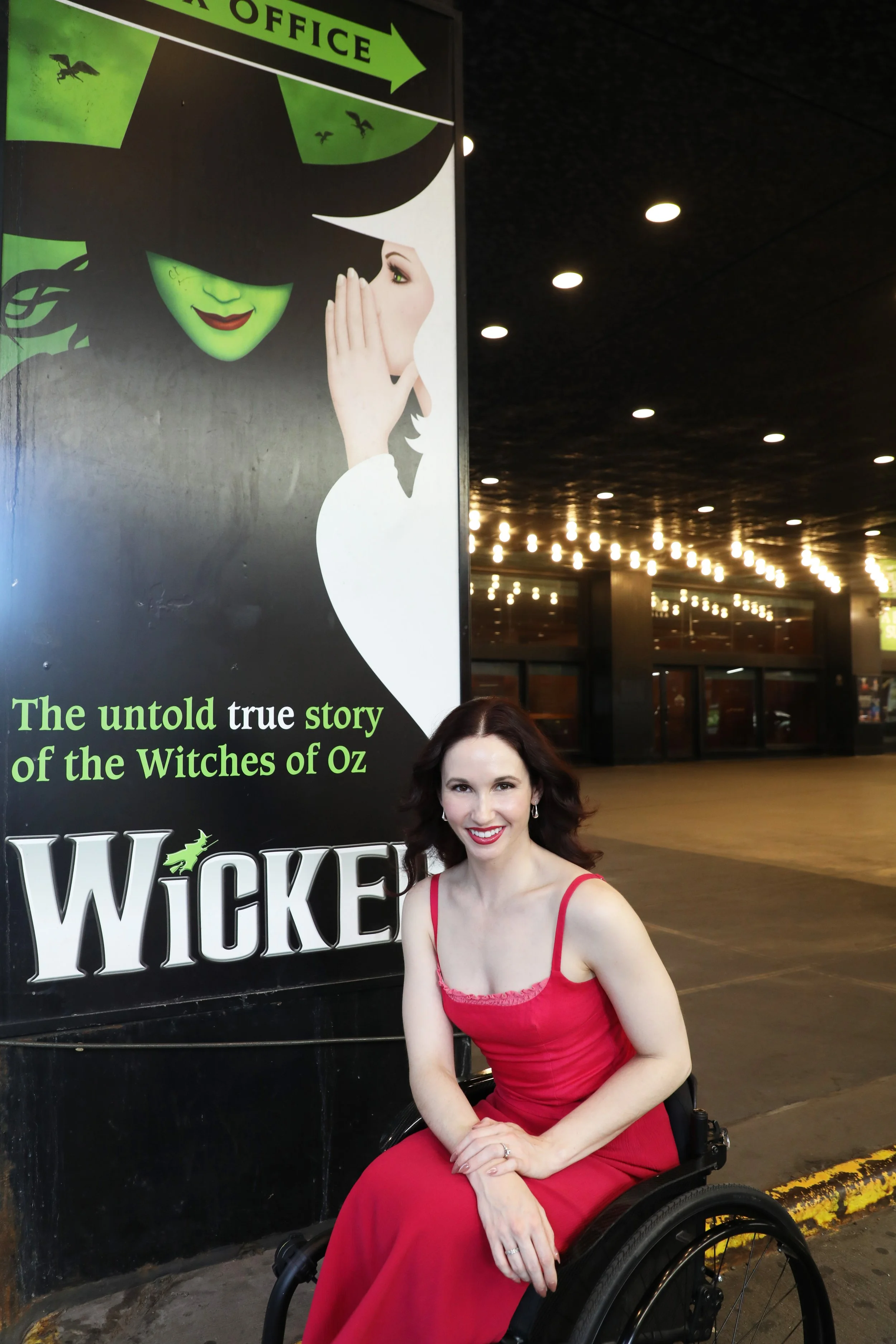
Jenna Bainbridge has never lived in just one lane.
She is a Broadway actor, a disability rights advocate, and the founder of Consultability, a nonprofit that helps arts organizations become more accessible for people with disabilities. For Jenna, these roles are not separate. They are deeply connected parts of the same story: a story about access, representation, belonging, and the power of being seen.
“I am always juggling many different balls,” she says. “I am a Broadway actor, I am a disability rights advocate, and I am also the founder of a nonprofit called Consultability.”
Consultability works with arts institutions to make their spaces and practices more accessible for people with disabilities, whether they are on stage, backstage, in the audience, or working behind the scenes. For Jenna, this work grows directly from her own lived experience as a disabled performer.
Jenna became paralyzed when she was 16 months old. Although there remains some mystery around the exact diagnosis, the general understanding is that she sustained some type of spinal cord injury. Today, she is partially paralyzed from the waist down and identifies as an ambulatory wheelchair user.
That identity took time to fully claim.
For years, Jenna lived in what she describes as a “gray area.” Some doctors, teachers, and peers told her that because she could walk, she should not use a wheelchair. Others told her that a wheelchair could make her life easier and safer. As a child, she absorbed the message that mobility aid use was all-or-nothing.
“If I was using my wheelchair, in my mind, it meant that I was giving something up,” she says. “If I use my wheelchair, it means I can’t walk anymore. And that’s just simply not the case.”
Now, Jenna uses her wheelchair for distance, ease, and safety. If she is going more than about a city block, she uses it. Her wheelchair is not a sign of limitation. It is a tool of access.
But learning to see it that way required unlearning years of internalized ableism.
“I didn’t see examples of disabled adults thriving,” Jenna says. “If you don’t have somebody in your immediate family or friend circle, and you don’t see it in media, you don’t see a path. You don’t see an option.”
As a child, Jenna loved sports. She skied, rode horses, played baseball and volleyball, and earned a black belt in karate. But by middle school, sports became more competitive and less welcoming. The focus shifted from teamwork and fun to winning, and Jenna found herself pushed aside.
Her mother saw what was happening and gently opened another door.
Jenna had always loved singing and performing. Instead of framing theater as a replacement for sports, her mother presented it as another opportunity to use many of the same skills: teamwork, discipline, focus, and performance.
In Denver, where Jenna grew up, that opportunity came through Phamaly Theatre Company, an organization that casts actors with disabilities. Her mother took her to see a show, and Jenna was hooked.
Theater became more than an activity. It became a place where Jenna saw disabled adults living full, creative, joyful lives.
It also showed her the power of representation.
When Jenna played Belle in Beauty and the Beast as a high school senior, she met children with disabilities who told her how much it meant to see a disabled princess on stage.
“Suddenly they were viewing themselves as, ‘Oh, I can be a princess. I can be a romantic lead. I can be the smartest girl in town, and my disability can be a part of all of those identities.’”
That idea continues to guide Jenna’s work today.
Jenna is currently performing in Wicked on Broadway at the Gershwin Theatre, playing Nessarose. She is the first wheelchair user to play the role on stage.
For Jenna, the role is especially meaningful because Wicked has been part of her life since childhood. Like many fans of the show, she knew every word. But she also knew something else: Nessarose was the role she was most likely to be considered for because the character is written as disabled.
Still, for most of the show’s history, Nessarose had been played by non-disabled actors. That changed in the film adaptation when Marissa Bode, a wheelchair user, portrayed the character. Soon after, Jenna was cast in the Broadway production.
Her presence on stage changes the story in ways that go beyond casting.
“My disability is always a part of a character,” Jenna explains. “Every single character I play is disabled. They have my disability. The difference is, do they live in a world with or without ableism?”
That distinction matters. Sometimes disability is written into the story. Sometimes it is not. But Jenna believes disabled actors should not be limited only to roles where disability is the central storyline.
In her view, a disabled actor playing a role can expand the world of the story. It can also help audiences imagine disability differently—not as tragedy, limitation, or stereotype, but as part of the ordinary range of human life.
This is one of the reasons Jenna speaks so clearly about ableism.
“To me, ableism is the pre-existing notions and expectations about what disabled people can do,” she says. “It is making assumptions about people’s abilities. It is not having access and then blaming the disabled person for asking for access or requiring access.”
In theater and film, ableism shows up when disabled characters are rarely represented, and when they are, they are often played by non-disabled performers. This can reinforce stereotypes because audiences are seeing what others imagine disability to be, rather than the authentic lived experience of disabled people.
Jenna points out that disability is a normal part of life. Most people will experience disability directly or through someone they love. Accessibility is not a special benefit for a small group of people. It is something that helps everyone.
This belief is at the heart of Consultability.
Jenna started the nonprofit with her husband after years of being the disabled actor in the room who was expected to solve access problems without formal recognition or compensation. Disabled performers are often required to do more than perform. They end up educating staff, advocating for accommodations, reviewing sets, identifying barriers, and explaining why certain choices may be harmful or inaccessible.
Sometimes these requests come from good intentions. But the result is that disabled artists are asked to do extra work that their non-disabled colleagues are not expected to do.
“We’re suddenly being asked to not just be actors, but be teachers and advocates and consultants,” Jenna says.
Consultability exists so arts organizations can access that expertise intentionally and responsibly.
The nonprofit provides physical access audits, helping theaters and arts spaces identify barriers that may prevent people with disabilities from participating fully. These recommendations may include short-term fixes, such as replacing round doorknobs with lever-style handles, as well as longer-term improvements, such as budgeting for automatic push-button doors.
But Jenna emphasizes that accessibility is not only physical. It is cultural.
Consultability also provides training and cultural audits to help organizations understand where they are supporting disabled artists, staff, and audiences—and where they may be falling short.
That cultural work is essential because access needs vary. A checklist alone cannot create true inclusion. Organizations need to understand why access matters and how to have open, respectful conversations about it.
“If we just tell them, ‘You need to remove all these stairs and change these door widths,’ they might not understand why,” Jenna says. “It’s really about changing that cultural mindset also.”
Her message is practical and hopeful: accessibility does not have to happen all at once, but it does need to be intentional. Small changes matter. Long-term planning matters. Representation matters. And when accessibility is built into the budget and culture of an organization, it becomes an investment rather than an afterthought.
Even with the demands of eight Broadway performances a week, Jenna continues to advocate, consult, and educate. She also shares ideas through social media, including reflections on roles that could be enriched by disabled casting and ways fashion could become more accessible for wheelchair users.
Her imagination is expansive. She has suggested, for example, that Prince Charming in Cinderella could be played by a blind or low-vision actor, adding new meaning to the famous search involving a glass slipper. She has also imagined Cinderella as a physically disabled character, noting how powerful it could be for “her own little chair” to be a wheelchair.
For Jenna, disability does not shrink a story. It can deepen it.
At the end of the interview, Jenna offered three ideas that she believes can improve the lives of people with disabilities: physical access, open communication about access needs, and representation.
Physical barriers must be addressed. People must be encouraged to name and disclose their access needs without fear or shame. And society must continue to show examples of disabled people living full, successful, creative lives.
That is what Jenna Bainbridge is doing every night on Broadway. It is also what she is doing through her advocacy, consulting, and public voice.
She is helping create a world where disabled children can see themselves as princesses, romantic leads, artists, leaders, and changemakers.
And perhaps most importantly, she is helping the rest of the world see it too.
About the Author

Craig Escudé, MD, FAAFP, FAADM
President, IntellectAbility
Host, IDD Health Matters Podcast
Craig is a board-certified Fellow of the American Academy of Family Physicians and the American Academy of Developmental Medicine. He has more than 20 years of clinical experience providing medical care for people with IDD and complex medical and mental health conditions.
He is the author of “Clinical Pearls in IDD Healthcare” and developer of the “Curriculum in IDD Healthcare,” an eLearning course used to train clinicians on the fundamentals of healthcare for people with IDD.
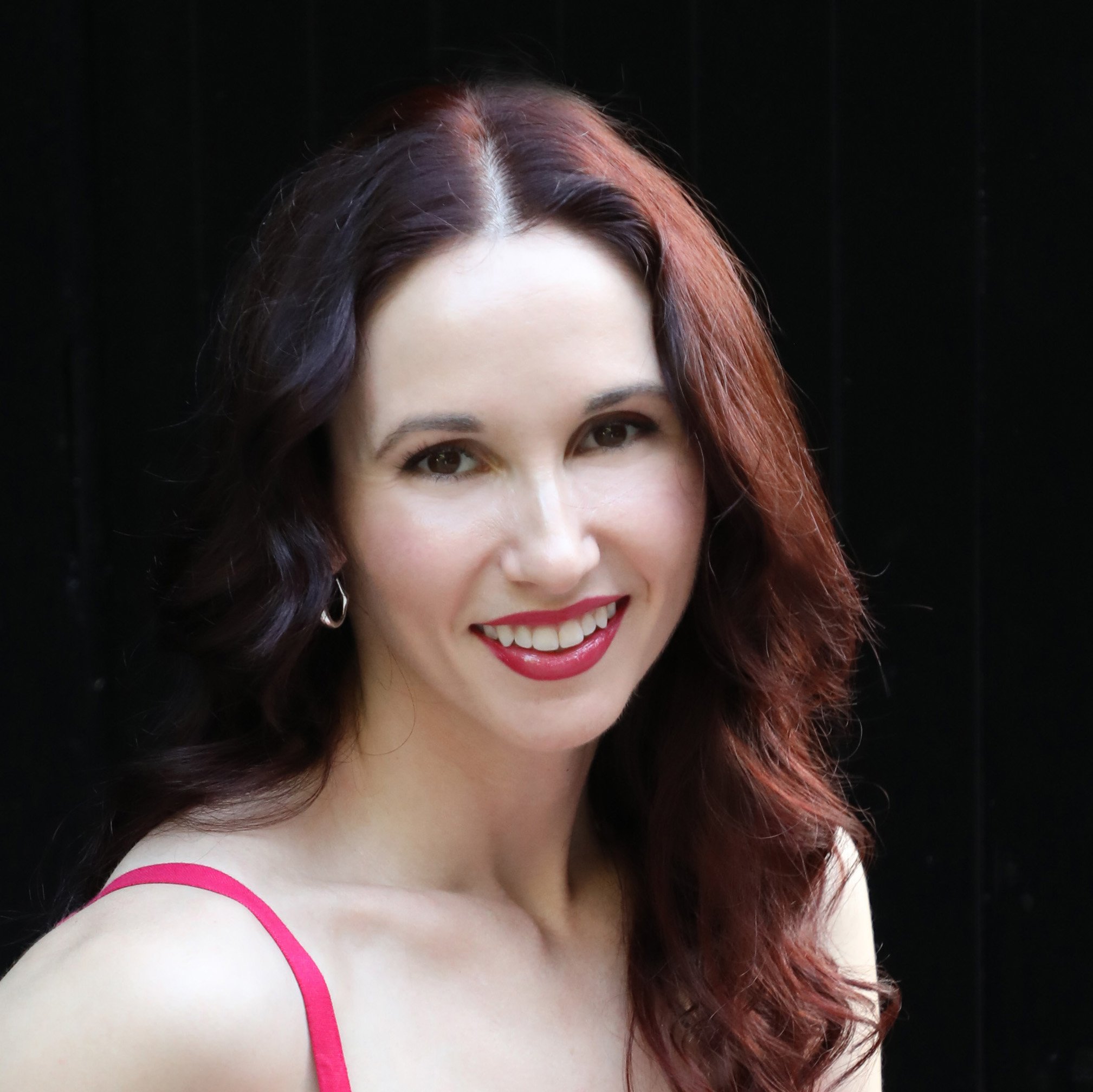
Jenna Bainbridge is an actor, singer, and disability rights advocate, currently appearing on Broadway as Nessarose in Wicked. In 2024 she became the first wheelchair user to perform in a New Musical on Broadway when she made her debut in Suffs which won the 2024 Tony Awards for Best Book and Best Music. In addition to performing, Jenna is also the Co-founder of ConsultAbility, a non-profit consulting company whose mission is to work with theatrical institutions and educational programs to create more accessible spaces and inclusive programming for disabled artists, bridging the gap between what is desired and what is required when working with disabled artists in the theatrical world.
Photos of Jenna by Rick Guidotti, Positive Exposure