
Disability Pride 2026
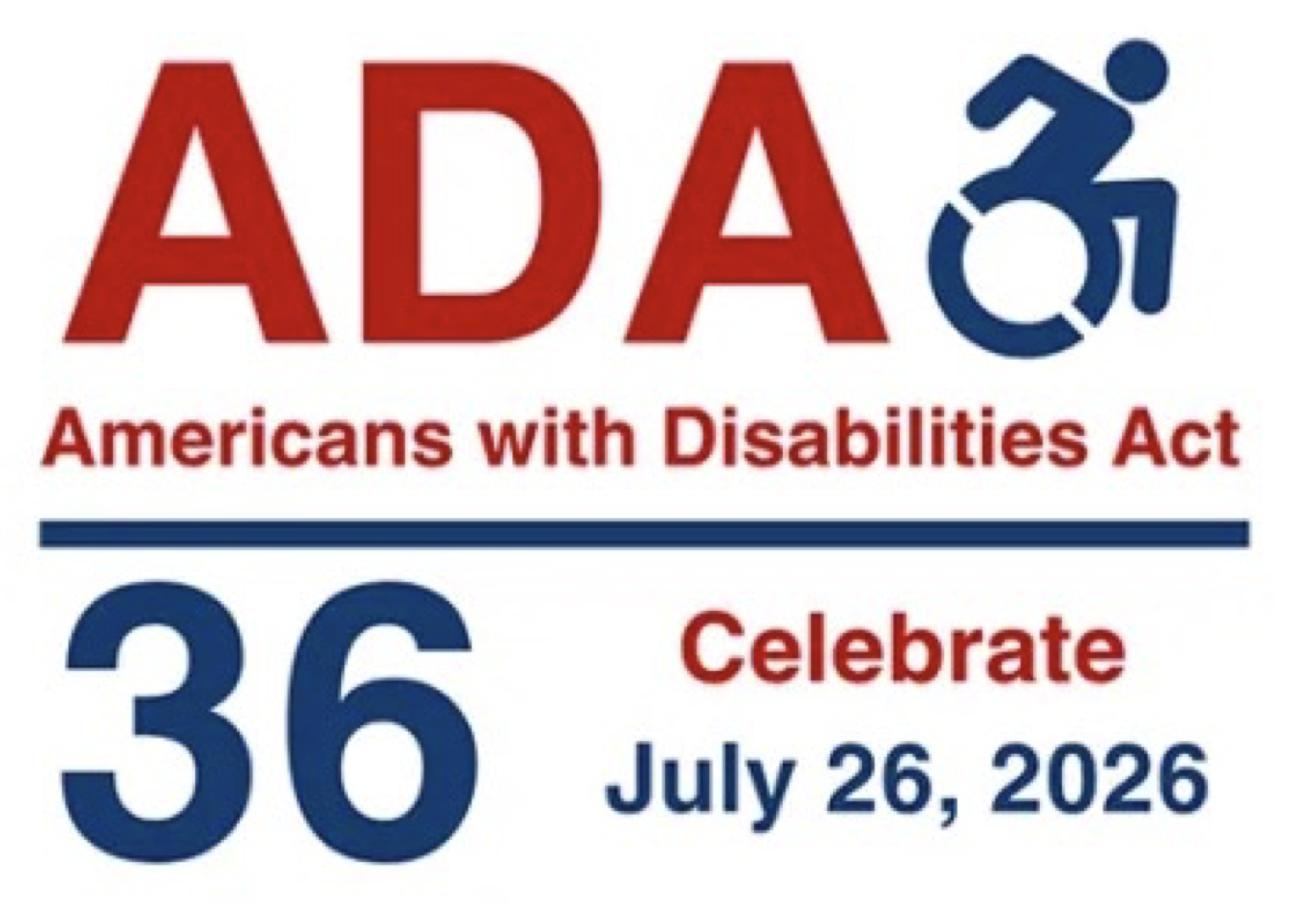
Americans with Disabilities Act 36th Anniversary
The Americans with Disabilities Act celebrates its 36th anniversary on July 26, 2026. Get details about how to celebrate in your community here.

About the Disability Pride Flag
The original Disability Pride Flag was created in 2019 by writer Ann Magill, who has cerebral palsy. Two years later, with insight from people with photosensitivity, Magill released the updated design pictured above, which is still used today. According to Magill, the design symbolizes the entire community because everyone came together to redesign it.
What the Colors Represent
Each color used on the flag symbolizes different aspects of the disability community:
Red: Physical disabilities
Gold: Neurodiversity
White: Invisible and undiagnosed disabilities
Blue: Emotional and psychiatric disabilities
Green: Sensory disabilities
The dark gray background represents mourning and rage for victims of ableism, violence, suicide, negligence, eugenics, and other forms of systemic harm experienced by people with disabilities.
Disabled in Action
DIA is a civil rights organization committed to ending discrimination against people with disabilities — all disabilities. We fight to eliminate the barriers that prevent us from enjoying full equality in American society.
Founded in 1970, DIA is a democratic, not-for-profit, tax-exempt, all-volunteer membership organization. DIA consists primarily of and is directed by people with disabilities.
“Nothing about us, without us!”
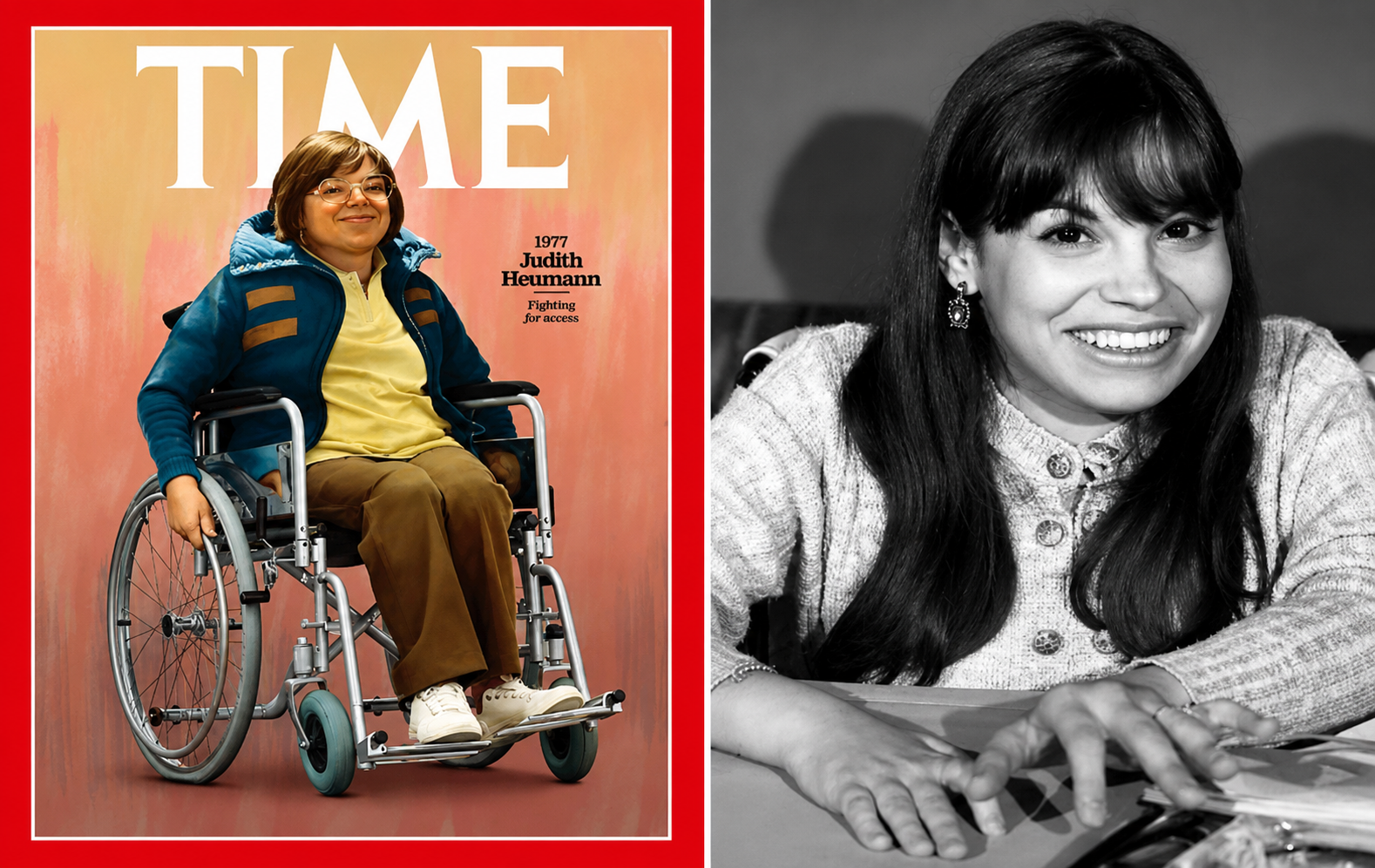
Judith Heumann on the cover of Time Magazine (left) and as a young activist.
History of Disabled In Action
Disabled In Action was organized in 1970 by Judy Heumann, a young militant disabled woman, and other disabled activists at Long Island University, Brooklyn Campus. Ms. Heumann sued the New York City Board of Education when her application to obtain a teaching license was rejected because of her disability. Although the suit was settled out of court, the publicity it received served as the impetus for founding DIA.
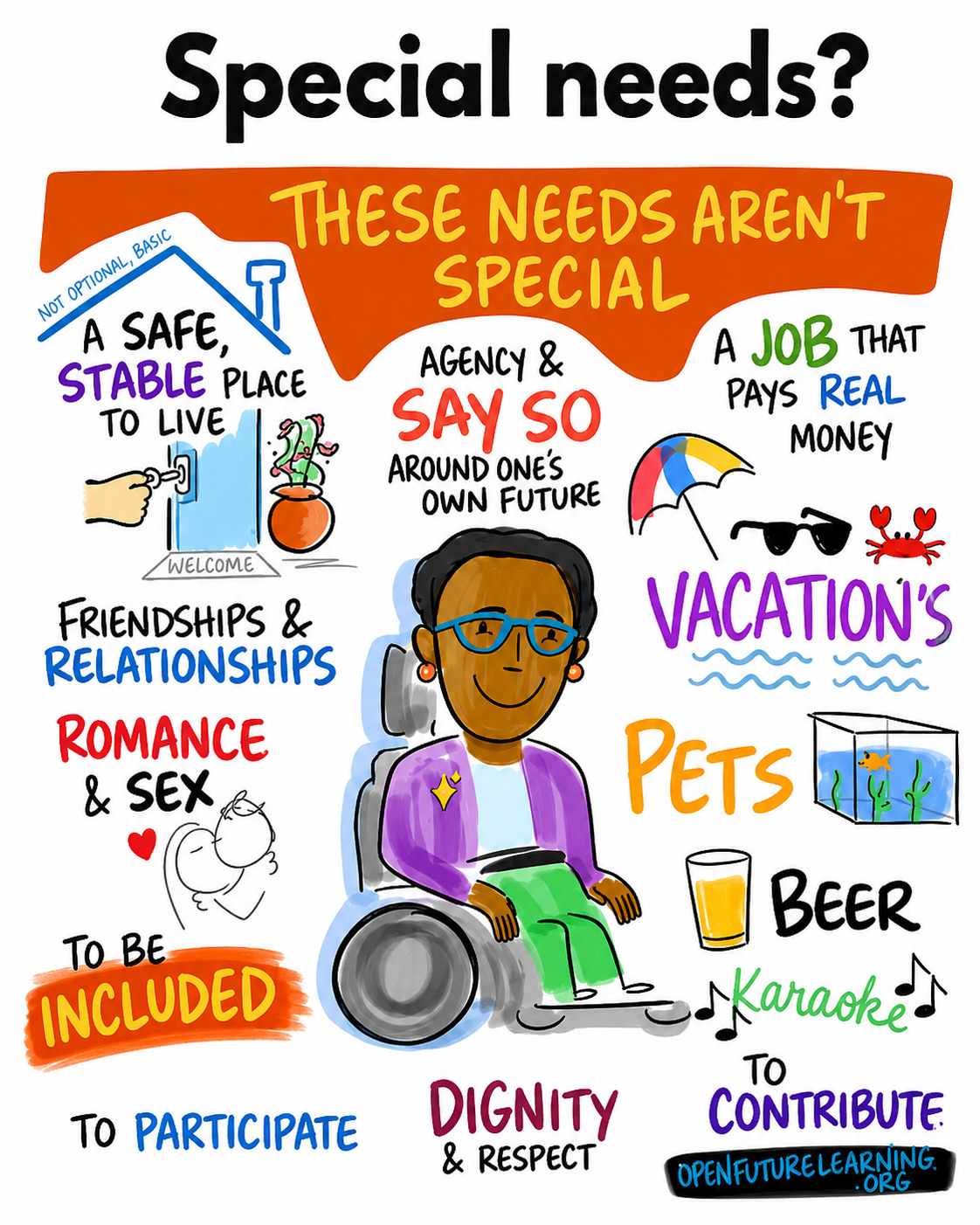
From Our Friend Steve Eidelman
Image description: A colorful hand-drawn infographic titled “Special needs?” answers with “These needs aren’t special.” At the center, a smiling person using a wheelchair is surrounded by illustrations and words representing everyday human needs: a safe, stable place to live; agency and a say in one’s own future; a job that pays real money; friendships and relationships; romance and sex; vacations; pets; beer and karaoke; inclusion; participation; dignity and respect; and opportunities to contribute.