
Throwing Darts at The Bricklayers
HELEN Editorial

Rick Rader, MD, FAAIDD, FAADM, Editor-in-Chief, Helen Journal
“There is nothing which has yet been contrived by man, by which so much happiness is produced as by a good tavern.”
-Samuel Johnson
David Austin (in Palaestra Winter 2004) gives us the lowdown on the origins of “Therapeutic Recreation.”
“It has often been said of psychology that it is a field with a long past but a relatively brief history. A similar statement could be made about therapeutic recreation. While recreation has been used for therapeutic purposes since the time of the ancient Egyptians and Greeks (Frye & Peters, 1972), only following World War II did the profession of therapeutic recreation begin to develop. The beginnings of therapeutic recreation as a profession occurred in the aftermath of World War II during the 1940s and 1950s. The service, then known as hospital recreation, had been provided during WW II by Red Cross recreation workers who offered programs for hospitalized soldiers within military hospitals. Following the war, similar services were soon developed within the Veterans' Administration (VA) Hospital system. The trend accelerated as recreation therapy programs were established in state psychiatric hospitals and state residential schools for persons with mental retardation (Austin, 2002).”
Throwing Darts at The Bricklayers
Samuel Johnson the celebrated English critic, biographer, essayist, poet, and lexicographer was one of the greatest figures of 18th-century life and letters, had a fondness for the traditional British pub.
“There is nothing which has yet been contrived by man, by which so much happiness is produced as by a good tavern.”
I came to understand and appreciate that as a medical student in London.
The teaching firm (British equivalent of the “teaching ensemble” which consists of medical students, interns, residents, fellows, professors, and consultants) for my internal medicine clinical rotation (North Middlesex Hospital, London) had an unusual tradition. Every other Thursday we would hold “liver rounds” at a local pub called The Bricklayers. It was located in Tottenham, the host city for the Tottenham Hotspurs, the local professional football (soccer) team.
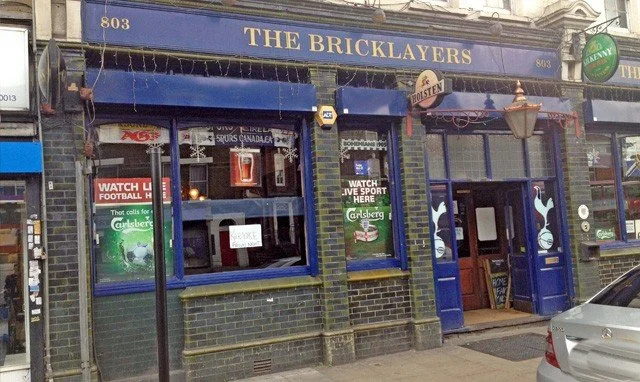
We would meet in a corner of the pub, and the professor would discuss a recent case that we had followed at the hospital and grilled the students. By the third round of Theakston’s Old Peculier (a popular ale) it didn’t seem to matter if we knew the significance of Bean’s Lines or Biot’s Sign. One of the selling points that our professor presented as a benefit to holding “rounds” at The Bricklayers was the opportunity to observe the patrons and decide which of them had physical evidence of some syndrome or disorder. “Mr. Rader, the bloke wearing the anorak with the British Railways patch, what do you make of his posture?” Thus was my introduction to SPS or “Stiff Person Syndrome,” (a rare autoimmune neurological disorder that was originally called Stiff Man Syndrome, even though its more common in women).
So, lessons at The Bricklayers were memorable.
In one corner of the pub, one could observe the endless procession of men throwing darts.
The popularity of darts in pubs is linked to the very fabric of British social life, evolving from a simple pastime to a national obsession.
Dieter (the creator of the DartCounter, a device used to keep score in competitive darts) provides a brief lesson in British pub dart history.
“The true origins of darts are shrouded in a bit of mystery, with various theories abounding. However, the prevailing narrative places its genesis in medieval England. Some believe it evolved from archery practice, with soldiers throwing shortened arrows or darts at upturned barrels. Others suggest it was a game played by bored archers between battles, using makeshift targets and whatever projectiles were available. Regardless of the precise start, it’s clear that the seeds of darts were sown in a military or recreational context. Early versions likely involved throwing various objects at a target, with scoring systems being rudimentary and localized.
The crucial transition from field sport to pub game is harder to pinpoint, but it’s believed that darts gradually migrated indoors, finding a natural home within the warm and convivial atmosphere of the local pub. This transition was likely driven by practicality – pubs offered shelter from the elements, and the game could be easily played in a relatively small space. Pubs also provided a social hub, fostering competition and camaraderie among players.”
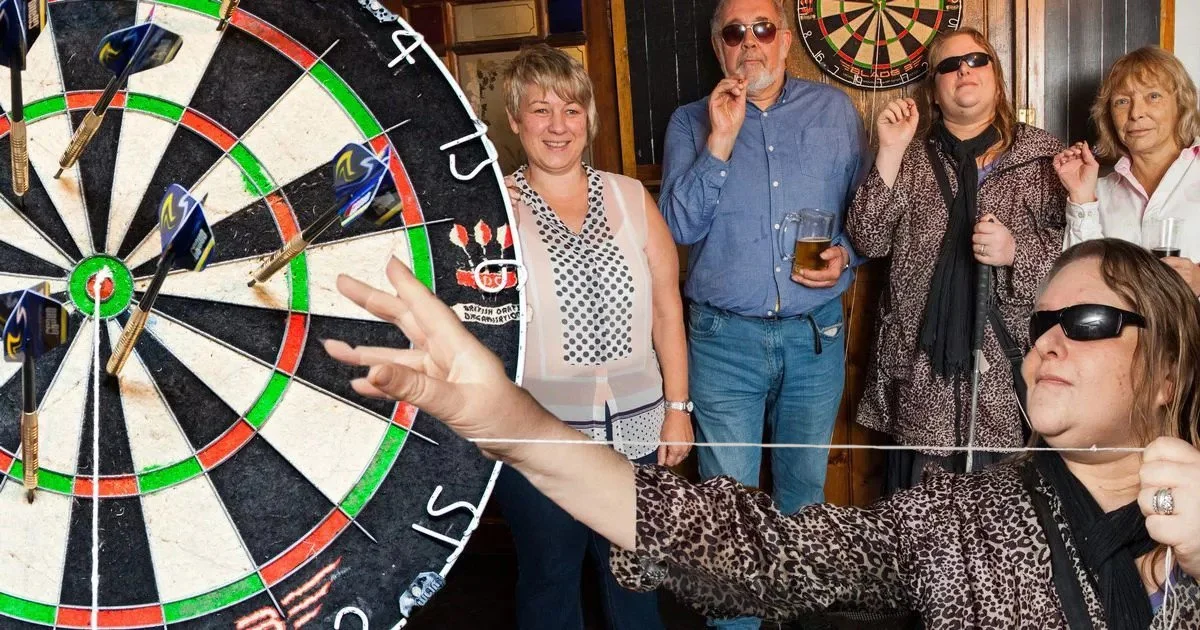
On one particular Grand Rounds at The Bricklayers, I noticed something unusual going on at the dart boards. There were six guys throwing darts with incredible accuracy. They were all blind. Six blind guys who all belonged to a club for disabled “dart players.”
It appears that darts are a fantastic sport adaptable for everyone; they don’t simply toss them, they score big time.
Dieter demonstrates how darts can be adapted to encourage, allow, and support people with disabilities to throw darts. It’s a model for Therapeutic Recreation” and how virtually every human endeavor can be made possible for people with disabilities.
The beauty of darts lies in its simplicity and adaptability. While traditional darts might seem challenging for individuals with certain disabilities, numerous modifications and adaptations can make the game accessible and enjoyable for everyone. The key is focusing on creating a level playing field where everyone can participate and feel included. Understanding the specific needs of players and implementing appropriate adjustments is crucial in promoting **darts for people with disabilities**.
This includes considering various factors such as physical limitations, visual impairments, cognitive disabilities, and other conditions that might affect a person’s ability to play traditional darts.
For players with limited mobility or upper body strength, several assistive devices can make a significant difference:
Dart Launchers/Throwing Aids: These devices allow players to launch darts using a lever or trigger mechanism, eliminating the need for a traditional throwing motion.
Support Frames: Providing stability and balance, support frames can help players maintain a consistent stance and improve accuracy.
Modified Dartboards: Lowering the dartboard or using larger target areas can make it easier for players to aim and score.
Seating Accommodations: Ensuring comfortable and supportive seating arrangements is crucial for players who use wheelchairs or have mobility issues. Choosing the best seats is also important!
Adaptations for Visual Impairments
Players with visual impairments can still enjoy darts with a few key adaptations:
Auditory Cues: Using sound to indicate the location of the dartboard and scoring zones can help players aim accurately.
Tactile Dartboards: Raised or textured dartboards allow players to feel the target areas and determine their position.
Verbal Assistance: Having a sighted assistant to call out scores and provide guidance can enhance the playing experience.
Modifications for Cognitive Disabilities
For players with cognitive disabilities, simplified rules and scoring systems can make the game more accessible and enjoyable:
Simplified Scoring: Using a simpler scoring system, such as counting only the number of darts that hit the board, can reduce complexity.
Visual Aids: Employing visual aids, such as diagrams or color-coded target areas, can help players understand the rules and scoring.
Extended Time Limits: Providing additional time for players to take their turns can reduce pressure and promote a more relaxed playing environment.
In addition to the obvious attraction of hanging out at The Bricklayer throwing darts, there were many benefits, both physically and mentally to those disabled dart players. Darts improved hand-eye coordination, fine motor skills, balance and stability, muscle strength, and endurance as well as Improved concentration and focus, increased self-esteem and confidence, reduced stress and anxiety, enhanced social interaction and connection and a sense of accomplishment and belonging.