
Supporting Person-Centered Medical Decision-Making for People with Intellectual and Developmental Disabilities
By Ruth Benjamin, RN, GERO-BC, CDDN, CRRN, CHPN, PLNC RN Consultant
Summary: People with intellectual and developmental disabilities and their families often face complex medical decisions during serious illness, progressive health decline, palliative care, hospice or comfort-focused care, and end-of-life planning. Families, nurses, and health care professionals share responsibility for ensuring that decisions are informed, ethically grounded, legally appropriate, and person centered. Drawing on nursing experience caring for people with intellectual and developmental disabilities, this article offers practical guidance for supporting communication, capacity assessment, supported decision-making, substituted judgment, health care proxy use, symptom management, and New York State requirements related to Medical Orders for Life-Sustaining Treatment and OPWDD review processes. The article emphasizes preserving the person’s voice whenever possible, respecting dignity and self-determination, clarifying goals of care, and balancing quality of life, treatment benefit, and treatment burden in a compassionate professional manner.
Author Note: Ruth Benjamin is an RN consultant with more than five decades of nursing experience, including 34 years in intellectual and developmental disability nursing at Heritage Christian Services. Her work has included clinical and administrative leadership, health management, research, complex medical care, and end-of-life care support.
Her professional service includes advocacy and consultation for people with intellectual and developmental disabilities who have complex medical concerns; service as founder and president of the Finger Lakes Nurse Honor Guard; board service with the Developmental Disabilities Nurses Association and Shepherd Home; participation on mortality review and surrogate decision-making processes in partnership with the Justice Center for the Protection of People with Special Needs; and related community and professional service in aging, disability, comfort care, and end-of-life support.
This article offers educational guidance drawn from her professional nursing experience to support families, nurses, and health care professionals who assist people with intellectual and developmental disabilities during serious illness, medical decision-making, palliative care, and end-of-life planning.
Abstract
People with intellectual and developmental disabilities and their families often face complex medical decisions during serious illness, progressive health decline, palliative care, hospice or comfort-focused care, and end-of-life planning. Families, nurses, and health care professionals share responsibility for ensuring that decisions are informed, ethically grounded, legally appropriate, and person centered. Drawing on nursing experience caring for people with intellectual and developmental disabilities, this article offers practical guidance for supporting communication, capacity assessment, supported decision-making, substituted judgment, health care proxy use, symptom management, and New York State requirements related to Medical Orders for Life-Sustaining Treatment and OPWDD review processes. The article emphasizes preserving the person’s voice whenever possible, respecting dignity and self-determination, clarifying goals of care, and balancing quality of life, treatment benefit, and treatment burden in a compassionate professional manner.
Keywords
Intellectual and developmental disabilities; informed consent; supported decision-making; medical decision-making capacity; health care proxy; MOLST; OPWDD; palliative care; hospice or comfort care; life-sustaining treatment; person-centered care; nursing advocacy.
Disclaimer
This article is intended for educational and clinical discussion purposes for families, nurses, and health care professionals who support people with intellectual and developmental disabilities. It does not constitute legal advice, medical advice for a specific patient, or a substitute for institutional policy, professional clinical judgment, ethics consultation, or legal counsel. Requirements related to capacity determinations, surrogate decision-making, Medical Orders for Life-Sustaining Treatment, OPWDD processes, and withholding or withdrawing life-sustaining treatment vary by jurisdiction, care setting, and individual circumstance. Readers should consult current federal, state, and organizational requirements and involve appropriate medical, legal, ethics, and administrative resources when making decisions for a specific person.
Introduction
Medical decision making can be difficult for any family. It becomes especially complex when the person receiving care has an intellectual or developmental disability, communication differences, serious illness, or progressive decline. Families may be asked to consider hospitalization, artificial nutrition and hydration, resuscitation, mechanical ventilation, comfort-focused care, or hospice while trying to protect the person’s dignity and honor what matters most to them.
Nurses and other health care professionals help families understand clinical information, slow the decision process when time allows, and keep the person’s voice at the center of care. This article offers practical guidance for supporting decisions that are informed, compassionate, legally appropriate, and grounded in the individual’s values, preferences, communication needs, comfort, and quality of life.
Over my years of nursing, I have seen how quickly families can feel overwhelmed when clinical decisions, legal requirements, and love for the person all come together at once.
Establishing a Circle of Support
Families should not be expected to navigate complex medical decisions alone. A circle of support may include trusted relatives, close friends, spiritual advisors, clinicians, care coordinators, social workers, ethics representatives, and others who know the person well. Its purpose is not to override the individual’s rights, voice, or preferences, but to clarify information, reduce emotional burden, and promote thoughtful decision-making. Nurses strengthen this process by identifying whom the individual wants involved, confirming appropriate consent or authorization when needed, and helping the interdisciplinary team understand each support person’s role. The nurse’s role is to support informed decision-making, advocate for known or expressed wishes, and help ensure that decisions are clinically appropriate, legally compliant, ethically sound, and aligned with the person’s goals and quality of life.
I have found that families often make clearer and better-informed decisions when they are surrounded by people who know their loved one well, are trusted by the family, and can help bring the person’s life, routines, and relationships into the discussion.
Ensure the Person’s Voice Whenever Possible
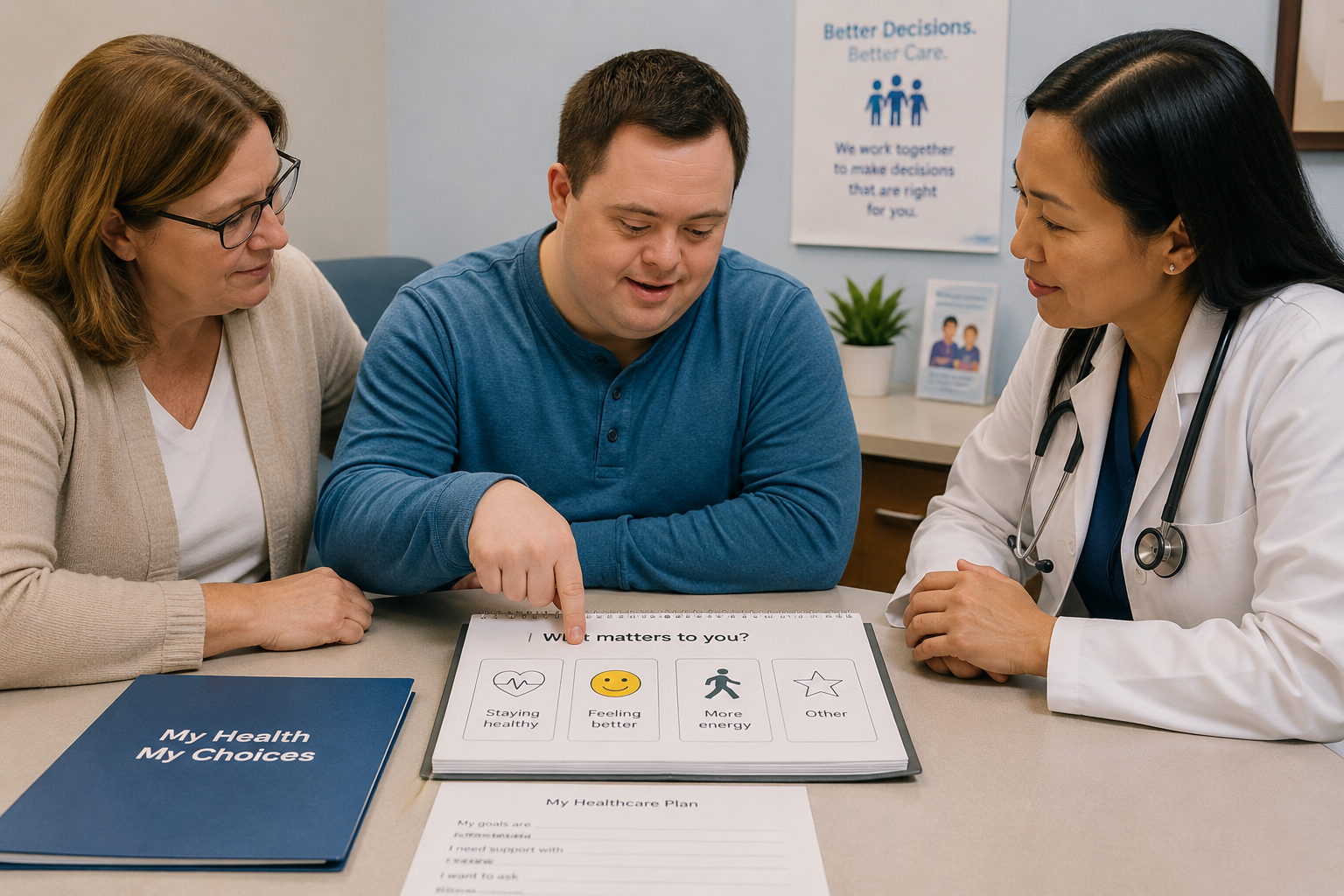
The person receiving care should participate in medical decision-making to the greatest extent possible, even when illness, disability, cognitive impairment, communication barriers, mental health concerns, or distress make participation difficult. Participation is not all-or-nothing. A person may express preferences through speech, gestures, facial expressions, behavior, written communication, pictures, assistive technology, or a trusted communication partner. Communication accommodations may include plain-language explanations, visual supports, extra processing time, familiar partners, assistive technology, and careful observation of behavior-based communication. Nurses are essential in recognizing these forms of expression and advocating that the individual’s preferences remain central to the plan of care. Whenever possible, clinicians should ask what the person understands, what matters most, what they fear, and what outcomes they would consider acceptable or unacceptable. When family members disagree about inclusion in difficult conversations, nurses can support respectful participation adapted to the person’s abilities and comfort.
In my nursing practice, I have often seen that a person’s preferences can be expressed in ways that are easy to miss when the team is focused only on spoken language. A change in the person’s facial expression, body language, appetite, restlessness, eye contact with a familiar person, reaching toward someone they trust, or withdrawing from a usual care intervention may all provide
important information about comfort, fear, distress, or preference.
Ask Questions Until Information Is Clear
Families should feel empowered to ask physicians, nurses, advanced practice providers, therapists, and other members of the care team to explain diagnoses, test results, treatment options, expected outcomes, and risks in clear terms. Informed decisions require more than the delivery of information; they require comprehension.
Nurses can support health literacy by avoiding unnecessary medical jargon, using teach-back methods, checking for understanding, and encouraging families to prepare written questions before clinical conversations. When medical terminology is necessary, it should be explained in practical language that connects the diagnosis or treatment to the person being supported and to what the family is observing in the person’s daily life. This is especially important when the individual is experiencing serious illness, progressive decline, repeated hospitalizations, complex symptoms, or end-of-life care needs.
Clarify Diagnosis, Condition Changes, and Treatment Options
A new diagnosis or change in condition can be confusing and emotionally overwhelming. Before major treatment decisions are made, families should understand the diagnosis, anticipated trajectory, available options, and potential benefits, risks, and burdens of each intervention. These decisions may involve hospitalization, diagnostic procedures, surgery, medication changes, artificial nutrition and hydration, mechanical ventilation, cardiopulmonary resuscitation, other life-sustaining treatments, or repeated transitions among home, group home, and acute care settings. Goals-of-care discussions help clarify what outcomes are meaningful, what burdens may be unacceptable, and how treatment options align with the person’s values and clinical condition. Nurses contribute by organizing information, identifying gaps in understanding, clarifying questions, and helping prepare for conversations with the interdisciplinary team.
Allow Time for Reflection
Except in emergent situations, families should be given time to process information, ask follow-up questions, consult trusted supporters, and consider whether a proposed decision is consistent with the person’s values and goals. Feeling rushed can heighten stress and may lead to decisions that families later question. Strong clinical decision support includes acknowledging uncertainty, discussing benefits and burdens honestly, and allowing space for emotion. Nurses can help pace the process by reinforcing that thoughtful deliberation is an essential component of ethical, person-centered care.
In practice, I have seen that even a brief pause for questions, prayer, discussion, or quiet reflection—whether in a chapel, with clergy, or with trusted supporters—can help families move from feeling rushed to feeling supported in their decision-making.
Use of Substituted Judgment and Known Values
When a person cannot make or communicate medical decisions, families and authorized decision-makers are often asked to consider what the person would choose if able to speak for themselves. This process may include prior conversations, known beliefs, cultural or spiritual values, experiences with illness, tolerance for medical intervention, and the person’s own definition of acceptable quality of life. Helpful questions include: What are the person’s current medical complexities and prognosis? Would the person want frequent hospitalization? Would a feeding tube be acceptable if they could no longer eat safely by mouth? Would they want treatments that may prolong life but also increase discomfort, fear, or dependency? These questions help shift decision-making away from what others may want and toward what is most consistent with the person’s wishes, values, identity, and lived experience.
Balance Quality and Length of Life Without Judgment
Families may differ in how they weigh quality of life and length of life. Neither priority is inherently wrong. What matters clinically and ethically is that decisions are based on the person’s wishes and values, and that families understand the likely outcomes of each option. For some individuals, comfort, familiar surroundings, eating for pleasure, avoiding hospitalization, or minimizing distress may be most important. For others, additional time, even with significant medical intervention, may be deeply meaningful. Nurses may know the person well and therefore offer meaningful input. The nurse can create a nonjudgmental environment where these preferences can be named, explored, documented, and incorporated into the plan of care.
Integrate Palliative Care Early
Palliative care should be introduced early when a person is living with serious illness; has a rare, complex, or progressive condition; is aging with increasing medical complexity; has experienced repeated hospitalizations or functional decline; or is facing difficult treatment decisions. Palliative care is not limited to end-of-life care. It is an added layer of interdisciplinary support focused on symptom management, communication, emotional support, goal clarification, care coordination, and quality of life. It may be provided alongside disease-directed treatment. For families, it can provide education, reassurance, and assistance with difficult decisions. For nurses and clinicians, it offers partnership in aligning treatment with the person’s goals while supporting families through uncertainty, grief, and decision fatigue.
Clinical Implications for Professional Nurses
Professional nurses are uniquely positioned to help support informed, person-centered decisions. Nurses often witness the individual’s general functional status, change in health status, ability to communicate, family dynamics, and response to interventions that may not be fully visible during brief clinical encounters. This proximity gives nurses a responsibility to advocate for clarity, dignity, and individualized care. Clinically strong nursing practice includes assessing decision-making capacity within scope, identifying communication barriers, recognizing caregiver strain, promoting culturally respectful care, documenting expressed preferences, and escalating concerns when the plan of care appears misaligned with the person’s goals.
Some of the most important nursing advocacy I have witnessed has come from careful observation, quiet persistence, and the willingness to ask whether the plan truly reflects the person’s comfort and values.
Nurses must also familiarize themselves with relevant terminology, legal requirements, and the policies and procedures of the organization or facility in which they are providing care. This knowledge helps nurses recognize when additional review, documentation, consultation, or escalation of care is required, supporting safe, compliant decisions that remain anchored in the person’s goals and rights.
Nurses also help families distinguish between choosing for the individual and choosing as the individual themself would choose. This distinction is central to ethical practice. By asking careful questions, validating emotions, and ensuring that families understand both clinical facts and likely burdens, nurses help transform difficult decisions into decisions that are informed, compassionate, and faithful to the person’s identity.
Key Medical, Ethical, and Legal Concepts
Families and health care professionals benefit from a shared understanding of terminology used in serious illness, end-of-life care, and medical decision-making. Because complex decisions are often necessary during emergent medical situations, uncertainty, and emotional distress, early education, and discussions with families about key medical, ethical, and legal concepts can improve communication and reduce confusion.
Knowledge Is Power: Medical, Ethical, and Legal Terminology
Professional nurses play an essential role in helping individuals with intellectual and developmental disabilities, families, and interdisciplinary teams understand terminology related to serious illness, end-of-life planning, and life-sustaining treatment. Clear terminology supports informed consent, shared decision-making, and clinically appropriate, person-centered care that is consistent with applicable New York State Department of Health and Office for People with Developmental Disabilities (OPWDD) requirements. The following terms are commonly encountered in clinical practice and should be explained in plain language while preserving their medical and legal meaning.
Capacity Assessment
A capacity assessment is a clinical evaluation used to determine whether an adult can understand relevant information, appreciate the reasonably foreseeable consequences of a decision, compare available options, and communicate a choice. Capacity is decision-specific and may fluctuate over time; a person may have capacity for some decisions but not for others. Disability, diagnosis, communication style, or the need for support should not be treated as evidence of incapacity (Alberta Government, n.d.).
Consent
Consent is authorization for proposed health care action, treatment, procedure, or intervention. In clinical care, valid consent requires that the individual, health care agent, or legally authorized surrogate receive relevant information, understand the decision being made, and agree voluntarily without coercion (American Medical Association, n.d.; Merck Manual Professional Edition, 2023).
Informed Consent
Informed consent is an ongoing communication process in which a health care professional explains the nature of a proposed treatment or procedure, expected benefits, material risks, reasonable alternatives, and the option to decline. Informed consent is both an ethical and legal obligation and is grounded in the person’s right to direct what happens to their body and health care (American Medical Association, n.d.; Merck Manual Professional Edition, 2023).
Health Care Proxy
A health care proxy is a legal document through which a person appoints a trusted health care agent to make medical decisions if the person later becomes unable to make or communicate those decisions. A person does not need to understand every possible future medical decision to appoint an agent; the person must understand that they are giving another individual authority to make health care decisions on their behalf if decision-making capacity is lost. For people receiving OPWDD services, special witnessing requirements may apply (New York State Office for People with Developmental Disabilities, n.d.).
A health care agent, legally authorized surrogate, and court-appointed guardian may have different sources and scopes of authority; clinicians should clarify the applicable decision-maker before relying on consent.
Life-Sustaining Treatment
Life-sustaining treatment refers to medical interventions that may maintain or prolong life, including cardiopulmonary resuscitation, mechanical ventilation, dialysis, artificial nutrition and hydration, and other treatments intended to support vital physiologic function. Decisions about life-sustaining treatment should be guided by prognosis, expected benefit, potential burden, the person’s values and goals, and applicable legal requirements (New York State Department of Health, n.d.).
*When withholding or withdrawing life-sustaining treatment is being considered for a person with intellectual or developmental disability who lacks capacity and does not have an applicable health care proxy, the OPWDD legal requirements checklist process may be required before MOLST orders are signed (New York State Office for People with Developmental Disabilities, 2020).
Palliative Care
Palliative care is specialized interdisciplinary medical care for people living with serious illness, such as advanced cancer, heart failure, end-stage kidney disease, progressive neurologic disease, or other complex conditions. It focuses on symptom management, communication, care coordination, emotional and spiritual support, and alignment of treatment with the person’s goals and values. Palliative care may be provided alongside disease-directed or potentially curative treatment and can be delivered in multiple care settings (Center to Advance Palliative Care, n.d.; National Institute on Aging, n.d.).
Hospice Care/Comfort Care
Hospice care/ comfort care is a form of palliative care for people with serious illness who are approaching the end of life. It emphasizes comfort, symptom management, psychosocial support, spiritual support when desired, and quality of life rather than curative treatment. Hospice eligibility is generally based on a physician’s clinical judgment that the person is expected to live six months or less if the illness follows its usual course, although eligibility and services may vary by payer, setting, and applicable law (American Cancer Society, n.d.; National Institute on Aging, n.d.).
Artificial Nutrition and Hydration
Artificial nutrition and hydration are medical treatments used when a person cannot safely or adequately eat or drink by mouth. Enteral nutrition refers to nutrition delivered through the gastrointestinal tract, such as through a gastrostomy or gastrojejunostomy tube. Parenteral nutrition refers to nutrition delivered intravenously. These interventions should be evaluated in relation to goals of care, expected benefit, potential complications, comfort, and the person’s known wishes (National Cancer Institute, n.d.; Merck Manual Professional Edition, 2024a, 2024b).
Mental Hygiene Legal Service
The Mental Hygiene Legal Service is a legal advocacy program that provides protective legal services and assistance for individuals with disabilities who receive services in New York State-operated or licensed settings. In specific circumstances, including decisions involving life-sustaining treatment, notification and review by this service may be required (New York State Unified Court System, n.d.).
Medical Orders for Life-Sustaining Treatment
Medical Orders for Life-Sustaining Treatment, commonly known as MOLST, are medical orders that communicate treatment decisions regarding cardiopulmonary resuscitation, intubation, mechanical ventilation, hospitalization, artificial nutrition and hydration, and other life-sustaining treatments. MOLST is generally used for people with serious health conditions who want to avoid or receive specific life-sustaining treatments, reside in a long-term care facility, or require long-term care services, or might die within the next year. In New York State, a physician, nurse practitioner, or physician assistant may generally sign MOLST orders. However, when the person has an intellectual or developmental disability, lacks capacity, and the decision involves withholding or withdrawing life-sustaining treatment without an applicable health care proxy, a physician must follow the special
OPWDD procedures and attach the completed OPWDD legal requirements checklist before signing the MOLST orders (New York State Department of Health, n.d.; New York State Office for People with Developmental Disabilities, 2020).
OPWDD Legal Requirements Checklist
The OPWDD legal requirements checklist is used in New York State when decisions are being considered to withhold or withdraw life-sustaining treatment for a person with an intellectual or developmental disability who lacks medical decision-making capacity and does not have an applicable health care proxy. The checklist documents the required surrogate decision-making pathway under SCPA § 1750-b, including identification of the appropriate surrogate, physician discussion of treatment options and goals of care, confirmation of incapacity, required clinical determinations, notification to required parties, and the applicable review period before MOLST orders are finalized (New York State Office for People with Developmental Disabilities, 2020).
New York Family Health Care Decisions Act
New York’s Family Health Care Decisions Act permits authorized family members or close friends to make certain health care decisions for adult patients who lack decision-making capacity and do not have an available health care agent. The applicable decision-making pathway may depend on the care setting, the type of decision, the person’s diagnosis, and service system involvement, and whether special statutory procedures apply (New York State Bar Association, n.d.).
Supported Decision-Making
Supported decision-making allows a person to receive assistance from trusted supporters while retaining authority to make their own decisions whenever possible. Supporters may help the person understand information, consider options, communicate preferences, and document decisions. This approach reflects the principle that disability alone does not equal incapacity and that capacity may be enhanced through accommodation and appropriate support (New York Mental Hygiene Law, Article 82, n.d.).
Health Care Proxy Considerations for People with Intellectual and Developmental Disabilities
Health care proxy documentation may be appropriate for a person with an intellectual or developmental disability when these conditions are met:
The person has a trusted individual who is actively involved in their life and willing to serve as the health care agent.
A recent capacity assessment indicates that the person can appoint a health care agent to make medical decisions if they later become unable to make or communicate their own decisions.
The person understands, in plain language and with appropriate support, that the health care agent will only make decisions if the person later loses the ability to make or communicate health care decisions.
The health care proxy form is completed with the person and appropriate health care professional in accordance with applicable legal, organizational, and facility requirements.
The document is signed by the person and witnessed appropriately. For residents of OPWDD facilities, one witness must be a physician, nurse practitioner, or psychologist who meets OPWDD experience, employment, approval, or training requirements, and one witness must be an individual who is not associated with the residential facility. A witness should not be the health care agent or an individual whose role creates a conflict of interest.
The health care agent is informed that authority to decide about artificial nutrition and hydration may depend on whether the agent knows the person’s wishes regarding those treatments.
The completed document is shared with the person, the chosen health care agent, primary care provider, residential or service provider, and other appropriate members of the care team so it is available when needed.
If a court-appointed guardian is already authorized to make health care decisions, clinicians should obtain legal or administrative guidance before pursuing health care proxy documentation because the legal guardian will supersede that of a health care agent.
MOLST and OPWDD Legal Requirements for People with Intellectual or Developmental Disabilities
When a person with an intellectual or developmental disability lacks capacity, does not have an applicable health care proxy, and a decision is being considered to withhold or withdraw life-sustaining treatment, New York law may require completion of the OPWDD legal requirements checklist before MOLST orders are issued. The process is intended to ensure that the decision is clinically justified, legally compliant, and consistent with the person’s interests, values, and rights. The New York State Department of Health describes MOLST as documentation of treatment preferences and medical orders for people with serious health conditions, while OPWDD guidance identifies additional safeguards for people with developmental disabilities who lack capacity and do not have a health care proxy (New York State Department of Health, n.d.; New York State Office for People with Developmental Disabilities, 2020).
The process generally requires identification of an authorized surrogate and a documented conversation with the treatment physician about treatment options, prognosis, expected benefits and burdens, and goals of care.
The person’s lack of medical decision-making capacity must be confirmed and documented. In New York State, one of the involved professionals must meet OPWDD-related training, employment, approval, or experience requirements.
The attending physician and a concurring physician, or a licensed psychologist were permitted for the capacity determination, must provide detailed supporting documentation addressing diagnosis, prognosis, expected treatment effects, and the statutory basis for the proposed decision.
Required notifications must be made within 48 hours of completion of the 6- step process. Depending on the person’s circumstances, notification may include the person to the extent possible, the CEO or facility director, Mental Hygiene Legal Service, the local Developmental Disabilities State Operations Office (OPWDD), and other required parties.
If no objection is raised during the required 48-hour review period, the physician may complete the MOLST orders. The checklist, capacity assessment, clinical determinations, and related documentation should be compiled and made available to primary care providers, residential providers such as group homes, emergency personnel, and health care providers during transfers of care, and should be placed in the person’s chart.
The nurse should be aware that the legal guardian or authorized surrogate may request at any time that a life-sustaining treatment order on the MOLST form be reviewed, changed, or removed, consistent with the person’s current condition, known wishes, and best interests.
Supported Decision-Making Under New York Mental Hygiene Law
Supported decision-making recognizes that adults are presumed to have capacity unless that presumption is legally rebutted or a court-appointed guardian has authority that conflicts with the proposed supported decision-making agreement. Disability alone, diagnosis alone, or a person’s manner of communication should not be treated as evidence of incapacity. Capacity may be strengthened through support, accommodation, accessible communication, and trusted relationships (New York Mental Hygiene Law, Article 82, n.d.).
A supported decision-making agreement allows the person to choose supporters who help them understand information, consider choices, communicate decisions, and exercise self-determination. The person remains the decision-maker and may revoke all or part of the agreement when permitted by law. For families and clinicians, supported decision-making is a reminder that assistance should expand a person’s ability to participate rather than replace the person’s voice.
Practice Points for Nurses
Presume capacity unless evidence shows otherwise, and support participation through accessible communication and accommodation.
Clarify who has legal authority to consent, including whether the decision-maker is a health care agent, legally authorized surrogate, or guardian.
Document the person’s expressed preferences, observed responses, comfort needs, and communication supports.
Escalate concerns when treatment plans may not align with the person’s goals, rights, comfort, or applicable legal and facility requirements.
Know the applicable MOLST, OPWDD, and organization-specific procedures before urgent decisions arise.
Over many years of practice, I have come to believe that the best decisions are not always the most medically aggressive or the least medically aggressive. The best decisions are those that are honest, informed, compassionate, legally sound, and centered around the person’s own life, comfort, relationships, values, and quality of life.
Conclusion
Informed, person-centered medical decision-making is both a clinical process and a human responsibility. It asks families to understand the medical situation while honoring the person’s values, preferences, fears, hopes, communication style, and definition of quality of life. It asks nurses and health care professionals to bring clinical knowledge, ethical sensitivity, communication skills, cultural humility, and advocacy to every encounter. For people with intellectual and developmental disabilities, this work also requires careful attention to capacity, supported decision-making, surrogate authority, and state-specific legal protections. When these elements come together, care becomes more than the delivery of treatment; it becomes a disciplined commitment to dignity, safety, comfort, self-determination, and the person at the center of every decision.
About the Author

Ruth has spent more than 50 years working with and advocating for people with intellectual and developmental disabilities, their families, and support staff. She served for 33 years at Heritage Christian Services as Director of Health Management and Research, providing leadership to nursing and dietitian teams and medical oversight for 400 individuals with intellectual disabilities. Before retiring in 2023, she also served as Aging and End-of-Life Care Planner. Ruth continues to consult on care for people with I/DD and complex medical needs and has mentored professionals and presented locally and nationally.
She is founder and president of the Finger Lakes Nurse Honor Guard and holds certifications as a Certified Developmental Disability Nurse, Certified Rehabilitation Registered Nurse, board-certified gerontology nurse, Certified Hospice and Palliative Care Nurse, Advanced Steps ACP Facilitator, and end-of-life doula. Ruth serves on several committees and boards, including the Regional Mortality Review Committee, Third Age Committee, Surrogate Decision-Making Panel, Developmental Disability Nursing Association, and Shepard Home. She has also contributed to I/DD curriculum development for nursing students at St. John Fisher College.
References
Alberta Government. (n.d.). Capacity assessment. https://www.alberta.ca/capacity-assessment.aspx
American Medical Association. (n.d.). Informed consent. AMA Code of Medical Ethics, Opinion 2.1.1. https://code-medical-ethics.ama-assn.org/ethics-opinions/informed-consent
Merck Manual Professional Edition. (2023). Informed consent. https://www.merckmanuals.com/professional/special-subjects/medicolegal-issues/informed-consent
American Cancer Society. (n.d.). Hospice care. https://www.cancer.org/cancer/end-of-life-care/hospice-care.html
Center to Advance Palliative Care. (n.d.). About palliative care. https://www.capc.org/about/palliative-care/
Merck Manual Professional Edition. (2024a). Enteral nutrition. https://www.merckmanuals.com/professional/nutritional-disorders/nutritional-support/enteral-nutrition
Merck Manual Professional Edition. (2024b). Parenteral nutrition. https://www.merckmanuals.com/professional/nutritional-disorders/nutritional-support/parenteral-nutrition-pn
National Cancer Institute. (n.d.). Artificial nutrition and hydration. NCI Dictionary of Cancer Terms. https://www.cancer.gov/publications/dictionaries/cancer-terms/def/artificial-nutrition-and-hydration
National Institute on Aging. (n.d.). What are palliative care and hospice care? National Institutes of Health. https://www.nia.nih.gov/health/hospice-and-palliative-care/what-are-palliative-care-and-hospice-care
New York Mental Hygiene Law, Article 82, Supported decision-making. (n.d.). https://www.nysenate.gov/legislation/laws/MHY/TEA82
New York State Bar Association. (n.d.). Family Health Care Decisions Act resource center. https://nysba.org/fhcda-resource-center/
New York State Department of Health. (n.d.). Medical Orders for Life-Sustaining Treatment. https://www.health.ny.gov/professionals/patients/patient_rights/molst/
New York State Office for People with Developmental Disabilities. (n.d.). Health care decisions. https://opwdd.ny.gov/providers/health-care-decisions
New York State Office for People with Developmental Disabilities. (2020). MOLST legal requirements checklist for individuals with developmental disabilities. https://opwdd.ny.gov/system/files/documents/2020/04/molst-checklist-opwdd-fillable.pdf
New York State Unified Court System. (n.d.). Mental Hygiene Legal Service. https://www.nycourts.gov/courts/ad4/MHLS/index.shtm
Declaration of Generative AI and AI-Assisted Technologies During the preparation of this article, the author used Microsoft Copilot to assist with grammar, formatting, and journal-submission style. After using this tool, the author reviewed and edited the content as needed and takes full responsibility for the accuracy, integrity, and final content of the publication.