
Andrea Dalzell
By Crissy Renner
Summary: Andrea Dalzell’s journey is a story of resilience, determination, and breaking barriers. Diagnosed with transverse myelitis at age five and using a wheelchair full-time by age twelve, she pursued her dream of becoming a nurse despite widespread skepticism. After earning her nursing degree, she endured 76 job rejections before becoming New York State’s first registered nurse who uses a wheelchair. During the COVID-19 pandemic, she cared for critically ill patients while proving disability does not define ability. As an advocate known as “The Seated Nurse,” Dalzell continues promoting disability inclusion, accessibility, and equal opportunities, inspiring others to challenge stereotypes and pursue their dreams.
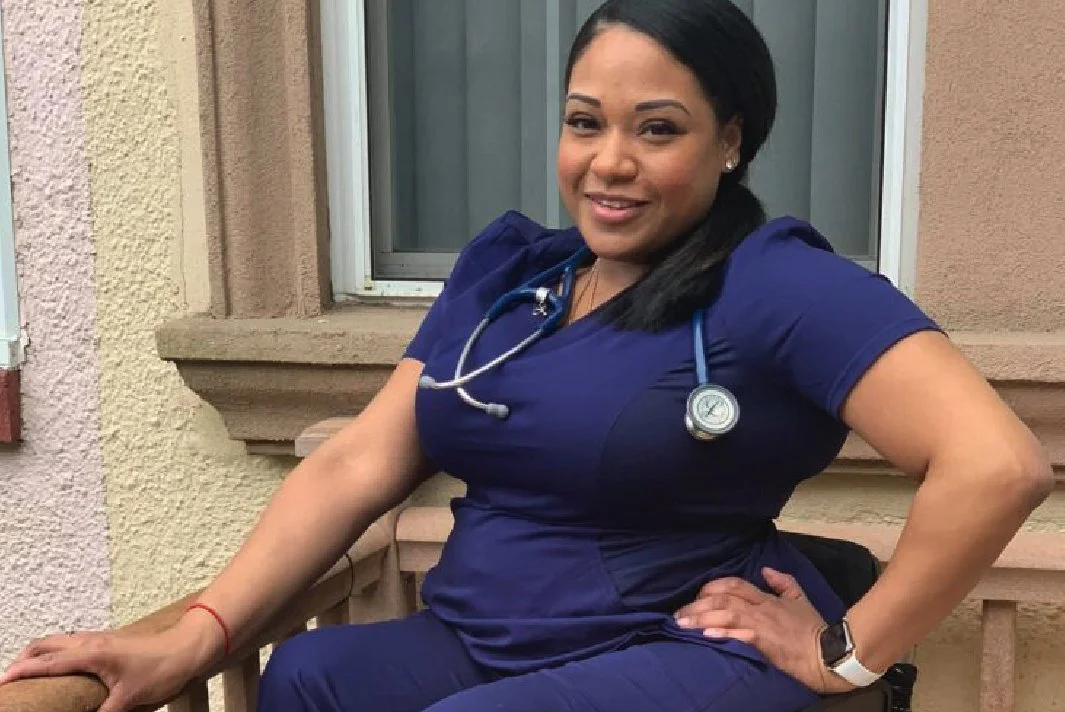
When Andrea Dalzell was five years old, her world changed in an instant.
A diagnosis of transverse myelitis left her with an uncertain future. As the inflammation damaged her spinal cord, walking became increasingly difficult. Through childhood she learned to use crutches, then a walker, and eventually, by age twelve, a wheelchair became her constant companion. To many people, that wheelchair represented limitation.
To Andrea, it became transportation toward possibility.
Growing up in Brooklyn, New York, she refused to let anyone write the ending to her story. She excelled academically, earning degrees in biology and neuroscience from the College of Staten Island. Like many aspiring healthcare professionals, she initially imagined herself becoming a physician. But somewhere along the way, she realized that medicine often focused on diseases, while nursing focused on people.
"I never wanted to look at someone as a disease," she would later explain. "I wanted to see the whole person."
That simple belief became the foundation of her career.
Earning her Bachelor of Science in Nursing should have been the beginning of her professional journey. Instead, it became the start of one of the greatest tests of her life.
She interviewed.
Again.
And again.
And again.
Seventy-six times.
Each interview began with hope and often ended with the same unspoken message.
A nurse in a wheelchair? We don't think so.
Employers questioned what they saw before they recognized what she knew. They looked at wheels instead of credentials. They saw disability before ability.
Every rejection carried the sting of prejudice disguised as concern.
Many people would have stopped after the tenth interview. Others after the twentieth.
Andrea kept going.
To pay the bills, she worked as a school nurse, a camp health director, and a case manager. Each position strengthened her clinical skills while reminding her of the dream that remained just out of reach. Every morning she continued preparing for the career she believed she deserved—not because someone promised it would happen, but because she refused to accept that it couldn't.
Then the world changed.
In 2020, COVID-19 swept through New York City. Hospitals were overwhelmed. Intensive care units filled with desperately ill patients. Ventilators became symbols of both hope and heartbreak.
Suddenly, hospitals needed experienced nurses more than ever before.
Andrea had experience with ventilators.
The opportunity she had pursued through seventy-six closed doors finally arrived.
She was hired as New York State's first registered nurse who uses a wheelchair.
It wasn't charity.
It wasn't an exception.
It was recognition that should have happened years earlier.
As the pandemic raged through New York City, Andrea cared for critically ill patients during one of the darkest chapters in modern healthcare. The same professionals who once questioned whether she could do the job now watched her perform it under the most demanding circumstances imaginable.
She didn't ask for special treatment.
She simply asked for the opportunity to prove what she had always known.
Outside the hospital, Andrea's voice grew even louder.
“Any person, with any type of disability can be a nurse. The misconception comes with the fact that with a disability means you’re incapable. Every single person’s ability is different. What I am able to do at my injury level, may not be another person’s ability at the same level.”
Known to thousands on social media as The Seated Nurse, she became an advocate for disability rights and healthcare inclusion. She challenged stereotypes that had discouraged countless people with disabilities from pursuing careers in healthcare. She reminded employers that disability does not determine competence, and she encouraged young people with disabilities to dream beyond the limits society often places upon them.
Her advocacy reached far beyond social media.
In 2015, she was crowned Ms. Wheelchair New York, using her platform—Life, Liberty and the Pursuit of Access—to champion accessibility and equal opportunity. She became a spokesperson, educator, influencer, and activist, appearing in national campaigns, magazines, and media outlets. Apple featured her in an Apple Watch campaign highlighting how she trains, even boxing to build the strength necessary for physically demanding nursing tasks like CPR.
Her message remained remarkably consistent.
Every disability is different. Every person's abilities are different. The mistake is assuming disability means inability.
Her work earned national recognition. She received the Craig H. Neilsen Visionary Prize, was named New Mobility's Person of the Year, and became an ambassador for disability inclusion in healthcare. Yet awards were never the destination.
Changing minds was.
Changing policies was.
Changing opportunities for the next generation was.
Andrea Dalzell's story is not simply about becoming the first nurse in a wheelchair in New York. It is about exposing the barriers that should never have existed in the first place. It is about perseverance in the face of repeated rejection and demonstrating that talent is not measured by whether someone walks into a hospital, but by how they care for the people inside it.
Sometimes history isn't made by the first person to walk through a door.
Sometimes history is made by the person who keeps knocking until someone finally opens it.
For Andrea Dalzell, it wasn't the first interview that defined her.
Or the tenth.
Or even the seventy-sixth.
It was the seventy-seventh door—the one that finally opened—not because she had changed, but because someone was finally willing to see what had been there all along.
And once that door opened, she made sure it would never close behind her.

About the Author
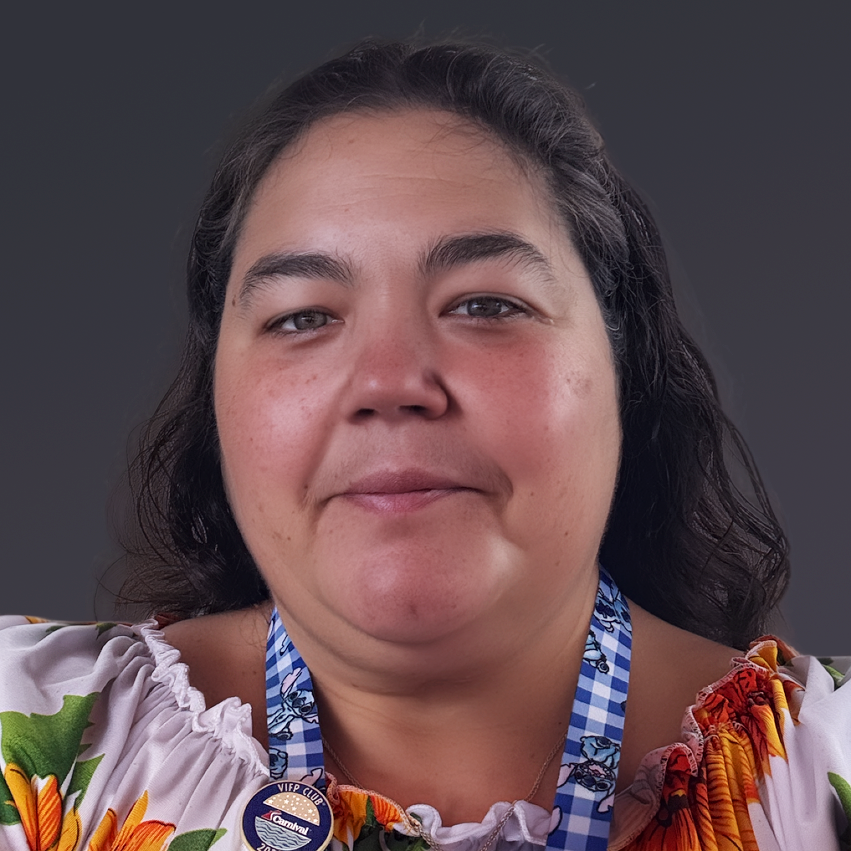
Crissy Renner holds a degree as a National Certified Medical Assistant (NCMA). She is currently working at the Orange Grove Center in the Morton J. Kent Habilitation Center with Dr. Rick Rader as his Administrative Assistant. While at her position at Orange Grove, she has accomplished becoming the Special Olympics Coordinator, a Dementia trainer, Managing Editor of HELEN, and the Executive Assistant to Project D.I.M.E.
During her time working for Orange Grove Center, she has grown in many areas and has become an integral part of Project D.I.M.E., and at Orange Grove with the inner workings of many important projects.