
Require Disability Training
Adding disability education to continuing care requirements
Summary: Mandating that health care professionals receive training on disability care, particularly through continuing education requirements for licensure renewal, is essential to address significant disparities and improper care for people with disabilities. Research shows widespread deficiencies in provider knowledge, resulting in unmet medical needs and poorer health outcomes, prompting calls from organizations like the National Council on Disability to mandate competency training. You can read the full analysis at Social Work Today.
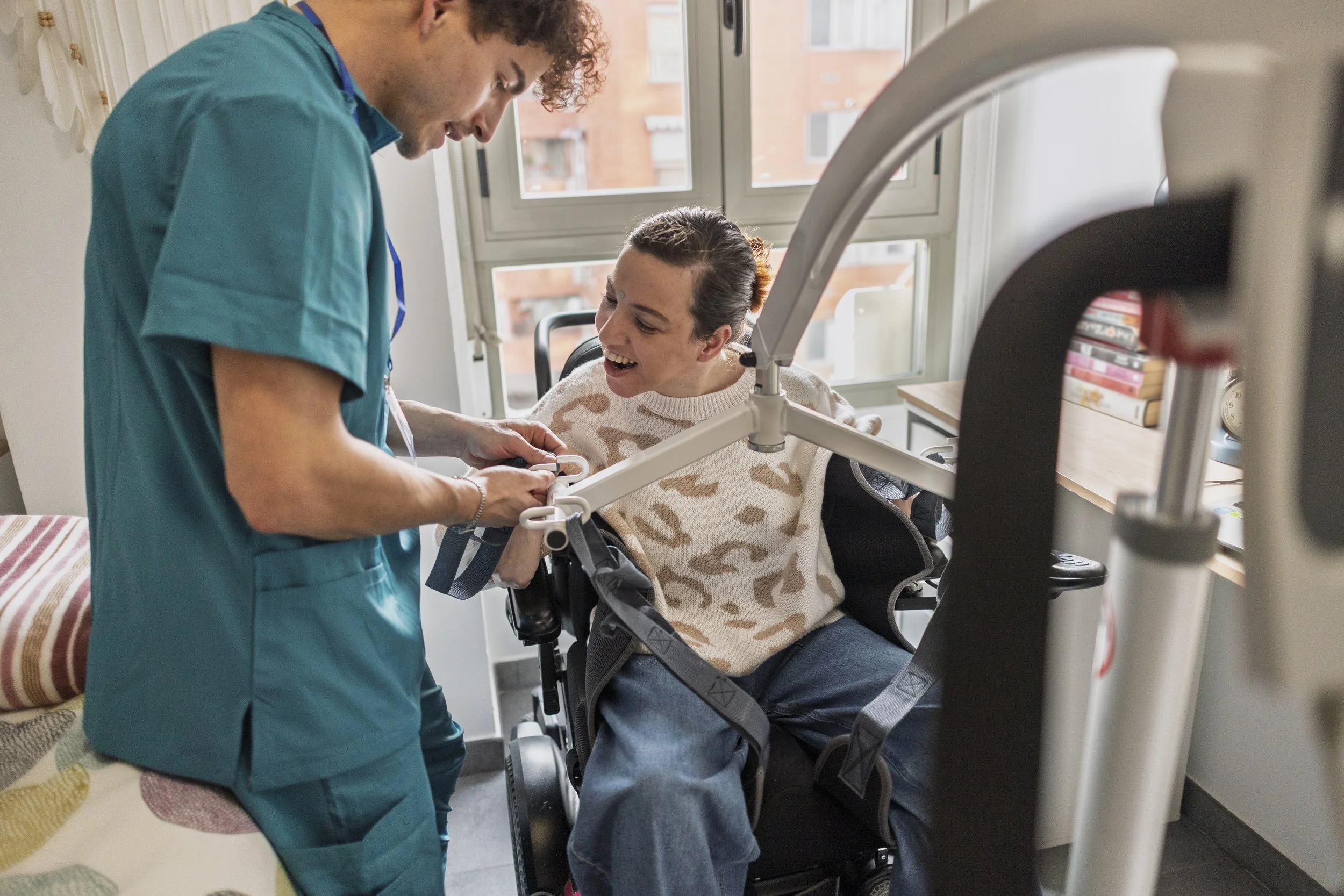
States can require that medical professionals take some continuing education on disabilities, especially neurodivergence, to maintain their licenses. Some states require continuing education content on bias. However, these types of requirements are insufficient, as bias can relate to many issues, not just disabilities.
People with Disabilities
People with disabilities, representing 28.7% of the US population, have poorer health, including mental health, than individuals without disabilities. In 2022, in Health Equity Framework for People with Disabilities, the National Council on Disability wrote:
Today, in the United States, if you are a person with a physical, intellectual, or developmental disability, your life expectancy is less than that of someone without disabilities.5 You are more than three times as likely to have arthritis, diabetes, and a heart attack.6 You are five [sic] times more likely to report a stroke, Chronic Obstructive Pulmonary Disease and depression.7 You are more likely to be obese.8 You are significantly [sic] more likely to have unmet medical, dental, and prescription needs.9
Lack of Clinical Training on Disabilities
It is essential that the health care system be prepared to care for people with disabilities, but many medical professionals are not properly trained on disabilities. The dearth of proper medical school training about disabilities causes doctors “not know how to care for people with disabilities.” There is also little content on disabilities in other health-care professional programs, including social work.
Reports state that the lack of appropriate clinical training negatively affects the ability of people with disabilities from receiving medically necessary health care. For example, the Government Accountability Office’s December 19, 2025, report, entitled “HEALTH CARE ACCESSIBILITY: Further Efforts Needed to Address Barriers for People with Disabilities,” listed “insufficient provider training on health care for people with disabilities” as one of the barriers that individuals with disabilities may face when “receiving health care.” The report also said, “We reported in 2024 that stakeholders noted that limited training can affect the care people with disabilities receive, including contributing to delays in receiving care or the need to travel long distances.” It added, “One study discussed in a review of studies found that over one-third of respondents felt as though they had to educate their doctors about their disabilities; nearly a quarter had some feeling of dissatisfaction when they left appointments.”
An example of detrimental effects from inadequate training of health-care professionals on disabilities involves a probable autistic person (CU). CU has suicidal ideation and expresses her suicidal thoughts to her therapist, who specializes in trauma but who does not have much experience with autism. That therapist ends service without a termination session, further traumatizing the probable autistic person. As 66 percent of autistic people experience suicide ideation during their lives, it is not surprising that CU has suicidal ideation. If the therapist had been properly trained in disabilities, she could have continued service.
Some medical professionals do not want to and/or feel that they cannot care for patients with disabilities. In 2022, The New York Times published an article, entitled “These Doctors Admit They Don’t Want Patients With Disabilities,” about a study by Harvard Professor of Medicine Dr. Lisa Iezzoni. That article reported, “One [a clinician] said he didn’t think he could legally just refuse to see a patient who has a disability — he had to give the patient an appointment. But, he added, ‘You have to come up with a solution that this is a small facility, we are not doing justice to you, it is better you would be taken care of in a special facility.’” In “Inclusion of Disability in Nursing Education: Rationale and Guidelines” in 2024, the National League for Nursing wrote:
The need to address disability in health care professions education is compelling. Health care professionals have reported a lack of understanding of the specific health-related needs of individuals with disabilities, lack of knowledge about the legal obligations to provide care to individuals with disability, lack of knowledge about how to communicate with individuals with disability, and lack of comfort in interacting with some groups of individuals with disability (Iezzoni et al., 2021). Because of the high prevalence of disability, every health care professional is likely to encounter those with disabilities in their practice setting. Thus, every health care professional needs to have basic information and education about the care of individuals with disabilities.
Most practicing clinicians will not return to school. However, they need continuing education to maintain their licenses. Continuing education is the prime opportunity to train medical professionals on disabilities.
Support in the Disability Community
There is support in the disability community regarding mandating that medical professionals learn about disabilities. The Health Equity Framework for People with Disabilities, the National Council on Disability called for “requiring disability competency education and training of medical, nursing and other healthcare professionals.” Parent advocate Annette Sanjurjo Lizardo, Esq. wrote “state regulatory boards need to require CME [continuing medical education] on disabilities as part of renewal licensure.” Dr. Tara Lagu, a medical school professor who was the lead author on the Health Affairs article “‘I Am Not The Doctor For You’: Physicians’ Attitudes About Caring For People With Disabilities” in 2022, said:
While we have known about physician bias and discrimination against people with disabilities in health care for some years now, this new work emphasizes the need for medical schools and regulating bodies such as the ACGME (Accreditation Council for Graduate Medical Education) and LCME (Liaison Committee on Medical Education) to take on the responsibility of educating future physicians about the care of people with disabilities.
Final Thoughts
It may be good for people with disabilities, their loved ones, and healthcare professionals to write to their representatives, asking for mandated continuing education on disabilities. Once one state acts, others may follow suit.
About the Author

Miriam Edelman, MPA, MSSW, is a Washington, D.C.–based policy professional and writer focused on disability issues, including autism. She holds degrees from Barnard College, Cornell University, and Columbia University, and serves on the DC Commission on Persons with Disabilities. Miriam is also a trainee in Georgetown University’s Leadership Education in Neurodevelopmental and Related Disabilities program and participates in a national initiative to strengthen disability-related healthcare education. She plans to continue her career in public service, with interests including disability, employment, health, and civic education.
References
Dantzig S. (2025). Why People with Disabilities Face Higher Mental Health Risks and Barriers to Care. United Cerebral Palsy. https://ucp.org/why-people-with-disabilities-face-higher-mental-health-risks-and-barriers-to-care/
Edelman M. (2024). Social Worker Education on Disabilities is Lacking. Social Work Today. https://www.socialworktoday.com/archive/exc_060424.shtml
Kolata G. (2022). “These Doctors Admit They Don’t Want Patients With Disabilities: When granted anonymity in focus groups, physicians let their guards down and shared opinions consistent with experiences of many people with disabilities.” The New York Times. https://www.nytimes.com/2022/10/19/health/doctors-patients-disabilities.html
Lagu T, Haywood C, Reimold K, DeJong C, Sterling WS, Iezzoni LI. (2022). ‘I Am Not The Doctor For You’: Physicians’ Attitudes About Caring For People With Disabilities. Health Affairs. 41(10). Doi: https://doi.org/10.1377/hlthaff.2022.00475
Lizardo, A.S. (n.d.). THE NEXT STEP FOR INCLUSION: STATE CME REQUIREMENTS ON DISABILITIES. Mediawiremobile.com. https://reader.mediawiremobile.com/accessibility/issues/205155/articles/5d52dc1281082d01b72f058d/reader
Morgan L. (n.d.). Autism and Suicide: Reducing the Risk. The New Social Worker. https://www.socialworker.com/feature-articles/practice/autism-and-suicide-reducing-the-risk/
National Council on Disability. (2022). Health Equity Framework for People with Disabilities. https://www.ncd.gov/assets/uploads/reports/2022/ncd_health_equity_framework.pdf
Ollove M. (2022). With Implicit Bias Hurting Patients, Some States Train Doctors. Stateline. https://stateline.org/2022/04/21/with-implicit-bias-hurting-patients-some-states-train-doctors/
Samuelson K. (2025). Disability is often neglected in medical school curricula, new study finds: “Doctors do not know how to care for people with disabilities because they never learned.” Northwestern University. https://news.northwestern.edu/stories/2025/01/disability-often-neglected-in-medical-school-curricula-new-study-finds