
Book Review: Systemic Ableism
by Charles M. Lepkowsky
Elena Salgado
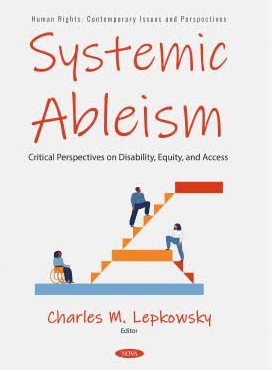
Systemic Ableism: Critical Perspectives on Disability, Equity, and Access is a book examining how people are affected by systems of discrimination built upon societal structures. At first glance, the book can feel intimidating. Its format and collection of academic journal-style articles make it seem like an incredibly difficult read. However, I was pleasantly surprised by how accessible, interesting, and engaging the articles were. The chapters are easy to follow and still provide meaningful, diverse, and up-to-date information about health equity, discrimination, and access.
This book is incredibly educational because of its diverse content and perspectives. The authors come from various universities and institutions across the United States, as well as from outside the country. Their perspectives include various disabilities, like developmental disabilities, autism spectrum disorders, physical disabilities, invisible disabilities, serious mental illnesses, aging disabilities, and much more. They contextualize how systemic ableism affects access to healthcare, employment, education, and social environments.
While it does identify the different barriers that people with disabilities experience, it also offers solutions. The science and research presented throughout each collection provide an important message about the need for change. Many of the chapters offer specific suggestions, interventions, strategies, or areas where society, communities, researchers, healthcare professionals, educators, employers, and families can improve. This book informs the reader about the interconnected systems designed to marginalize people with disabilities across institutions, communities, and regions of the world. However, it importantly emphasizes the many opportunities to create more equitable, accessible, and person-centered systems of care.
Each article varies in level of detail. Some are focused and concise, communicating their ideas very quickly, while others provide more thorough explorations of systemic ableism, disability, and intersectionality. For example, one chapter’s discussion of disability and ableism in medical practice differs substantially from another chapter that examines sexuality and sexual wellness among women with multiple sclerosis. Some might find the variety to feel disjointed and could distract readers from its original purpose. However, I do believe that most of the readers will find the diverse writing styles interesting because it keeps their attention and exposes them to focused discussion and more extensive examinations of societal issues.
Some articles may suggest that the intended audience is researchers, but its message is relevant to a much broader audience. A diverse audience is essential because creating equitable and high-quality care systems cannot be the sole responsibility of researchers or healthcare professionals. Meaningful change requires participation from the community as a whole.
Overall, Systematic Ableism: Critical Perspectives on Disability, Equity, and Access is a powerful book that is informative and thought-provoking. Its collection of articles examines ableism from multiple perspectives while emphasizing the importance of equity and accessibility. While the format does initially appear intimidating, the individual articles are surprisingly approachable and genuinely interesting to read. The diversity of authors, disabilities, and perspectives makes the book particularly valuable. This book is an incredible resource for raising awareness, and I would recommend it to academics, teachers, parents, healthcare providers, employers, clinicians, any other professional who interacts with disabled individuals, and anyone interested in accessibility and equality.
About the Author

Mayra Elena Salgado immigrated from Honduras to the United States at age nine. She graduated with highest honors from the University of Tennessee at Chattanooga, where she was inducted into Phi Theta Kappa and the Alpha Society for her academic and research achievements. She currently works as a coordinator for the Family Support Program at a nonprofit organization. Salgado plans to pursue a master’s degree and doctorate in psychology and hopes to become a neuropsychologist contributing to research and advocacy.