HELEN Editorial

Rick Rader, MD, FAAIDD, FAADM, DHL (hon), Director, Habilitation Center, Orange Grove Center Editor-in-chief, HELEN, Journal of Human Exceptionality
William Shakespeare wrote many of the most famous plays and sonnets in the English language, and few lines in his work are as commonly quoted as “To Be, or Not to Be.” Everyone knows this line. They may not understand it, or what it actually means, but they know it.
In modern English, people often use the phrase in a softer way. It can mean: Should I do this or not? Should I continue or stop? Should I act or stay passive? Is this decision worth the risk?
For many individuals, the decision to decide on a meaningful career is often elusive. Changes in individual interests, emotional and financial considerations, self-reflection, attitudes, new experiences, and of course the big enchilada question is, how does this career reflect one’s personal values.
Jacob Colton had a penchant for music since his early childhood. Of all the instruments he was exposed to it were the drums that nailed it for him.
Drums have been a part of human culture for centuries. They are used in ceremonies, celebrations, and music. The beat of a drum can stir emotions and bring people together. Playing the drums is also a great way to express oneself. It can be both fun and therapeutic. Drums are versatile and can be found in many music genres. From rock to jazz, drums provide the backbone of the music. Their ability to create various rhythms makes them unique. Many find joy in both listening to and playing the drums. The connection between the drummer and the drum is powerful. This bond can be felt by everyone who hears the beat.
Jacob excelled at drumming. He played drums in high school and continued to play drums in college, graduating from the State University of New York, Plattsburgh as a music major. His obvious options with that degree were to become a music teacher, become a member of a band or become a music producer. None of those choices resonated with him, at least not to the degree that he wanted to make the necessary commitments to achieving success in those pursuits.
One of Jacob’s values was an interest in helping others. Both Jacob and his brother were Eagle scouts, a biomarker for empathy and service. Jacob was aware of the field of “music therapy” and how it crossed over the two things that seemed to appeal to him, music and responding to people’s often hidden needs.
An opportunity to test the waters came about by being invited to observe how music could impact on the lives, behavior, and pleasure of individual with intellectual and developmental disabilities. The Orange Grove Center in Chattanooga has provided community support and services for individuals with complex disabilities for over 70 years. From its earliest beginnings music has been a mainstay as part of its enrichment programs. Under the direction of Music Navigator Ellen Poole, the music program is multi-tiered and ranges from a chorus to adaptive instruments, enrichment, group and personal music lessons, festival performances and boasts being an approved TRAP (The Rhythmic Arts Program) center.
Jacob came to Orange Grove on several occasions to observe how music was made available to individuals with multiple disabilities including mobility, sensory, communicative, cognitive and attention deficits. While none of those activities were part of a recognized music therapy program, they were certainly “therapeutic.” These sessions introduced individuals to social connections, solo performances, counting, attention span control, eye-hand coordination, personal space, participatory rewards, and of course sheer pleasure.
It wasn’t until Ellen invited Jacob to try his hand at “running the show,” that the real show began.
Jacob had not prepared to do any teaching or training and he timidly asked Ellen, “What should I do?”
Ellen responded, “Do what you do best, teach them some drumming.”
Jacob smiled and took the drum sticks that were provided by Ellen.
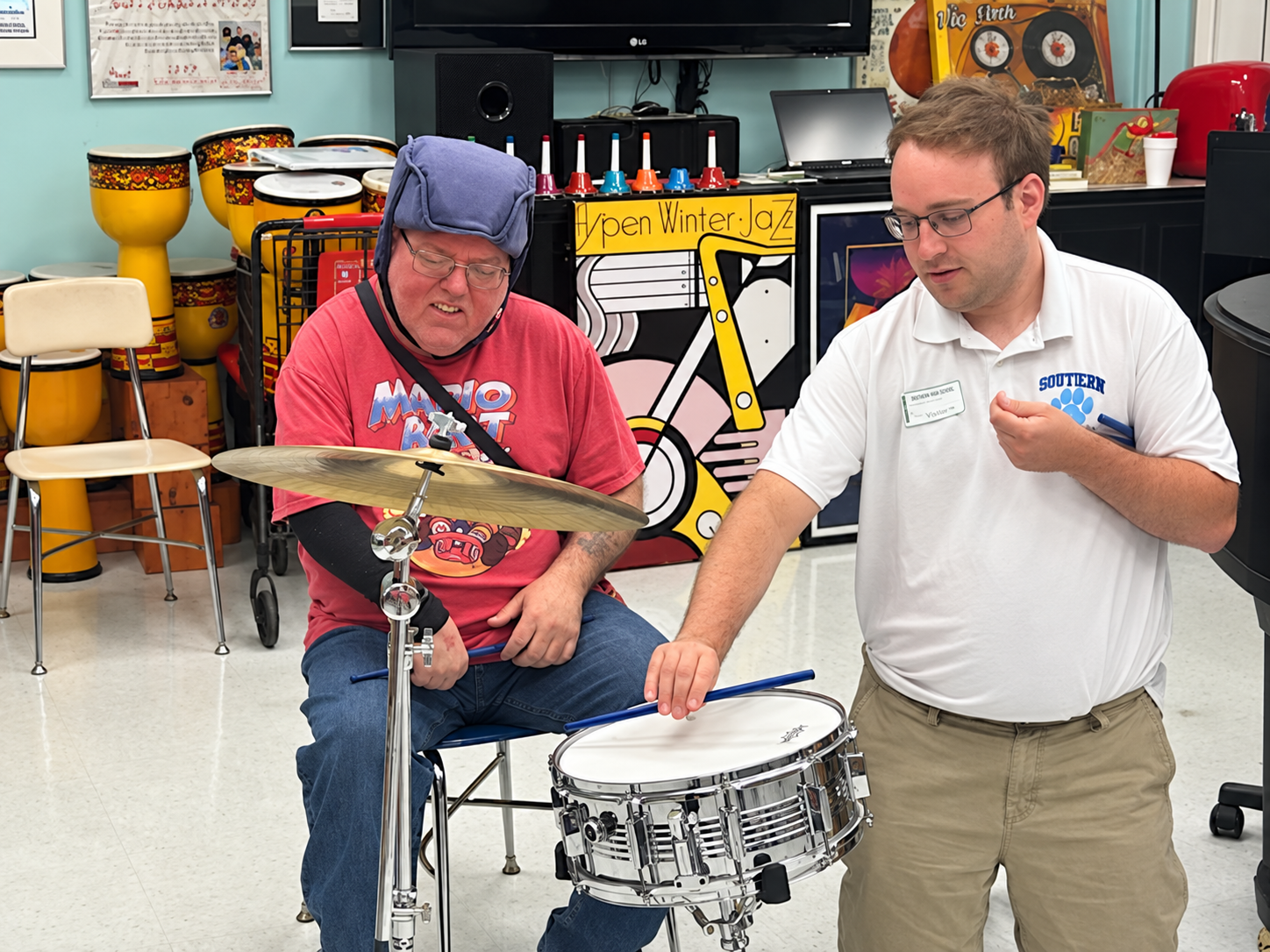
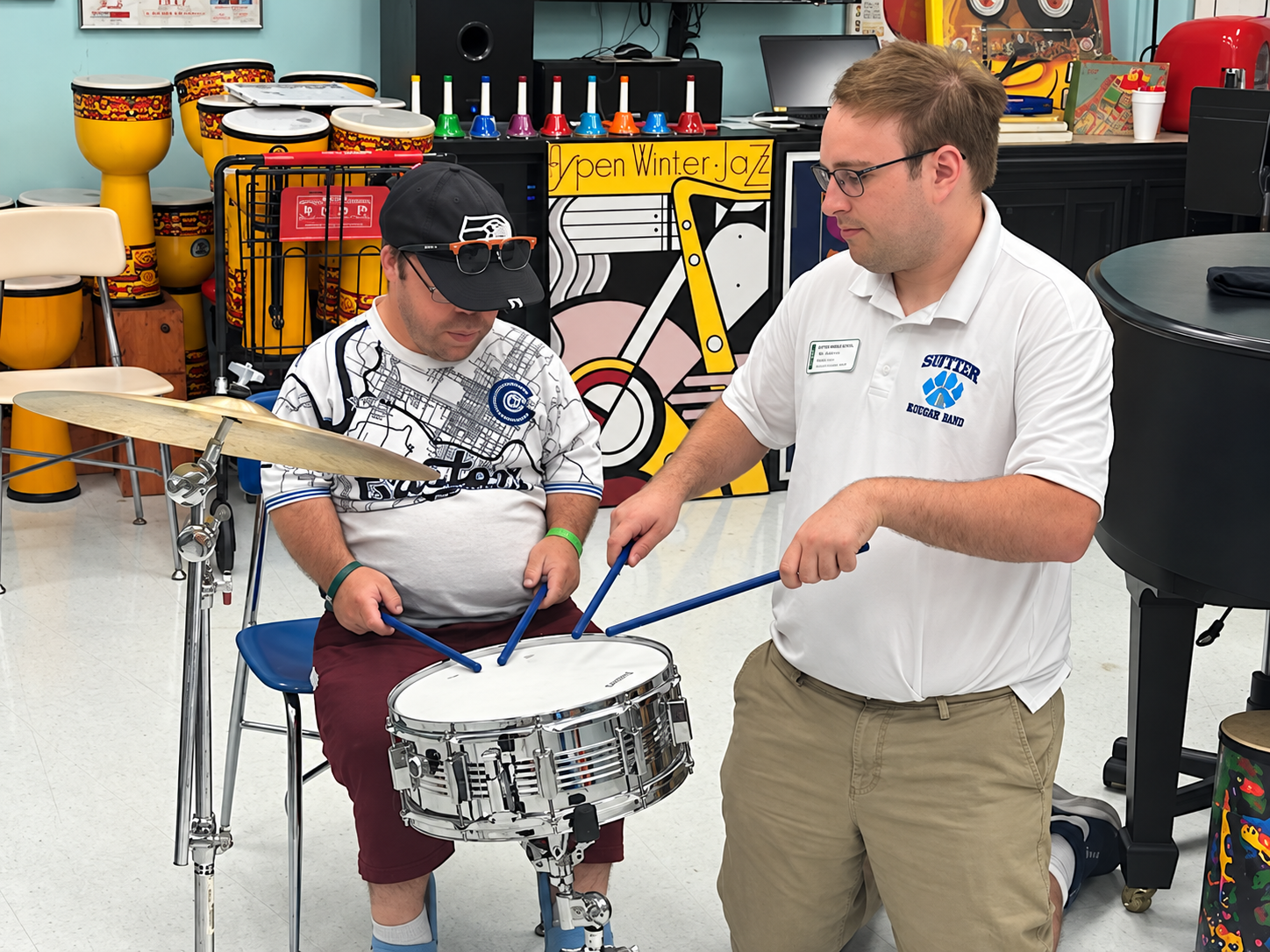
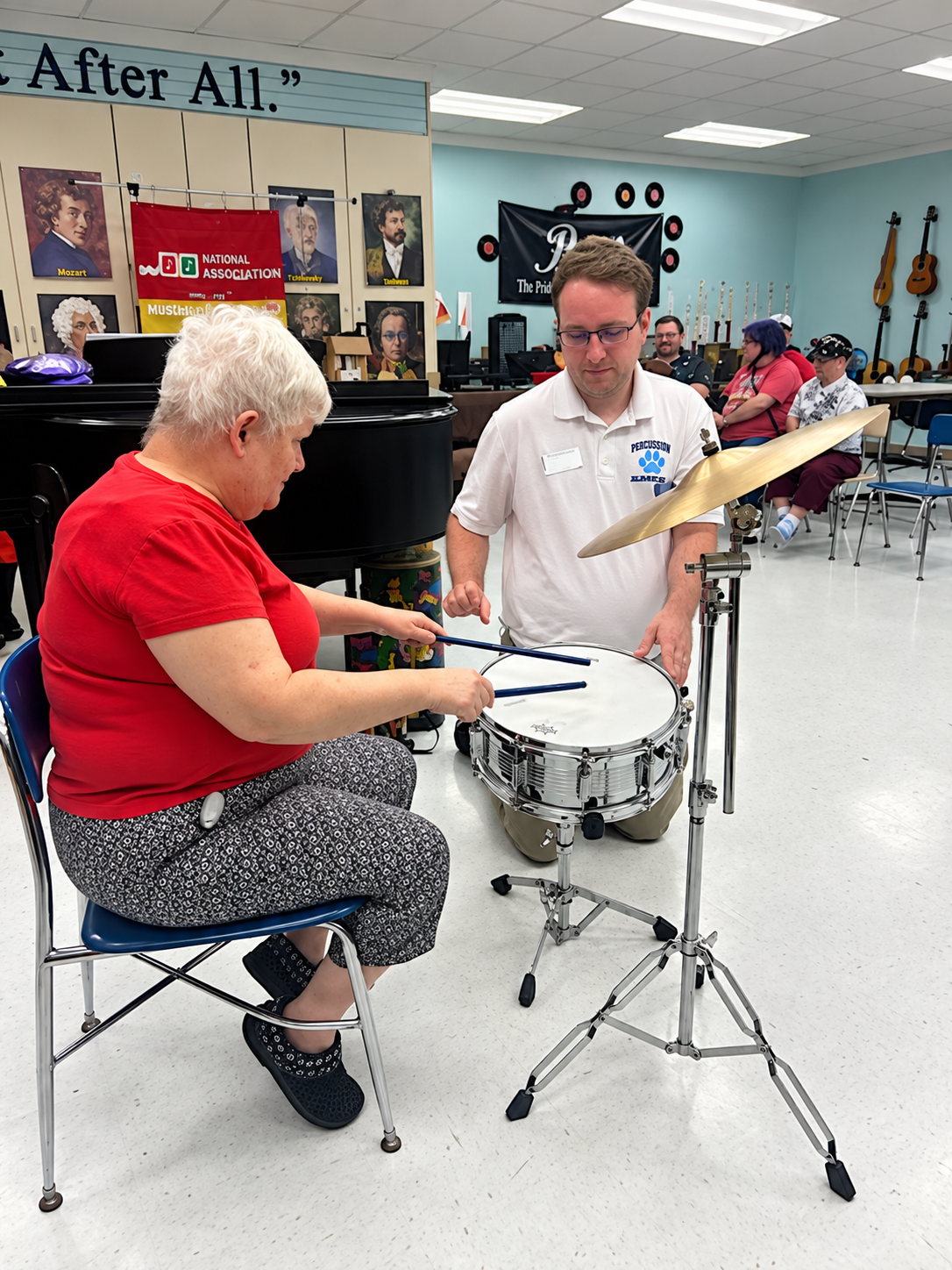
Over the next hour Jacob showed numerous students how to make a basic snare drum and a cymbal sound like never before. He produced a novel way to hold the sticks by someone with a deformed hand. He showed a deaf student how to use one hand on the “drum skin” to feel the sound. He showed another student how to change the sound of the cymbal by “petting” the cymbal with an open hand. He even encouraged a student who missed the drum and instead hit the cymbal stand to keep doing it.
Perhaps the most impressive display and indication that Jacob might have found his groove was the way he approached the students. Jacob went to where each student was seated and shook their hands and escorted them to the drum set. This was particularly significant for the students with mobility difficulties and the blind student. No one instructed Jacob to do that; he did not wait for one of the caregivers to bring the student to him. Jacob appreciated that his role was not only introducing them to drumming, but to ensure their comfort, safety, and confidence. After each performance Jacob initiated the applause that was joined and continued by the other students. Each student thanked Jacob and heard him say, “No, I want to thank you.”
By the end of the day the students wanted to know when Jacob was coming back.
Jacob understood and appreciated that this was simply a taste of the role and value that music can play in the lives of people with disabilities. It could have served as the answer to the question, “to be or not to be.”
Jacob has learned more about the goals and rewards of becoming a certified music therapist. He is currently evaluating the needed prerequisite academic courses he will have to obtain to apply to the competitive application pool. He appreciates the long road ahead if music therapy is the course he decides to pursue. But if his spontaneous interaction with the students at Orange Grove are any indication of his aptitude for this profession it would certainly be a “win-win” for everyone.
Jacob’s experience in finding an opportunity to explore his suitability, skills and interests serves as a model for other young people who are at the crossroads of making decisions impacting on their future. We need to give more students the chances to have “real life” experiences in areas that have piqued their curiosity or have been outside their comfort zone.