
Breaking Barriers: Alexandra Adams Becomes the UK’s First Deaf-Blind Doctor
Crissy Renner
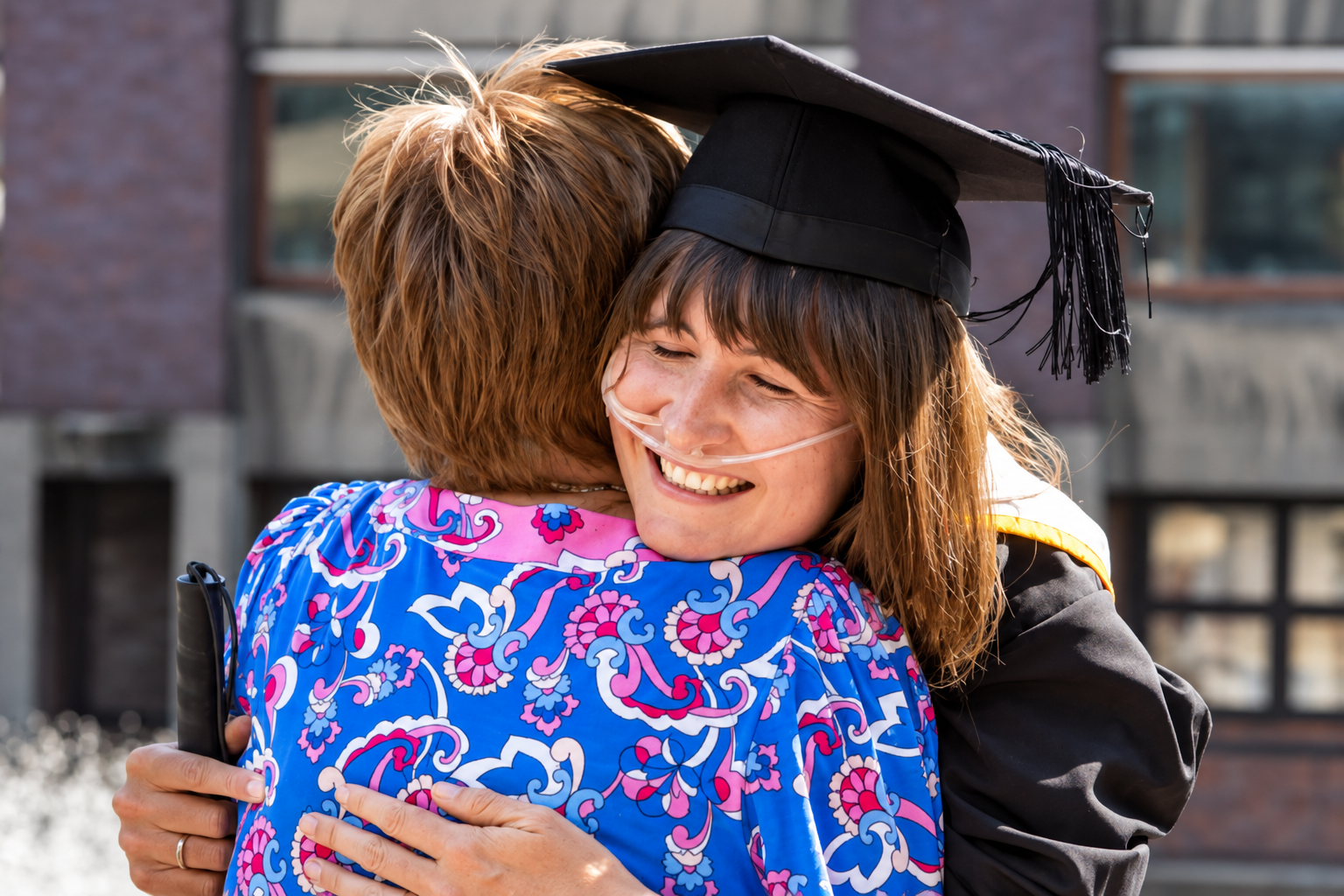
Alexandra at her medical school graduation.
Alexandra Elaine Adams has begun her medical career as the United Kingdom’s first deaf-blind doctor after completing more than a decade of medical training. The 32-year-old from Kent was registered deaf-blind at birth and lives with Ehlers-Danlos syndrome and other significant health challenges. Her journey to medicine has included athletic ambition, repeated hospitalizations, disability discrimination, academic setbacks, travel, writing, and an enduring determination to help others.
Adams recently celebrated receiving both a medical degree and a master’s degree in creative writing. She described earning the two degrees in the same week as “surreal” and “absolutely mad.” The achievement marked a remarkable milestone after more than a decade of medical education.
From Athlete to Medical Student
As a teenager, Adams became a full-time athlete, training as a swimmer for Great Britain with ambitions of competing in the London 2012 Paralympics. Her athletic career was interrupted by serious health problems, including numerous surgeries and an extended period in hospital.
While recovering in a hospital bed, Adams began considering medicine as a career. Watching the healthcare professionals who treated her inspired her to pursue a similar path.
“It was whilst I was in the hospital bed that I was inspired to look into medicine as a career,” she explained.
After her athletic career ended, Adams had to rebuild her strength and restart her education before eventually gaining admission to medical school. She has described her love of people as one of the reasons she was drawn to healthcare.
“Behind every crease of a smile, every smile of a crease, there is an untold story of joy and suffering in every single one of us,” she wrote in an autobiographical account of her journey.
Facing Disability Discrimination
Adams has faced discrimination and exclusion throughout her education and medical training. During medical school, she documented the challenges of studying while deaf-blind and living with Ehlers-Danlos syndrome, a genetic connective-tissue disorder.
At one point, disability discrimination forced her to take a break from her medical education only months before she was expected to qualify. She recalled believing that her dream of becoming a doctor might be over.
“At the time, I genuinely thought it was the end of the road,” she said.
Rather than abandoning her goals, Adams took a different direction. She discovered a master's program in creative writing at Northeastern University London and decided to apply. She had already begun working on a memoir about her experiences.
The university provided an environment in which she felt supported and included. She described the students and tutors there as a community that “feel like family.” Her creative writing studies eventually became an important part of her journey, giving her another way to tell her story and advocate for disability inclusion.
She completed her creative writing degree in 2025 and later had the opportunity to complete her medical studies as well.
Living and Traveling as a Deaf-Blind Person
Adams has also described taking a gap year to travel independently around the world while deaf-blind. She viewed the experience as an opportunity to gain perspective, rebuild her determination, and experience the world on her own terms.
Travel and adventure have remained important parts of her identity. Alongside medicine, Adams describes herself as a solo traveler, public speaker, writer, published poet, artist, and former swimmer and skier.
Her blog, Setting Sights, was created as a place to share her experiences and reflections. In introducing the blog, Adams explained that she wanted to create a space where her stories could have “meaning, motivation and reason.”
She has written openly about disability, healthcare, wellbeing, discrimination, ambition, travel, and the realities of living with complex health challenges.
Using Technology to Practice Medicine
Adams has demonstrated how assistive technology can help remove barriers for healthcare professionals with disabilities. During her clinical training, she used adaptive equipment to examine patients and participate in medical practice.
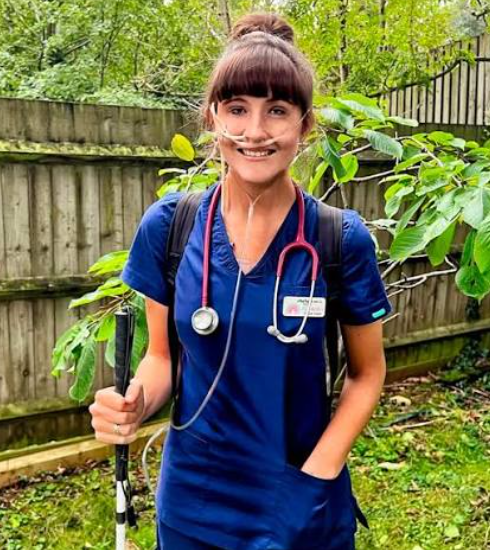
One example is her Bluetooth stethoscope, which connects directly to her hearing aids and enables her to listen to patients’ heartbeats. A video demonstrating the technology on TikTok has received more than 2.9 million views.
Her use of technology has attracted widespread attention because it demonstrates that accessibility can make it possible for people with disabilities to participate in professions that may traditionally have been considered inaccessible.
For Adams, however, technology is only one part of the solution. Her experiences have also highlighted the importance of changing attitudes toward disability within education, healthcare, and society.
Health Challenges Along the Way
Adams's medical journey has taken place alongside continuing health challenges. In her own writing, she described experiencing numerous hospital admissions and near-death experiences. She has also written about living with a progressive mitochondrial disorder and the impact that declining strength and stamina have had on her life.
These experiences have caused her to reconsider her priorities and focus more carefully on her own wellbeing while continuing to pursue her professional goals.
Rather than allowing her experiences to remain private, Adams has chosen to use them to advocate for others facing similar challenges.
“I feel it is my job to fight this and make the world a better place for others,” she wrote.
A New Career and a Continuing Mission
In July 2026, Adams celebrated her dual achievements at Northeastern University London’s graduation ceremony. Shortly afterward, she began work as a doctor, becoming the UK's first deaf-blind doctor.
“I’m starting work as a doctor next week – so a bit terrifying but so exciting and I’m just so happy,” she said.
Adams hopes to specialize in palliative medicine, with an emphasis on compassionate, patient-centered care. Her personal experiences with illness and the healthcare system have given her a perspective that she hopes will help her connect with patients and their families.
At the same time, she plans to continue writing, public speaking, and advocating for disability inclusion in healthcare.
Through Setting Sights, her memoir, social media, and public appearances, Adams has created a platform for sharing the realities of disability while challenging assumptions about what people with disabilities can achieve.
Her story is not simply about becoming the UK's first deaf-blind doctor. It is also about persistence, accessibility, belonging, and the importance of allowing people with disabilities to define their own ambitions.
From a young athlete dreaming of the Paralympics, to a patient inspired by the healthcare workers who treated her, to a medical student navigating discrimination, and finally to a doctor using assistive technology to care for patients, Alexandra Adams has built a career around both medicine and advocacy.
Her journey continues, with a medical career ahead of her and a story she is determined to keep telling.
About the Author
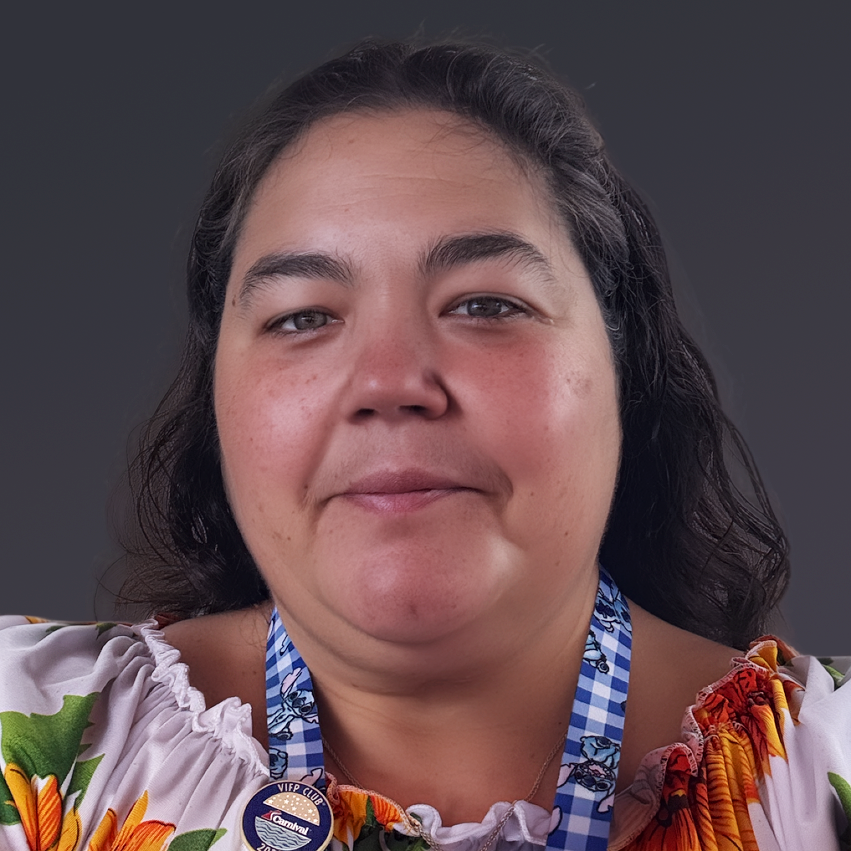
Crissy Renner holds a degree as a National Certified Medical Assistant (NCMA). She is currently working at the Orange Grove Center in the Morton J. Kent Habilitation Center with Dr. Rick Rader as his Administrative Assistant. While at her position at Orange Grove, she has accomplished becoming the Special Olympics Coordinator, a Dementia trainer, Managing Editor of HELEN, and the Executive Assistant to Project D.I.M.E. During her time working for Orange Grove Center, she has grown in many areas and has become an integral part of Project D.I.M.E., and at Orange Grove with the inner workings of many important projects.