
Disability-Inclusive Nursing
Nursing Leadership at the Intersection of Disability Research and Inclusive Workforce Education
Summary: The 2026 Disability and Multiple Chronic Conditions RIIG symposium highlighted the need for nursing science to drive equitable, disability-inclusive care by modernizing research with AI and addressing ableism in education. Participants advocated for integrating disability-specific content into nursing curricula across the four spheres of care to prepare a workforce focused on autonomy and person-centered care.
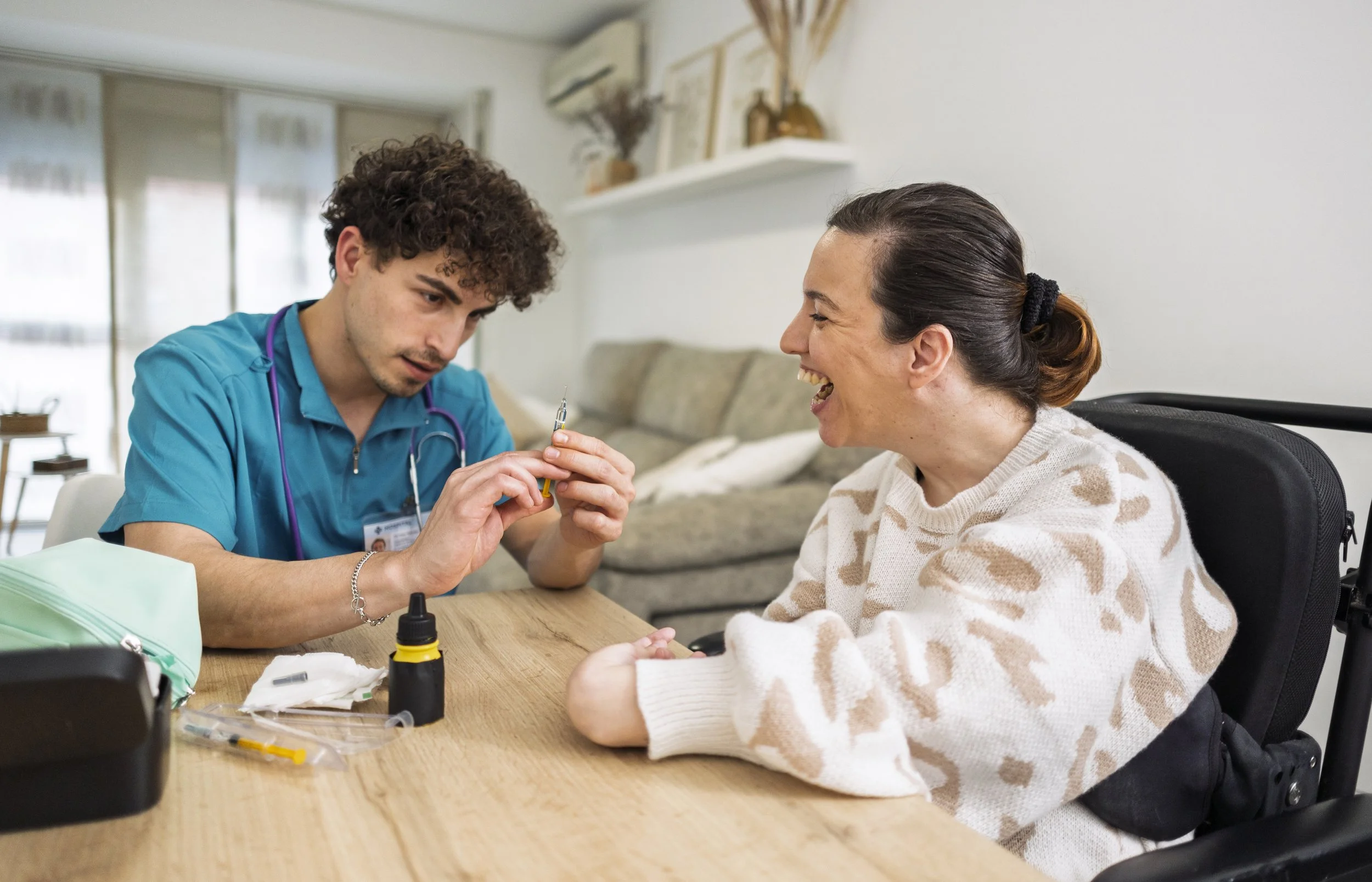
Adapted from a presentation delivered at the first Midwest Nursing Research Society Disability & Multiple Chronic Conditions Health Research Interest and Implementation Group Symposium
People with disabilities, including people with multiple chronic conditions, often face some of the biggest challenges in our health system. They experience ableism, discrimination, communication barriers, and structural barriers across care settings (Lundberg & Chen, 2024; CDC, 2025). Nursing science is uniquely positioned to lead the way in advancing equitable, disability inclusive care.
To support this work, within the Midwest Nursing Research Society (MNRS), nurse scientists involved in disability-inclusive research and education initiatives formed the Disability and Multiple Chronic Conditions Health Research Interest and Implementation Group (RIIG) in 2025. The RIIG brings together nurse scientists to promote accessible, community engaged research and to prepare a nursing workforce competent in the care of people with disabilities. At the 2026 50th anniversary MNRS Annual Conference in St. Louis, the RIIG held its first symposium, which opened with a talk on the current state of disability research and the needs of the nursing workforce in disability competent care.
Current and Emerging Research Directions
Researchers are changing how they study disability and multiple chronic conditions. Instead of examining one disease at a time or assuming disability is something to “fix,” new research uses large datasets, artificial intelligence tools, and advances in biology to understand how conditions interact in real life (Suls et al., 2022). These methods help identify who is at higher risk of developing serious health problems and how health care needs change over time. These advances also create opportunities for nursing to translate complex data into meaningful, patient-centered care strategies.
The National Institutes of Health 2026 Strategic Plan for Disability Research calls for research that looks at the whole person, uses modern data tools, and addresses the structural barriers people with disabilities face. Together, these new approaches aim to improve care, predict health needs earlier, and support better long term outcomes for people who often move through a fragmented health system.
Nursing Workforce Needs and the Spheres of Care
As part of a report by the National Academy of Medicine, Finkelman, et al., 2017 described 21st century workforce needs across four spheres of care. The American Association of Colleges of Nursing (AACN; 2021) updated competencies for professional nursing education described as being applicable across the four spheres of care. The spheres include:
disease prevention and promotion of health and well-being
chronic disease care
regenerative or restorative care during and after acute illness or injury
hospice, palliative, and supportive care
However, the way these spheres are currently described reinforces ableism and undermines efforts to prepare a nursing workforce competent in caring for people with disabilities. For example, disease prevention and health promotion are described as serving “generally healthy” people (Giddens & Mullaney, 2023, p.10), even though people with disabilities face limited access to health promotion and preventive services (CDC, 2025). Chronic conditions care is framed as “important in the prevention of negative sequelae (i.e., complications; Giddens & Mullaney, p.10), a narrow view that overlooks the importance of management of chronic conditions so that people with disabilities can engage in what matters to them. Workforce needs in hospice and palliative care are described as driven by “the aging of a large segment of the population who have complex chronic conditions” (Giddens & Mullaney, 2023 p.11), yet this is reason why good chronic conditions management is essential across all settings and is not described in that sphere of care.
During the symposium, participants discussed the problem of ableism in nursing education. As nurse scientists whose work is often clinically based, they recognized their ability to influence how the updated AACN competencies are implemented. They emphasized a key opportunity to integrate disability content into nursing education, especially at a time when many nursing programs are making changes to their curricula based on the updated AACN competencies. Participants highlighted the need for disability-inclusive toolkits to guide teaching across the four spheres of care, with a focus on person-centered care, autonomy, and community partnerships. In real-world clinical settings, including primary care and behavioral health, nurses routinely care for individuals with co-occurring mental health conditions, chronic illness, and disability. Nursing leadership is essential to translating disability-inclusive education and research into these settings to improve patient outcomes and reduce health disparities.
A Cultural Shift Toward Inclusion
Moving toward disability inclusive nursing education is not only a clinical shift, but also a cultural one. Nursing science can lead to this transformation. By treating disability and chronic conditions as natural parts of human diversity and centering the goals and autonomy of people with these lived experiences, nurses can help build a workforce that supports people with disabilities in living their lives as they want and as active members of their families and communities.
This is a critical moment for bold, inclusive efforts to change.
About the Authors
Sarah Ailey, PhD, is a professor at Rush University whose research focuses on improving care for people with disabilities, especially intellectual disabilities, in community and hospital settings. She leads federally funded programs addressing gaps in disability content in health education and studying problem-solving supports in group homes.
Ailey has advised more than 40 graduate students on disability-related projects, contributed to national work on disability inclusion in nursing education, and has served on the Board of the Alliance for Disability in Healthcare Education since 2015, including as president since 2018.

Dr. Angela Chen is a Professor and Endowed Chair in Behavioral and Mental Health Nursing at Michigan State University. Her work centers on advancing equitable, inclusive care through innovative, technology-based interventions that support health decision-making related to HPV vaccination, HIV/STIs, substance use, and mental health among underserved populations, including ethnic minority and immigrant youth and young adults. Grounded in both research and clinical practice, she is a board-certified Psychiatric Mental Health Nurse Practitioner who continues to provide direct care to individuals with mental health and substance use needs. Dr. Chen’s work is further informed by her experience as a Visiting Professor at the University of California, San Francisco Center for AIDS Prevention Studies from 2011 to 2013, where she contributed to advancing HIV prevention science.

Dr. Patty West is an Assistant Professor at Michigan State University College of Nursing whose research focuses on families of children with neurodevelopmental disabilities, IDD content in nursing education, and physical activity among adolescents with IDD.
A registered nurse and experienced educator, Dr. West is committed to family-focused care and inclusive research that improves health outcomes for people with intellectual and developmental disabilities. She teaches undergraduate and graduate nursing courses and co-teaches an interprofessional elective on transitional needs for adults with IDD.

Anna Quon PhD, RN, MBA HM, AMB-BC, NEA-BC
Assistant Professor, Department of Community, Systems and Mental Health Nursing. Areas of Expertise: Intellectual and developmental disabilities, autism spectrum disorder, ambulatory nursing care, health services research
References:
American Association of Colleges of Nursing. (2021). The Essentials: Core competencies for professional nursing education. Accessible online at https://www.aacnnursing.org/Portals/0/PDFs/Publications/Essentials-2021.pdf
Centers for Disease Control and Prevention. (April 7, 2025). Disability and health information for healthcare providers. U.S. Department of Health and Human Services. https://www.cdc.gov/disability-and-health/about/disability-and-health-information-for-healthcare-providers.html
Lundberg, D. J., & Chen, J. A. (2023). Structural ableism in public health and healthcare: a definition and conceptual framework. Lancet regional health. Americas, 30, 100650. https://doi.org/10.1016/j.lana.2023.100650
Finkelman E.M., McGinnis J.M., McClellan M.B., et al., (Eds.). (2017). Workforce for 21st-century health and healthcare. In Vital directions for health & health care: An initiative of the National Academy of Medicine. National Academies Press. https://www.ncbi.nlm.nih.gov/books/NBK595176/
National Institutes of Health. (2026). NIH strategic plan for disability research: 2026–2030. U.S. Department of Health and Human Services. https://dpcpsi.nih.gov/sites/g/files/mnhszr346/files/2026-04/NIH-Strategic-Plan-for-Disability-Health-Research-FY26-FY30-508.pdf
Suls, J., Salive, M. E., Koroukian, S. M., Alemi, F., Silber, J. H., Kastenmüller, G., & Klabunde, C. N. (2022). Emerging approaches to multiple chronic condition assessment. Journal of the American Geriatrics Society, 70(9), 2498–2507. https://doi.org/10.1111/jgs.17914