
Teaching for Equity
Health Literacy Strategies to Support People with Disabilities
By Dr. Julie Campbell
Summary: Integrating organizational health literacy and supported self-management into healthcare education is crucial for improving person-centered care and reducing inequities for people with disabilities. By adopting frameworks like the Individual and Family Self-Management Theory (IFSMT) and focusing on negotiated collaboration, providers can foster better communication and decision-making for disabled patients [3, 7, 8]. You can read the full analysis at Center for Literacy and Disability Studies.
Introduction
For the past few decades, healthcare has focused on evidence-based practice. Evidence-based practice is defined as bedside decision-making that is informed by three factors: clinical expertise, research, and the patient’s wishes [1]. In the healthcare system, it is common to see decisions based on clinical expertise and research, but how often is patient preference considered? Relatedly, a current buzzword in healthcare is person-centered care. A key aspect of person-centered care is including patient’s wishes in decisions about their care [2]. Making decisions about healthcare is similar to self-management, which means what people do to take care of their health [3]. Self-management may require support, or extra help, from healthcare professionals. For example, patients need to be fully informed about health and illness in order to make health-related decisions. This is especially important for people with disabilities, who are often dealing with many health-related issues at the same time.
Health literacy is the ability to obtain, understand, and use information for health-related decisions [4]. There is a great deal of evidence on best practices for communication between healthcare providers and patients. Several of the most widely known best practices are based on health literacy, such as plain language. However, it is quite common for patients to leave healthcare encounters without a clear and confident understanding of what they were told. This has a significant impact on their decision-making and the actions they take to manage their own health. The need for plain language and supported self-management is critical for people with disabilities. One way to improve patient-provider communication is to include these topics in education for healthcare professionals. This article discusses the integration of health literacy and supported self-management into healthcare professional education to improve person-centered care for people with disabilities.
Health Literacy
Health literacy is often defined as a personal characteristic of individual patients. In other words, someone with higher personal health literacy is more likely to be able to find, understand, and use health-related information [4]. Personal health literacy is more than the basic skills of reading and writing. It includes communicating with healthcare providers to obtain and understand information. Additionally, personal health literacy involves applying information to one’s own situation [5]. With this definition, patients are responsible for their own health literacy, which affects their ability to be involved in decision-making.
Another aspect of health literacy is organizational. Organizational health literacy means that healthcare providers and organizations make health-related information easy for patients to find, understand, and use [4]. This makes healthcare providers responsible for health literacy instead of individual patients. Organizational health literacy actions include making sure patients have the information they need, helping patients find their way through complex healthcare systems, and using plain language [6].
Educating Healthcare Providers for Direct Care of People with Disabilities
One way to move toward supported self-management for people with disabilities is to include organizational health literacy principles in education for healthcare professionals. Notably, these principles align with best practices for providing healthcare to people with disabilities. One of the Core Competencies on Disability for Health Care Education is Professionalism and Patient-Centered Care, which includes the following sub-competencies:
Demonstrate communication strategies to best meet the needs/abilities of the patient. Seek out and implement appropriate resources, including interpreter services, to communicate effectively using clear language at an appropriate level of health literacy. Adjust schedule to allow extra time as needed.
Recognize that some patients with disabilities may benefit from supported decision-making. Demonstrate skill in engaging the patient and caregivers in the supported decision-making process [7].
The Individual and Family Self-Management Theory can be a helpful framework for teaching supported self-management, with the addition of health literacy. The IFSMT describes three features of self-management: context, process, and outcomes. Context includes factors that affect self-management, such as the health condition and the patient’s or family’s literacy. The self-management process involves factual information, decision-making, and social support. Self-management outcomes can be actions like taking prescribed medications, as well as results like quality of life [3]. Similarly to personal health literacy, actions to improve self-management focus on what patients and families need to do. Incorporating organizational health literacy into the IFSMT helps describe what healthcare providers and organizations can do to support patients’ self-management skills and abilities. Education for healthcare professionals might include the following:
IFSMT Context
• Address health literacy and other patient/family factors as an aspect of person-centered care.
IFSMT Process
• Make sure patients have necessary factual information, and provide assistance as needed to help them understand the information.
• Assess the patient’s wishes for involving caregivers in self-management. Include caregivers in decision-making as desired by the patient.
• Engage in negotiated collaboration with the patient (and caregiver as appropriate). According to the IFSMT, “negotiated collaboration occurs when ‘your, mine, and our’ perspectives are respected and influential.” [3]
IFSMT Outcomes
• Promote equity for people with disabilities by supporting decision-making and self-management.
Negotiated Collaboration
The idea of negotiated collaboration is key to person-centered care and evidence-based practice. Interestingly, the IFSMT includes professional expertise, standards of care, and individual meaning in its definition of negotiated collaboration [3]. These are the same components as evidence-based practice: clinical expertise, research-based evidence, and patient wishes.
Communication between patients and healthcare providers is often challenging. In some situations, disability adds a layer of complexity. Many, perhaps most, healthcare providers are not trained in communication techniques. Negotiated collaboration may be a helpful place to start. Drawing from the business concept of “creating collaborative value during negotiation,” here are three strategies that align with organizational health literacy to support self-management for people with disabilities (adapted from Max Bazerman, Harvard Business School):
1. Share information: Provide necessary information and help patients understand what it means.
2. Ask questions: Actively listen to the patient’s wishes and remember that negotiation is not persuasion.
3. Make multiple offers: Share information about the patient’s options and intentionally involve them in processing the information and applying it to their own health-related decisions. [8]
Educating Healthcare Providers and Leaders for System Redesign
There are also resources for educating healthcare providers and leaders toward system redesign that improves patient-centered care. These could be incorporated into curriculum for pre-professional students as well as training for current providers.
Ten Attributes of Health Literate Organization [6]: Published by the National Academies of Medicine after its Roundtable on Health Literacy in 2012.
Health Literacy Universal Precautions Toolkit [9]: Approaches health literacy as a universal need for all patients in all healthcare encounters.
Health Literate Care Model [10]: Integrates principles of health literate organizations and health literacy universal precautions to promote productive interactions (e.g., negotiated collaboration) between informed patients/families and a prepared and proactive healthcare team.
Conclusion
Health and healthcare inequities persist for people with disabilities. This article describes strategies for educating healthcare professionals about health literacy and supported self-management, which can reduce inequities by ensuring healthcare is truly patient-centered. To further clarify these ideas and their effect on people with disabilities, additional research is needed. In general, there has been limited attention given to disabled populations in health literacy research. Current definitions of health literacy may be inadequate to understand the experience of people with disabilities. It may be helpful to focus on defining health literacy for various types of disabilities. Another area to investigate is how the IFSMT can inform effective ways to support self-management for people with disabilities, including attention to the role of caregivers and their support needs. In addition, there is substantial opportunity to explore negotiated collaboration and how it applies to shared decision-making and supported self-management for people with disabilities. Finally, there is a need to measure the effectiveness of education for healthcare professionals related to health literacy and supported self-management.
About the Author
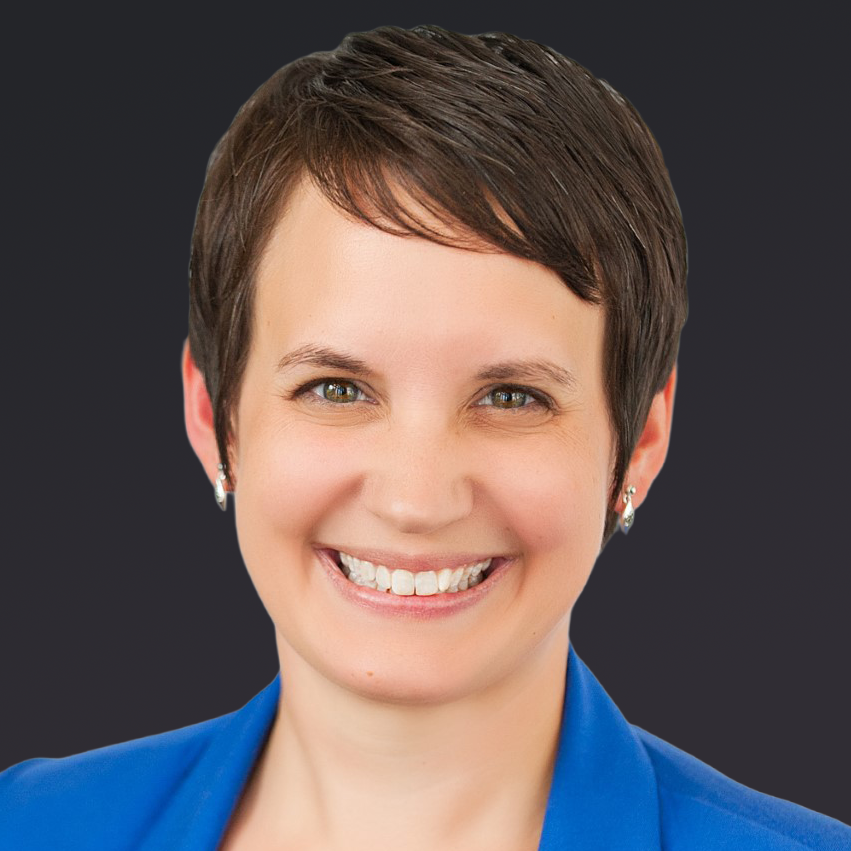
Dr. Julie Campbell is a PhD-prepared registered nurse. She has 21 years of lived experience as the mother of a daughter with multiple disabilities. She currently holds the position of Associate Professor and Director of Graduate Studies at Lee University School of Nursing in Cleveland, TN. Her areas of interest and expertise include health literacy, self-management, and disability equity. She was recently elected as the President of the Alliance for Disability in Health Care Education.