
From Our Friends
We are happy to share news from our partner organizations because, as Helen Keller once said, “Alone we can do so little; Together we can do so much.”
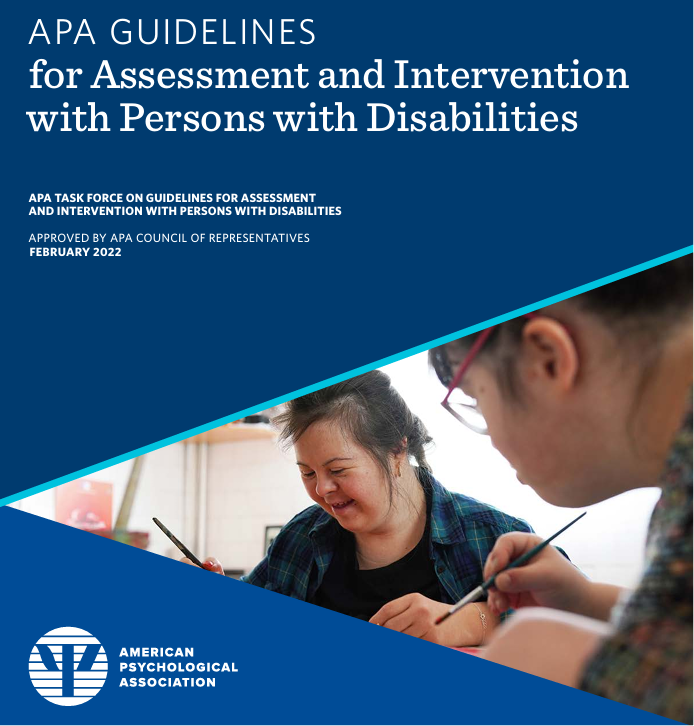
RESOURCE: APA Guidelines for Assessment and Intervention with Persons with Disabilities
The American Psychological Association has released guidelines for assessment and intervention with persons with disabilities.
NCI-AD™ 2024–2025 National Report Released
The National Core Indicators – Aging and Disabilities (NCI-AD™) 2024–2025 National Report has been released. For the last 10 years, NCI-AD has partnered with states to gather data on the experiences of people using long-term services and supports across the United States.
In 2024–25, NCI-AD surveyed more than 20,000 people in 24 states, including individuals using HCBS waivers, nursing facilities, PACE, and Older Americans Act programs. Key takeaways include:
Access to community: About two in three respondents (68%) participate in activities they like as much as they want. Nearly all respondents (92%) always have transportation to medical appointments, while 73% always have transportation for activities outside the home.
Relationships: Nearly all respondents (95%) say they can always see or talk to friends or family when they want, while nearly one in five (17%) say they often feel lonely.
Health and access to healthcare: Most respondents report access to healthy foods (89%), mental health services when wanted (89%), and a physical exam or wellness visit in the past year (87%). However, just 14% describe their health as excellent or very good.
Workforce: Two in five people (40%) say a paid family member or friend helps them most often, and 22% say their paid staff change too often.
Services meeting needs: Nearly all respondents (89%) say services and supports help them live the life they want, though 72% say their services meet all needs and goals.
Since 2016, state aging and disability agencies have used NCI-AD data to identify improvement opportunities and inform conversations with policymakers and community members about Medicaid program quality.
RESOURCE: Medicaid HCBS Infographic
ADvancing States, in partnership with the National Association of State Directors of Developmental Disabilities and the National Association of Medicaid Directors, has released a new infographic on the purpose, value, and impact of Medicaid home- and community-based services (HCBS).
The resource includes an overview of key services, facts and figures on HCBS utilization and spending, and trends in rebalancing efforts.
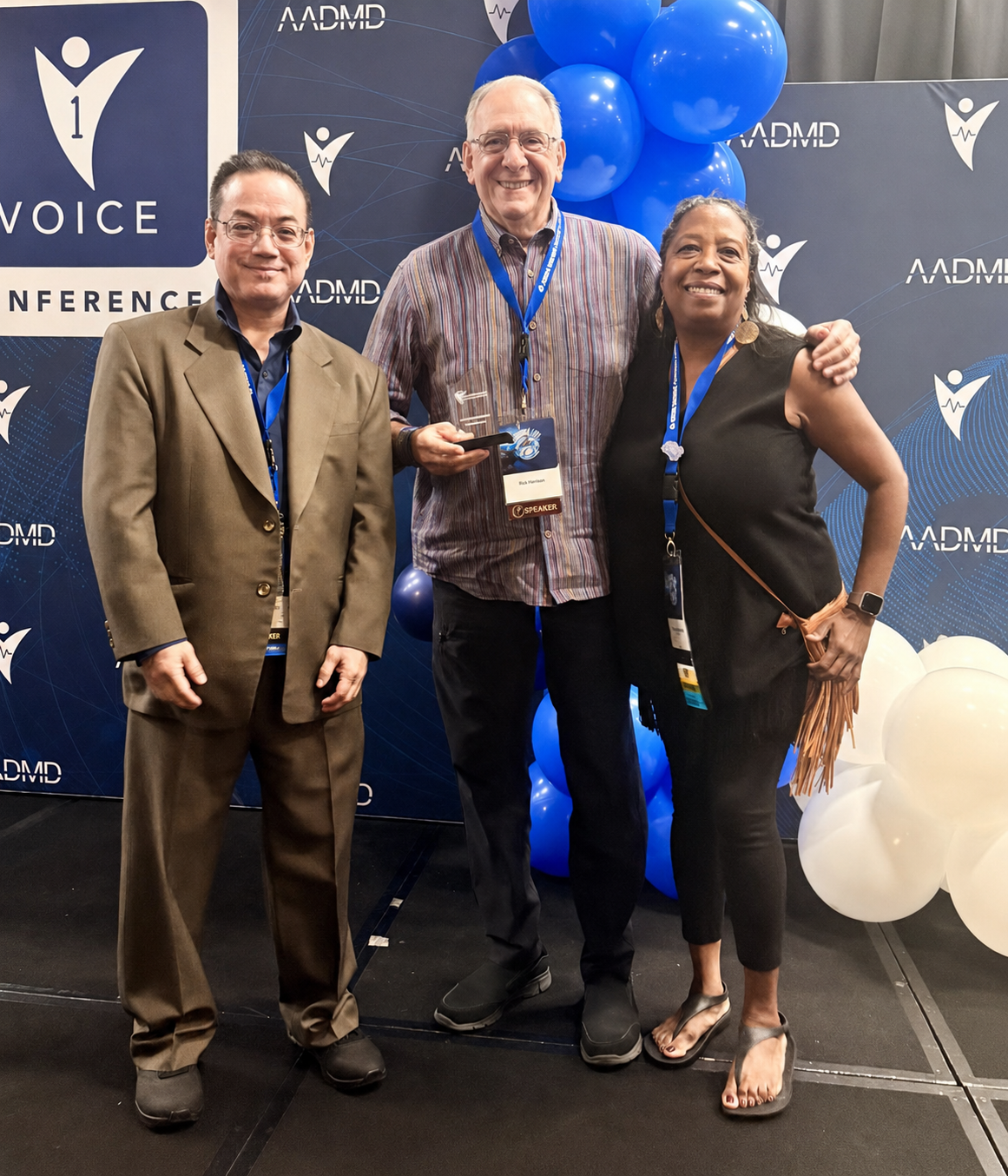
AADMD Presents Judy Heumann Award to Neil Romano
The American Academy of Developmental Medicine and Dentistry presented the Judy Heumann Award to Neil Romano, Acting Chairman of the National Council on Disability, during its 2026 One Voice Conference, held June 5–7 in Dallas, Texas.
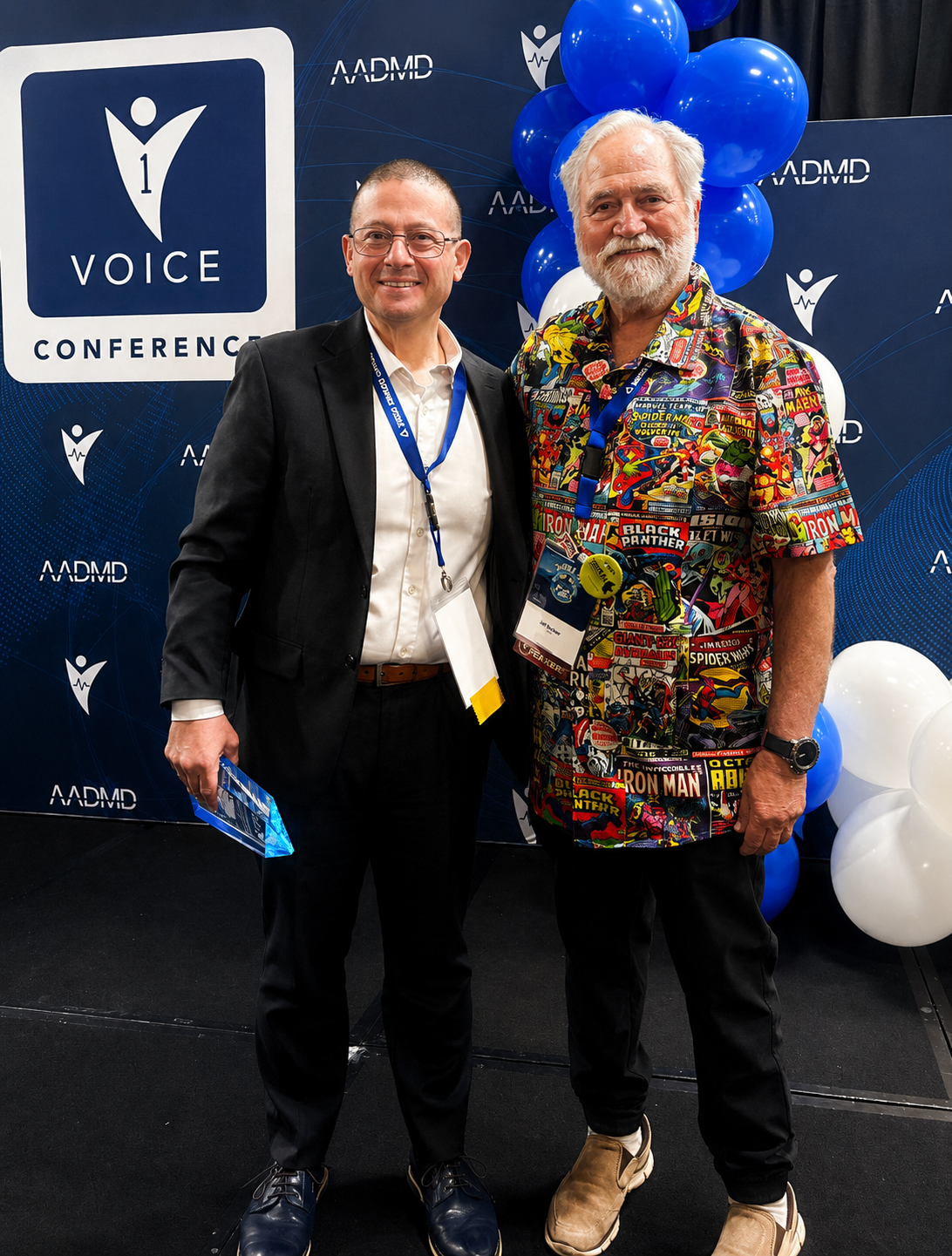
AADMD Presents Dr. Tom Cheetham Memorial Award to Jason Rechtman
The American Academy of Developmental Medicine and Dentistry presented the Dr. Tom Cheetham Memorial Award to Jason Rechtman, MA, MBA, LPC, NADD-DDS, Strategic Development Director for PerformCARE & ID/DD Solutions at AmeriHealth Caritas, during its 2026 One Voice Conference, held June 5–7 in Dallas, Texas.
Alliance for Oral Health Across Borders Showcases Emerging Global Oral Health Leaders
AOHAB's global oral health leaders showcased community-based projects at the 2026 AADMD One Voice Conference.
The Alliance for Oral Health Across Borders (AOHAB) highlighted the impact of its Student Leadership in Global Oral Health program at the 2026 American Academy of Developmental Medicine and Dentistry One Voice Conference, held June 4–7 in Dallas, Texas. Through poster presentations, mentorship, educational sessions, and leadership-development activities, participants demonstrated their commitment to improving oral health and advancing health equity in communities around the world.
AOHAB's Leadership in Global Oral Health initiative develops future oral health leaders through monthly educational webinars, engagement with global leaders, and individualized mentorship. Participants design and implement community-based oral health projects while developing leadership, advocacy, and research skills.
“Experiences like the One Voice Conference provide our students with far more than knowledge,” said Dr. Deborah Weisfuse, President of AOHAB. “They gain mentorship, confidence, global perspective, and lifelong professional relationships. Most importantly, they return home inspired and equipped to create meaningful change in their communities.”
POLICY UPDATE: NADSP Calls on Community to Thank Senator Kaine for His Continued Leadership
The National Alliance for Direct Support Professionals applauded U.S. Senator Tim Kaine (D-VA) for reintroducing the Supporting Our Direct Care Workforce and Family Caregivers Act, legislation intended to provide federal investment in the direct care workforce and family caregivers supporting older adults and people with disabilities.
The bill would direct the Department of Health and Human Services, through the Administration for Community Living, to award grants for initiatives that recruit, train, and retain direct care workers. It would also codify and expand technical assistance on direct-care workforce development, including national standards, apprenticeship programs, career pathways, and best practices.
NADSP urges members, partner organizations, direct support professionals, advocates, and allies to contact Senator Kaine's office to thank him for his leadership and encourage a full Senate vote.
RESOURCES: Stanford Medicine Alliance for Disability Inclusion and Equity
Information on Disability in Healthcare, General Disability Information, Disability in Graduate Medical Education, Disability Employment Resources, Accessing Accommodations at Stanford, Disability in Medicine Mutual Mentorship Program, Disability and Medical Schools, Disability in Graduate School/Research, Disability History in the U.S., Disability as Diversity, Additional Links and more.
ANCOR Issues Statement on Department of Justice Integration Mandate Memo
On June 18, the Office of Legal Counsel (OLC) at the U.S. Department of Justice (DOJ) released a memo on the integration mandate in the U.S. Supreme Court decision in Olmstead v. Lois Curtis and in Section 504 of the Rehabilitation Act. This interpretation by DOJ, when considered with the Trump administration’s ongoing statements devaluing the home- and community-based services that enable people with disabilities to live in their homes and communities — the hallmark of the integration mandate — compounds community providers’ concerns for the future of community-based disability services and the people with disabilities relying on their support.
In condemning the memo, ANCOR CEO Barbara Merrill issued the following statement:
“Today marks the 27th anniversary of the U.S. Supreme Court’s decision in Olmstead v. Lois Curtis, a landmark case which held that the Americans with Disabilities Act guarantees individuals with disabilities the right to be supported in their communities in the most integrated setting appropriate to their needs. But instead of using this time to reaffirm the administration’s commitment to community-based services for people with disabilities, the Department of Justice issued a memo that seeks to undercut this foundational community integration principle and contradicts decades of settled civil rights law.
“While such a memo does not have the force and effect of law, it represents the latest in a long line of actions subverting dignity, choice and community for people with disabilities — principles that are integral to the fabric of our society. We are deeply concerned that this erroneous legal interpretation could be used to justify future harmful federal policies and turn back decades of progress. This is especially concerning when considered in the context of cuts to Medicaid made in the budget reconciliation law last year, the administration’s recent proposals for deep cuts to the U.S. Department of Health and Human Services (HHS) budget and the elimination of key disability programs, actions destabilizing states’ home- and community-based services programs through overly broad program integrity enforcement measures, and ongoing dangerous rhetoric devaluing home- and community-based services.
“ANCOR knows that our communities are at their best when all people, including people with disabilities, have the opportunity to develop skills, achieve greater independence, and be successful. We call on the administration to abandon this flawed and harmful interpretation of the ADA, honor our nation’s commitment to civil rights as enshrined in Olmstead v. Lois Curtis, and reinforce the long-upheld guarantees of the integration mandate.”
IntellectAbility's Tools for IDD Healthcare
Events like AADMD are a powerful reminder of the impact clinicians have on improving health outcomes, advancing person-centered care, and driving meaningful change across the field.
We’d love to stay connected and continue the conversation.
How We Support Organizations:
• The Health Risk Screening Tool (HRST®): A validated health risk screening and stratification instrument that identifies health risks early, helping teams prevent crises, reduce hospitalizations, and make more informed support decisions.
• IntellectAbility Academy: An expanding library of accredited eLearning courses designed to equip supporters with the skills to recognize, respond to, and prevent health-related issues.
• Person-Centered Services (PCS): Training and coaching that embed Person-Centered Thinking into everyday practice, strengthening outcomes, consistency, and team alignment. The impact is real: fewer preventable ER visits and hospitalizations, reduced behavioral incidents, and stronger support.
For Clinicians and Medical Students—Explore Our Resources:
If you’re looking for practical, clinically relevant education in IDD healthcare, here are two places to start:
Clinical Pearls in IDD Healthcare
A hard copy clinical reference manual that provides healthcare practitioners with information about delivering medical and dental care for people with IDD.
Can be purchased online for $129 (use "hg15" at checkout for 15% off!)
Curriculum in IDD Healthcare (CIDDH)
Designed by a clinician for:
Clinicians and medical students
Strengthening clinical confidence in IDD-specific care
Earning CME/CEU credits
Keep Learning With Us:
IDD Perspectives Webinar Series
Join Dr. Craig Escudé and guest experts for practical conversations on improving health outcomes for people with IDD. Free 45-minute sessions designed to bring real clinical insights you can apply right away
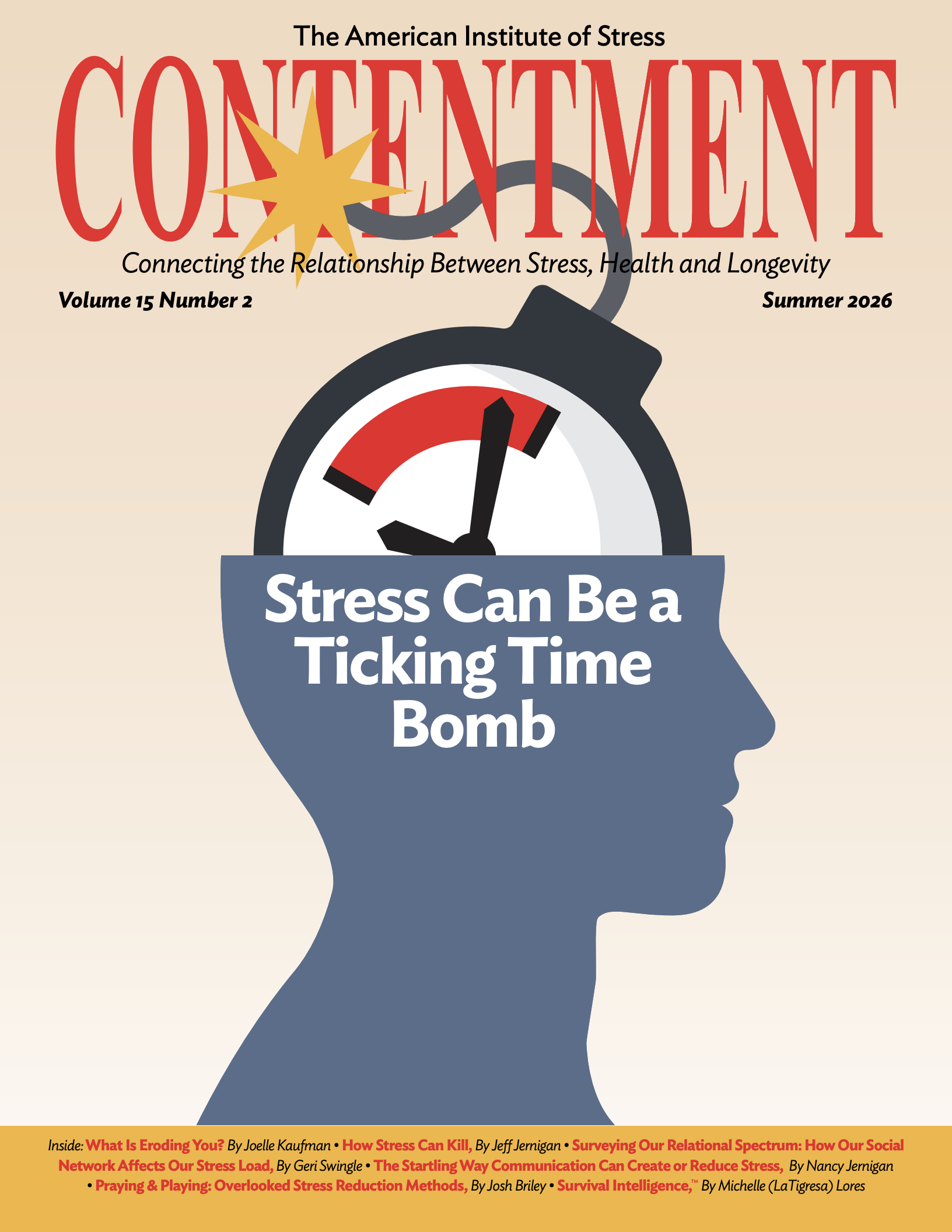
Contentment from the American Institute of Stress
Contentment is a quarterly magazine published in Spring, Summer, Fall, and Winter with news and advertising designed with the general public in mind. It appeals to all those interested in the myriad and complex interrelationships between stress and health because technical jargon is avoided and it is easy to understand. This magazine is indexed by EBSCO and archived online at stress.org.
Creating Inclusive Recreational Spaces for Autistic Adults: The Role of Parks, Community Centers, and Workplaces
In theory, the community center gym was accessible. The ramps were well maintained, automatic doors readily available, and the hours of operation were clearly posted. However, when Jessie arrived after work, the fluorescent lights were glaring, the music was blaring, and every machine was occupied. After a full workday navigating back-to-back meetings, inundation of sensory stimuli, and working through social nuance, the gym’s environment felt overwhelming. They left without exercising, not due to lack of motivation, but because the space required more regulation than Jessie had left to give. Unfortunately, Jessie’s experience mirrors that on many autistic adults.
Inclusive Recreational Spaces for Autistic Adults
Inclusive or equitable recreation is often focused on activities for children. Accessibility often focuses on adaptive playgrounds, sensory-friendly story times at libraries, and even youth sports leagues. While these are all needed, autistic adults experience some of the highest rates of social isolation, underemployment, and community exclusion. When recreation is not intentionally designed for adults, isolation deepens. Neuroinclusive recreational options are not a luxury; they are a pathway to belonging.
As autistic adults age, they frequently report a loss of structured social opportunism after school-based services end; environments can feel overstimulating or unpredictable, and there seems to be limited spaces designed with adult sensory needs in mind. The Centers for Disease Control and Prevention identifies physical activity and social connection as critical determinants of long-term health. Having options for recreation is necessary for reducing feelings of isolation, supporting regulation, and strengthening community ties. But Access alone is insufficient. There are simple things municipalities can do to design and offer opportunities for connection and belonging.
City parks and community centers are often assumed to be naturally inclusive, yet without intentional design they can unintentionally exclude autistic adults. Open air and green space can be regulating, but equitable access depends on predictable navigation, sensory-aware environments, adult-focused programming, and fair scheduling. Parks become more usable when they incorporate clear and consistent trail markers, posted maps or easy-to-navigate apps, and clearly identified rest areas, because predictability reduces anxiety and increases independence. Sensory-regulating features such as quiet areas away from playgrounds and sports fields, shaded seating, and low-traffic walking routes help create environments that feel usable rather than overwhelming. Availability of these simple accommodations not only benefit autistic adults but also older adults, individuals with mental health disabilities, or even trauma survivors. Adult-focused programming, including guided nature walks, photography or birdwatching groups, structured outdoor yoga, conservation initiatives, and community gardening, all provide interest-based entry points that reduce reliance on unstructured social interaction.
Similarly, community centers offer valuable structure for connection and wellness but can quickly become overstimulating due to bright lighting, loud music, or crowded fitness areas. Organized, interest-driven programming such as art studios, technology labs, fitness classes, book or gaming clubs, and skill-building workshops lowers social ambiguity. Providing a “Know Before You Go” guide, offering pre-event walkthroughs, clearly identified noise levels, and defined start and end times increase comfort and willingness to participate. While many facilities offer sensory-friendly hours, timing is the key. If low-stimulation access is only available during off-peak or mid-day periods, working adults or those reliant on others for transportation can be excluded. Equitable practice requires evening and weekend options, rotating inclusive time blocks, reducing baseline overstimulation where possible, and providing quiet spaces for regulation. Inclusion cannot require choosing between employment and access.
Community centers and park systems can also intentionally recruit and compensate autistic adults to design, teach, and lead interest-based programming, ensuring that activities are grounded in lived experience and reflect authentic community interests rather than assumptions. Respecting adult autonomy is equally essential. Staff should speak directly to adults, avoid infantilizing language, assume competence, and offer choices.
The true measure of an inclusive community is not whether autistic adults can use its spaces, but whether those spaces were designed with them in mind from the beginning. Recreation is not optional in adulthood. It is where health, employment, and belonging intersect.
. . . . . .
NEXT for AUTISM transforms the national landscape of services for people with autism by strategically designing, launching, and supporting innovative programs. We believe that individuals with autism deserve to live fulfilling, productive lives, supported by excellent services and connected to their communities. We continually ask, what’s next for people on the autism spectrum? For more information, visit nextforautism.org or email SI@NEXTforAUTISM.org.
Health, Rights & Inclusion: Addressing the Needs of Aging Autistic Individuals
A United Nations Side Event
In June 2026, ARI co-sponsored a side event at the United Nations that highlighted the emerging challenges and opportunities associated with autism and aging. The program brought together leaders from government, medicine, research, and the autistic community to explore ways to better support autistic adults in later life. The event intends to encourage international dialogue and action on this important but often overlooked issue. Additional information about the event is provided below.
Event Description
As life expectancy increases worldwide, there is growing recognition that aging is not a uniform experience. For Autistic individuals, aging presents distinct challenges that remain largely unaddressed within health and social care systems. While significant progress has been made in advancing the rights of persons with disabilities, Autistic adults in mid and later life continue to face barriers to equitable healthcare, mental health support, and community inclusion.
Autistic individuals are more likely to experience co-occurring medical and mental health conditions, along with differences in communication and sensory processing that can complicate care and support. Many face difficulty navigating complex systems that are not designed to be neuro-affirming. These challenges are compounded by limited provider training, fragmented services, and environments that do not accommodate diverse needs. As a result, Autistic adults often experience delays in diagnosis, unmet health needs, and reduced quality of life over time.
This side event draws on insights from a recent think tank held at the United Nations, to highlight key challenges related to healthcare access, social inclusion, and decision making, and to explore how more inclusive policies and systems can support Autistic individuals across the lifespan.
Key matters explored include:
Barriers to equitable and accessible healthcare for aging Autistic individuals
The impact of co-occurring physical and mental health conditions in later life
Social isolation, reduced community participation, and the need for inclusive environments
Challenges related to legal autonomy and decision making, including supported decision-making models
Gaps in provider training, care and support coordination, and service delivery
The importance of incorporating lived experience into research, policy, and service design
These issues highlight significant gaps in healthcare access, service delivery, and social inclusion for aging Autistic individuals, with important implications for health outcomes, autonomy, and quality of life. Addressing them will require more inclusive systems, better trained providers, and policies that incorporate lived experience to support full participation in society.
NADSP Releases Revised Code of Ethics
Across the country, direct support professionals are walking beside people with disabilities as they pursue lives of meaning, autonomy, and connection. As our communities evolve, and the roles of the direct support professionals grow in both complexity and importance, the National Alliance for Direct Support Professionals (NADSP) has taken a bold and necessary step: a full revision of the NADSP Code of Ethics.
For more than 25 years, the original Code of Ethics has:
Guided our field
Shaped direct support practice
Inspired professionalism
Reminded us of the profound responsibility we share as direct support professionals
But the world has changed. The expectations of people receiving support have changed, and the workforce itself has changed. It was time for our ethical foundation to evolve as well.
“It was time for our ethical foundation to evolve as well.”
In 2025, we partnered with the University of Minnesota’s Institute on Community Integration to launch a thoughtful, rigorous, and inclusive revision process. This included subject matter experts, people with lived disability experience, and direct support professionals and frontline supervisors from across the country. Together, they examined the original Code of Ethics, sharing with us what remained strong, and identifying areas that needed to evolve.
This process included:
Dozens of focus groups where direct support professionals and frontline supervisors shared real stories, dilemmas, and challenges
In-person validation sessions using structured ethical scenarios
Consensus-building to ensure each statement reflects the realities of modern direct support
Today, as we introduce the revised Code of Ethics, we are not simply sharing a document, we are renewing a commitment. When the original Code of Ethics was released nearly three decades ago, it helped establish why our field needed an ethical compass. Today, we no longer ask that question. We see its significance every day.
We ask organizations, associations, advocates, and governmental partners to endorse the revised Code of Ethics. But more importantly, we ask direct support professionals across the nation to embrace it, teach it, and adopt it. This Code of Ethics belongs to you, and we want it to guide you in your daily practice.
In the months ahead, NADSP will be offering webinars, open forums, and conference presentations around the country. We will also be integrating the revised Code of Ethics into our E-Badge Academy, where tens of thousands direct support professionals are already using the original Code of Ethics in their certification journey.
We extend our deep gratitude to the colleagues, experts, professionals, and people with lived experience whose wisdom shaped this revision. They remind us that ethical practice is not merely a set of principles, but a promise we make to one another and to the people we support.
Thank you for all you do to uphold that promise.
Smartwatch App Accurately Identifies Tonic-Clonic Seizures And Seizures With Major Convulsions In People With Epilepsy, Data Show
The EpiWatch app for Apple Watch demonstrated a 98% sensitivity in detecting tonic-clonic seizures, identifying 46 of 47 events, according to data published in Neurology Open Access. The app produced a significantly lower false alarm rate compared to existing devices—averaging one every 12.4 days—while accurately detecting all sleep-related seizures.
What Comic Books Can Teach Us About Medicine
A. David Lewis didn’t always look for deep meaning in his comic books. As a kid, he just wanted to be transported to the worlds of his favorite toys, like G.I. Joe, Transformers, and He-Man. Gradually, he began to appreciate the medium on new levels. “I was a voracious reader and I credit comics, particularly superhero comics, with giving me my vocabulary,” he says.
As an English major at Brandeis University, Lewis (GRS’12) began to study comics as works of literature. At Boston University, where he earned a PhD in religion and literature, he considered how they fit into the canon of mythic lore and morality plays. Now, he focuses on graphic medicine—the portrayal of healthcare in comics.
Lewis is an associate professor of English and health humanities at the Massachusetts College of Pharmacy and Health Sciences, where he teaches multiple courses about graphic medicine. In October 2025, he helped to organize the New England Graphic Medicine Summit, a conference for storytellers and healthcare workers. And his new book, Body, Soul, and Comics: Graphic Religion and Graphic Medicine (University Press of Mississippi, 2026), comes out in May.
“My mom said something great to me once when I was young: ‘You’re probably training for something that doesn’t exist yet,’” Lewis says. Now, he’s at the vanguard of a growing field.
Comics that take on serious subjects aren’t new. Martin Luther King, Jr. (GRS’55, Hon.’59) published a comic in 1957 to publicize the nonviolent activist movement. Art Spiegelman’s Maus: A Survivor’s Tale (Pantheon Books, 1991), which tells the story of his family during the Holocaust, was the first graphic novel to receive a Pulitzer Prize.
“Comics are disarming,” Lewis says. “They work for both high and low literacy—they work for kids and then work in a whole new way for adults.” Telling a Holocaust story from the perspective of mice, as Spiegelman did, opens the door to audiences reluctant—or unable—to read a longform story on the subject. That, he says, makes comics “attractive to big, powerful, even revolutionary messages.”
When Lewis looks back at some of the superhero comics of his childhood, he sees a subtext that he hadn’t considered. For example, Wolverine, one of Marvel’s X-Men, has mental health issues. “He’s an amnesiac. He has rage issues. There’s something amazing about a hero who suffered, who didn’t trust his own mind,” he says.
With his new book, Lewis brings together his study of religion and medicine. “I don’t think it was an accident that I shifted to healthcare,” he says. “I’ve noticed the shared concerns, the shared approaches, the shared questions that they have, and comics are a wonderful space for them to engage each other. The through-line is that both of these fields represent selfhood.”
Lewis’ most popular course at Massachusetts College of Pharmacy and Health Sciences is Cancer in Comics. For the reading list, he’s able to draw on what has become a rich genre that includes Brian Fies’ Mom’s Cancer (Abrams, 2011), about the author and his siblings dealing with their mother’s illness, and Kimiko Does Cancer (Arsenal Pulp Press, 2020), author Kimiko Tobimatsu’s story of facing breast cancer as a young, queer woman.
“There’s something about the medium that invites those who don’t have power, those who are marginalized and vulnerable, to express themselves,” Lewis says.
There’s also evidence that these stories can improve health outcomes. A 2019 study by researchers at Penn State College of Medicine showed that comics—specifically My Degeneration: A Journey Through Parkinson’s (Penn State University Press, 2015) by Peter Dunlap-Shohl—increased doctors’ empathy for people with Parkinson’s.
“Comics can deliver messages and thoughts and experiences in a mediated way,” Lewis says, “in a way that doesn’t assault the reader, but still can deliver some really hard truths.”
Why Inclusive Swimming Matters
Joey Enos highlights how inclusive swimming programs, such as SNAPkids in the San Francisco Bay Area, foster a necessary sense of community, joy, and independence for children with disabilities, counteracting societal pressures to view them as “not normal.” The program allows children to move freely and develop social connections while offering families a supportive environment, ultimately highlighting the urgent need for more accessible recreational activities.
New Publication From The Link Center
Cross-System Strategies to Support Children with Complex Behavioral Health Conditions:
NASDDDS is excited to join our partners with the Link Center, the National Association of State Mental Health Program Directors (NASMHPD), the National Association of State Head Injury Administrators (NASHIA), and NADD, in announcing the release of a new groundbreaking publication, Cross-System Strategies to Support Children with Complex Behavioral Health Conditions, authored by Nancy Thaler with contributions from Stacy L. Nonnemacher, PhD. This important resource responds directly to one of the most urgent challenges facing states and families: how to better support children with complex behavioral health needs who are often served across multiple systems, including behavioral health, child welfare, Medicaid, developmental disabilities, acquired brain injury, education, and juvenile justice.
Grounded in neuroscience and focused on practical systems change, the publication offers a framework for coordinated, community-based support built around three essential pillars: a place that is safe, treatment to heal, and opportunities to grow. State leaders, providers, families, and advocates will find actionable strategies to strengthen policy, service design, financing, data use, and cross-system collaboration — helping systems move beyond fragmented responses toward shared solutions that better meet the needs of children and families. Find more resources on The Link Center website.
Resources:
Disability Health Equity Updates
New Federal Accessibility Standards
This month, the U.S. The Department of Health and Human Services has implemented new federal accessibility standards. HHS’s updated Section 504 rule strengthens and modernizes disability nondiscrimination protections across all health and human service programs that receive federal funding. It clarifies requirements in areas such as medical treatment, accessible medical diagnostic equipment, and digital accessibility, ensuring decisions are not based on bias or assumptions about disability. The rule aligns Section 504 with the ADA, ACA, and decades of legal and advocacy developments to better protect people with disabilities across federally funded programs.
The Center for American Progress has created a toolkit for ensuring proper state implementation of the ruling. This toolkit provides background on the U.S. Department of Health and Human Services’ final rule on “Nondiscrimination on the Basis of Disability in Programs or Activities Receiving Federal Financial Assistance.” It also provides guidance to advocates on outreach to state attorneys general and officials, reminding them of the compliance dates for the rule. The link to the toolkit can be found here!
Accessible Healthcare for People with Disabilities: An Implementation Guide for Healthcare Organizations
The Disability Equity Collaborative has released an implementation guide for healthcare organizations that includes comprehensive, evidence-based resources to support healthcare organizations, clinicians, and staff in delivering high-quality care for patients with disabilities. This Implementation Guide is based on existing data and lessons from healthcare organizations across the country working to improve the quality of care for patients with disabilities. This information is intended to provide guidelines that are adaptable to your local context.
The Guide is designed for healthcare organizations of all sizes, from small rural clinics to large health systems, and to be used by any role within an organization, from frontline staff and clinicians to executive leadership. To download the guide, visit the link below!
Implementation Guide: Accessible Healthcare for People with Disabilities: An Implementation Guide
Resources: