
Frances Oldham Kelsey, Canadian doctor, and thalidomide “hero,” 1914-2015
Heroic doctor raised serious concerns about the drug and kept it out of U.S.
“When you have impairments due to the thalidomide drug, you’re all the time compensating. You’re actually overusing one side of your body. So that too becomes inflamed and sore and painful because you can’t use the other side.”
CBC News · Posted: Aug 07, 2015
Dr. Frances Oldham Kelsey honored with Order of Canada on Thursday for her vocal opposition to anti-nausea drug thalidomide.
Frances Oldham Kelsey, the Canadian doctor whose vocal opposition to the anti-nausea drug thalidomide helped keep it out of the United States, has died at age 101.
Kelsey, who was born on Vancouver Island, died early today with her daughter, Christine Kelsey, by her side. The two had been living in London, Ont.
Thalidomide was prescribed to pregnant women in the 1960s before it was discovered that it caused serious birth defects such as missing limbs, internal organ damage, deafness, and blindness.
Kelsey was a reviewer for the U.S. Food and Drug Administration who raised serious concerns about the safety of the drug.
Ontario Lt.-Gov. Elizabeth Dowdeswell had travelled to London on Thursday afternoon to present Kelsey with the Order of Canada, which was bestowed on her in the spring.
Dowdeswell suspects that because Kelsey lived in the U.S. for much of her life, it took longer for her to be honored in Canada.
“She only came back last November, I believe, so that may have played a part in it,” Dowdeswell said. “But the point is that the country did recognize her.”
Dowdeswell said it was a privilege to present Kelsey with the medal.
“We knew that death was imminent, and I sat beside her bed, held her hand, told her why I was there and why it was so important that we have the opportunity to recognize her, and took the medal and had an opportunity to put it in her hands,” Dowdeswell said.
“She immediately woke up and she was clearly aware that I was there. She didn’t speak but she tried to speak and she got animated immediately. It was just such an honor. This was a person who dedicated her life to public service and for me to be able to say words of thanks, words of gratitude, it was so important to her family.”
Daughter Christine Kelsey was at the bedside when her mother received the medal.
“Her family upbringing gave her the strength of her own convictions, and her education gave her the understanding of the importance of careful research,” Kelsey said from London, Ont.
Instrumental in licensing protocols
Throughout her career, Kelsey helped to improve pharmaceutical oversight procedures in the U.S., Gov. Gen. David Johnston’s office said Thursday.
Thalidomide, first synthesized in West Germany by Chemie Gruenenthal, was marketed from 1957 in West Germany and under different names until the early 1960s. It was used to alleviate morning sickness in pregnant women around the world, including in Canada.
The drug was withdrawn from the West German and U.K. markets by December 1961 but remained available for use in pregnancy in Canada until March 2, 1962, according to the Thalidomide Victims Association of Canada.
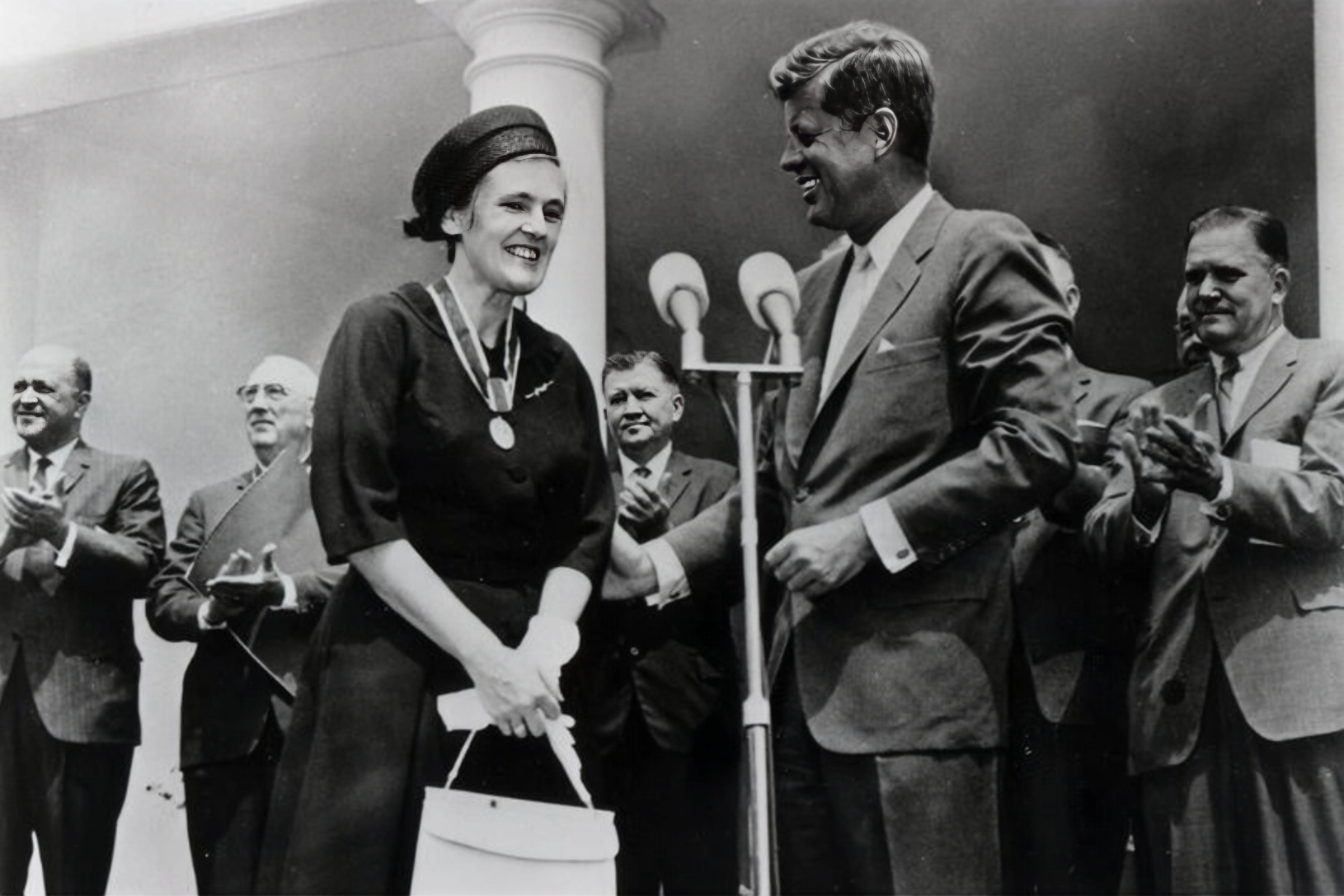
U.S. President John F. Kennedy, center right, bestows Dr. Frances Kelsey with the President’s Award for Distinguished Federal Civilian Service in 1962. Kelsey, who kept thalidomide off the U.S. market, died at the age of 101 in 2015. (U.S. Food and Drug Administration)
Kelsey’s refusal to agree with approval of the drug for use in the U.S. saved thousands of children from serious birth defects, and led to new safety standards for prescription drugs, a statement from the Governor General said. Only 17 children were born in the U.S. with thalidomide problems.
“Over the next four decades, she remained an instrumental figure in shaping and enforcing drug licensing protocols,” it said.
In the early 1960s, CBC's Knowlton Nash talked to Kelsey about the pressure she faced from U.S.-based drug company William S. Merrell to approve it.
“Usually, the companies are eager to get it on,” Kelsey replied. “It's just a matter of when the pressure becomes excessive, our judgment may be interfered with.”
“She was a hero.”
Kelsey was hailed as a hero in the U.S. and given the President’s Award for Distinguished Federal Civilian Service by John F. Kennedy.
But the drug’s dark legacy continues in her home country: In May, the federal government announced Canada’s nearly 100 thalidomide survivors will be each provided pensions of up to $100,000 a year for the rest of their lives. The aging survivors are seeking help to cope with their day-to-day needs.
Kelsey demonstrated how one person can change the world, said Alvin Law, a thalidomide survivor, currently in Crystal Lake, Sask.
“She was a hero. She was just simply that. She was a guiding angel. She was an amazing human being,” Law said.

“There is no glory in what I do, only the quiet satisfaction of knowing I made the world a little softer for someone else.”
History remembers the loudest voices, the grandest victories, and the most celebrated names. But behind every great movement, invention, or act of courage, there are those who remain unseen, unspoken, and unsung. Their words, though unheard by millions, carry the weight of experience, resilience, and a quiet wisdom that shapes the world.
The disability community has been blessed with no shortage of “unsung heroes;” those champions who have left their mark without fanfare, parades, and monuments. HELEN wants you to know about them, to understand them, and in your own way, to thank them.