
We are happy to share news from our partner organizations because, as Helen Keller once said, “Alone we can do so little; Together we can do so much.”
America’s Rare Children Need Congress to Act: NORD Urges Swift Reauthorization of Proven Rare Pediatric Disease Voucher Program
NORD report shows 63 FDA vouchers driving breakthroughs for 47 rare pediatric diseases, 43 with no prior treatments — unprecedented progress for children left behind
WASHINGTON, Dec. 4, 2025 — The National Organization for Rare Disorders (NORD®) today urged Congress to reauthorize the Rare Pediatric Disease Priority Review Voucher (RPD PRV) program by year-end, warning that continued delay threatens the future of innovation for children with rare diseases.
On Dec. 1, the U.S. House of Representatives passed the Give Kids a Chance Act (H.R. 1262 /S. 932), an important step forward in protecting incentives for rare pediatric drug development. The bill will now move to the Senate for consideration.
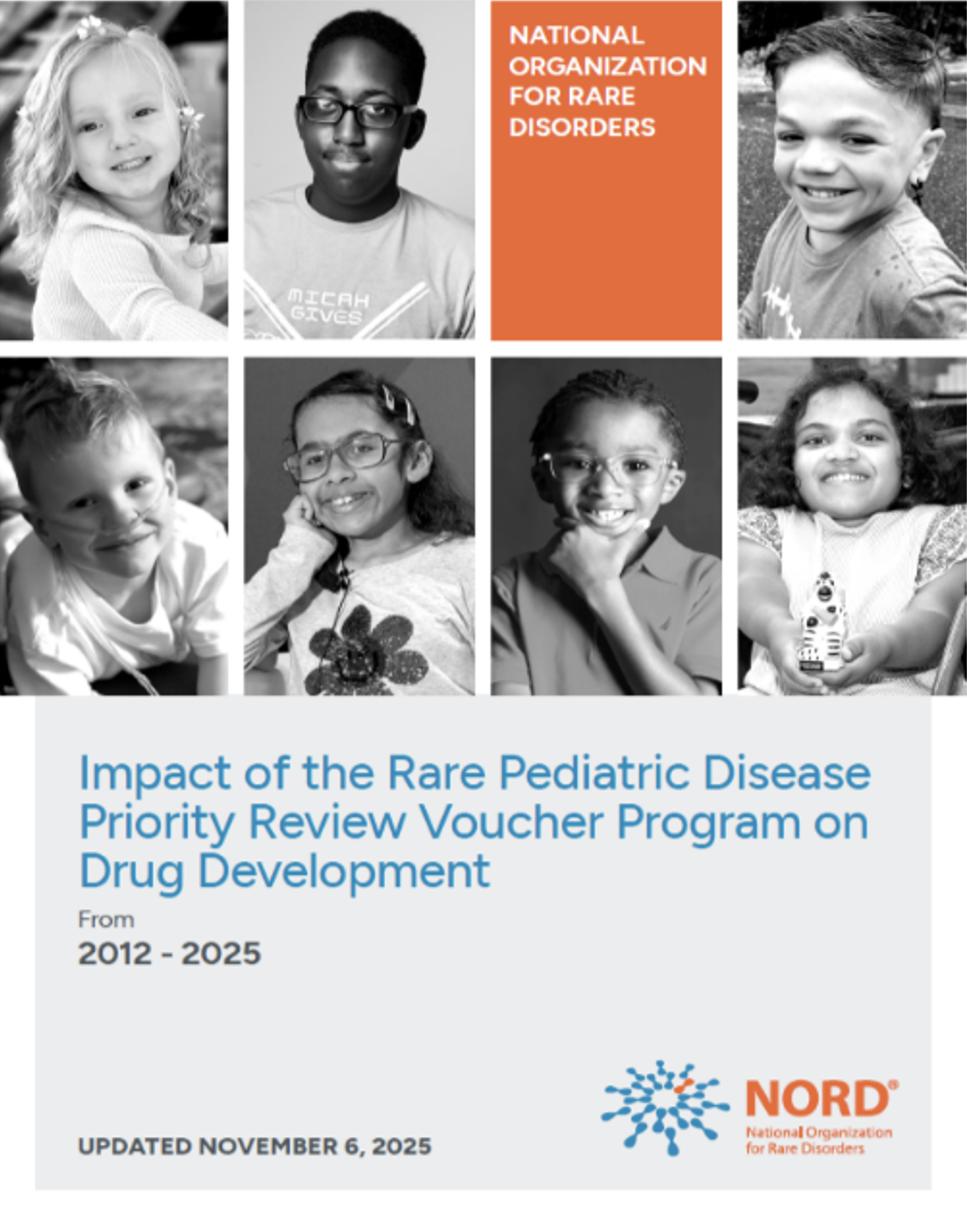
According to NORD’s original research, the Food and Drug Administration (FDA) has awarded 63 vouchers since the program’s creation in 2012, leading to treatments for 47 rare pediatric diseases, 43 of which previously had no treatment options. More than half of all designations have occurred in just the past five years, underscoring the program’s growing impact and bringing real hope to the more than 15 million children living with a rare pediatric disease, 30% of whom will not live to see their fifth birthday.
Urgency to Reauthorize
With the FDA's authority to grant rare pediatric designations expiring in 2024, and its authority to grant priority review vouchers expiring on Sept. 30, 2026, the delay in reauthorization fuels uncertainty in the marketplace for investors and pediatric drug developers.
“The PRV program has been instrumental in encouraging the development of new therapies for rare pediatric diseases. Since its inception in 2012, this program’s success has resulted in more American children with rare diseases having a chance at a fuller, healthier life, and gives hope to communities still waiting for a treatment option for their condition. Congress must move on reauthorization now. Timely restoration of the program will provide needed certainty within the U.S. pediatric treatment marketplace and prevent devastating consequences for children with rare diseases who are waiting for new treatments,” said Rep. Gus Bilirakis (R-Fla.), an original cosponsor of the Give Kids a Chance Act (H.R. 1262).
“Every day without reauthorization creates uncertainty that disrupts research and delays innovation,” said Pamela K. Gavin, NORD Chief Executive Officer. “That uncertainty puts both hope and progress at risk for children with life-threatening rare diseases who simply cannot afford to wait. Congress has a clear choice: reauthorize a program that works or allow progress to stall for kids who have no other options.”
“The RPD PRV is the most important incentive for developing new therapies for ultra-rare neuromuscular diseases. Already, we have seen investors and companies shy away from developing life-changing treatments for our ultra-rare community, and without rapid reauthorization, it will only get worse. MDA joins the rare disease community in calling for the program's immediate reauthorization," said Paul Melmeyer, EVP, Public Policy and Advocacy, Muscular Dystrophy Association.
Proven Results:
NORD, in a white paper titled, “Impact of the Rare Pediatric Disease Priority Review Voucher Program on Drug Development 2012 - 2025,” confirms the RPD PRV program is a measured, effective incentive that accelerates development for rare pediatric conditions.
In 2025 alone, four vouchers were granted for life-saving therapies addressing severe rare diseases such as neurofibromatosis type 1, diffuse midline glioma with H3 K27M mutation, Barth syndrome, and thymidine kinase 2 deficiency (TK2d).
29 RPD PRVs have been redeemed for priority review of 26 different drugs for a variety of diseases, including eight drugs to treat rare diseases.
Of the top 50 Medicare-spend drugs in 2023, only three were approved through a redeemed voucher and fewer than half were among the top 100 in Medicare Parts B or D spend.
“In 2023, the Friedreich’s ataxia (FA) community saw a long-awaited breakthrough: the first and only FDA-approved treatment for a progressive, life-shortening disease that begins in childhood and affects about 4,000 people in the U.S. This therapy offers meaningful improvements in stability, coordination, and fatigue, bringing families hope where there had been none,” said Jennifer Farmer, Friedreich’s Ataxia Research Alliance, Chief Executive Officer. “This milestone may not have been possible without the Rare Pediatric Disease Priority Review Voucher program,” added Farmer.
A Bipartisan Opportunity
NORD is calling on lawmakers to pass the bipartisan Give Kids a Chance Act before year-end, extending the program for at least another five years. “A year-end reauthorization would be a bipartisan victory,” said NORD’s Gavin. “America’s rare children cannot afford another month of inaction.”
"Lennox-Gastaut Syndrome (LGS) is a devastating childhood epilepsy, and for years, families had no options. The PRV program finally drove investment in treatments that would otherwise never have been developed," said Tracy Dixon-Salazar, LGS Foundation Executive Director. "These therapies don’t just improve quality of life; they help prevent lifelong disability, reduce medical crises, and ease enormous emotional and financial strain,” added Dixon-Salazar.
The Give Kids a Chance Act would extend the Rare Pediatric Disease Priority Review Voucher program for at least five more years, protecting one of the few incentives proven to drive new treatments for children with rare diseases. The House passed its version on Dec. 1, but the Senate must act quickly to keep this lifesaving program alive.
Urge your Senators to support the Give Kids a Chance Act and help ensure continued breakthroughs for kids who urgently need them. Act with a NORD Action Alert here.
About NORD
Founded in 1983, the National Organization for Rare Disorders (NORD®) is the leading independent nonprofit dedicated to improving the health and lives of the 30+ million Americans living with rare diseases. In partnership with more than 350 member organizations, NORD drives policy, research, education, and patient support nationwide. Learn more at https://rarediseases.org/.
New ACP paper provides ethical guidance amid controversies and changing practices in organ transplantation
PHILADELPHIA, October 28, 2025 – The American College of Physicians (ACP) today issued a position paper on ethical considerations surrounding organ transplantation, saying the needs of the donor patient and family must be prioritized and the process should be trustworthy and transparent. “Ethical Issues in Organ Transplantation: A position paper from the American College of Physicians” was published in Annals of Internal Medicine. It clarifies the duties and roles of care teams of prospective donor-patients, recipient-patients, and organ procurement teams, reaffirming that end-of-life decision making for prospective donor-patients must center on their best interests independent of organ donation potential. It also emphasizes the importance of truly informed consent for organ donation.
Current organ transplantation practices can prioritize the benefit to the community at the expense of patient-centered care. According to ACP, physicians must always act in the best interests of the patient and that care must align with the patient’s wishes and preferences. Recent advancements and controversies—and growing criticism—of the current transplantation system and practices underscore the need for reaffirmation of long-standing ethical principles and examination of conflicts between current practices and the best interests of patients, especially the potential donor. Recent press accounts have documented troubling organ procurement practices; the United Network for Organ Sharing and the system it manages have been criticized as unfair, ineffective, and opaque; and an overhaul of the system, the Organ Procurement and Transplantation Network (OPTN) Modernization Initiative, is underway.
ACP says that increasing the number of organs for transplant does not override physicians’ duties and responsibilities to patients and suggests in the paper’s positions that:
When caring for a patient who may become a donor, the physician’s obligation is to that patient first and foremost. The physician’s primary duties are to the patients under their care. End of life decision making for prospective donor patients must center on the best interests of the patient, regardless of the organ donation potential.
Discussions about organ donation should support the patient or their family in making the best possible decision for the donor, while also ensuring the process is open, honest, and trustworthy. Physicians should respect and act on patients’ and families’ fully informed, voluntary decisions.
Advance care planning should help patients express their future medical treatment preferences and/or choose someone to make decisions for them if they can’t do so themselves. Organ donation should not take priority over the patients’ preferences for end-of-life care.
Metrics or financial/other incentives must not override the physician’s primary responsibility to always act in the best interest of the patient. Patients come first, regardless of any outside pressures or institutional interests.
Fair and equitable access to organ donation and transplantation should be a top priority. The system must be built on trust and use fair, transparent, and ethical practices.
“This guidance is relevant to all involved in organ transplantation and particularly to internal medicine physicians who advise their patients about advance care planning and organ donation, caring for them prior to organ transplantation,” said Jason M. Goldman, MD, MACP, President, ACP. “As physicians, we should work to strengthen these ethical norms to ensure we are always doing what’s in the best interests of our patients.”
In a 2023 paper, ACP’s Ethics, Professionalism and Human Rights Committee (EPHRC) emphasized how determination of death is a distinct issue that must be kept separate from organ transplantation, reaffirming the fundamental ethical importance of the dead donor rule and raising ethical concerns about practices such as thoracoabdominal normothermic regional perfusion (TA-NRP, commonly called NRP).
This position paper was developed on behalf of the ACP Ethics, Professionalism and Human Rights Committee to provide ethical guidance for physicians, organ donor and recipient patients and families, the public, policymakers, and other stakeholders.
About the American College of Physicians
The American College of Physicians is the largest medical specialty organization in the United States with members in more than 172 countries worldwide. ACP membership includes 162,000 internal medicine physicians, related subspecialists, and medical students. Internal medicine physicians are specialists who apply scientific knowledge and clinical expertise to the diagnosis, treatment, and compassionate care of adults across the spectrum from health to complex illness. Follow ACP on X, Facebook, Instagram, Threads and LinkedIn, and subscribe to our new RSS feed
National Down Syndrome Society Launches CARE Down Syndrome
New clinical education hub empowers primary care professionals with the knowledge and resources required to meet the unique healthcare needs of adults with Down syndrome
Washington, D.C. (October 21, 2025) – The National Down Syndrome Society (NDSS) is proud to announce the launch of its initiative, CARE Down Syndrome, a comprehensive, free online clinical education and resource hub designed to equip healthcare professionals with the knowledge, tools, and confidence needed to deliver exceptional care to adults with Down syndrome.
Estimates show that only 5% of adults with Down syndrome in the United States have access to clinics specifically equipped to meet their unique healthcare needs. Most individuals rely on primary care professionals who often have limited experience with the Down syndrome community and may have received minimal training in medical school on how to provide appropriate care.
To close this critical knowledge gap and improve healthcare outcomes, NDSS created CARE Down Syndrome in partnership with more than 40 national experts, including Brian Chicoine, MD, Medical Director of Advocate Medical Group Adult Down Syndrome Center, and with support from The Linda and Mike Mussallem Foundation. This initiative extends Dr. Chicoine’s and others’ vital research and expertise to primary care professionals worldwide.
CARE Down Syndrome Initiative Highlights:
Accredited eLearning Course: The initiative features a two-hour, self-paced eLearning course designed to help healthcare professionals learn practical strategies for managing the unique healthcare needs of adults with Down syndrome, while earning Continuing Medical Education (CME) credits.
Reference Articles: CARE Down Syndrome offers a free catalog of reference articles, providing clinically relevant, quick-access information and tools on a range of topics, including Alzheimer’s disease, weight management, and mental health.
Specialized Resource Library: The resource library includes patient education materials and additional tools designed to support healthcare professionals in delivering exceptional care to adults with Down syndrome.
All course materials and clinical reference articles have been peer-reviewed by experts with extensive experience caring for patients with Down syndrome and have also been reviewed and endorsed by the Down Syndrome Medical Interest Group-USA (DSMIG-USA) and the American Academy of Developmental Medicine & Dentistry (AADMD).
“We created CARE Down Syndrome to close critical gaps in care for adults with Down syndrome,” said Kandi Pickard, NDSS CEO. “This initiative empowers healthcare professionals with the confidence, knowledge, and resources they need to deliver enhanced, more personalized care.”
“Too often, primary care providers are asked to meet the complex needs of adults with Down syndrome without having access to the specialized training or resources needed to best serve this population,” said Mike Mussallem. “CARE Down Syndrome is tackling this challenge head on by providing accessible tools and educational resources based on the expertise of leaders in this area, including Dr. Chicoine and his team. Linda and I are proud to partner with NDSS and Dr. Chicoine on this important initiative.”
Healthcare professionals are encouraged to enroll in the course and take advantage of this free resource.
To learn more about the CARE Down Syndrome Initiative, access resources, or enroll in the course, visit www.CAREDS.org .
AAHD Scholarship Program
The Frederick J. Krause Scholarship on Health and Disability recognizes students with disabilities who are working to advance the broad field of disability and health.
The mission of the American Association of Health and Disability (AAHD) is to contribute to national, state, and local efforts to promote health and wellness in people with disabilities and identify effective intervention strategies that reduce health disparities between people with disabilities and the general population. AAHD accomplishes its mission through research, education, and advocacy at the national, state and community level. As part of our work, we are pleased to offer the annual Frederick J. Krause Scholarship on Health and Disability to students with disabilities majoring in public health, disability studies, health promotion, or a field related to disability and health. Learn more about the legacy of Frederick J. Krause.
Scholarship Program Criteria
The AAHD Frederick J. Krause Scholarship on Health and Disability is awarded annually to deserving students with a disability who are pursuing undergraduate or graduate studies in an accredited university. This scholarship recognizes students pursuing studies related to health and disability, particularly majors that will impact the quality of life of persons with disabilities.
For the 2025-2026 application:
Undergraduate Applicants: Must be enrolled as a full-time undergraduate student and must have completed one full year of college or more. In other words, the applicant must have sophomore or greater status in a program at a college or university pursuing their degree as of fall 2025.
Graduate Applicants: May be enrolled part-time or full-time in a graduate school, pursuing a post graduate degree as of fall 2025.
Important: applicants who have not yet graduated from high school will not be considered. High school students entering college, for the first time, in the fall of 2025 are NOT eligible to apply. The only exception would be for high school students who have achieved sophomore status via high school AP course credits.
Applicant must have a disability as defined by the Americans with Disabilities Act and must provide documentation to verify this.
Preference will be given to students majoring in public health, health promotion, disability studies, disability research, rehabilitation engineering, audiology, disability policy, special education, or other fields related to disability and health.
Preference will be given to students with a history of community service and/or volunteer activities.
Previous winners of the AAHD Frederick J. Krause Scholarship on Health and Disability are not eligible to apply unless they have enrolled into a new program of study. For instance, if an undergraduate student had received a scholarship previously, they would not be eligible to apply again for the same undergraduate program, but they would be eligible to apply if they were enrolled in a graduate program. Similarly, a graduate student who had received a scholarship for a master’s program would be eligible to apply again if they were subsequently enrolled in a Ph.D. program.
Applicant must be a US citizen or legal resident living in the United States and enrolled in an accredited United States university.
Those who serve on the Disability and Health Journal Editorial Board are not eligible for the AAHD Scholarship.
Funding Information and Application Requirements
Scholarships are generally for $1,000 but amounts are at the discretion of the AAHD Board of Directors Scholarship Committee and based on availability of funds. The Scholarship Committee will evaluate each of the applicants and will determine how many scholarships will be awarded each year and the amount of each scholarship. The final date for 2025-2026 application submissions is March 6, 2026. Scholarships will be awarded by August 2026, at which time recipients will be notified by email on the status of their application.
Interested applicants must provide:
Personal Statement (maximum 2 pages, double spaced), including a brief personal history, educational/career goals, extra-curricular activities, community service, and reasons why they should be selected by the AAHD Scholarship Committee. This statement must be written solely by the applicant.
One (1) Letter of Recommendation from a faculty member or academic advisor. Letters should include the signature of the teacher or advisor who wrote the letter. The name of the student should appear clearly on the document.
Transcript. Provide an official or unofficial copy of the most recent college transcript.
Verification of their disability status with documentation of their disability from a specialist (physician, educator, et. al).
Agreement to allow AAHD to use his/her name, photo, and/or story in future scholarship materials.
All required documents should be completed and compiled by the applicant to be submitted through the SurveyMonkey application portal as part of a single application submission. For questions or accommodations to this process, please contact scholarship@aahd.us.
The 2025-2026 application period is now open. Only completed applications will be considered and must be received no later than March 6, 2026.
Follow us on social media and sign up for our newsletter for updates on the scholarship program.
Learn more about their accomplishments and plans for the future on our blog. There were numerous applicants for the scholarships this year, reflecting many fine candidates. AAHD would like to thank everyone who submitted an application to the AAHD Scholarship Program. We encourage those that were not selected to re-apply for future scholarships.
Regina Erickson Named IEC Champion of Change 2025
The Institute for Exception Care (IEC) is delighted to announce Regina Erickson as IEC’s Champion of Change for 2025! Regina brings deep compassion, lifelong volunteerism, and powerful lived experience to her advocacy for people with intellectual and developmental disabilities (IDD).
Elyse has seen firsthand of Regina’s connection to IEC is personal. As a mother of an adult son with IDD, she has spent decades navigating a complex healthcare and support system. Her medical background as a radiation therapist helped prepare her for these challenges, but it has still been a struggle at times.
Regina has helped IEC organize data, contacts, meeting notes, and much more. It’s the kind of behind-the-scenes work that often goes overlooked but is essential to keeping a small nonprofit like IEC running smoothly.
“Regina embodies the heart of our mission,” said Mai Pham, CEO of IEC. “Her lived experience, generosity, and unwavering commitment to people with IDD make her an inspiring Champion of Change. We’re honored to recognize her contributions.”
“IEC is remarkable in that it is bringing attention and creating change in the medical community for a demographic that often is overlooked.”
Make A Difference Today
Read our full interview with Regina below.
What is your favorite food? What meal brings you the most joy? Why?
Food brings people together. Sharing a meal with others is so enriching-not only by providing sustenance, but also in building relationships through the conversations that take place. The meal that brings me the most joy is the meal I spend with my family.
I enjoy food and trying new things. Don’t know if I can say I have a favorite food, but I do have a bit of a sweet tooth. For instance, a warm chocolate chip cookie with ice cream is delicious.
I spend a lot of time in my kitchen cooking and baking for various groups. Currently, I am baking cookies for the annual cookie walk at our church. I also cook and serve in a monthly meal at a senior living center in my community.
What about IEC do you think is remarkable/unique?
IEC is remarkable in that it is bringing attention and creating change in the medical community for a demographic that often is overlooked. As the statistics show, those with IDD are less likely to receive the comprehensive medical/dental care that is needed. IEC is working to improve the healthcare system by how it is taught, delivered, and paid for. I love the fact that IEC’s work centers on the lived experiences of individuals with IDD, and is led by self-advocates. The spectrum of those with IDD is very broad. While many may need comprehensive supports, there are many who could work. The opportunities to live independently and work are limited by not having a supportive community, and the resource limits placed on individuals restrict their ability to thrive on their own.
I chose to volunteer with IEC because of my daughter, Lauren. There was a need that she thought I could fulfill.
What in your background (professional or personal) drew you to IEC? Why did you choose to volunteer?
I was trained and worked as a radiation therapist at the University of Iowa and the Iowa City Cancer Treatment Center. I was also certified in Medical Dosimetry. While it has been years since working in this field, my training and work helped me to understand the medical community. My son was born with IDD, and because of my medical background, I was better prepared to meet the challenges of navigating the medical system. I later went back to college as a non-traditional student and got a degree in Psychology and a minor in Sociology. While my professional career kind of took a backseat to raising a family, I have worked many part-time jobs. I have been a caregiver for many. I have been a lifetime volunteer in my community through the school system (9 years as a school board member) and serving on numerous committees at my church.
Do you have a personal connection to IEC’s mission? If so, would you mind sharing it?
My son, Brian, has an IDD waiver. My lived experiences in advocating for him are numerous. The toughest question he has asked me is, “Why do people treat me differently.” He is now an adult-living independently, but he does need supports in decision making, finances, and transportation. My husband and I are his legal guardians, and I serve as his representative payee. Brian provides for himself, is responsible in his parttime job, and is saving money with his ABLE account. The journey for him has not always been easy. He does trust his family and chooses to have us as his primary caregivers. I will say there is a vast difference in the availability of resources between urban and rural communities. We made a move from my small hometown to a larger city because we believed it would provide more opportunities for him.
Which accomplishments or contributions, during your tenure with IEC, are you most proud of?
I am most proud of my contribution to IEC through my daughter, Lauren, and her work at IEC. She has built her career around making healthcare a better system based on her lived experiences as a sibling to someone with IDD. My participation in IEC involved data entry and meeting notes in Salesforce. This provides a way for all of you to keep track of the numerous conversations you have with so many different people across the country.
What kind of change do you envision for the world? What are your hopes for the future?
My idealistic nature envisions a world where labels are not used to differentiate people. I truly believe that everyone serves a purpose. We are all human beings with unique abilities. We all learn from one another and are meant to be in community with each other. The life lessons I learned through the patients I treated as a radiation therapist are numerous. Likewise, my son has taught me so much. They have made me a better person.
What can others do to become champions of change in their communities?
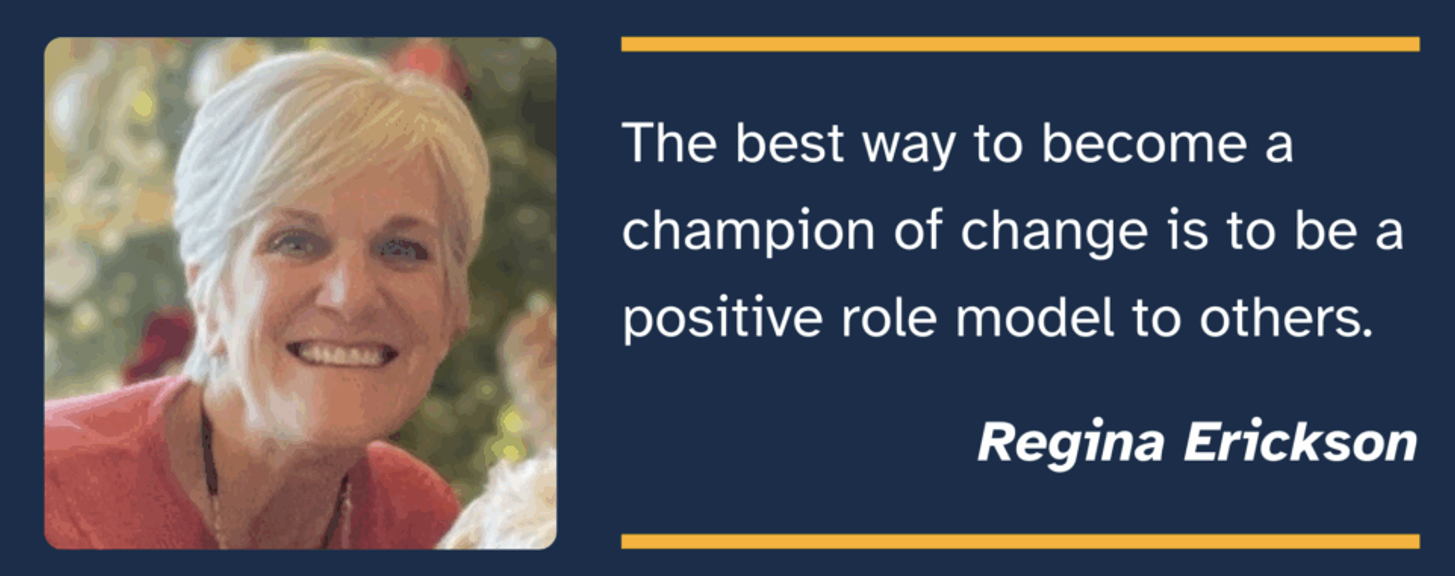
The best way to become a champion of change is to be a positive role model to others. Be a trusted individual. Build skills of communication that involve listening and empathizing with the concerns of other people. Change happens when we can effectively communicate the “how” and “why” a change is needed. We are all in this together. We all need to learn how to get along. Respect for each other needs to work in two directions.
The Joseph P. Kennedy, Jr. Foundation 2026 Public Policy Fellowship
The Joseph P. Kennedy, Jr. Foundation Public Policy Fellowship is a one-year, full-time, intensive experience in Washington, D.C. We seek an exemplary professional, and/or a person with a disability, or a family member of someone with intellectual or developmental disabilities (IDD) to serve as a 2026 Public Policy Fellow in Washington, DC.
Since its founding in 1946, the Joseph P. Kennedy, Jr. Foundation has supported the creation of practical programs to benefit persons with IDD, their families, and their communities. The Foundation has always worked with national leaders who understand both the promise and challenges of the U.S. system of government. The need for skilled leadership in government, in organizations providing services and supports for people with IDD, and in public policy advocacy has never been greater. In response to this need, the Foundation initiated the Public Policy Fellowship Program in 1980. Fellows receive first-hand knowledge and experience in the development of public policy and the opportunity for professional development and other learning opportunities.
Each year the Foundation brings talented and accomplished professionals, family members (many of whom are both professionals and family members) and persons with a disability to Washington, D.C. for a full year where they actively participate in public policy development in the offices of a Member of Congress, Congressional committees, or on rare occasions, federal agencies. Former Public Policy Fellows describe the Fellowship as a major turning point in their professional and personal lives. The experience is a unique chance to understand the intersection of public policy, disability advocacy, and the political process and to establish connections with the broader community of disability advocates and policy makers.
The purpose of the Fellowship is to prepare emerging leaders to assume leadership roles in the public policy arena at the state and/or national levels. During this one-year Fellowship, the successful applicant will learn how federal legislation is initiated, developed, and passed by Congress, as well as how programs are administered and regulations promulgated by federal agencies. Fellows also learn how disability organizations work to shape public policy affecting people with disabilities and their families.
Key issues in 2026 may include health care reforms, public health and scientific research infrastructure, and many briefings and hearings, all impacting the quality of life for individuals with IDD, and for their families.
The successful applicant’s background will include distinguished involvement in efforts to improve the lives of people with IDD at the local, regional, state, or national level. Successful applicants will have demonstrated outstanding experience and accomplishment in at least one of the following areas:
State or national level advocacy for persons with IDD and their families;
Health care, mental health care, employment, education, childcare, child welfare, housing, transportation, or home and community-based services for people with IDD;
Development of training programs for people with disabilities, families, and communities and/or for the professionals who work with and for them;
Development or improvements of family support services, programs focused on increasing individual’s control of resources and decisions impacting their lives, technology in support of people with IDD and any other area of focus important to these Americans.
Conducting research that improves or validates services that improved the quality of lives for people with intellectual disabilities and their families.
Enhancing the empowerment and influence of people IDD through organized efforts and programs.
The expectation is that fellows will become future leaders in the area of disability policy. After their year in Washington D.C., the Foundation expects former Kennedy Fellows will make significant contributions to policy and program development at the state or national level.
The program provides an intensive one-year full-time exposure to the federal public policy making process and includes a stipend and modest relocation expenses. Selected fellows must be prepared to live in the Washington, D.C. area full-time and work in-person during their fellowship year and to devote themselves full-time to the fellowship.
Application process and guidelines:
Applicants should submit a letter of application in word or PDF form between 2 to no more than 4 pages in length, single spaced in 12-point font with 1-inch margins, stating their background and history in the field of services and supports to people with IDD, interests and
accomplishments to date, as well as what they hope to do with the knowledge and experience gained from the fellowship. They should also attach either a résumé detailing their work and educational experience or a summary of their involvement in the field along with three letters of support from people familiar with their work. Applications should clearly show the candidate's name, address, telephone number(s), and e-mail address on the first page.
Applicants must be U.S. resident to participate in the program. If an applicant needs accommodations to complete the application, please reach out to Eidelman@jpkf.org
APPLICATION
The sole method of application, including letters of support and résumé submission is via an online system that is located at https://www.aucd.org/app/jpkffellowship2026
Hard copies will not be accepted!
Letters of support must be submitted with the application via a PDF file or a word file. Please make sure that each letter clearly specifies the candidate for which the letter is being submitted.
The application deadline for the 2026 fellowship is January 31, 2026, by 5:00 P.M. EST.
The Fellowship starting date will be negotiated with the successful applicant(s). The Foundation fellowship will be awarded for the period beginning as early as March 2026 and as late at September 2026 and running for one year, with the actual schedule subject to negotiation between the successful applicant and the Foundation.
Finalists will be invited to Washington in the Spring of 2026 to be interviewed by a distinguished panel of national Public Policy experts.
Applications will only be accepted online at: https://www.aucd.org/app/jpkffellowship2026
Please do not send paper copies to the Foundation.
Questions? Please contact Steven M. Eidelman: Eidelman@jpkf.org
Address letters of application to: Public Policy Fellowship, The Joseph P. Kennedy, Jr. Foundation
Please Note: NO hard copies will be accepted!
Vanderbilt clinical trial offers hope for families battling rare genetic disorder
New treatment being tested in Nashville could help children with Prader-Willi syndrome gain independence.
Monroe Carell Jr. Children's Hospital at Vanderbilt is participating in a clinical trial for a drug to treat the rare Prader-Willi syndrome. (WSMV)
Brendan Tierney
Dec. 16, 2025, at 7:53 PM EST
NASHVILLE, Tenn. (WSMV) - Sharon Sanders can eat an entire carton of ice cream or jar of peanut butter if it’s available. The 15-year-old has picked food out of the trash and tried to lick drinks off the floor. Her mother Crystal Henson has to lock up all the food in their house.
The heartbreaking situation is connected to a rare genetic disorder that causes relentless hunger and can cause life-threatening obesity for some people. Sharon is one of an estimated 10,000 to 20,000 Americans dealing with Prader-Willi syndrome (PWS). After she was diagnosed at just six months old, Crystal’s life changed forever.
“You don’t ever want your child to go through something. This is something I can’t take away from her, but we try to get through it the best we can,” Crystal said.
Early signs and diagnosis
Sharon’s condition became apparent early in life. Crystal said Sharon struggled with eating and was “really floppy” until she got on growth hormones, which finally allowed her to eat and grow.
The extreme hunger behaviors didn’t emerge immediately, either. Crystal said the problems escalated when her daughter turned 4 or 5 years old.
“It flipped to where she was just taking food and eating food and sneaking food,” Crystal said. “It’s hard to watch your child go through that.”
The relentless hunger now affects every aspect of the family’s life. Lamonte Fulbright Jr. said they must constantly guard against food-seeking behaviors while still making sure Sharon is getting enough calories.
He said the holidays present particular challenges for families like theirs, managing PWS.
“I ain’t worried about her going in there and eating no ham. I ain’t worried about her going in there and eating no cauliflower or no cranberry sauce,” Fulbright said. “It’s going to be the cakes, the cookies. The best way to monitor that, you keep that stuff locked away.”
PWS is marked by chronic hunger, growth hormone deficiency and behavioral challenges. Besides dangerous obesity, those with hyperphagia-associated PWS may experience learning disabilities, developmental delays and other serious symptoms.
Crystal said Sharon also struggles academically and has to work extremely hard to get good grades.
The blue pill being used in the HERO clinical trial is shown here next to a penny for size... The blue pill being used in the HERO clinical trial is shown here next to a penny for size comparison. (WSMV)
HERO clinical trial testing new approach
Vanderbilt University Medical Center is recruiting participants for the Phase 3 Hunger Elimination or Reduction Objective clinical trial, which aims to test a potential new treatment for hyperphagia associated with Prader-Willi syndrome.
The HERO clinical trial is evaluating a new drug from Aardvark Therapeutics, called ARD-101, to see if it can help the body release certain gut hormones to reduce excessive hunger and food-seeking behaviors.
Dr. Ashley Shoemaker is helping run the clinical trial at Monroe Carell Jr. Children’s Hospital at Vanderbilt. She said PWS patients develop “a real increased interest in food” that requires lifelong care and supervision.
“That burden never goes away, and we really struggle to allow our patients to be more independent,” Shoemaker said. “Which is frustrating because many of them would be quite capable of having a job, and they want to spend more time with their peers and their community. It’s just difficult to make it work.”
Challenges of rare disease research
Shoemaker said PWS can be diagnosed early, but treatment options remain limited.
Patients like Sharon only have one approved treatment right now, and there are no known cures for PWS.
“It’s hard to get companies interested in rare diseases, because if your drug gets approved, you are not going to treat millions of people,” Shoemaker said. “It’s not going to be a blood pressure medicine or a general diabetes medicine. It’s for a much more narrow group of patients, but they really need help.”
The HERO clinical trial represents a new approach to treating PWS. Shoemaker said it’s unlike any currently available therapies and could transform the management of PWS.
“It’s a completely new mechanism. It’s targeting a different pathway than we have used previously in trials for PWS. They had good, promising early data and it seems to be really well tolerated,” she said.
Key eligibility requirements and information about the study are available at https://www.heroforpws.com
Crystal is cautiously optimistic about the potential for new treatments, understanding that no single solution will work for everyone.
Sharon started on the only FDA approved drug a couple of months ago and hasn’t noticed any major improvements so far.
“It’s not going to take the hunger away completely, but it can hopefully help,” Crystal said. “We would like to see more, to have more options available. If this one doesn’t work, because not all medicines work for everybody, being able to have those options would be a miracle in itself.”
The new clinical trial offers hope that families dealing with Prader-Willi syndrome may soon have more treatment options to help their children live more independent lives.
Copyright 2025 WSMV. All rights reserved.