
Beyond Expectations
Celebrating the Strengths of Individuals with Chromosome 18 Conditions
Jannine D. Cody, PhD
“Birth defect”, “incompatible with life”, “vegetative state” -these are the harsh descriptors all too often heard by families of children with chromosome 18 conditions. Luckily, we see such negative language as a call to arms-to counter the dialogue and change the narrative. In 1990, we formed the Chromosome 18 Registry and Research Society to bring families together and to invest in research to improve lives.
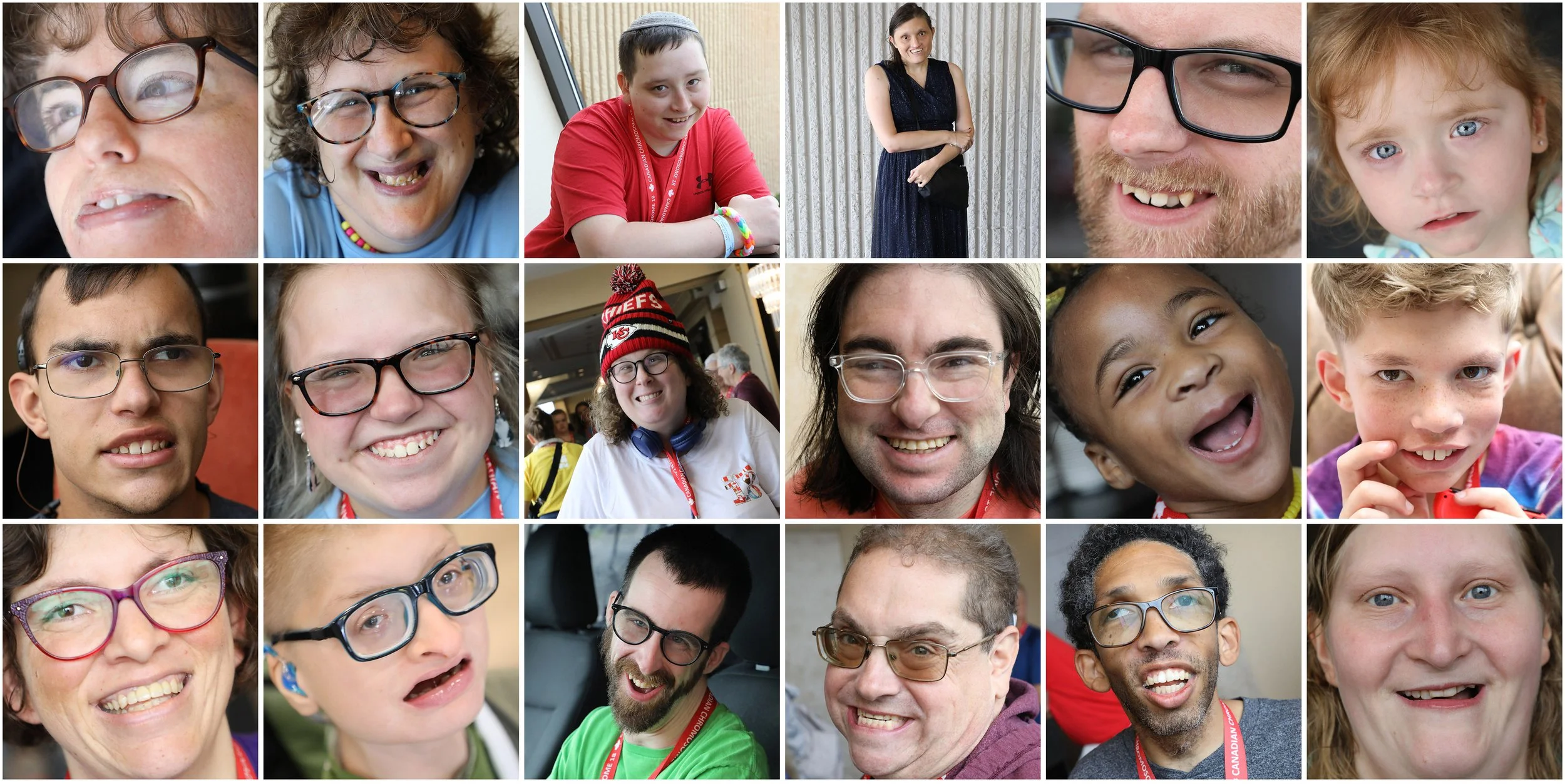
The many faces of Chromosome 18 conditions. Collage by Rick Guidotti, Positive Exposure
The chromosome 18 conditions are caused by missing or duplicated sections of the chromosome. The result is too many or too few copies of perfectly normal genes. Somone can be born with an extra copy of the entire chromosome, called trisomy 18. It is second only in prevalence to Down syndrome, more appropriately called Trisomy 21. When children with Trisomy 18 begin life, they are usually very medically fragile, leading some to refer to it as incompatible with life. More and more medical centers are learning how to save babies with Trisomy 18, thereby making the term “incompatible with life” erroneous.
Trisomy 18 is far from the only chromosome 18 condition. Individuals can be born with any of a variety of conditions caused by a duplication of a section of the chromosome. One of the rarest of the chromosome 18 conditions is called Tetrasomy 18 because it involves four copies of the short arm of the chromosome. It occurs in one out of every 625,000 births.
The chromosome 18 conditions can also include those with missing pieces of the chromosome. Individuals can have a missing piece from the short arm of the chromosome, called 18p- or from the long arm of the chromosome, called 18q-. Each of these occur in about one out of every 55,000 births. And then there is the combination of the two, in which deletions from both ends of the chromosome result in the formation of a ring chromosome, appropriately called Ring 18. This condition occurs in about 1 in 300,000 births. Each of these conditions are ultra rare.
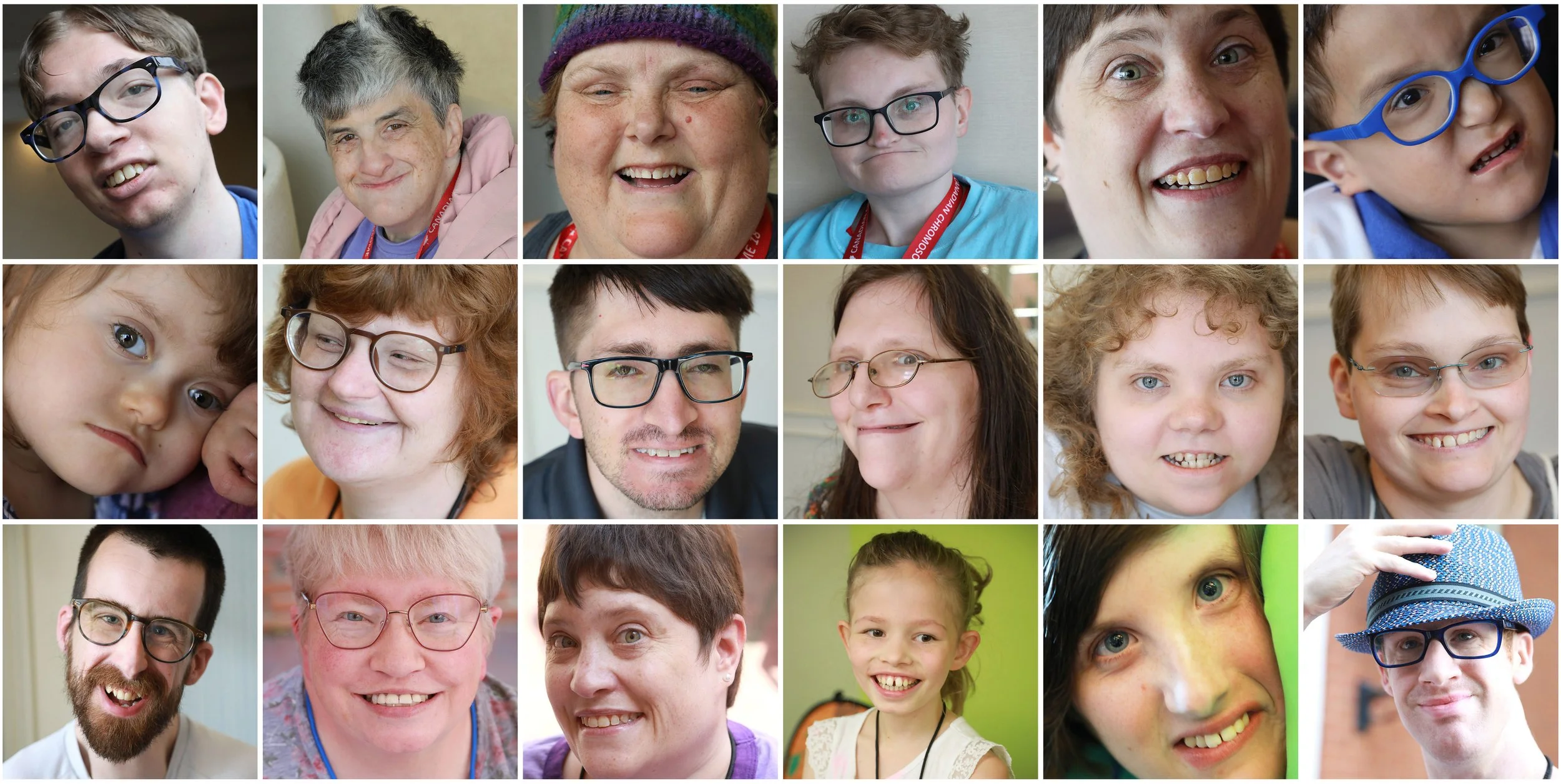
The many faces of Chromosome 18 conditions. Collage by Rick Guidotti, Positive Exposure
In 1985, soon after my daughter Elizabeth was born, she was diagnosed as having a missing piece that includes about 30 genes from the end of the long arm of chromosome 18, 18q-. The one-page description we were given provided a long list of “birth defects” and said, “children with this condition lie in a frog-like position in a vegetative state.” It also stated there were only 20 other known individuals with her condition. Today, the Chromosome 18 Registry and Research Society serves over 7,500 families across the globe. After 35 years of meeting hundreds of people with all varieties of chromosome 18 conditions, I have yet to meet anyone who fits the description of lying in a vegetative state. Each of them is a treasured and interactive member of their extended families, even if that interaction is unique.
Today, Elizabeth independently takes the bus to her part-time job at a restaurant. She takes 100% responsibility for the welfare of her dog, Mimi. She is even a member of our local branch of the Royal Scottish Dance Society, where she learns the complex dances faster than most, a passion she drew her initially reluctant mother into.
The Chromosome 18 Registry and Research Society has created a vibrant community by offering dozens of online and in-person opportunities to engage with each other each year. The families also invest in their children’s future by supporting the work of the Chromosome 18 Clinical Research Center. The research center has produced management guides for the various chromosome 18 conditions and is pursuing drug development to address the unmet needs.
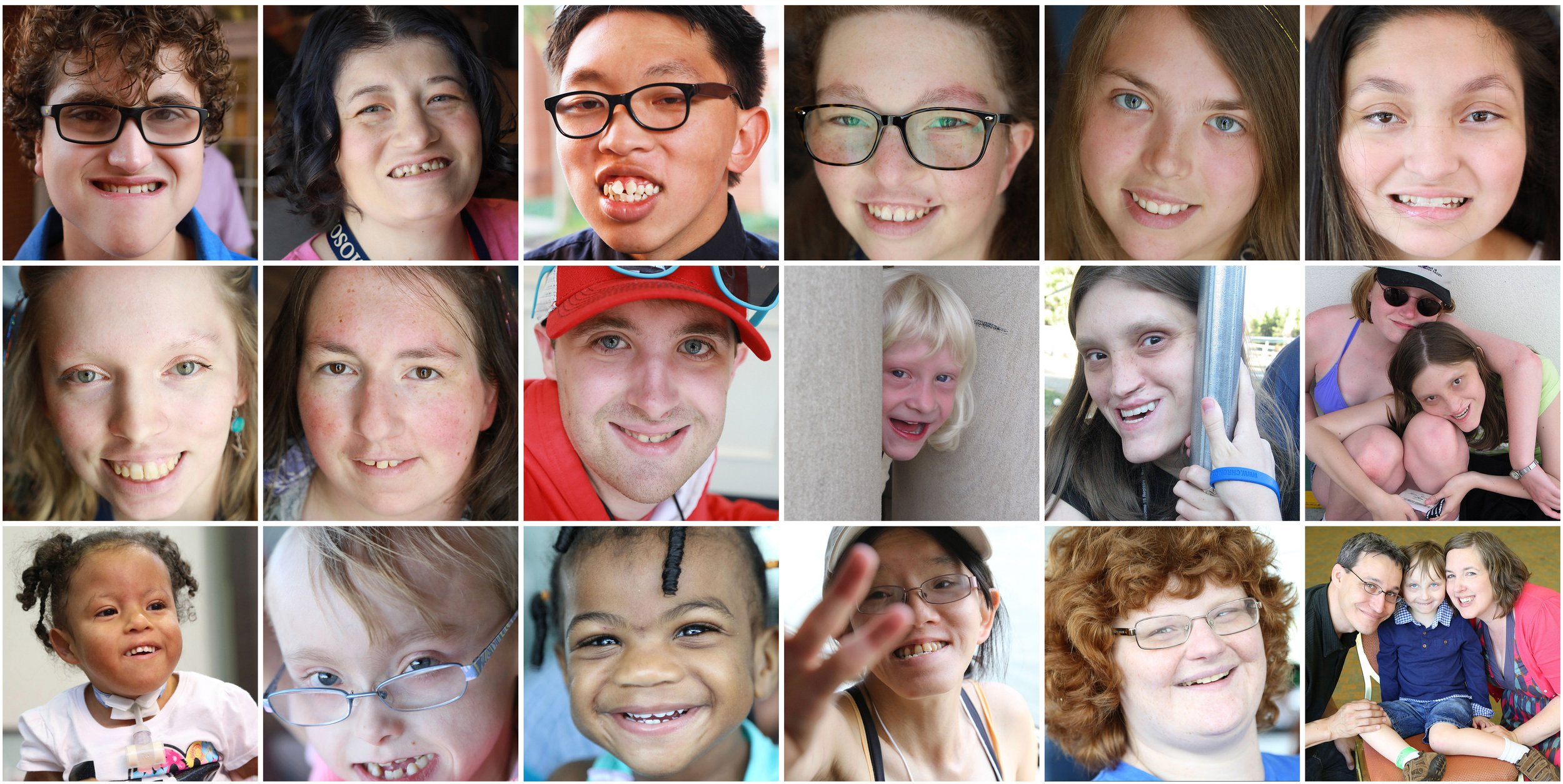
The many faces of Chromosome 18 conditions. Collage by Rick Guidotti, Positive Exposure
A very special member of the Chromosome 18 family is Rick Guidotti, founder of Positive Exposure, a nonprofit that promotes a more equitable, compassionate world for individuals and communities at risk of stigma and exclusion through photography, film, community storytelling, education and advocacy. Its work focuses on celebrating the dignity and beauty of people living with genetic, physical, behavioral, and intellectual differences. Rick has been an essential part of the annual family conference for the last 25 years and is always a highlight of the gathering. There is a nonstop peal of kids yelling, “Ri-i-ick!” over the exclamations of Rick screaming, “Fabulous! You are amazing!” They are amazing, in spite of the words so often used to describe their limitations instead of focusing on their strengths.
To learn more about The Chromosome 18 Registry & Research Society, visit www.chromosome18.org.
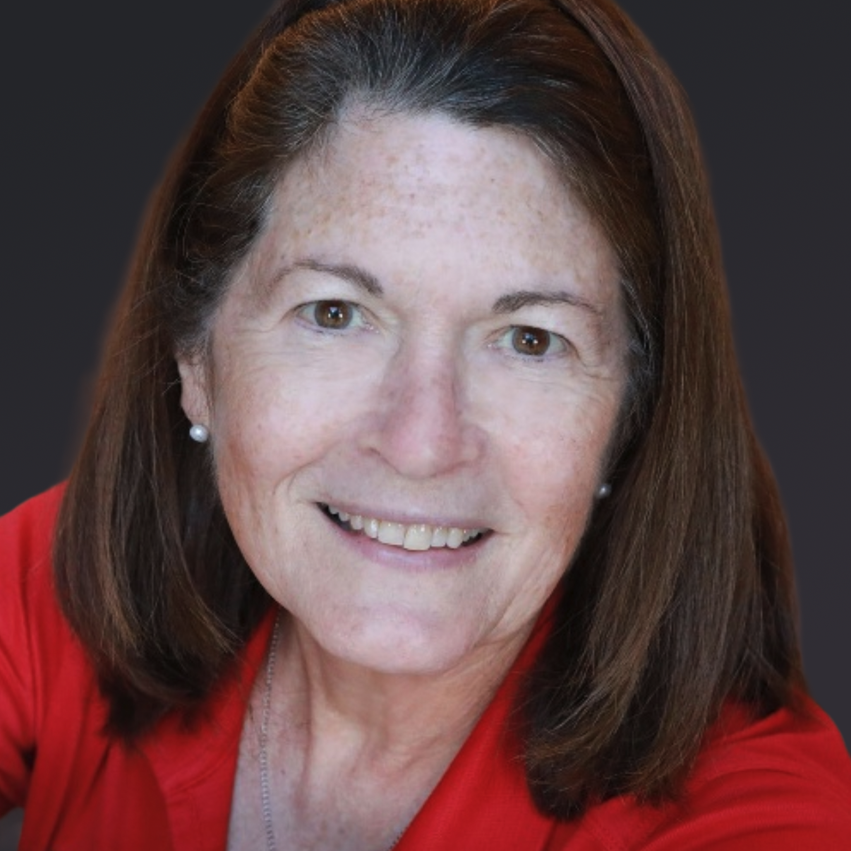
Jannine D. Cody, PhD
Dr. Cody is mother to Catherine and Elizabeth, and Professor and Director of the Chromosome 18 Clinical Research Center at the University of Texas Health, San Antonio.