
For Students in Inclusive Postsecondary Education (IPSE) Programs
By Tina Gower
Summary: As a new college semester begins, students have exciting opportunities to learn, grow, and build greater independence. While college can feel overwhelming, preparation, perseverance, and self-advocacy can help students with disabilities navigate challenges such as finding classrooms, managing transportation, balancing schedules, budgeting money, understanding FERPA rights, and asking for support when needed. Beyond academics, college also offers chances to make friends, join clubs, explore interests, build job skills, and gain confidence through each new experience.
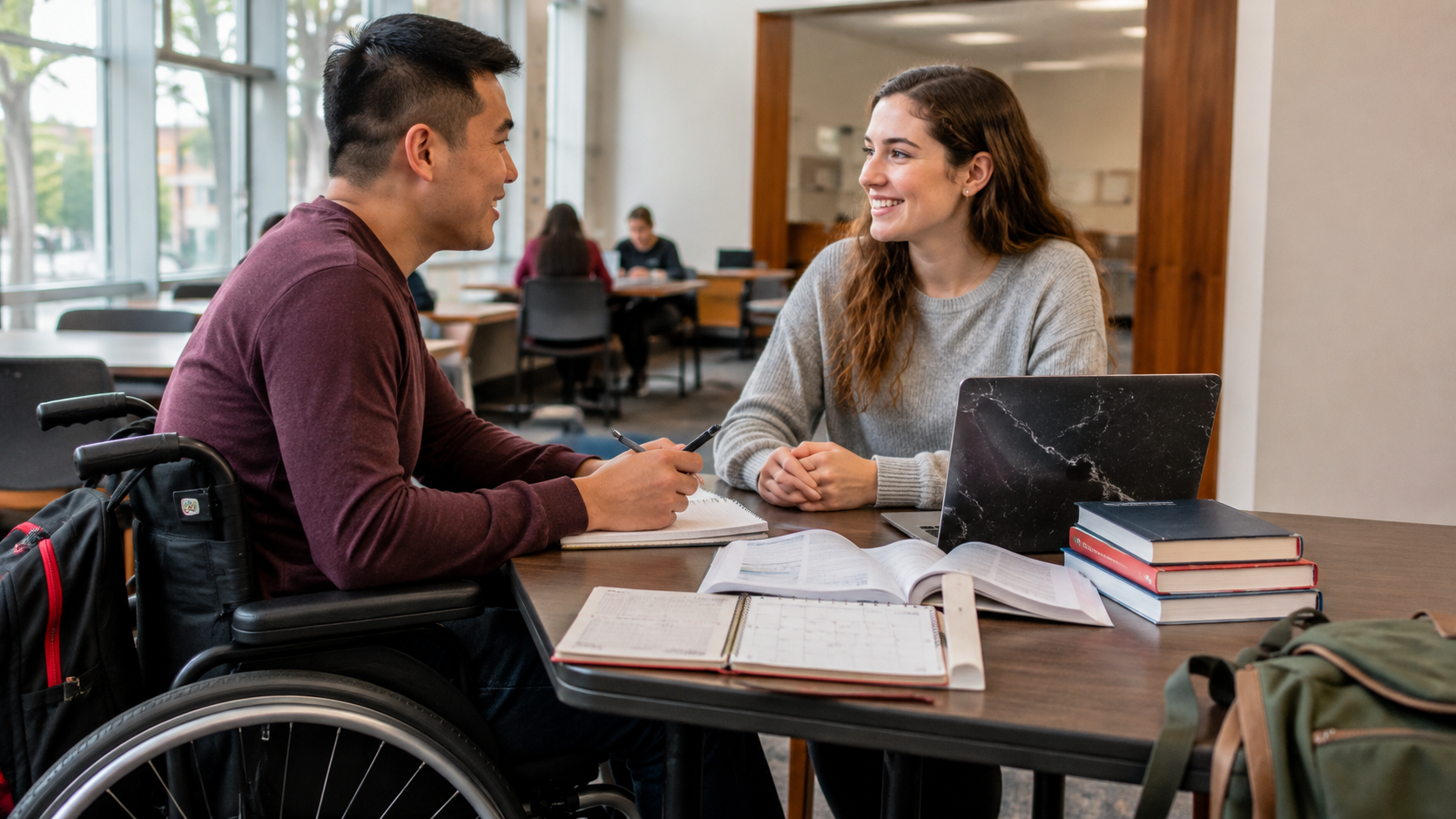
Summer is almost over, which means it’s time to trade in lazy mornings for learning something new, comfort zones for new challenges and opportunities, and vacations for adventures on campus.
Welcome to campus! Whether this is your very first year on campus or you’re returning for another year, college is full of opportunities to learn, grow, make friends, and become more independent.
For students with disabilities, starting a new semester can bring excitement, a little uncertainty, and maybe even some anxiety. The good news? You’re not alone. Every student on campus is learning something new, and everyone needs help once in a while.
First Challenge: Logging In
Before class even begins, you’ll probably face your first college obstacle: your password.
Remember that password you used last semester? Neither do we.
Now it’s time to enter your 12-character password with uppercase letters, lowercase letters, numbers, symbols, and somehow it can’t be anything you’ve ever used before.
Finally, after typing it perfectly…An authentication code will be sent to your phone.
Now begins the race to pull out your phone, wait for the code, enter it before it expires, and hope you don’t type it wrong.
If you do? No worries, you can count that as your practice round and just try again.
As you make it through the login process, know that you’re building perseverance! Great Job!
Campus Adventures Await
Once you’ve conquered technology, it’s time to conquer campus.
You’ll become an expert at reading campus maps, finding classrooms, figuring out which building your class is in, and discovering that what seems like “right around the corner” is really a 10-minute walk.
Along the way, you’ll master important college survival skills like:
Leaving on time for class.
Finding your favorite study spot.
Remember your student ID.
Charging your laptop before you leave and bringing your charger, so it stays powered throughout the day.
Learning where to go and who to ask when you need help.
Before classes begin, make sure you know how you will get to campus each day and have a transportation plan. Whether you ride the city bus, use a transportation service or van, live in a residence hall, get rides from family, or drive yourself, take time to plan how you’ll get to campus each day. Know your route, allow extra time during the first week, and have a backup plan just in case. Arriving on time starts with being prepared before you ever leave home.
If you’re working a summer job that continues into the school year, or starting a new part-time job, don’t forget to share your class schedule with your supervisor as soon as possible. Your employer can’t schedule around your classes if they don’t know when you’re in school.
Good communication helps everyone plan ahead and shows that you’re becoming a responsible employee. Learning to balance work and college is an important life skill, and speaking up about your availability is part of being successful in both.
Managing Money: A College Life Skill
College is also a time to learn how to manage money and make smart choices. Whether you live on campus, commute from home, or spend time in the community, learning to budget can help you feel more confident and independent.
Start by knowing where your money comes from and where it goes. This might include paychecks from a job, family support, benefits, scholarships, or other sources of income.
Create a simple budget by planning for expenses such as:
Food and snacks on campus
Transportation costs
School supplies and technology needs
Clothing and personal items
Entertainment and activities
Saving money for future goals
Before buying something, ask yourself: “Do I need this, or do I want this?” Making thoughtful choices helps your money last longer.
If you are on campus, explore affordable options. Pack a snack or lunch, when possible, attend free campus events, and learn about resources available to students.
If you spend time off campus, practice real-world money skills like comparing prices, reading receipts, safely using a debit card, planning shopping trips, providing appropriate tips in restaurants, and making choices that fit your budget.
Avoid financial exploitation. Some people may ask to borrow money or want you to pay for things. Do not loan money to other people or share your debit card, bank account information, PIN, or passwords. If you are not sure whether something is a good spending choice, or if someone asks to borrow money, talk to a trusted family member, support person, or another trusted adult before deciding what to do.
Remember, budgeting does not mean you cannot have fun. It means making a plan so you can enjoy today while preparing for later.
Your Voice Matters: Advocate for Yourself
College is about more than attending classes and completing assignments. It is also about experiences within the college and community. You will join clubs, attend events, ask questions, participate in discussions, share your ideas, and listen to others.
One of the most important skills you can develop in college is self-advocacy. Self-advocacy means knowing your strengths, understanding what support you need, and feeling confident enough to speak up for yourself.
Remember, people cannot support you if they do not know what you need. Being a self-advocate does not mean you have to do everything alone. It means knowing when to ask for help and being a part of your own success.
As Dr. Rick Rader often tells students in the Tiger Access Program at Chattanooga State, “You are the expert on you.”
You know what helps you learn, what challenges you face, and what goals you want to achieve. Advocating for yourself means sharing that information and being part of the decisions that affect your education and your future.
If you need help, ask. If you do not understand something, speak up.
Asking for help is not a sign that you cannot do something. It is a sign that you know yourself, understand what you need, and are willing to take steps toward success.
Your Information, Your Responsibility
A law called FERPA (Family Educational Rights and Privacy Act) protects the privacy of your education records as an adult student. This means you have the right to decide who can access your educational information. Your parents, guardians, or other family members do not automatically have access to your grades, schedules, meetings, or college records unless you give permission.
This is very different from high school. In high school, your parents or guardians received updates about your grades, school progress, meetings, and other important information. When you enter college, those rights transfer to you. You become the person who decides who you want to be involved in conversations about your education.
This change can feel like a big adjustment, but it is an important part of becoming more independent. You will learn how to ask questions, communicate your needs, make decisions, and choose the people who support your success.
Remember, self-advocacy does not mean you have to do everything alone. It means understanding your rights, knowing what support helps you succeed, and including the people who can encourage and guide you. Your at home support people can still be an important part of your college journey, but you are the person leading the conversation about your education, goals, and future.
Every Day Is a New Opportunity
College is about so much more than homework and tests. It is about making friends, discovering your strengths, trying new experiences, building confidence, developing job skills, and preparing for your future.
Challenge yourself to:
Introduce yourself to someone new.
Join a campus club or activity.
Try something outside your comfort zone.
Keep track of important dates and assignment deadlines.
Be seen. Be involved. Be yourself.
Remember, there is only one you. Your experiences, ideas, and strengths are what make you an important part of your college community.
Believe in yourself, even when something feels hard.
Progress does not happen all at once. It happens one class, one assignment, one conversation, one job skills, and one accomplishment at a time.
Remember Why You’re Here
There will be days when college feels easy and days when it feels hard.
Some assignments will be difficult. Technology won’t always cooperate. You may forget a password, miss a turn, or have a day when nothing seems to go as planned.
That’s okay.
Every challenge teaches you something new. Every obstacle you overcome builds confidence, resilience, and independence.
Success isn’t about being perfect. It’s about continuing to learn, grow, and believe in yourself.
Here’s to a Great Semester!
So, charge your laptops, pack your backpack, grab your student ID, make sure your ride to campus is ready, check your budget, and maybe write that password down somewhere safe (just not on a sticky note attached to your computer!).
Most importantly, remember that YOU BELONG on your college campus.
Your ideas matter.
Your goals matter.
Your future matters.
YOU matter!
Here’s to new friendships, exciting opportunities, and a semester filled with learning, laughter, and growth. May your Wi-Fi be strong, your authentication codes arrive quickly, your work schedule fits your class schedule, your transportation plans run smoothly, your budget stay on track, and your classrooms be easier to find than your forgotten passwords!
About the Author

Tina Gower works at Chattanooga State Community College as the Tiger Access Coordinator, where she leads a program that provides college opportunities and support for students with intellectual disabilities. She holds a Master’s degree in Special Education and is continuing her education through graduate studies in Educational Leadership. Tina is passionate about creating opportunities for students to achieve their personal, academic, and career goals.
Since 2005, Tina has been involved with Special Olympics Tennessee, where she supports athletes and students in developing sports skills, building confidence, and gaining important life skills to help them pursue meaningful employment and community involvement. In 2022, Tina proudly served as the female bowling coach for Team Tennessee at the Special Olympics USA Games in Orlando. In 2026, she served as additional staff for Team Tennessee at the Special Olympics USA Games in Minnesota. Tina was named Special Olympics Tennessee Coach of the Year in 2024. She also helped Chattanooga State become the first community college in Tennessee to earn Unified Champion School status.
Tina is also actively involved in advancing opportunities for individuals with disabilities by attending monthly local Department of Disability and Aging Subcommittee meetings. Through her work in higher education, Special Olympics, and community advocacy, Tina continues to promote access, belonging, and meaningful opportunities for individuals with disabilities.