
We are happy to share news from our partner organizations because, as Helen Keller once said, “Alone we can do so little; Together we can do so much.”
Event:
8th Annual Conference on Multi-Disciplinary Clinical Care for Patients with Intellectual and Developmental Disabilities
The CP State Medical Directors’ Council
Date: May 14-15, 2026
Location: Embassy Suites, 86 Congress St, Saratoga Springs, NY
Elevate Your Impact
This premier two-day event is the definitive gathering for clinical leaders and healthcare practitioners within New York’s intellectual and developmental disabilities (I/DD) provider community. It serves as a vital platform to engage with multi-disciplinary experts, gain actionable clinical insights, and explore innovative care models for the field’s most pressing challenges—from the integration of medical and behavioral health to advancements in oral healthcare and administrative excellence.
By fostering a collaborative environment, we empower our attendees to Elevate Their Impact, ensuring that patients with I/DD receive the comprehensive, high-quality care they deserve.
Adult disability care transition: Why medicine must grow up
Ronald L. Lindsay, MD
KevinMD.com ⎸ March 16, 2026
“Let’s Fly.” Captain Burnham’s words on the USS Discovery were more than a command. They were a declaration of trust, of forward motion, of refusing paralysis.
That is the question before us now: What happens when children with disabilities grow up?
For decades, pediatrics treated disability as a childhood condition. The grant language, the fellowship training, the systems of care, all built on the assumption that disability ends at eighteen. But children with disabilities do not disappear. They grow into adults with complex needs. And medicine, blinded like Harold at Hastings, has refused to follow them.
The abandoned adult
The truth is stark. When children with disabilities grow up, the system collapses around them.
Internal medicine and family practice: They do not know how to handle adults with disabilities. Training stops at childhood. Continuity evaporates. The adult patient is invisible.
Psychiatry: Already overwhelmed. With waves of self-diagnosed ADHD and ASD, the default response is medication. No cognitive-behavioral therapy. No coping mechanisms. Just prescriptions thrown at the problem.
Pediatrics: Will not touch it at all. The specialty that claimed ownership of disability care abandons its patients at the threshold of adulthood.
The result is abandonment disguised as specialization. Adults with disabilities are left to improvise, to self-diagnose, to turn to AI because the human system refuses to follow them.
The ethical reckoning
Is it ethical to leave adults with disabilities to self-diagnose with AI? The answer is no.
AI can provide information, but it cannot replace continuity of care, lived expertise, or human accountability. It cannot prescribe coping mechanisms, build therapeutic alliances, or stage the kind of trust that medicine once promised.
The reliance on AI is testimony to resilience, adults and families refusing silence, improvising with whatever tools they can find. But it is also indictment. It proves that medicine has failed to grow up with its patients. Internal medicine does not know how to handle them. Psychiatry is overwhelmed. Pediatrics refuses to follow.
The ethical failure is not in the use of AI. It is in the abdication that makes AI necessary. Systems collapse, and the Cassandra prophecy repeats: foresight ignored, harm endured.
The call to action
The question is not whether children with disabilities grow up. The question is whether medicine will grow up with them.
We need a new model: disability care across the lifespan.
Pediatric foresight must extend into adult medicine. Internal medicine and family practice must be trained to handle adults with disabilities, not treat them as invisible. Psychiatry must move beyond medication triage, embedding coping mechanisms, therapy, and continuity. Pediatricians must stop abandoning their patients at eighteen, and instead stage coordinated transitions into adult systems.
Training programs must embed transition planning. Fellowship curricula must include adult disability medicine. Interdisciplinary continuity must become the standard, not the exception. Otherwise, the Cassandra prophecy repeats: foresight ignored, harm endured, vindication delayed.
The HOPE Project: Never condemn without a solution
Critique without blueprint is just lament. Testimony must carry solutions. That is why the Madigan HOPE Project matters.
HOPE was not theory. It was practice. A nurse practitioner saw the adults with disabilities. I managed the psychotropic medications. Together, we built continuity where pediatrics refused to tread. The ethos of developmental pediatrics was carried into adulthood, proving that systems can adapt if they choose to.
HOPE showed that women with disabilities could be seen, treated, and respected. It demonstrated that psychotropic medication management could be staged responsibly, not abandoned to overwhelmed psychiatry. It proved that interdisciplinary care could cross the artificial boundary between pediatrics and adult medicine.
The irony was sharp: The American Pediatric Association passed on the project for the Health Care Delivery Award because it was “adult, not pediatric.” As if children with disabilities do not grow up. That refusal was pediatrics’ arrow-in-the-eye moment. But the project itself was vindication.
HOPE is the model:
Continuity across the lifespan.
Integration of medical and behavioral care.
Recognition of women’s health needs.
Partnership between clinicians and families.
Never condemn without a solution. HOPE was the solution. It remains the proof that foresight can become practice, that prophecy can become blueprint, that Cassandra can become Odysseus.
Closing cadence: Let’s fly
“Let’s Fly.” Captain Burnham’s words on the USS Discovery were more than a command. They were a declaration of trust, of forward motion, of refusing paralysis.
That is the call before us now. Children with disabilities grow up. They do not vanish at eighteen. They do not dissolve into categories medicine refuses to see. They become adults with complex needs, and the system must grow up with them.
We have condemned the failures: pediatrics blinded by its own definitions, internal medicine untrained, psychiatry overwhelmed. We have named the indictment: abandonment disguised as specialization. We have offered the solution: continuity across the lifespan, embedded in projects like HOPE.
Now the cadence must shift. Not lament, but propulsion. Not prophecy alone, but blueprint enacted. Cassandra foresaw. Odysseus endured. Homer recorded. Burnham commands: Let’s Fly.
It is time for medicine to take the helm, to trust its crew, to chart the uncharted. To stop abandoning adults with disabilities and instead stage continuity, compassion, and conscience across the lifespan.
The question is not whether they grow up. The question is whether we will fly with them.
Equipping Dentists for Patients with IDD: The NICHE-Dental Curriculum Toolkit
NICHE-Dental is a groundbreaking curriculum toolkit designed to train dental students, educators and professionals in caring for individuals with intellectual and/or developmental disabilities (IDD). This curriculum toolkit features off-the-shelf materials developed by over 90 IDD experts from 22 dental schools and equips learners with the foundational knowledge and practical tools to address oral health disparities in an underserved and aging IDD population.
Join ADEA for this free, live webinar featuring NICHE-Dental co-creators, Drs. David Fray and Allen Wong. Whether you’re a dental student, educator or administrator, this webinar will show you how NICHE-Dental can help you cultivate a more inclusive, compassionate dental practice that meets accreditation standards and improves outcomes for patients with IDD. You’ll get a preview of the NICHE-Dental content, including health disparities, collaborative care across the lifespan, real-world case studies, best-practice models and a robust resource library. We’ll also share funding opportunities to support, including the NICHE-Dental curriculum in your 2026 academic year planning.
Learning Objectives:
Identify oral health disparities experienced by people with IDD.
Recognize the Commission on Dental Accreditation (CODA) standards requiring education on how to treat patients with IDD.
Describe how the NICHE-Dental curriculum can be used to enhance existing dental school curriculum to include lessons on people with IDD.
The Biggest Misunderstandings About Health Advocacy
Social Health Network ⎸ March 28, 2024
Choosing to become an advocate means sharing a health journey. To educate others, advocates share personal details about their health. They become vulnerable to help others on similar journeys.
Unfortunately, misconceptions about the role and purpose of advocacy abound. Friends, loved ones, and even strangers often make insensitive comments that show their lack of understanding.
We wanted to learn more about the misconceptions about health advocacy that our Health Leaders have encountered. So, we asked the Social Health Network Facebook community, “What is something people misunderstand about health advocacy?”
Here are the top misconceptions the community deals with.
Advocacy is easy-peasy
One misconception of advocacy is that it is easy. Becoming a successful advocate requires dedication and hard work. It takes years to build a thriving network. Advocates invest countless hours working to connect with their audience.
Advocacy also happens while living with a chronic health condition. Flares and fatigue can slow down the work. It does not happen overnight!
“They believe it is easy.” – Racquel H. Dozier
“That it’s not hard to accomplish.” – Scott Matheny
It generates a lot of income
Some believe that advocates make a lot of money from advocacy work. An advocate’s condition often removes them from the workforce, so any income is welcome when living with a chronic illness. But advocacy is not high paying.
Advocates do the work because they believe in raising awareness, not for the money. Advocacy fulfills a sense of purpose with chronic illness. It is also flexible and able to be scheduled around doctor appointments and bad days.
“Either they believe it’s lucrative, or feel it’s normal that we do everything for free.” – Annie-Danielle Grenier
“That we are taking advantage of our health condition for personal gain.” – Erica Nicole Carrasco
Advocates are attention-seeking
Another misconception of advocacy work is that it is self-serving. Advocates hear that they are using their disease for attention.
Being an advocate means talking about a chronic illness – a lot! Advocates use their experience to fight false impressions about their disease. Advocacy is not telling a story for pity or sympathy, but to help others learn. They do not want others with the disease to feel as alone as they did.
“Other people think we’re just looking for pity or attention.” – Kerry Wong
“That we never ‘shut up’”! – Lorene Alba
“That we do it for attention / that it’s glamorous.” – Natalie Hayden
“That we are just whiners, and if our health problems make us high risk, we should ‘just stay home.’” – Andrea Jensen
Advocacy is not legitimate work
Advocates often receive criticism about their work. People may suggest it is not a real job or title. Some even interpret advocacy efforts as troublemaking. They do not understand why advocates need to do what they do.
Advocates invest a lot of themselves in their work. They raise their voices to help others access accurate diagnoses and care.
“That advocacy is not a title.” – Randy Madara
“They say we are ‘troublemakers.’” – Ellen Reed
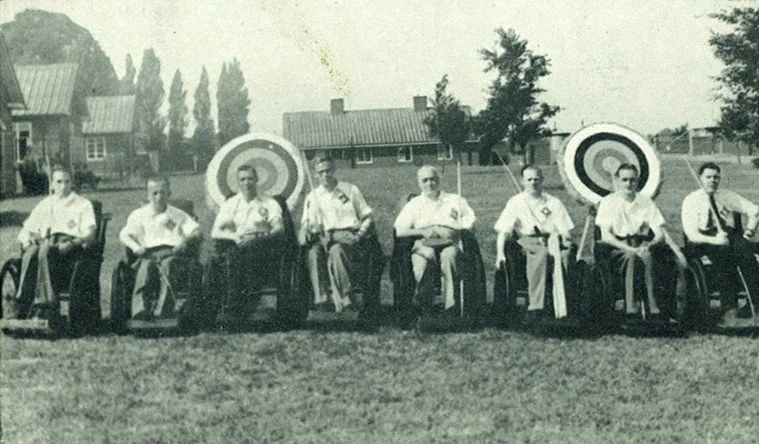
Move United Timeline
This timeline celebrates Move United’s rich history. From our founding as the National Wheelchair Athletic Association in 1956 to becoming the national leader in community-based adaptive sports and recreation. None of these milestones would have been possible without the countless passionate individuals who molded this organization and solidified its foundation.
This timeline celebrates Move United’s rich history—from our founding as the National Wheelchair Athletic Association in 1956 to becoming the national leader in community-based adaptive sports and recreation. None of these milestones would have been possible without the countless passionate individuals who molded this organization and solidified its foundation.
Our journey mirrors the broader disability rights movement. During our first decades, we grew alongside landmark civil rights legislation, forged partnerships with like-minded organizations nationally and internationally, connected with mainstream media, and pioneered wheelchair road racing. Since then, we’ve witnessed the integration and inclusion of people with disabilities in sport and everyday life—driven by innovations in adaptive equipment, expanded training and education, and increased awareness across society.
It started here. And it continues because of dedicated athletes and their families, staff and volunteers, coaches and officials, classifiers and event directors, allied health professionals, member organizations, sponsors, donors, and partners. Thank you for your commitment to the sustainability, growth, and impact of Move United.
Please excuse any errors and/or omissions. This is a sample, not an exclusive list, and is a living and breathing historical document. To check out a more comprehensive history, check out this VIRTUAL History Timeline – Text Only Pdf
Event:
Authentic Awareness Autism Assembly
National Council on Severe Autism (NCSA)
Date: July 14-16
Location: Washington, DC
Space is limited for three days of training, advocacy on Capitol Hill, and community.
July 14 — Training Day: Embassy Suites D.C. Convention Center
July 15 — Advocacy Day: Congressional Offices
July 16 — Community Fun Day: Smithsonian’s National Zoo
Get more details at the registration link below.
Caroline's Story: When the System Fails Severely Autistic Adults
Cristina Gaudio
NCSA Blog ⎸ February 11, 2026
Finger-pattern bruises. A hematoma. A scalp gash requiring stitches. These are the injuries sustained by a nonverbal, severely autistic 34-year-old in a Kentucky group home — while her mother's camera requests go unanswered. NCSA Legal & Policy Fellow Cristina Gaudio examines how the CMS Settings Rule has left the most vulnerable adults without safety or accountability.
Announcement from the American Academy of Neurology
Nimish A. Mohile, MD, FAAN
As part of the American Academy of Neurology’s ongoing commitment to neurological health equity, I’m thrilled to announce that a new AAN position statement-A Roadmap to Neurologic Health Equity-was recently published in the Neurology® journal. I encourage all of you to read this important new resource.
Achieving health equity requires intentional efforts to address health disparities caused by social, structural, and institutional barriers-not just individual behaviors-and this position statement is structured around four domains: Clinical Practice and Quality, Scientific Knowledge and Research, Education and Awareness, and Advocacy and Policy Initiatives. Each domain includes targeted strategies to eliminate systemic barriers, improve care for marginalized groups, and engage the neurology workforce in advancing equity.
Webinar: Promoting Brain Health Across the Lifespan for Individuals with Down Syndrome
Brian Chicoine, MD, Medical Director, Advocate Medical Group Adult Down Syndrome Center
Dana Sciullo, Manager of Health and Wellness Programs, National Down Syndrome Society
April 21st, 2026 (12pm-1pm CT)
Promoting brain health for individuals with Down syndrome requires a proactive, lifespan approach that extends beyond a sole focus on dementia. In this webinar, Dr. Brian Chicoine, Medical Director at the Advocate Medical Group Adult Down Syndrome Center, will guide participants through ways to maintain brain health throughout life, emphasizing health promotion, strengths-based care, and the importance of supporting cognitive well-being. Participants will examine common misconceptions about brain health in individuals with Down syndrome and understand why brain health conversations should begin early and continue across the lifespan.
Designed for community-based service providers, healthcare professionals, and others who support individuals with Down syndrome, this session will highlight practical, evidence-based strategies that can be incorporated into daily routines to promote lifelong brain health as well as resources available through the NDSS.
PLEASE NOTE
Webinars are free.
CEUs are not offered for the webinars.
Webinars and materials will be recorded and archived on YouTube Channel.
For disability accommodations, email Jasmina Sisirak (jsisirak@uic.edu) at least 10 days before webinar.
The webinars will be held on the Zoom platform. Prepare for upcoming Zoom meetings by setting up a Zoom test call HERE.
2026 Brain Injury Report
Brain Injury Association of America ⎸ March 11, 2026
Recognizing the need for a comprehensive look at the current state of brain injury in America, the Brain Injury Association of America has published The 2026 State of Brain Injury Report.
A collaboration from distinguished leaders in the field of brain injury and neurorehabilitation, The 2026 State of Brain Injury Report explores the impact that acquired brain injury has on millions of Americans – not just those who sustain brain injuries, but their families, caregivers, and communities.
Event:
ADHCE Virtual Annual Conference
The Alliance for Disability in Health Care Education
Date: June 18, 2026
Time: 10:00 am to 4:00 pm (EST)
Registration for submitting your proposed presentation has begun.
This event is free!
This virtual event will bring together leaders, educators, and self-advocates in disability health care and education. Please join us virtually for a day of collaboration, innovation, and inclusion. Please support this event today by becoming a paid member or donating!
Register for Conference Presentation - Abstract Submission: Please share your research and inclusive work with our community! We welcome your professional or student abstract to present at the 2026 ADHCE virtual conference. Submit here.
Due May 1st, 2026
We look forward to welcoming you to this year’s gathering as we continue advancing disability health care and education, together.
Applying for Student Project Scholarships: You can apply to submit a Student Scholarship Project and possibly be awarded up to $1,000 in ADHCE scholarship funding for your project. These submissions are being accepted for the ADHCE Annual Student Scholarships. Those who are awarded scholarships this year in 2026, will be asked to share their work at next year’s, 2027 ADHCE annual conference! Share with your students today! Students - Apply here by May 1st, 2026.
AADMD is Accepting Institutional Heroes Grant Program Applications
The American Academy of Developmental Medicine & Dentistry (AADMD) is proud to announce that the Institutional Heroes Grant Program application process is open for the 2026 academic year.
Through the dental school and other allied dental programs Institutional Heroes Grant Program, NICHE-Dental aims to impact dental students’ attitudes, knowledge, and/or skills to treat patients with intellectual and/or developmental disabilities and address how future dentists and dental allied health professionals think about disability.
NICHE-Dental plans to award up to 10 Dental Schools and other Allied Dental Programs a $5,000 grant to incorporate the NICHE-Dental curriculum enhancements that address gaps in dental education regarding patients with IDD.
The RFP for academic year 2026-2027 opened on March 9th, 2026. Award notifications will be made by late May. The next RFP cycle will open in Fall 2026. If you have any questions or would like to learn more about the NICHE-Dental Institutional Hero Grant Opportunity, please email niche-dental@aadmd.org.
Note: At this time, Dental Schools and other Allied Dental Programs partners must be located in the U.S. or Canada and CODA accredited. Awardees are only eligible to receive a NICHE-Dental grant one-time.
Event:
2026 Hybrid Family & Community Conference - Clinical/Research Partners
Date: April 24-26, 2026
Location: Hyatt Regency, Boston, MA
Hope for HIE’s Family & Community conference is offered in a HYBRID format, live streaming key sessions of the event from the beautiful Hyatt Regency Boston Hotel.
We are excited to put together a robust, meaningful, and exciting program that blends support, science and celebration of community for HIE families, across all impacts and outcomes, ages, and stages, and the broader HIE community of interest including scientists, community members, and others who are dedicated to advancing the unmet needs of the global HIE community.
Get more details, including the full agenda at the registration link below.